

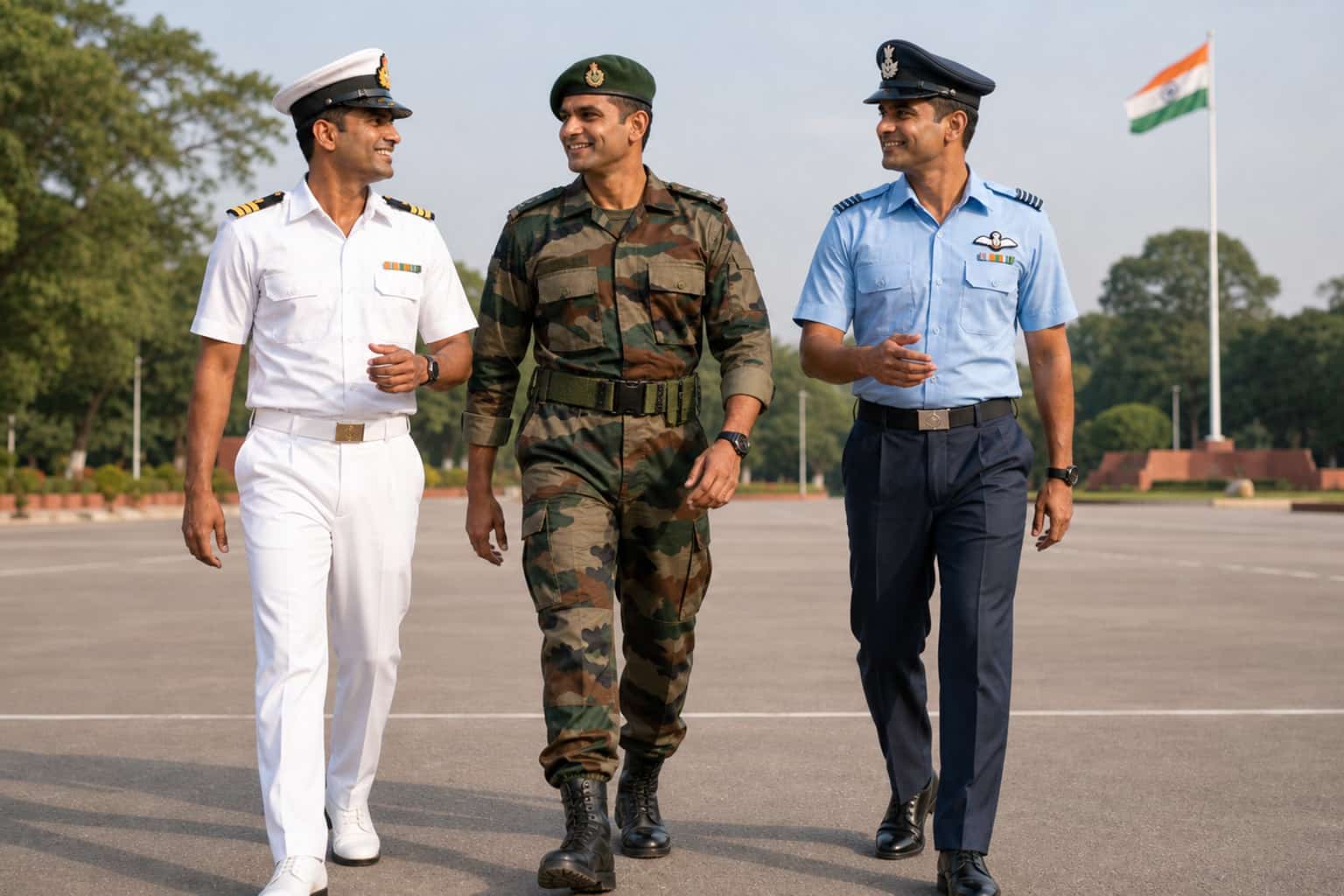
For most people outside the armed forces, the debate around Group X and Group Y pay may sound like a technical service matter. But for serving soldiers, veterans, and defence families, it goes much deeper than classification. At its core, the issue is about fairness. It is about whether the system is recognising skill, training, duty pressure, and service responsibility in a way that still makes sense in today’s military environment.
That is why this subject deserves serious attention as discussions around the 8th Pay Commission continue.
The concern being raised is not new, but it is becoming harder to ignore. Under the existing structure, Group X personnel in certain technical trades receive additional pay recognition, while Group Y personnel do not get the same level of benefit. Supporters of the current model argue that technical trades require specialised ability and therefore deserve additional compensation. That principle, by itself, is easy to understand. Skill should be rewarded.
The real dispute begins when soldiers and welfare voices ask a more difficult question: does the present classification still capture the true nature of service in modern armed forces?
This is where the debate becomes important.
Military roles today are far more complex than older labels sometimes suggest. Across the Army, Navy, and Air Force, personnel increasingly work with advanced systems, communications equipment, operational technology, digital documentation, surveillance support, logistics coordination, and specialised platforms. Even where a trade is not officially placed in the highest technical category, the actual duty may still involve significant training, high responsibility, and direct operational value.
That is why many within the defence community feel the old distinction can sometimes produce an unfair outcome. The objection is not that technical personnel should lose recognition. The objection is that many others may also be doing demanding, skilled, and high-pressure work without receiving equivalent financial recognition. In such a system, the question is no longer only about pay. It becomes a question of institutional respect.
And in the military, that matters.
A soldier may not use the language of policy reform every day, but he understands very clearly when the system values his work and when it does not. Morale is not created by slogans alone. It is shaped by how fairly the organisation treats its people. When two personnel with strong training backgrounds, similar working pressure, and serious operational roles see a clear pay gap because of legacy classification, it naturally raises concern.
This is why the Group X and Group Y issue is not only a service-condition matter. It is a morale matter.
There is also a larger inter-service dimension to this discussion. As often pointed out in defence circles, the share of personnel benefiting under technical categories does not appear equally distributed across the three services. That creates another layer of dissatisfaction. If one service has a far higher proportion of such recognition than another, then soldiers may begin to feel that comparable effort and capability are being valued differently depending on institutional structure rather than actual contribution.
In an era when jointness and integration are repeatedly emphasised, that perception becomes difficult to defend.
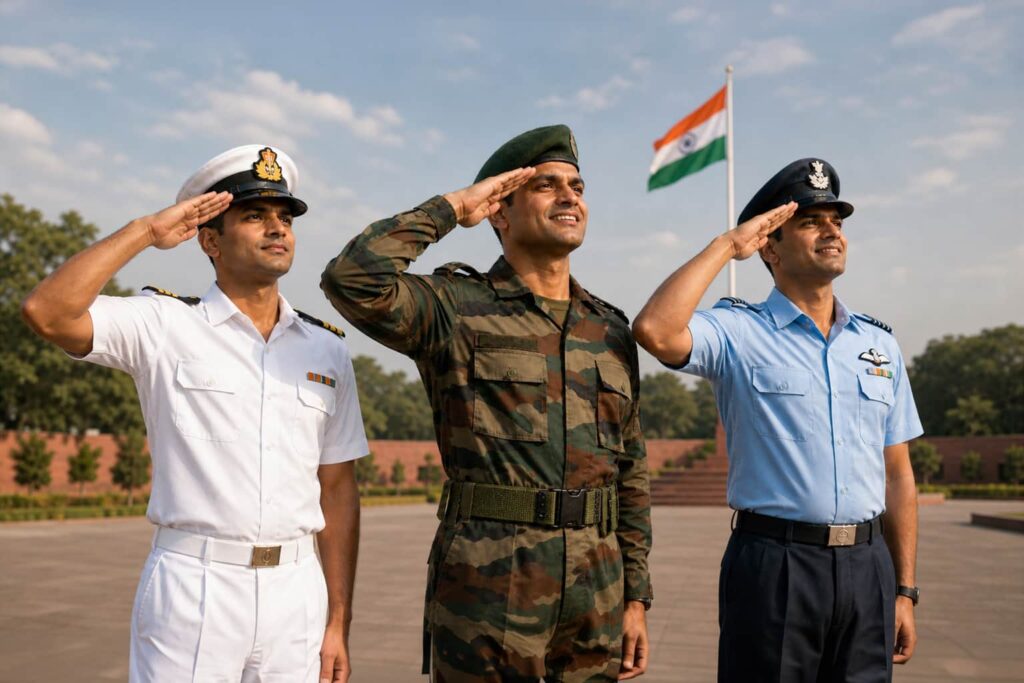
The armed forces are moving toward greater coordination, shared capability, and modernised operational thinking. If the military is changing in that direction, then the pay structure also has to be examined through a more modern lens. It cannot remain tied only to labels that may have been more relevant in an earlier era. What matters now is not simply which group a person belongs to on paper, but what he is actually trained to do, what responsibility he carries, and how critical his role is to the mission.
That is why the idea of a skill-based model is attracting attention.
Instead of a narrow group divide, a future structure could examine real competence levels, role complexity, specialised training, technical handling, and operational responsibility. A system like that would not automatically treat everyone as identical, nor should it. But it could create a more transparent method of recognising actual skill rather than relying too heavily on historical grouping. In today’s environment, that would appear more rational and more just.
Such a model could also address another reality of military life. Many skills in the armed forces are not acquired through civilian certificates alone. They are built through service training, operational exposure, field conditions, and unit-level experience. A soldier may develop advanced competence because the military has trained him for necessity, not because he holds a civilian technical label. If that competence improves readiness, safety, maintenance, efficiency, or mission performance, the system has a strong reason to acknowledge it.
This is why the demand for stronger skill-linked recognition is gaining emotional force.
For defence families, the matter is even larger than monthly salary. Service pay affects pension. Any gap during active duty can echo into retirement through pension calculations and long-term financial security. That means the Group X and Group Y issue is not limited to present service conditions. It also affects the future well-being of ex-servicemen and their families. A difference that begins as a pay classification issue can eventually become a pension justice issue.
That is one reason this topic is unlikely to fade easily.
The 8th Pay Commission, whenever it examines defence-related matters in detail, will face a difficult balancing act. On one side is the valid need to reward specialised technical roles. On the other side is the equally valid concern that many soldiers outside the traditional technical bracket may be under-recognised despite carrying demanding responsibilities in a changed military environment. A serious review would have to avoid simplistic answers. It would need to ask whether the current structure reflects real service conditions, or whether it is continuing because it has existed for a long time.
That is a question worth asking honestly.
A fair review would not necessarily mean giving exactly the same pay to everyone. Uniformity is not always fairness. But fairness does require that the criteria for additional recognition should be relevant, transparent, and updated. If military roles have changed, then the framework used to reward those roles should also be open to review. Otherwise, the system risks sending the wrong message to those who form the backbone of the forces.
And that backbone is made up largely of JCOs and Other Ranks.
These are the personnel who carry out the demanding daily reality of defence service. They maintain systems, perform field duties, handle equipment, sustain operations, and keep the military functioning at ground level. If their concerns about recognition are repeatedly dismissed as a technical pay dispute, the larger institutional significance may be missed.
In the end, this debate comes down to one simple idea: should pay recognition in the armed forces reflect old labels, or present-day military reality?
That is why the Group X and Group Y issue may become one of the most closely watched defence welfare questions in the 8th CPC era. It speaks to dignity, parity, morale, and long-term fairness. It is not just about who gets an extra amount today. It is about what kind of message the system sends to soldiers about how their service is valued.
If the 8th Pay Commission chooses to examine this question with honesty and modern thinking, it could do more than adjust a pay category. It could help restore confidence that skill, sacrifice, and responsibility are being recognised in the way a modern military deserves.





Leave a Reply