

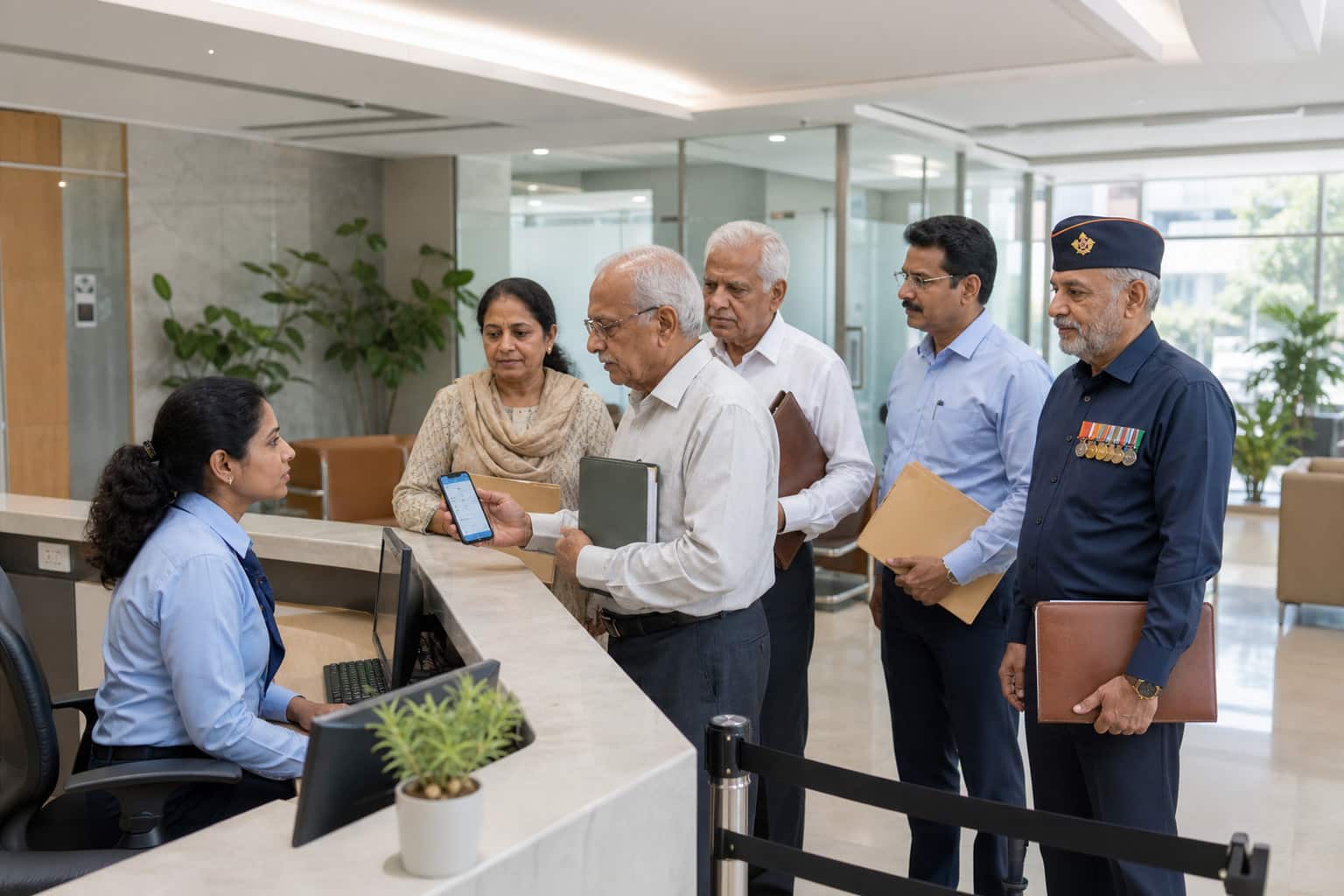
The 8th Central Pay Commission has now entered a more serious phase, and that changes the conversation for Central Government employees, pensioners, defence personnel and recognised associations. Until recently, much of the discussion around the 8th CPC was driven by expectations, social media posts and broad demands. Now the process is becoming more official, more structured and more time-sensitive.
That shift matters.
The Commission is no longer only collecting general attention from a distance. It has started scheduling field-level stakeholder interactions, and that means the consultation process is moving closer to the people who will be affected by its recommendations. For employees and pensioners, this is the stage where issues need to move from discussion into the formal system.
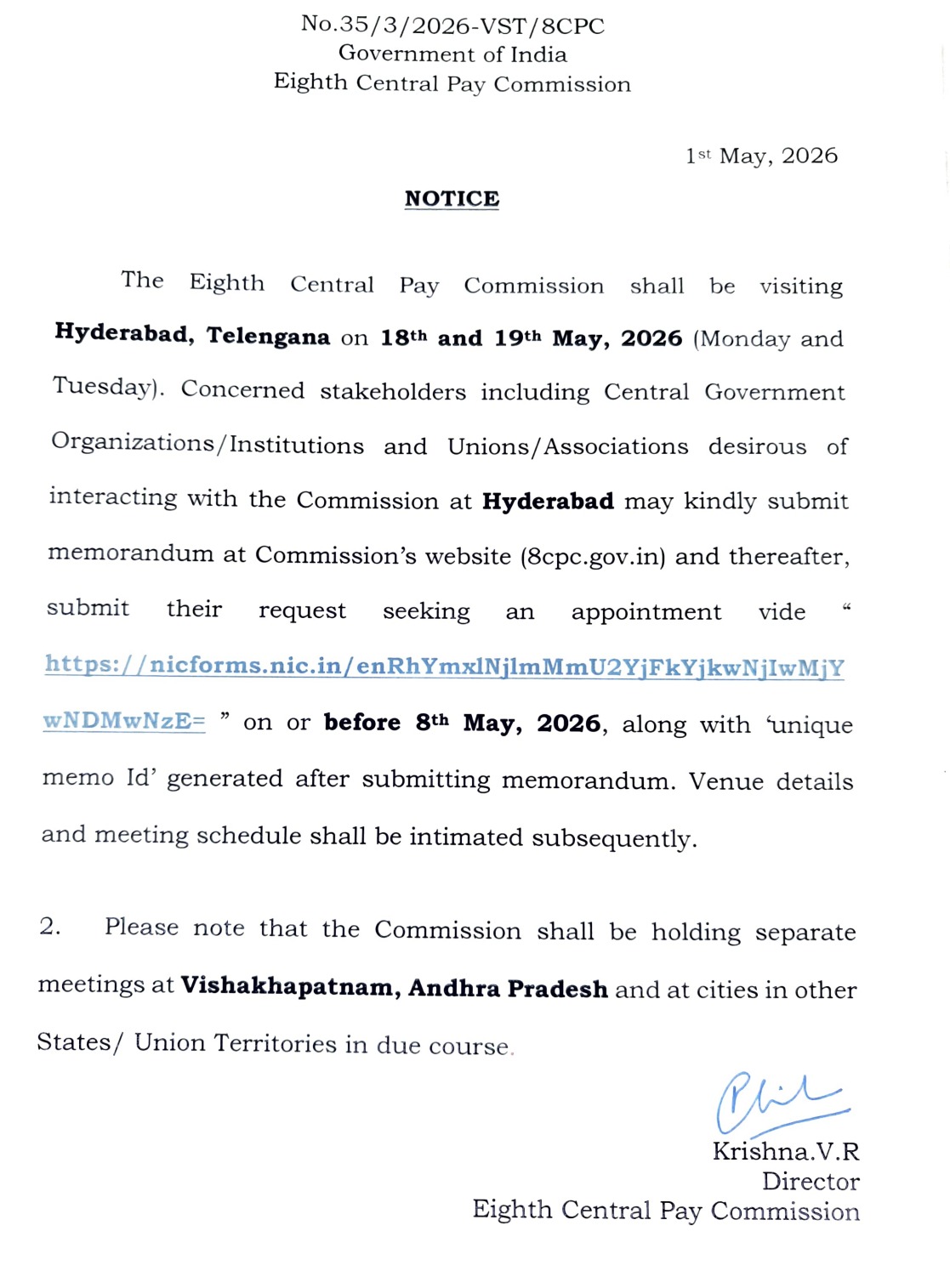
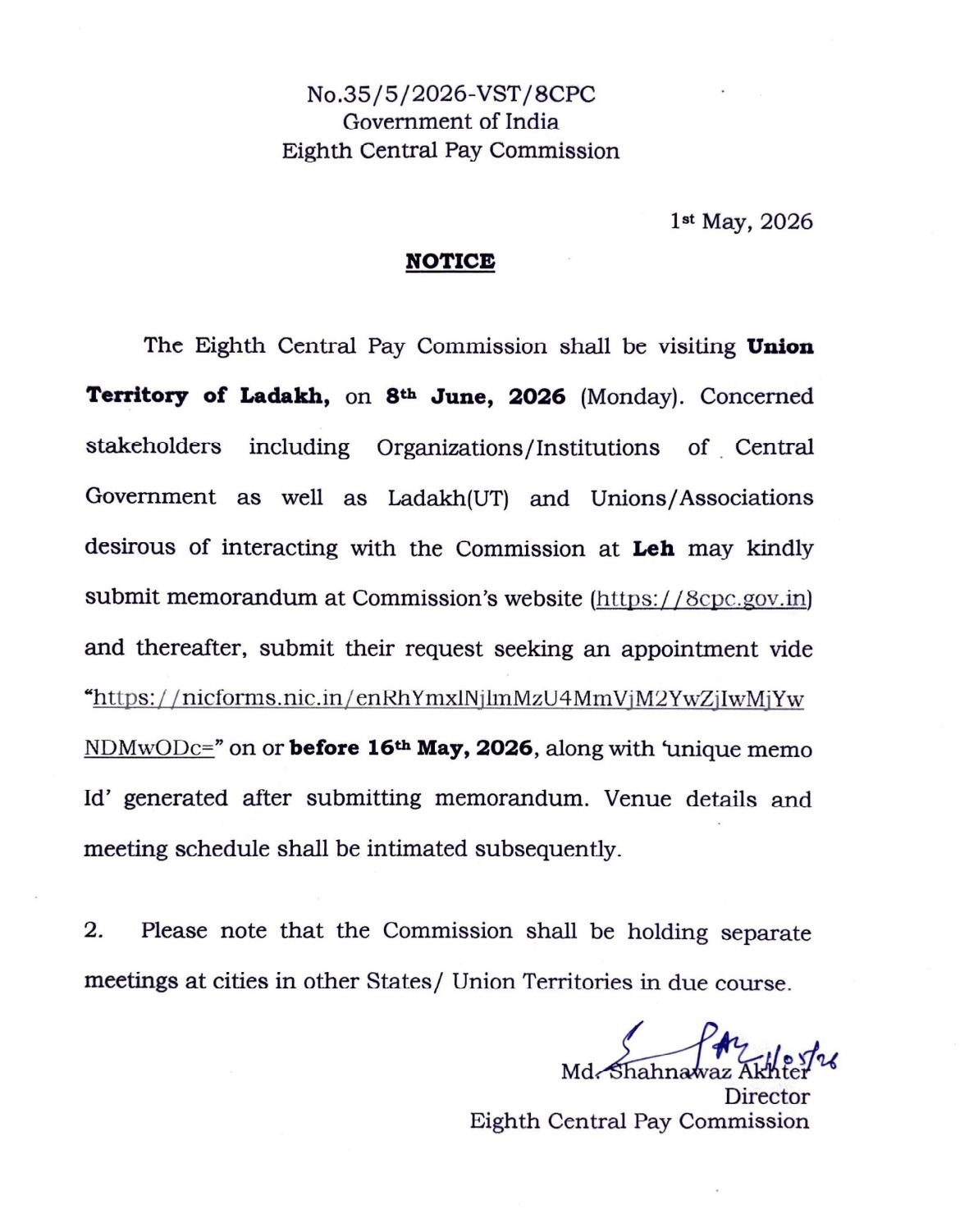
The latest official notices for Hyderabad, Srinagar and Ladakh show exactly that. These visits are important not just because the Commission is travelling, but because they signal that the real consultation window is active. This is the point where stakeholders must stop treating the 8th CPC as a future event and start treating it as a live process.
The most important lesson from this stage is simple: Memo ID is now central to the process.
Many people may assume that if they have a valid issue, they can always send a letter later, carry a file to the venue, email a memorandum, or ask an association to mention it informally. But the official system is much stricter than that. The Commission has made it clear that representations and memoranda must go through the online route. Once that is done, a unique Memo ID is generated. That number is not a formality. It becomes the key reference for appointment-related requests and for ensuring that a submission is properly recorded.
In practical terms, the Memo ID is what turns a complaint into an official submission.
This is why the city visits are important. Hyderabad, Srinagar and Leh are not just travel stops. They are consultation points where region-specific, service-specific and stakeholder-specific concerns can be brought before the Commission in a more direct way. But this opportunity comes with deadlines, and those deadlines are linked to proper submission.
That makes the current stage very different from informal debate.
For employees and pensioners, the message is straightforward. If an issue matters, it should not remain only in WhatsApp groups, discussion circles, forwarded PDFs or emotional conversations. It should be entered into the official process. A Pay Commission ultimately works on structured inputs, and the quality of those inputs can influence how strongly an issue is examined.
This is especially important because the 8th CPC will affect far more than basic salary. Its recommendations may shape pension revision, fitment factor, allowances, service-related corrections, medical support, hardship recognition, retirement security and long-term financial planning. Once those recommendations are finalised, their effect can continue for years. That is why the current consultation stage is not routine paperwork. It is one of the most meaningful opportunities stakeholders will get.
The Hyderabad visit is an early example of how serious the process has become. For those who want to seek interaction there, the first step is not physical presence. It is correct submission. The same principle applies to Srinagar and Leh. In every case, the memorandum must come first. The Memo ID follows. Only after that does the appointment request make practical sense.
This is where many people can make a mistake.
Some may focus too much on getting a meeting slot and too little on what they are actually submitting. But meeting the Commission is not the real objective. The real objective is to ensure that the issue is put on record clearly, strongly and in a way that can be understood and evaluated. A weak memorandum supported by a meeting may achieve little. A well-prepared memorandum with evidence, examples and a workable suggestion can have far greater value.
That is why the quality of the submission matters as much as the Memo ID itself.
A good memorandum should be brief, clear and fact-based. It should identify the issue directly, explain the current difficulty, describe who is affected, and suggest what correction is needed. Long emotional writing without structure often weakens the case. A professional submission works better because it helps the Commission understand both the problem and the proposed solution without confusion.
Different stakeholder groups may naturally focus on different issues.
Serving employees may want to raise concerns linked to pay matrix revision, annual increment, fitment factor, promotion anomalies, HRA, TA, LTC, service conditions or cadre-specific issues. Pensioners may focus on pension revision, family pension, commutation, gratuity, DR-related concerns and income protection after retirement. Defence personnel and ex-servicemen may need to present their issues even more carefully, because defence service involves hardship, field postings, altitude, operational risk, early retirement patterns and pension-linked concerns that do not fit neatly into a standard office-service framework.
That is why regional visits like Srinagar and Leh carry special weight. These are not ordinary administrative centres in the context of service conditions. They are locations tied to strategic importance, difficult geography and unique hardship realities. If those experiences are not reflected properly in formal representations, the final recommendations may not fully capture them.
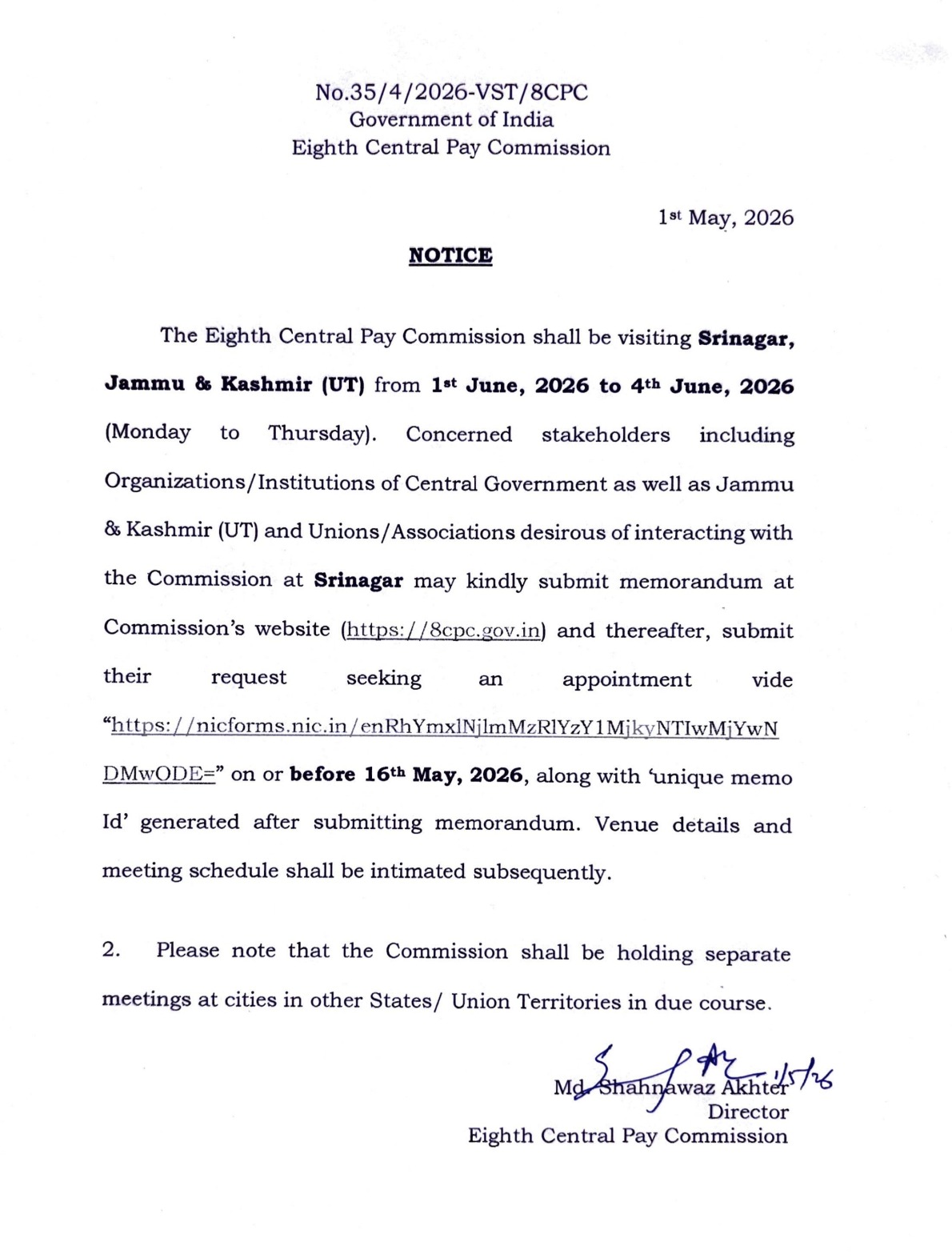
The extension of the overall memorandum deadline gives stakeholders some extra time, but that should not create complacency. The deadline for the general submission window and the deadlines linked to particular city interactions are not the same thing. Anyone hoping to participate in Hyderabad, Srinagar or Leh-related consultations must move earlier, not later.
In simple terms, waiting for the final deadline may mean missing the more immediate opportunity.
This is why the 8th CPC process has now become a test of preparation. Those who act early, write clearly and submit properly are more likely to ensure that their concerns are visible in the official system. Those who delay or rely only on informal channels may find that their strongest points never entered the consultation record in the first place.
For readers, the biggest takeaway is clear: the Commission has moved beyond passive paperwork and into active interaction. That makes this one of the most important phases so far in the 8th CPC journey. Employees, pensioners, defence personnel and associations should now think less about headlines and more about documented representation.
Because at this stage, the most valuable thing is not just having a demand.
It is having that demand officially submitted, properly recorded, and backed by a valid Memo ID.
That is why Memo ID is now the most important step in the process. It is the point where concern becomes representation, and where discussion begins to turn into something the Commission can formally examine. For anyone serious about the 8th Pay Commission, that is the step that cannot be ignored.

Leave a Reply