

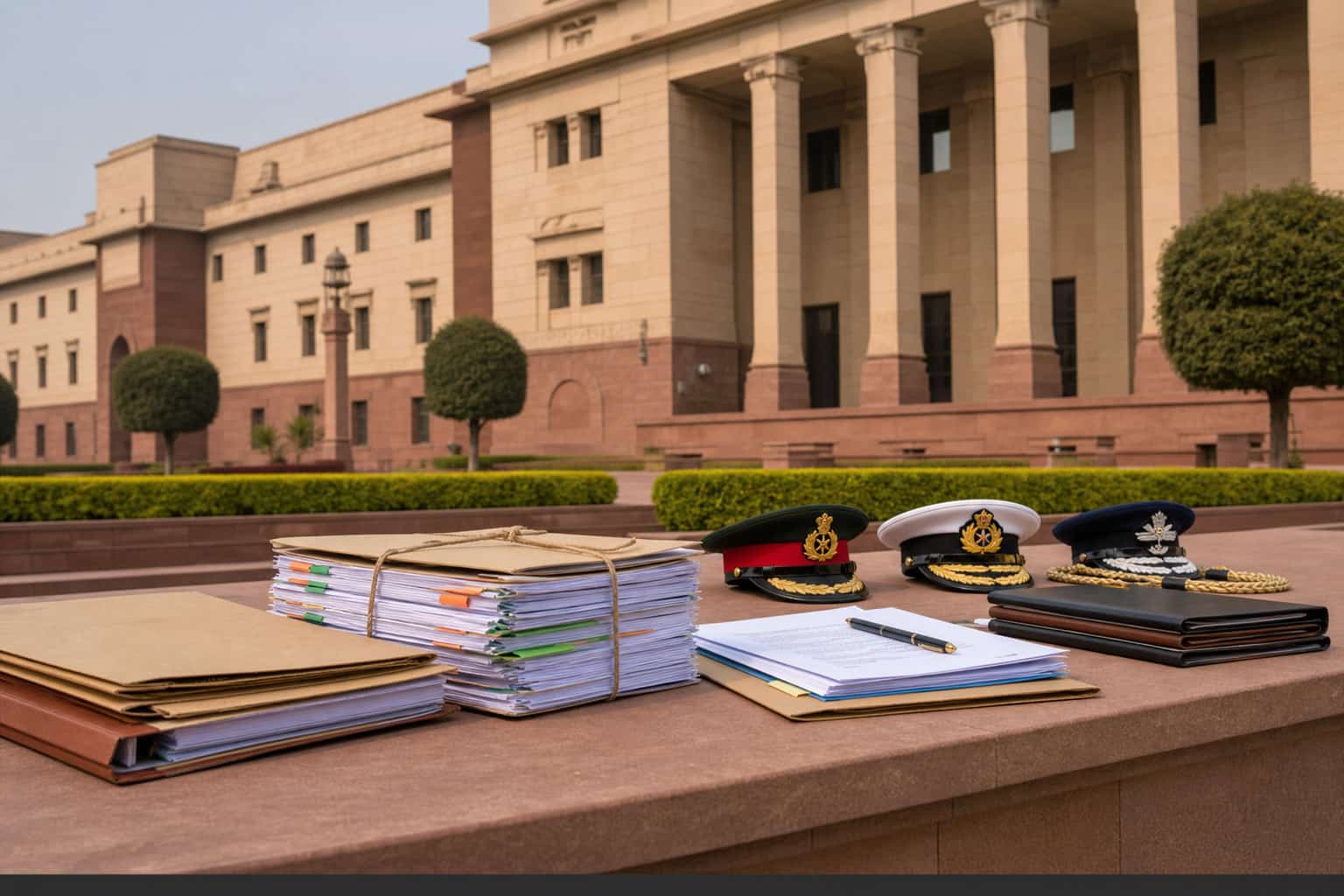
For the defence community, the 8th Pay Commission is not just another government exercise. It is a rare chance to place long-pending pay, pension and allowance issues before a system that can shape financial policy for years to come. That is why the recent discussion around a possible Ministry of Defence Pay Commission Cell has drawn so much attention among serving personnel, veterans, defence civilians and family pensioners.
The reason is simple. Defence service is too complex to be represented through random files, unconnected demands and scattered voices.
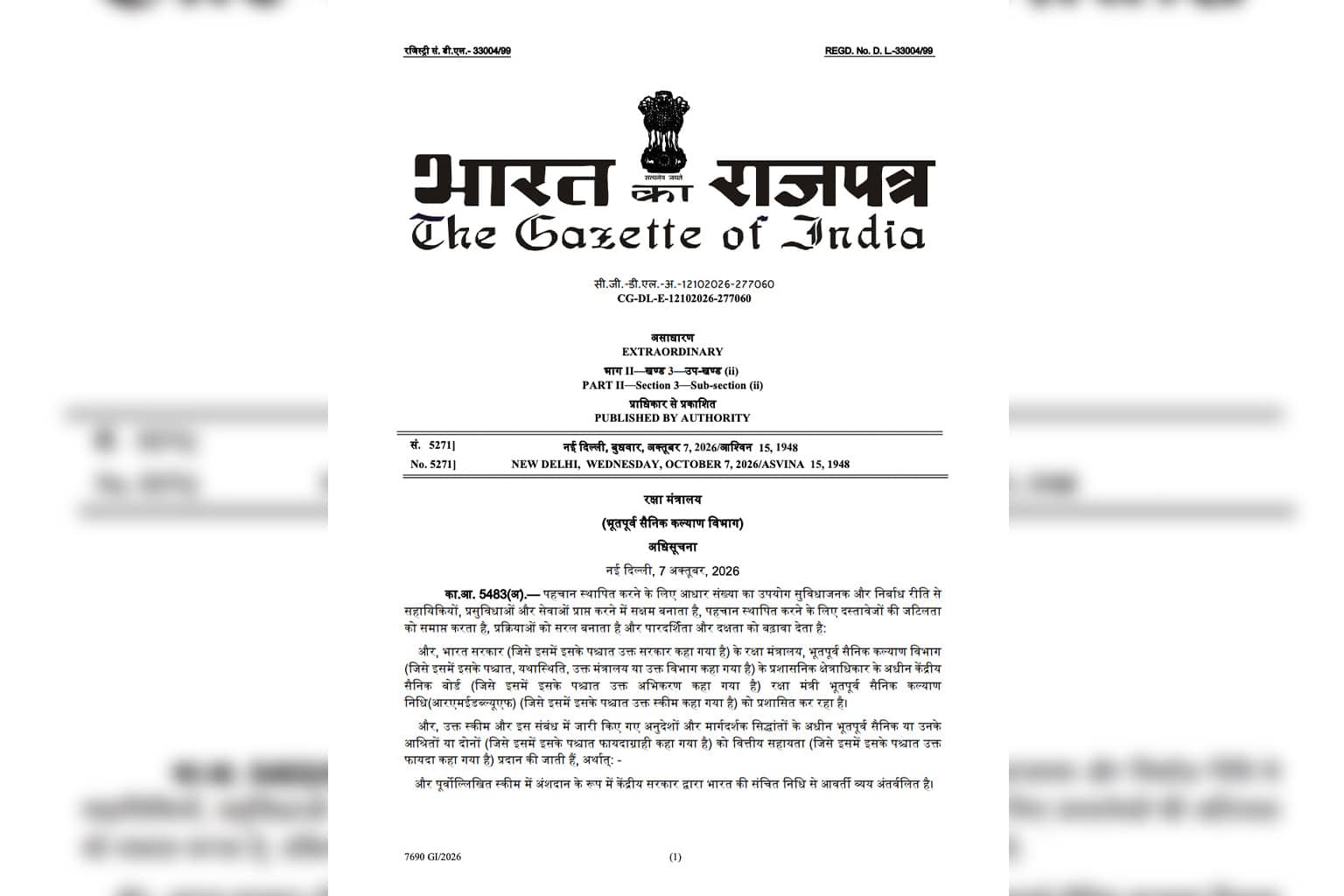
A widely shared document on social media, described as an MoD office memorandum dated 8 April 2026, has triggered this discussion. As with any document circulating online, it should be treated carefully unless officially confirmed through the Ministry of Defence. But even if one sets aside the question of verification for a moment, the larger issue it has raised is both practical and important: who will collect, organise and present defence-specific concerns before the 8th Central Pay Commission in a structured way?
That question matters a lot more than it may appear.
The 8th Central Pay Commission has already been formally constituted. This means the process has moved beyond rumours and expectations. It is now a real institutional exercise in which memorandums, proposals, evidence and stakeholder submissions can shape how future recommendations are framed. For the defence sector, this stage is critical because the matters involved are not ordinary.
A normal civilian pay issue may revolve around grade, level, promotion, increment or office structure. Defence issues are far wider. They include Military Service Pay, early retirement, field and hardship conditions, high-altitude postings, risk exposure, X Group Pay, disability pension, family pension, commutation, OROP-linked concerns, ECHS difficulties, rank-based anomalies and service-specific pension questions. These are not subjects that can be explained properly through generic language alone.
That is why many within the defence community believe a coordinated mechanism is necessary.
If there is no serious system for collecting defence-related demands, an important problem arises. Different groups may submit the same issue in different ways. Some may focus only on emotion. Others may use technical language without explaining the human impact. Some concerns may be repeated too much, while other equally important issues may barely get noticed. In a process as formal as a Pay Commission, weak presentation can reduce the weight of even a genuine problem.
This is where the idea of an MoD-level Pay Commission Cell becomes meaningful.
Such a cell would not decide the final recommendations. That responsibility belongs to the Commission and later to the Government. But a dedicated coordination mechanism could still play a valuable role. It could gather inputs from the Army, Navy, Air Force, veterans’ organisations, defence civilians and pensioners. It could identify overlapping concerns, separate service-specific issues from common demands, and help ensure that important defence subjects are not lost inside the much larger universe of Central Government employee submissions.
In simple terms, it could turn a crowd of concerns into a readable national defence brief.
That is urgently needed because defence service cannot be judged only by a standard government service model. A jawan does not serve like an office worker. A sailor on a ship does not live under the same conditions as a clerical employee in a city posting. An air warrior, a soldier in a counter-insurgency zone, a JCO posted in difficult terrain, a disabled veteran and a family pensioner each face different realities. If all of these are pushed into a flat administrative format, the actual hardship and service conditions may not be properly reflected.
This is why many veterans keep repeating one important point: defence representation has to be informed by defence experience.
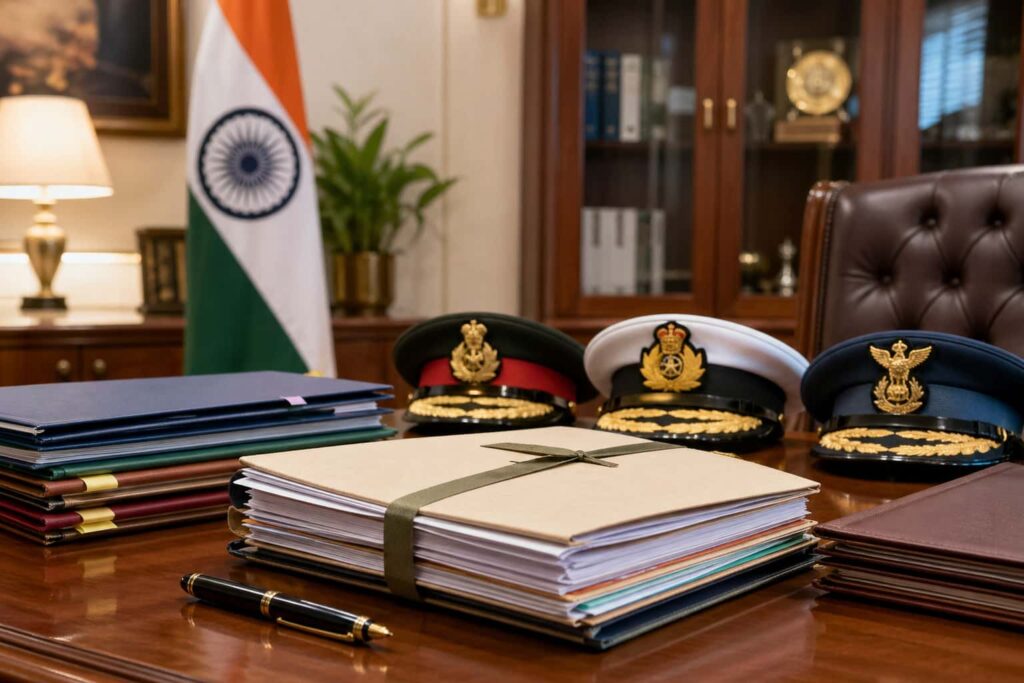
It is not enough to compile files mechanically. Those preparing proposals must understand how rank structure works, why early retirement matters, how pension gaps affect families, how technical and non-technical classifications influence pay, and why some allowances are not perks but basic recognition of duty conditions. A single poorly worded note can reduce the strength of a serious demand. On the other hand, a well-framed submission can help the Commission understand why a particular issue needs priority.
The official 8th CPC memorandum process makes this even more relevant. The Commission has clearly opened the door for employees, pensioners, defence personnel, associations, ministries and departments to send representations through the official online route. This means defence stakeholders do not have to depend only on internal departmental movement. They have an official window to place issues directly into the consultation system.
That is why the defence community should not wait passively.
Whether the MoD Pay Commission Cell is eventually confirmed or not, every serious stakeholder should prepare a proper submission. Serving personnel, veterans, widows, defence civilian associations and pensioner groups all need to think carefully about what they want corrected and how they want it presented. This is not the stage for vague slogans. It is the stage for clean issue-wise documentation.
For example, if the issue is Military Service Pay, the submission should explain what the present structure is, why it falls short, which categories are affected and how a correction would improve fairness. If the issue is disability pension, the memorandum should explain how the present rule or interpretation creates hardship. If the concern is commutation, then the recovery period and long-term impact on pensioners should be clearly shown. If the issue is OROP anomaly, then the gap should be demonstrated with rank-wise or time-wise examples.
The same discipline is needed for defence civilians.
Their issues are equally important and should not be overshadowed. Pay level differences, cadre stagnation, promotion bottlenecks, allowance concerns and pension matters need proper representation too. A well-functioning coordination system should not create competition between uniformed and civilian defence stakeholders. It should ensure that both are heard in the right way and on the right terms.
This is why one strong voice does not mean one narrow voice. It means one organised voice.
The 8th Pay Commission will not respond to volume alone. It will respond to structured reasoning, evidence, consistency and policy clarity. That is why scattered forwarding, emotional videos and incomplete talking points are not enough. Every issue has to be shaped in a form that the Commission can examine seriously. If defence concerns go in a fragmented manner, the final recommendations may miss the very people who needed the strongest representation.
The timing makes this even more important. A Pay Commission cycle does not come every year. It comes after a long gap, and once its recommendations are formed, changing missing or weakly presented issues becomes much harder. In that sense, the current stage is not only an opportunity. It is a responsibility.
For the defence community, the message is clear.
Do not rely only on social media documents. Verify what you can. Do not assume that someone else will raise your issue properly. Put it in writing. Make it specific. Support it with examples. Use the official memorandum route. Keep proof of submission. And where possible, ensure that associations and representative groups are speaking with clarity instead of confusion.
In the end, this discussion is bigger than one circulated memo. It is about whether the men and women connected to India’s defence system will be represented before the 8th Pay Commission with seriousness, discipline and depth. If their concerns reach the Commission in a strong, organised and informed manner, this process could become a real defence welfare opportunity. If not, years of sacrifice, hardship and unresolved anomalies may once again be reduced to footnotes.
That is why the idea of one strong voice matters now. Not for symbolism, but for results.


Leave a Reply