

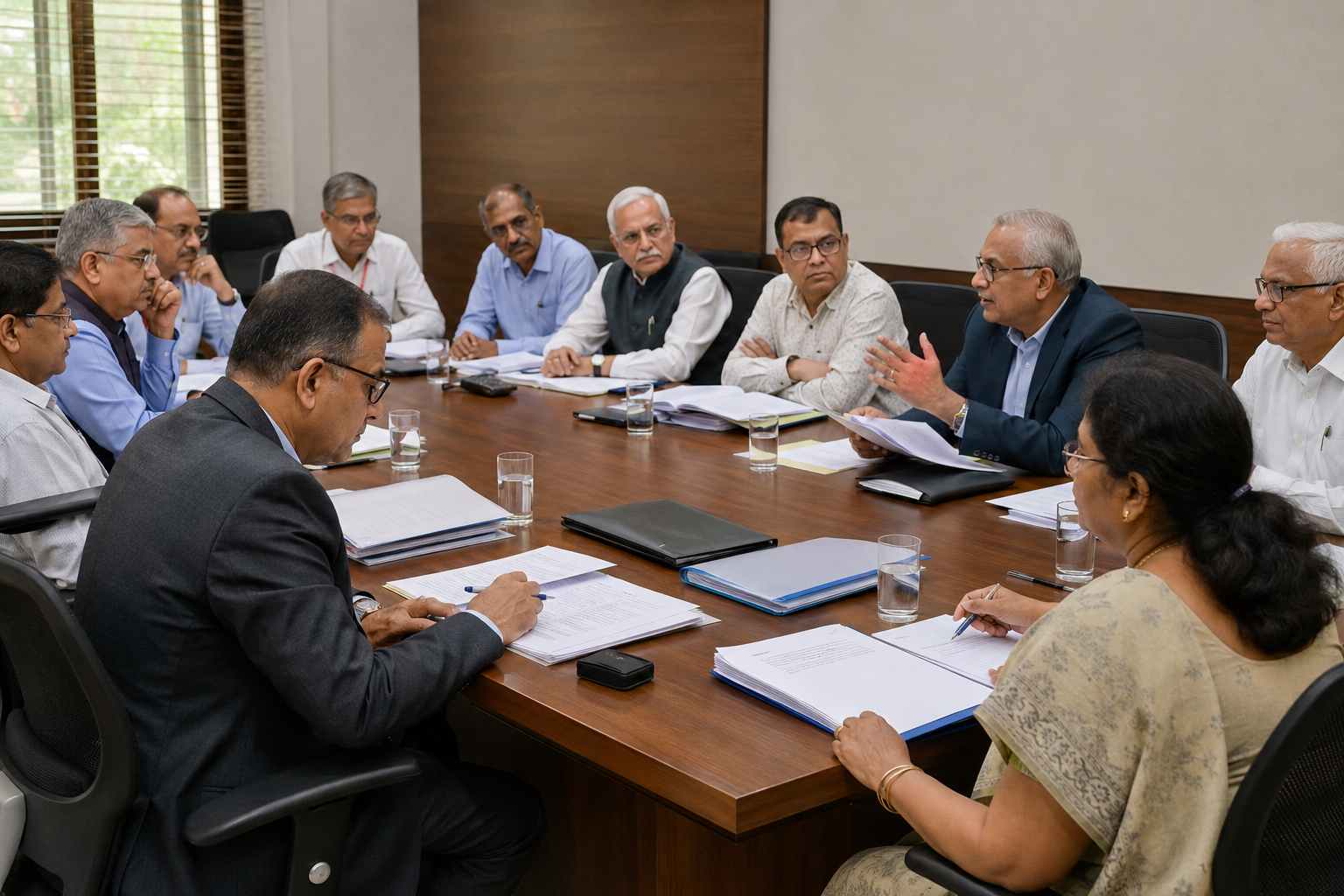
For Central Government employees and pensioners, the 8th Pay Commission is no longer just a future promise. It is now a live process, and every meeting, memorandum and stakeholder interaction is being watched closely. That is why the latest development from Pune has attracted so much attention. According to a report by The Economic Times, members of the Maharashtra Old Pension Organization met the 8th Pay Commission in Pune on 5 May 2026 and placed two headline demands before it: raise the minimum basic pay to ₹65,000 and apply a fitment factor of 3.8.
This is an important update, but it needs to be understood correctly.
These are demands raised before the Commission, not approved government decisions. No final 8th CPC salary formula has been announced yet. The significance of the Pune meeting is not that employees have already won a new pay structure. The significance is that the consultation stage is now producing more specific, sharper and more aggressive proposals from organised groups. That is exactly how a Pay Commission debate begins to move from broad expectation to structured pressure.
The official 8th CPC website already showed that the Commission was scheduled to visit Pune, Maharashtra on 4 and 5 May 2026, which confirms that the Pune interaction was part of the official consultation process. The same official platform has also been inviting memoranda and representations from employees, pensioners, associations, ministries and other stakeholders, which means these meetings are not symbolic. They are part of the formal record-building stage before recommendations are framed.
So why is the ₹65,000 demand getting so much attention?
The answer is simple. Minimum basic pay is the number that shapes the broader pay structure. When employee or pensioner groups place a figure like ₹65,000 before the Commission, they are not only asking for a higher salary floor. They are also trying to influence the wider logic of revision, including the likely fitment formula, pension outcomes, allowances and future income protection against inflation. A higher minimum pay demand sends a message that the present salary base is being seen as too low for current cost-of-living realities.
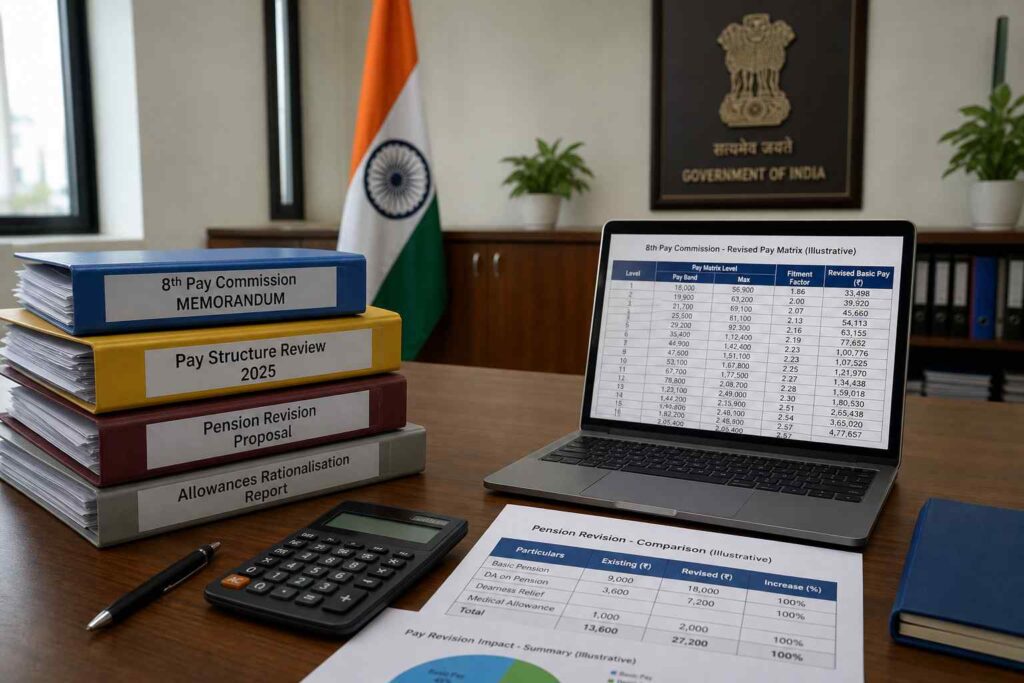
The fitment factor demand of 3.8 is equally important. Fitment factor is the multiplier used to convert current basic pay into revised basic pay under a new pay commission. That is why even a small difference in this number can dramatically change salary and pension calculations. In public debate, many figures get circulated, but when an organised body formally places a 3.8 demand before the Commission, it adds weight to the argument that stakeholders want a much stronger revision than what cautious government watchers may expect.
At the same time, readers should stay realistic.
A demand is the starting point of a negotiation, not the final outcome. Pay Commissions receive many proposals from different groups, and those proposals often vary widely. Some organisations pitch a higher minimum pay, some focus on fitment factor, some press for pension correction, and others raise service-specific issues such as allowances, promotions or retirement benefits. The Commission studies these submissions, compares them with financial feasibility and administrative structure, and only then moves toward its recommendations. That is why the Pune meeting should be seen as a strong signal, not as a final salary announcement.
Still, the Pune development matters because it shows how quickly the 8th CPC conversation is becoming more concrete. Earlier, much of the public discussion revolved around whether the Commission would move fast enough, when stakeholders would be heard, or what kind of memoranda would be submitted. Now the tone is changing. Groups are beginning to place actual numbers and clear formulas before the Commission. That makes the debate more serious, more data-driven and more politically important.
For pensioners, this story is especially relevant.
A higher minimum pay and stronger fitment factor do not affect only serving employees. They also shape pension expectations, because pension revision is closely linked with the broader pay structure. If the starting pay level rises sharply, pensioners naturally begin to ask how their own financial protection, revision method and long-term income security will be handled. That is why pension bodies are not passive observers in the 8th CPC process. They are becoming active participants in trying to shape the argument before the Commission reaches its report stage.
There is also a wider emotional reason behind such demands. Employees and pensioners have spent months hearing debates around inflation, DA, fitment factor, allowances, and future salary projections. In that environment, a meeting like the one in Pune gives shape to those concerns. It tells people that the process is moving, that organised groups are putting demands on record, and that the Commission is hearing more than just generic slogans. For many readers, that alone is an important development.
But the bigger test lies ahead.
The 8th CPC is still in consultation mode. Its official site continues to show ongoing meetings, stakeholder interactions and memorandum activity. It has also extended the deadline for memorandum submissions up to 31 May 2026, which shows that the consultation window is still open and the Commission is still gathering inputs. That means more bodies, more unions and more pensioner groups may still come forward with their own figures and formulas in the coming days.
That is why the Pune story should be read as part of a larger pattern. It is not just about one state-level body or one meeting. It reflects the broader build-up of pressure around the 8th Pay Commission. As more organisations submit demands, the Commission will have to weigh competing expectations and decide what is desirable, defendable and financially practical.
For now, the message from Pune is clear. The 8th Pay Commission process is no longer running only through official notices and appointment links. It is now producing concrete pay and pension demands with real numbers attached to them. The Maharashtra Old Pension Organization’s call for ₹65,000 minimum basic pay and a 3.8 fitment factor may or may not become part of the final recommendation, but it has already succeeded in doing one thing: it has sharpened the national conversation on what employees and pensioners now believe the 8th CPC should deliver.
And that is exactly why this Pune meeting matters. It is not the final chapter of the 8th Pay Commission story, but it may prove to be one of the moments that made the debate more serious than before.



Leave a Reply