

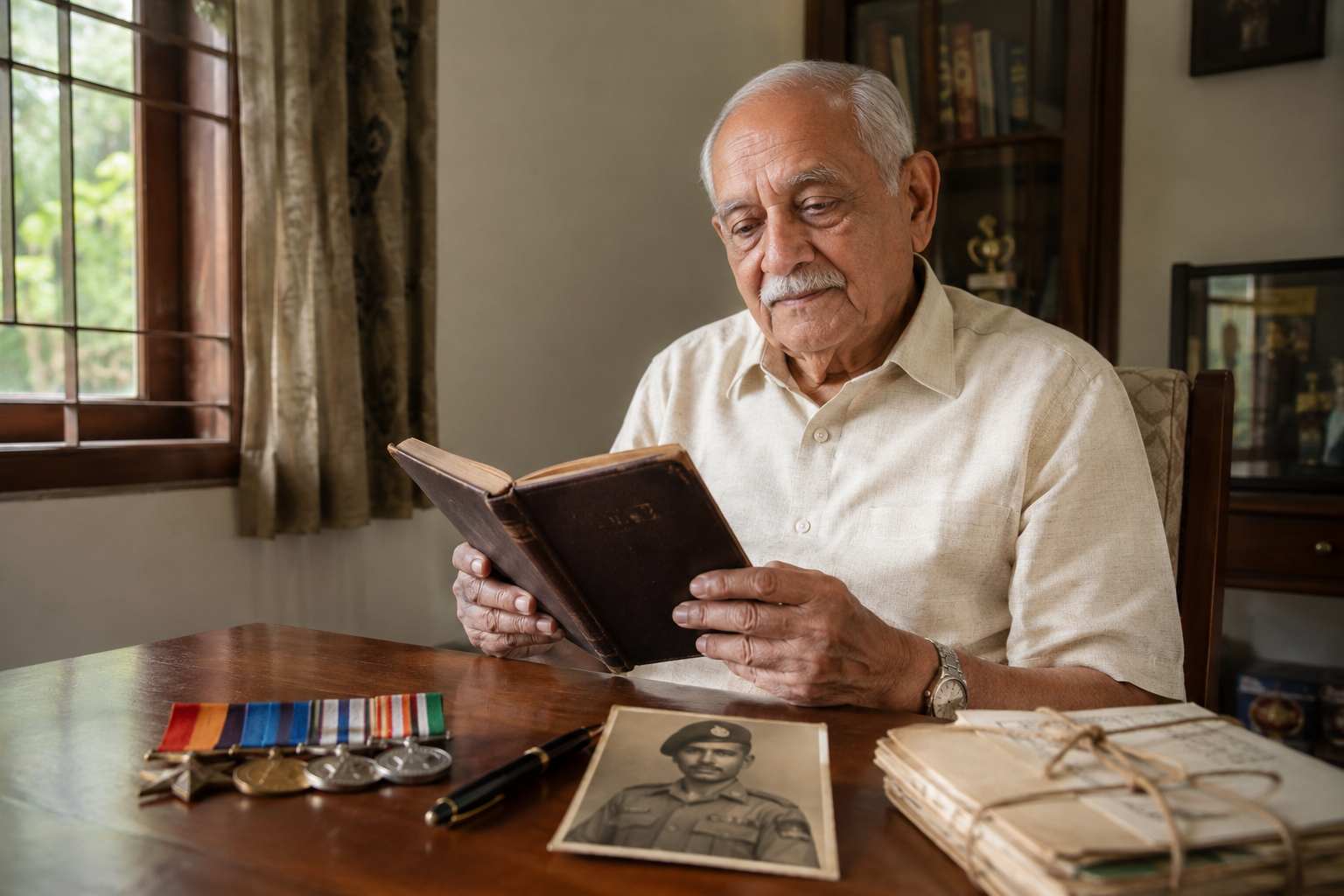
When people think about military history, they usually think of wars, operations, medals, commanders and major national moments. Those things matter, and they deserve their place. But the full story of an army is never written only through official reports. It is also written in the private lives of soldiers, in the discipline they carry, the hardships they endure, the letters they send home, and the memories they leave behind.
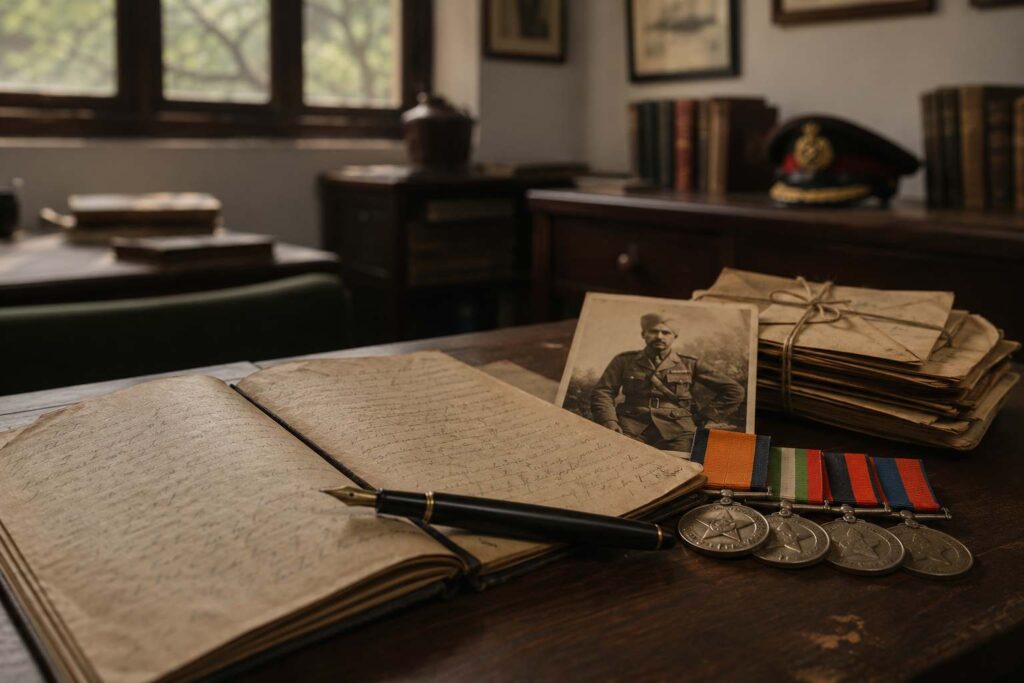
That is why the launch of Ek Sainik Ki Diary carries meaning far beyond a ceremonial book release.
At one level, it is the story of a soldier’s personal record being brought before a wider audience. At a deeper level, it is a reminder that armies do not draw their moral strength only from equipment, training and command structures. They also draw strength from memory, tradition and the human experience of service. A diary written by a soldier can preserve that experience in a way no official file ever truly can.
According to the details shared, the book is based on the diary entries of Honorary Captain Mohar Singh Bainsla and covers the period from 1943 to 1971. It was compiled posthumously by his niece, retired IRS officer Sunita Bainsla, and launched by Chief of Defence Staff General Anil Chauhan during the Joint Commanders’ Conference at Sapta Shakti Command in Jaipur. That timeline alone gives the work historical depth. It spans a period that included the final years before Independence, the reshaping of India after 1947, and an era of immense national and military change.
But what makes this story truly special is not only the historical span. It is the personal lens.
History looks very different when seen through the eyes of one soldier. A national timeline tells us what happened. A diary tells us what it felt like to live through it. It can show the emotional side of service, the routine that never makes headlines, and the silent discipline that forms the backbone of military life. It can capture the soldier not only as a uniformed figure, but as a human being carrying duty, pressure, hope, fatigue, pride and responsibility.
That is where a book like this becomes valuable for the Army and for the country.
Official records are essential. They preserve orders, appointments, movements, citations and outcomes. But they are not designed to hold the emotional truth of service. A soldier’s diary can record fear without weakness, loneliness without complaint, and courage without performance. It can reveal the inner world of a man in uniform, the part of military life that is often understood by fellow soldiers and families, but rarely documented in a public way.
That is why General Anil Chauhan’s reported observation that such a personal account can strengthen the roots of the Indian Army is so important.
The roots of any army are not only strategic. They are moral and cultural as well. They are found in the values carried forward from one generation of soldiers to the next. When personal military memories are preserved, the institution strengthens its sense of identity. Young soldiers understand that they belong to a living tradition. Cadets and officers see that the Army is not only an organisation of ranks and rules, but a brotherhood built on sacrifice and continuity. Families understand that service is not an abstract national slogan, but a deeply human commitment.
This is especially meaningful in today’s age.
Modern defence discussions are often dominated by technology, procurement, drones, missiles, artificial intelligence and future warfare. These are necessary conversations. But the danger is that the soldier can sometimes disappear behind the machine. When that happens, the public begins to understand the military only through capability and spectacle. A diary restores balance. It brings the focus back to the person who lives the military life day after day, often far from attention, carrying burdens that cannot be measured by hardware alone.
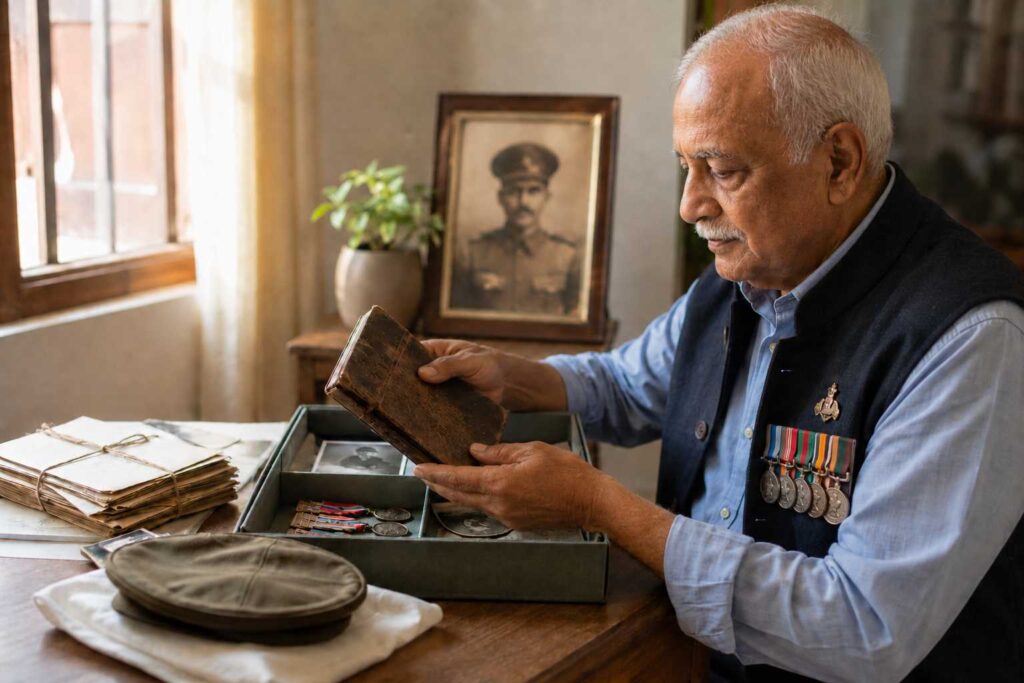
That is one reason books like Ek Sainik Ki Diary matter for younger generations.
Many young Indians admire the Army, but their understanding is often shaped by visual symbols such as the uniform, the salute, the battlefield image, the parade and the prestige. Those symbols have power, but they do not tell the whole story. A personal diary can show that service also means routine, endurance, emotional control, separation from family, responsibility under pressure, and commitment without constant recognition. It teaches that soldiering is not only about moments of glory. It is also about years of disciplined living.
That lesson is worth preserving.
It is also important for veterans and military families. Across India, countless soldiers have served honourably, lived with discipline, returned quietly and faded from public memory. Many of their stories survive only in family trunks, fading photographs, handwritten notebooks or spoken recollections. If these memories are not preserved, a part of the nation’s military heritage disappears with them. Each lost diary, each forgotten letter, each undocumented service memory is not only a private loss. It is also a public loss.
That is why this book carries a broader message beyond one family.
It tells other military families that service memories matter. They do not need to belong only to famous war heroes or top commanders to deserve preservation. The story of an ordinary soldier can be extraordinary in its honesty. It can reveal how military life shaped character, family, region and community. In many parts of India, especially rural regions, the Army has long been more than a profession. It has been a path to dignity, discipline, exposure and national belonging. The experience of one soldier often influences an entire family line and sometimes an entire village.
That broader social role of military service should not be overlooked.
A soldier who leaves his village, serves the country and returns with a wider view of life carries more than his own experience home. He brings back discipline, confidence, perspective and a living connection to national purpose. Over time, that influence spreads through younger relatives, local youth and community culture. That is why preserving one soldier’s diary is not only about honouring the past. It is also about understanding how military service shapes society itself.
There is another reason this story matters today.
We are living in a time of speed. Public attention moves quickly from one headline to the next. Many important stories are reduced to short clips, dramatic titles or emotional fragments. In such an environment, a diary has special power because it slows us down. It asks the reader to listen, reflect and enter the world of the writer. It does not shout. It stays. That quality is rare and valuable, especially when dealing with institutions like the Army, where depth of character matters more than noise.
In the end, Ek Sainik Ki Diary represents something larger than one book launch.
It represents the idea that military heritage is not complete until the soldier’s inner voice is heard. Weapons can defend borders. Strategy can guide wars. Leadership can shape institutions. But memory gives meaning to service. Without memory, military history becomes dry. Without the human voice, honour becomes distant. A diary fills that gap.
That is why preserving a soldier’s personal story matters as much as preserving military history.
It gives the nation not only facts, but feeling. Not only timelines, but texture. Not only service records, but service truth. And when that truth is remembered with respect, the Army does not simply preserve its past. It carries its values more strongly into the future.


Leave a Reply