


When a government employee dies in service or is medically invalidated, the family does not enter a normal administrative process. It enters a crisis. The loss is emotional, but it is also deeply practical. School fees do not stop. Rent does not stop. Medicines do not stop. Daily household expenses do not stop. In many cases, the family is suddenly pushed into uncertainty at the very moment it is least prepared to deal with it.
That is the real purpose of compassionate appointment.
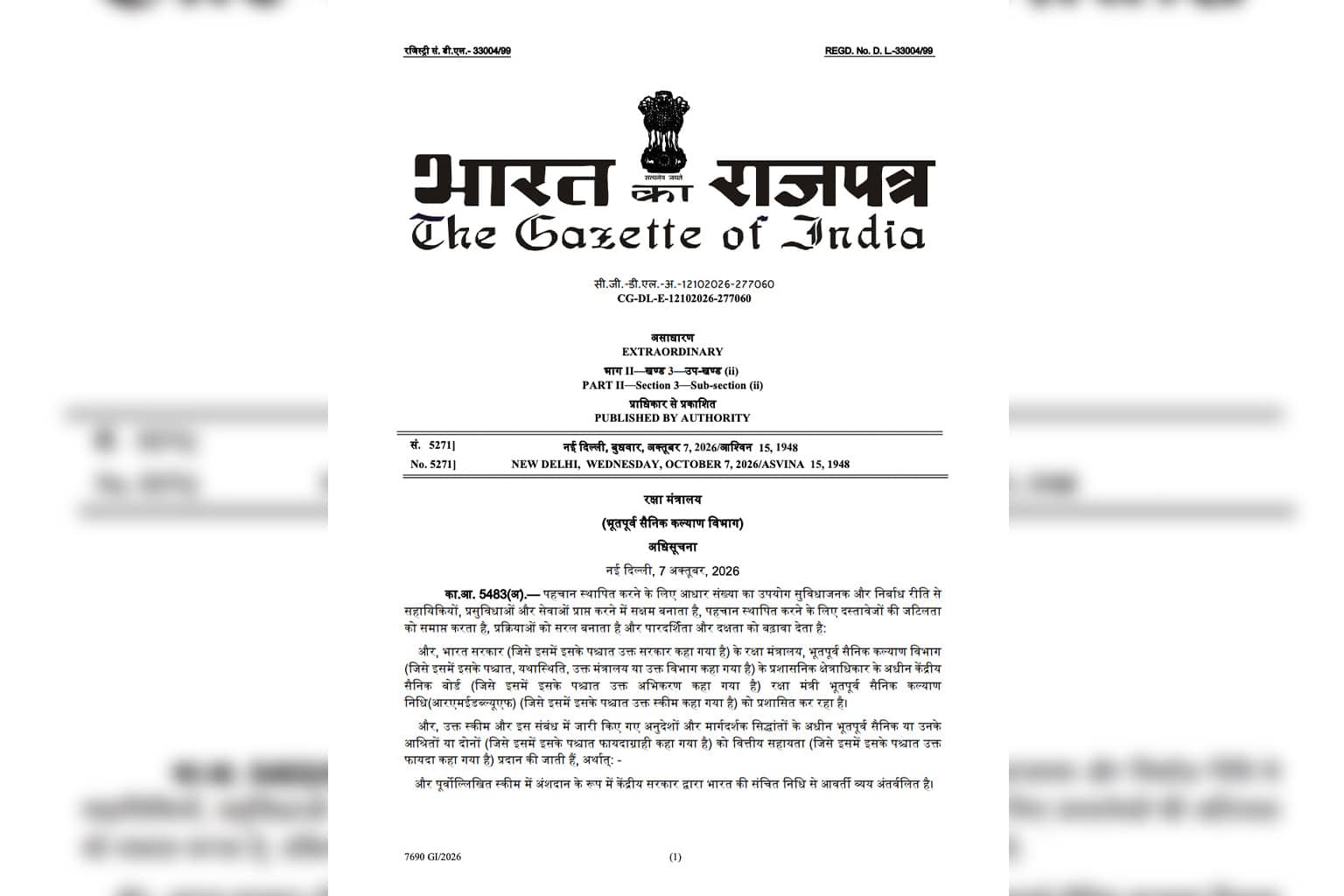
It is not meant to be a regular job opportunity passed from one family member to another. It is a limited welfare measure designed to help a dependent family survive sudden financial distress after the loss or medical invalidation of the earning member. That distinction is very important, because it explains why the process has always involved scrutiny and why the Ministry of Defence’s revised 100-point scale matters so much.
The biggest change in this story is not only the number of points. It is the mindset behind them.
The revised scale moves the process further away from a sympathy-based impression and closer to a document-based assessment of hardship. In simple terms, the system now tries to measure need more clearly. Instead of relying too much on general appeals or emotional narratives, it gives structured weight to things like pension amount, lump sum benefits, family income, assets, number of dependents, minor children, unmarried daughters, service left at the time of death or invalidation, and special hardship conditions.
That can be a good thing.
For years, one of the biggest frustrations in compassionate appointment cases has been confusion. Families often struggle to understand why one case moves ahead and another remains pending. Since every case involves tragedy, people naturally feel their own hardship is genuine and urgent. But the government cannot treat every case as equally distressed. It has to identify which family is facing the most severe financial problem within limited vacancy availability. A structured merit scale attempts to do exactly that.
This is why the revised MoD system deserves attention.
It suggests that the process is becoming more transparent, but it also becomes more demanding. Transparency and paperwork usually go together. Once hardship is converted into a point-based system, every missing document can weaken a case. Every unclear figure can create delay. Every unverified claim can reduce credibility. That is why this update is important not only for departments, but especially for widows, dependents, veterans’ families and defence-linked households who may one day have to deal with such a file under painful circumstances.
One of the most important parts of the new framework is the weight given to financial support already available to the family.
If the family is receiving a lower pension, it may score higher because that indicates greater distress. If the family has received a smaller amount through gratuity, insurance, leave encashment or similar benefits, that too may strengthen its priority compared to a family that received more financial support. In other words, the system tries to assess not just loss, but the remaining financial capacity of the household after that loss.
That is a major shift in public understanding.

Many people still think compassionate appointment works mainly as a humanitarian response to death in service. It certainly has that humane purpose, but the decision is not based on grief alone. It is based on relative financial difficulty. That means two families who both suffered a tragic loss may still be treated differently if one has more pension support, more assets, another earning member, or a better overall financial position than the other. The revised scale makes this distinction sharper and more visible.
Another important factor is family structure.
The number of dependents matters because financial strain changes when more people depend on the same reduced income. Minor children matter because they cannot contribute economically and require long-term support. Unmarried daughters may also affect the hardship profile of the family. A widow applying herself may deserve extra consideration because she is not just a dependent, but the person now carrying the whole burden of the household. Special conditions like disability within the family or loss of both parents can also make the distress much more severe than a simple income table might show.
This is where the revised system appears more humane than it may look at first glance.
A point system can sound cold on paper, but it can actually bring fairness if it properly recognises real hardship. Not all suffering is visible through salary or pension numbers alone. A family may have modest benefits on record but still face extraordinary difficulties because of disability, lack of support, or social vulnerability. Grace points and special weightage can help such cases receive more realistic consideration.
At the same time, the revised system also makes one hard truth unavoidable.
Compassionate appointment is not automatic. It is not a guaranteed right that follows every death or medical invalidation. Courts and administrative guidelines have repeatedly made it clear that the purpose is to help a family overcome sudden financial crisis, not to create a parallel inheritance-based recruitment channel. That means even a genuine applicant still has to prove distress, satisfy conditions, compete within limited vacancies, and submit a complete and credible file.
This is exactly why documentation now becomes the centre of the story.
Families cannot afford to treat this like an informal request. A weak file can badly damage a strong case. Pension sanction papers, terminal benefit details, income certificates, property income records, dependency certificates, disability documents, death certificate or medical invalidation papers, details of minor children, records relating to unmarried daughters, and any supporting evidence of hardship should all be organised carefully. Verbal explanations are not enough in a merit-based system. The file must speak for the family.
That is where many deserving applicants may lose ground.
Not because they are less distressed, but because they are less prepared. A widow in grief may not know which document matters most. A dependent son or daughter may not understand how pension figures are interpreted. A family may hide or misstate certain asset details out of confusion, fear or bad advice, only to create complications later. A delay in collecting records can also weaken the case, especially where time-based merit or continuing hardship has to be shown.
The issue of delayed cases is particularly important.
Some families apply late because they are overwhelmed, unaware of the rules, or unable to navigate the process immediately after tragedy. The revised approach does not necessarily close the door on older cases, but it does make timing relevant. If the death or invalidation happened long ago, the authorities may naturally ask whether the family is still in the same level of sudden distress that the scheme is meant to address. This makes it even more important for delayed applicants to show continuing hardship with clear proof rather than general statements.
Another practical area is tie-breaking.
Where two or more candidates receive equal marks and vacancies are limited, the system needs a fair way to decide which file moves first. This may not attract headlines, but it matters a lot for real families. A clear tie-breaking method reduces suspicion and gives the process more credibility. It tells applicants that if they lose priority, there is at least a defined reason behind it.
For defence-linked families, the larger lesson is simple.
The revised 100-point scale may reduce arbitrariness, but it also places more responsibility on the applicant. The case must be honest, complete and carefully prepared. That means no casual paperwork, no missing enclosures, no confusion about income, and no dependence on hearsay. Departments also have a duty here. Families in distress should be guided properly, not left to wander from office to office while trying to understand what the system wants from them.
In the end, this reform should be seen for what it is.
It is an attempt to make compassionate appointment more evidence-based and more transparent in a field where emotions are naturally intense and vacancies are limited. That is a positive direction if implemented fairly. But for affected families, the new lesson is very clear: the process will not turn on sympathy alone. It will turn on what the record shows.
That is why the real difference between success and delay may now lie in preparation.
The families who understand the score, collect the documents, present the hardship honestly and keep their file clean will stand in a much stronger position. In a system where every point counts, every paper counts too. And for a family already living through loss, that preparation can make all the difference.




Leave a Reply