

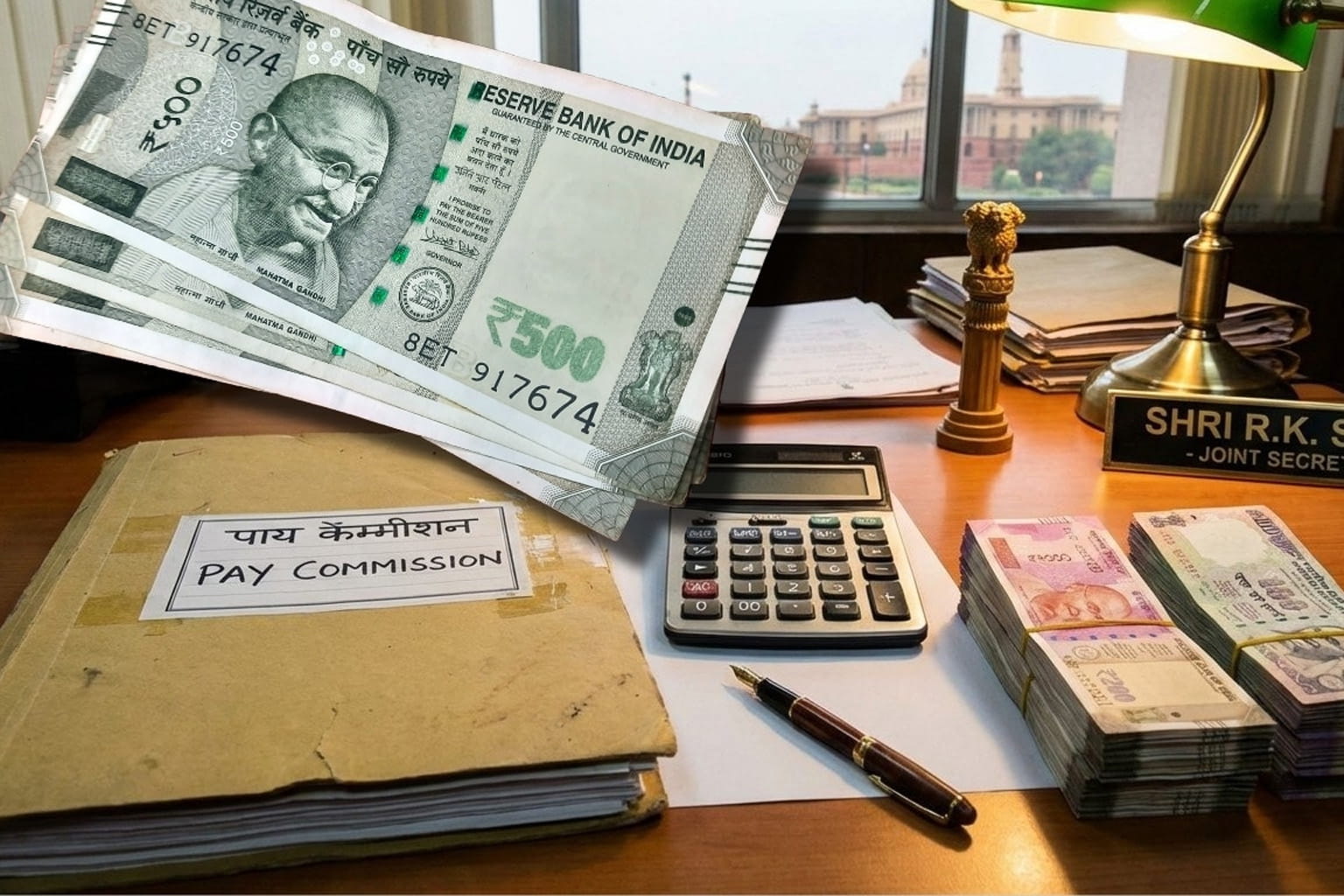
For lakhs of central government employees and pensioners, the wait around the January 2026 Dearness Allowance update had started turning into a serious talking point. There was uncertainty, there was delay, and there was one common question everywhere: when will the government finally announce the next DA increase? Now that decision has come. The government has approved a 2% hike in Dearness Allowance, taking the rate from 58% to 60% of basic pay.
At one level, this is a routine revision. DA and DR are adjusted periodically to account for inflation. But at another level, this update matters far more than a routine percentage change. It affects monthly salary, pension calculations, arrears expectations, household budgets, and even the broader mood among employees and pensioners who have been closely watching every development linked to pay and inflation.
The first reaction for many people may be mixed. Some will see relief because the pending revision has finally been cleared. Others may feel underwhelmed because a 2% increase is lower than what many had hoped for. Both reactions are understandable. The real value of this announcement lies not just in the percentage itself, but in what it means on the ground for take-home income and financial planning.
Why this 2% DA hike matters more than it looks?
A 2% increase can sound small when seen only as a headline figure. But DA is calculated on basic pay, which means even a small percentage move directly changes monthly earnings. For pensioners, the same principle applies through Dearness Relief. So while the number may not feel dramatic, the effect is real and immediate.
This is especially important because this increase is effective from January 2026. That means employees and pensioners are not only looking at a revised monthly amount going forward, but are also likely to focus on the arrears component for the period already passed. In other words, this is not just about future salary slips. It is also about the gap that builds up when an announcement comes later than expected.
The update also comes at a sensitive time. Employee groups have been vocal about wider pay issues, and the conversation around the 8th Pay Commission has already started gaining momentum. So this DA revision lands in an environment where people are no longer looking at DA in isolation. They are connecting it to the larger question of future salary restructuring.
How much increase will employees actually get in hand?
This is the question that matters most. People do not experience DA as a policy note. They experience it through the amount that enters their account every month.
Let us take the most commonly cited example. If an employee has a basic pay of Rs 30,000, then under the old DA rate of 58%, the DA amount comes to Rs 17,400. After the increase to 60%, the DA becomes Rs 18,000. That means the employee gets an additional Rs 600 per month.
This is the simplest way to understand the impact. The increase is directly tied to basic pay, so the higher the basic pay, the higher the monthly gain.
For example:
If the basic pay is Rs 18,000, the increase works out to Rs 360 per month.
If the basic pay is Rs 40,000, the increase becomes Rs 800 per month.
If the basic pay is Rs 50,000, the increase becomes Rs 1,000 per month.
If the basic pay is Rs 1,00,000, the increase reaches Rs 2,000 per month.
This is why the same 2% hike feels very different across pay bands. The headline is the same for everyone, but the actual monthly benefit varies depending on basic pay.

What this means for pensioners?
For pensioners, the equivalent benefit comes through Dearness Relief, which will now also rise from 58% to 60%. For many retired employees and defence pensioners, even a modest increase matters because monthly expenses are under constant pressure from inflation, especially in healthcare, medicines, transport, and household essentials.
A pensioner with a basic pension of Rs 25,000 would see a rise of Rs 500 per month under a 2% DR increase. That may not sound huge in a national headline, but at the household level, it still matters. It can help cover recurring utility bills, medicine expenses, or day-to-day living costs.
That is why DA and DR announcements are followed so closely. They are not just technical revisions. They are one of the most direct and visible ways in which the government adjusts compensation and pension support against inflation.
Why the Hike is only 2% this time?
This is where expectations and reality often collide. Many employees tend to compare each DA increase with past rounds and hope for a similar jump every time. But DA is not announced on guesswork or sentiment. It is linked to the Consumer Price Index for Industrial Workers, which tracks inflation trends.
If inflation rises sharply, the formula can produce a bigger DA increase. If inflation remains relatively moderate, the revision tends to be smaller. That appears to be the case this time. The 2% hike suggests that the inflation trend, while still relevant, did not generate a stronger upward push in the DA formula.
So from a technical point of view, the increase reflects the inflation data pattern rather than any one-off decision to keep the benefit low. But from an emotional and financial point of view, many employees may still feel that the increase is modest, especially when daily costs in real life often seem to rise faster than official relief.
The real impact is not only Monthly Salary but also Arrears and Expectations
One important part of this development is the arrears angle. Since the revised DA is effective from January 2026, employees and pensioners will naturally expect the benefit to be paid from that date. This means the eventual payout is not limited to the revised monthly amount going forward. It also includes the accumulated difference for the delayed months.
That makes the announcement more meaningful than the monthly figure alone. A person who sees only a few hundred rupees extra per month may still receive a more noticeable amount once arrears are added.
At the same time, this announcement will shape expectations for the months ahead. Employees will now begin watching two parallel tracks. The first is the next DA cycle. The second, and probably more important one, is the movement on the 8th Pay Commission.
Why this small DA revision is being seen in the shadow of the 8th Pay Commission?
The current DA hike is significant, but it is not the only reason employees are paying attention. The wider salary debate has already shifted toward possible structural revisions under the 8th Pay Commission. Bodies such as the NC-JCM have reportedly raised bigger demands, including a fitment factor that could sharply change minimum pay if accepted.
That is why this 2% DA hike is being viewed in two ways at once. On one side, it offers immediate relief. On the other, it reminds employees that the bigger battle is still ahead. DA gives periodic support against inflation, but a pay commission can redefine the entire salary framework.
This is also why many employees are unlikely to judge the development only by the Rs 600 example on a Rs 30,000 basic pay. They are comparing today’s relief with tomorrow’s expectations.
What Employees and Pensioners should take away from this update?
The clearest message from this announcement is that the January 2026 DA revision has finally been settled. That removes uncertainty. It tells employees and pensioners where they stand, what the revised rate is, and how to estimate the increase in their own case.
The second takeaway is that the hike is real, but modest. It gives relief, not transformation. Nobody should mistake this revision for a major pay breakthrough. It is a limited but meaningful increase linked to inflation.
The third takeaway is that timing matters. Delays in DA announcements create anxiety because people do not just wait for the number. They wait for clarity. Once clarity comes, even a smaller increase becomes easier to understand and plan around.
The 2% DA and DR hike from January 2026 is a relief, but it is the kind of relief that feels practical rather than dramatic. It will put more money into employees’ and pensioners’ accounts, it will generate arrears, and it will slightly ease the pressure created by rising costs. At the same time, it is unlikely to fully satisfy those who were hoping for a stronger increase or those who are now looking ahead to the much bigger question of salary restructuring under the 8th Pay Commission.
In simple terms, this is good news, but measured good news. It matters. It helps. It closes one pending chapter. But for most employees and pensioners, the bigger story is still unfolding.



Leave a Reply