

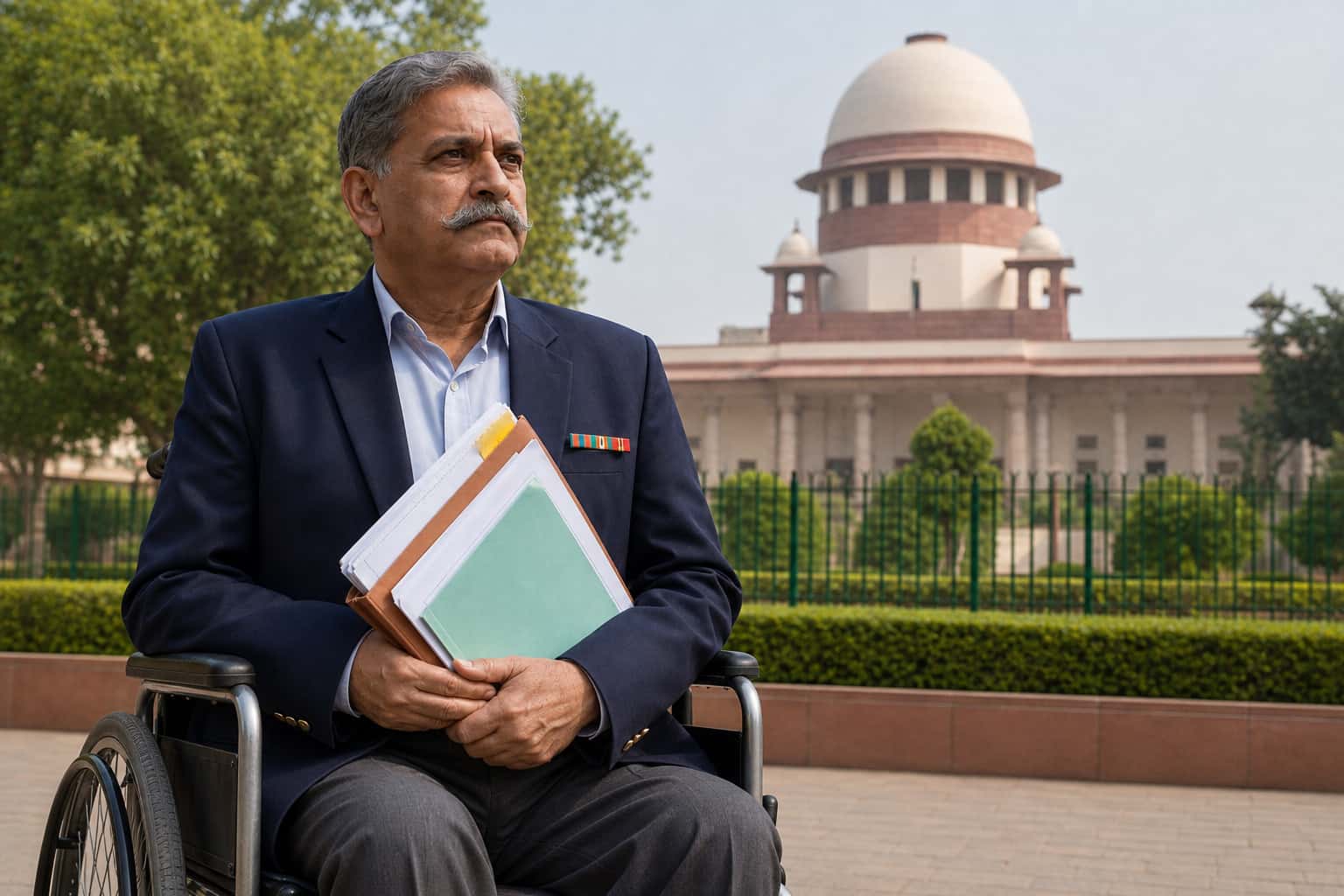
When a retired officer or soldier wins a disability pension case, the expectation is simple: the order should be implemented without forcing the veteran into another legal battle. That is why the recent Punjab and Haryana High Court development has struck such a strong chord across the defence community. According to media reports, the court imposed a ₹2 lakh cost on the Defence Secretary and the Army Chief in a disability pension delay matter involving Major Rajdeep Dinkar Pandere (Retd) after compliance did not happen despite earlier judicial relief.
What makes this story important is not only the reported penalty. The larger issue is institutional delay after a veteran has already succeeded before the Armed Forces Tribunal and then survived a challenge in the High Court. At that stage, the question should no longer be whether the veteran deserves relief. The question should be why the relief has still not reached him. That is what turns one pension case into a larger debate about accountability, dignity and court compliance.
Press reports say Major Pandere, a retired Army officer from Pune, was commissioned in 2012, served with the Ladakh Scouts, and later developed a serious medical condition during service. The reporting further says he underwent multiple surgeries, was placed in low medical category, and was eventually released from service after about a decade in uniform. His disability pension claim was then rejected after the disability was treated as neither attributable to nor aggravated by military service.
That rejection was challenged, and the case moved to the Armed Forces Tribunal. Reported coverage says the AFT found in his favour, held that he was entitled to disability pension, and granted him relief based on the applicable pension rules and the rounded-off disability principle. Later, a Division Bench of the Punjab and Haryana High Court reportedly dismissed the government’s writ petition on 28 July 2025, effectively upholding his entitlement. Hindustan Times reported that the High Court said his right to disability pension “cannot be doubted.”
Normally, that should have ended the matter.
Instead, the reported sequence suggests the dispute moved into a new and more troubling phase: implementation. Hindustan Times said the benefit still did not reach the petitioner even after the court order, leading him to return to the High Court and then file a contempt plea. That is the point where this case stops being only a pension dispute and becomes a question of whether final judicial directions are being treated seriously enough by the system.
The Tribune reported that the High Court had earlier given a final opportunity to file a compliance affidavit and had linked delay with the possibility of costs. When no compliance affidavit was filed, the court reportedly granted one more chance, but only on the condition that ₹2 lakh be paid, with the amount to be deducted equally from the salaries of the two respondents and paid to the petitioner. If reported correctly, that is a very sharp judicial message: once the court has ruled, administrative delay cannot continue as though nothing has happened.
This matters far beyond one officer’s case.
Disability pension is one of the most sensitive areas of defence welfare. It sits at the intersection of military service, medical evidence, pension rules and human hardship. Many such cases turn on medical board opinions, attribution or aggravation findings, disability percentage, rounding off, and the interpretation of service conditions. For veterans, these are not abstract legal terms. They decide whether a service-related medical condition will be recognised or whether years of suffering will be pushed aside through technical reasoning.
That is why delay after a final order hurts so deeply. A veteran approaching a tribunal or a high court is usually not doing so for a symbolic victory. He is fighting for monthly financial security, medical stability and family dignity. In many cases, pension arrears and corrected monthly payments directly affect treatment costs, household expenses and long-term planning. When implementation is delayed even after relief is granted, the veteran is forced to spend more time, money and emotional energy just to receive what the court has already recognised.
There is also a larger warning here for the administration. Defence pension matters cannot be handled as routine paperwork once they reach finality. A case may involve files, departments and layers of internal movement, but once judicial relief has been granted and upheld, the responsibility shifts from litigation strategy to compliance discipline. If the system fails at that stage, it does not only inconvenience one petitioner. It weakens trust among serving personnel, veterans and families who watch these cases closely.
For veterans and serving personnel, the practical lessons are clear. First, never treat disability pension matters casually. Preserve all medical board proceedings, low medical category papers, specialist opinions, discharge documents, pension correspondence and copies of every legal order. Second, follow up in writing, not only verbally. Third, if relief is granted, do not assume the matter is over until the actual pension order, arrears and revised payment are in hand. In defence pension disputes, documentation is often the difference between delay and enforceable compliance.
For policymakers, the case highlights the need for a dedicated compliance mechanism for AFT and High Court pension orders. Litigation may end in court, but justice is incomplete until the payment reaches the veteran. If implementation continues to depend on repeated follow-up and contempt warnings, the system will keep failing those who have already done their service and won their case.
That is why this reported High Court order matters so much. It is not just a story about a ₹2 lakh cost. It is a reminder that disability pension is a legal entitlement when the conditions are met, not a favour to be released at administrative convenience. Veterans should not have to win twice, first in court and then again in compliance.
And that may be the strongest message from this case: in pension justice, delay is not a minor clerical issue. It is a direct challenge to dignity, rights and the credibility of the entire system.




Leave a Reply