

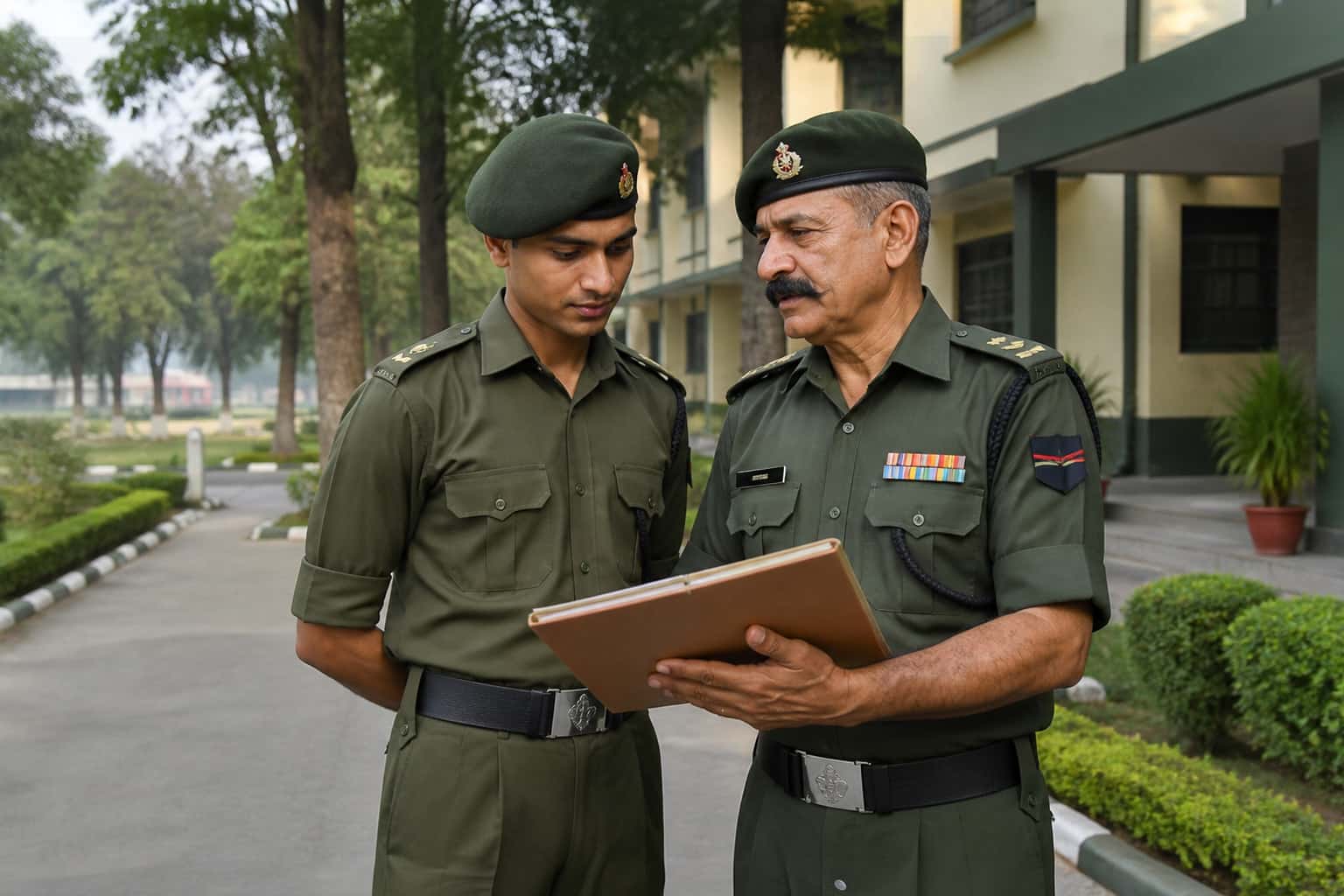
For any soldier, pension is not just a retirement benefit. It is the financial recognition of years spent in uniform, years of discipline, risk, family separation and service to the nation. This is why every discussion around defence pension becomes emotional, especially when it concerns jawans, JCOs and their families.
The latest discussion around AG’s Branch recommendation has brought one powerful question into focus: should jawans get pension protection closer to the level of JCOs? The issue is being discussed in the larger context of the 8th Pay Commission, and if taken seriously, it could become one of the most important defence welfare debates before the Commission.
At the heart of this issue is a simple reality. Jawans form the backbone of the Indian Army. They are the men who stand at forward posts, patrol difficult areas, handle operational duties, maintain equipment, support field formations and carry out the day-to-day military work that keeps the system moving. Their service life is physically demanding, emotionally intense and often shorter than many civilian careers.
Yet, after retirement, many jawans face a difficult financial transition. A large number of them retire at a comparatively young age due to the service structure of the armed forces. This means their post-retirement responsibilities often continue when their military salary stops. Children’s education, family responsibilities, health expenses, housing needs and social obligations remain. In this situation, pension becomes a lifeline.
This is why the idea of giving jawans pension parity or stronger pension protection closer to JCO-level benefits is not only a financial question. It is a question of fairness. If the soldier has served in tough conditions, carried risk and completed his duty with discipline, then the post-retirement system must ensure that he does not feel forgotten after hanging up the uniform.
The JCO category has traditionally been seen as a bridge between officers and other ranks. JCOs carry leadership responsibility, administrative responsibility and operational experience. Their pension structure naturally reflects their rank, pay level and service profile. But the demand being raised now is not necessarily to remove rank distinction. The larger demand is to examine whether jawans, especially those who serve long and difficult tenures, deserve better pension recognition under the 8th Pay Commission.
This discussion becomes even more important because the 8th Pay Commission is not limited to civilian pay alone. The official framework covers changes that are desirable and feasible in emoluments, including pay, allowances and other facilities or benefits for Central Government employees and defence personnel. Since defence personnel have unique service conditions, their pension issues must be examined through a defence-specific lens.
The biggest difference between a civilian employee and a soldier is the nature of service. A soldier may retire earlier. A soldier may face higher physical risk. A soldier may spend years away from family. A soldier may serve in high-altitude areas, field areas, counter-insurgency zones, border regions and difficult operational locations. These conditions are not ordinary. Therefore, pension calculation for defence personnel cannot be understood only through a normal office-service comparison.
For jawans, the problem becomes sharper because their career progression is limited. Not every soldier becomes a JCO. Many serve with loyalty and discipline but retire before reaching higher ranks. If pension is too heavily tied to rank progression, then a large number of jawans may feel that their actual contribution, hardship and service risk have not been fully recognised.
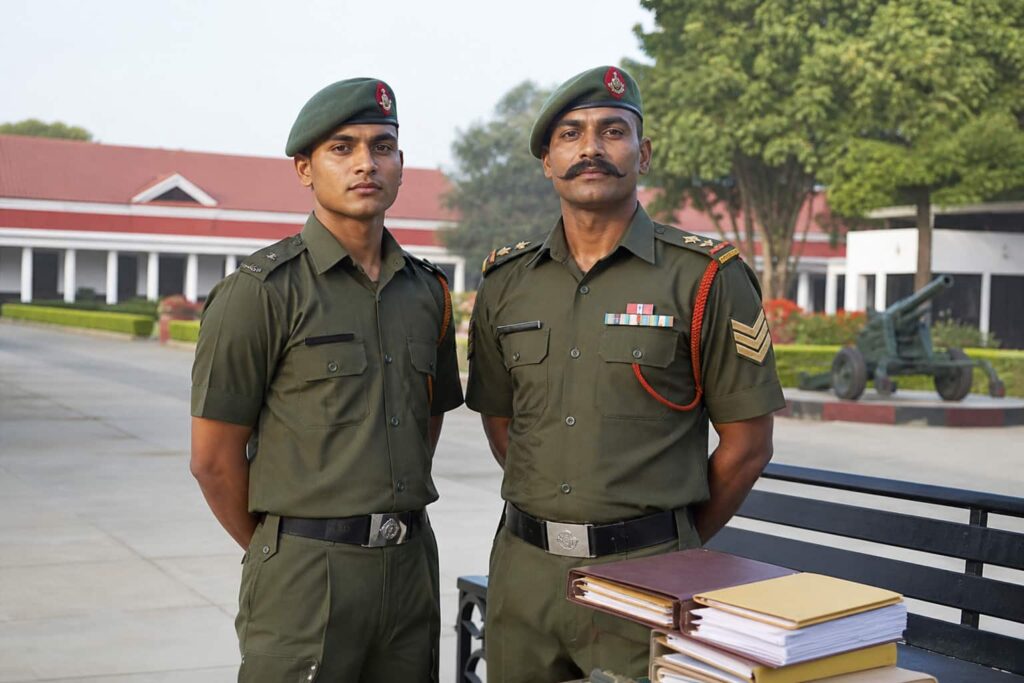
This is where the AG’s Branch proposal, as discussed in the video, becomes important. If the idea is to reduce the gap between jawan pension and JCO pension, then the purpose appears to be welfare correction. It is about ensuring that a soldier who has spent his best years in uniform receives a more dignified retirement income. It is also about improving morale among serving soldiers, because every serving jawan also thinks about what will happen to his family after retirement.
A stronger pension structure for jawans can have multiple benefits. First, it can improve post-retirement stability. Second, it can reduce financial anxiety among serving soldiers. Third, it can support families who have sacrificed years of normal civilian life. Fourth, it can send a message that the nation values not only rank but also service, sacrifice and duty.
However, this issue must also be understood practically. A proposal does not become policy automatically. The 8th Pay Commission will have to examine the financial impact, pension structure, rank hierarchy, service length, pay matrix and long-term government liability. After the Commission submits its report, the Government will take the final decision. The official 8th CPC website states that the Commission has 18 months to submit its report, which means the process will involve study, consultation and recommendation before implementation.
This is why serving personnel, veterans and associations should treat the present stage as the most important time to build a strong case. Emotional arguments matter, but data-backed arguments matter even more before a Pay Commission. If the demand is that jawans should receive pension closer to JCO level, the representation must explain why this is needed, how it can be structured and what categories should be covered.
The proposal can also be framed in a balanced way. Instead of simply saying that every jawan must get the exact same pension as every JCO, the demand can be shaped around minimum pension protection, service-linked pension enhancement, hardship-linked recognition, or a better pension floor for long-serving jawans. This kind of structured approach may help the issue receive more serious attention.
For defence pensioners, this debate is connected with dignity. Many veterans who joined as young men gave their strongest years to the country. After retirement, they do not want charity. They want fair recognition of their service. A pension structure that gives greater security to jawans would also strengthen trust between the soldier and the system.
For serving jawans, this is also a morale issue. A soldier who knows that his family will be financially protected after retirement serves with greater confidence. In military life, morale is not built only through speeches. It is built through visible fairness, timely benefits, respectful treatment and confidence that the system will stand with the soldier after service.
The 8th Pay Commission therefore has an opportunity to examine an issue that affects the lowest and most vital layer of the defence structure. Pay and pension reform should not only benefit those who are already at higher levels. It should also look at the jawan who carries the weight of the uniform in the most direct way.
In the end, the question is simple: if the jawan is the backbone of the Army, should his pension remain only a technical calculation, or should it reflect the real value of his service? The answer will decide whether the 8th Pay Commission becomes just another salary revision exercise or a meaningful defence welfare correction.
For now, nothing should be treated as approved. But the issue deserves serious attention. If AG’s Branch has raised this concern, and if the 8th Pay Commission studies it with fairness, the pension debate for jawans could become one of the most important welfare issues of this pay revision cycle. For lakhs of soldiers and veterans, this is not merely about money. It is about respect, security and the promise that those who protect the nation will not be left behind after retirement.
Leave a Reply