

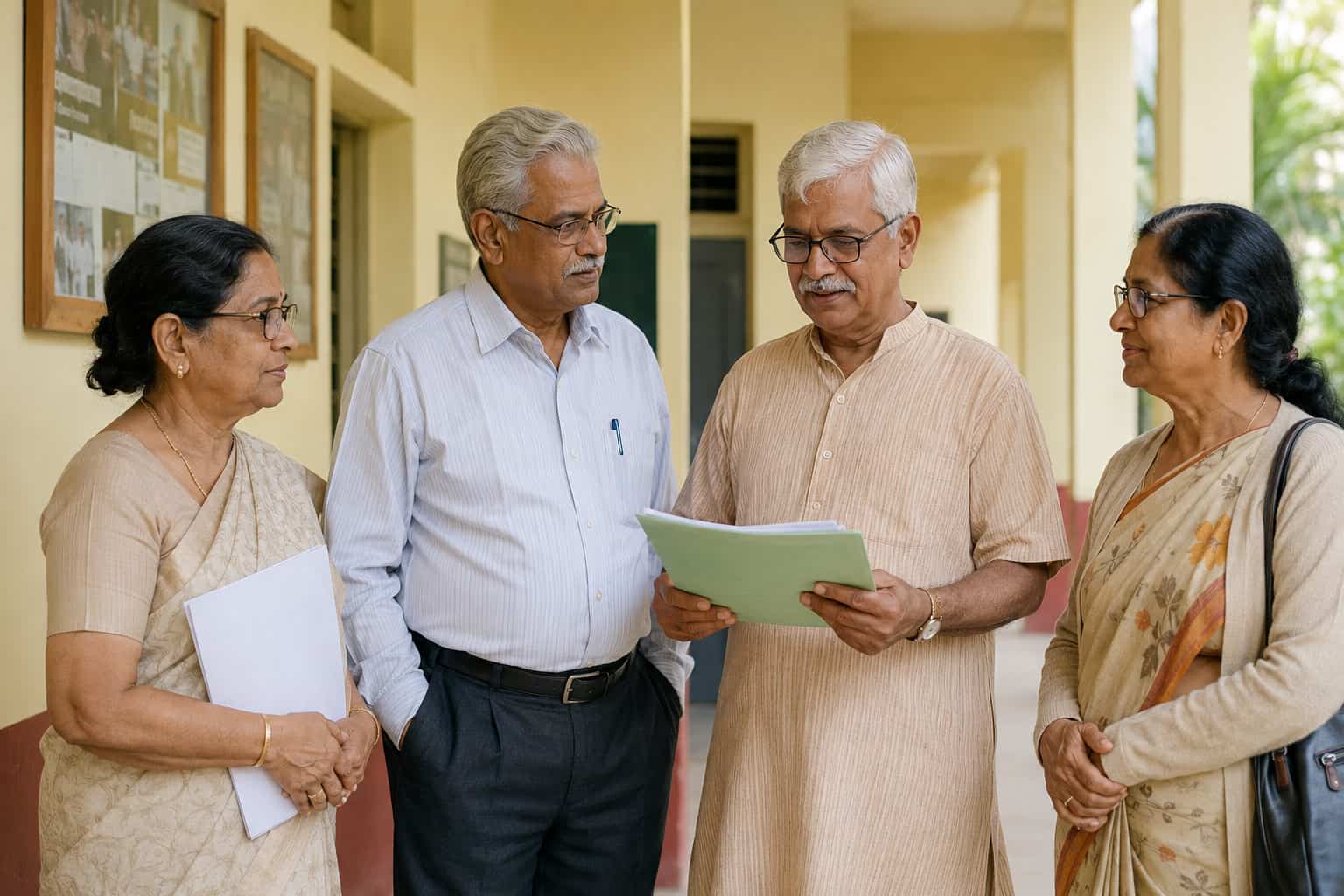
For lakhs of central government employees, the 8th Pay Commission is often seen through one simple lens: how much salary will rise. But some of the most important demands now reaching the Commission are not only about pay. They are about retirement security, pension certainty, and fairness across categories of employees. That is why the latest set of demands placed before the 8th CPC has attracted so much attention. A meeting between the All India NPS Employees’ Federation (AINPSEF) and the Commission has brought two big questions to the centre of the debate: should NPS subscribers be allowed to move to OPS after certain years of service, and should central government teachers retire at 65 instead of 60?
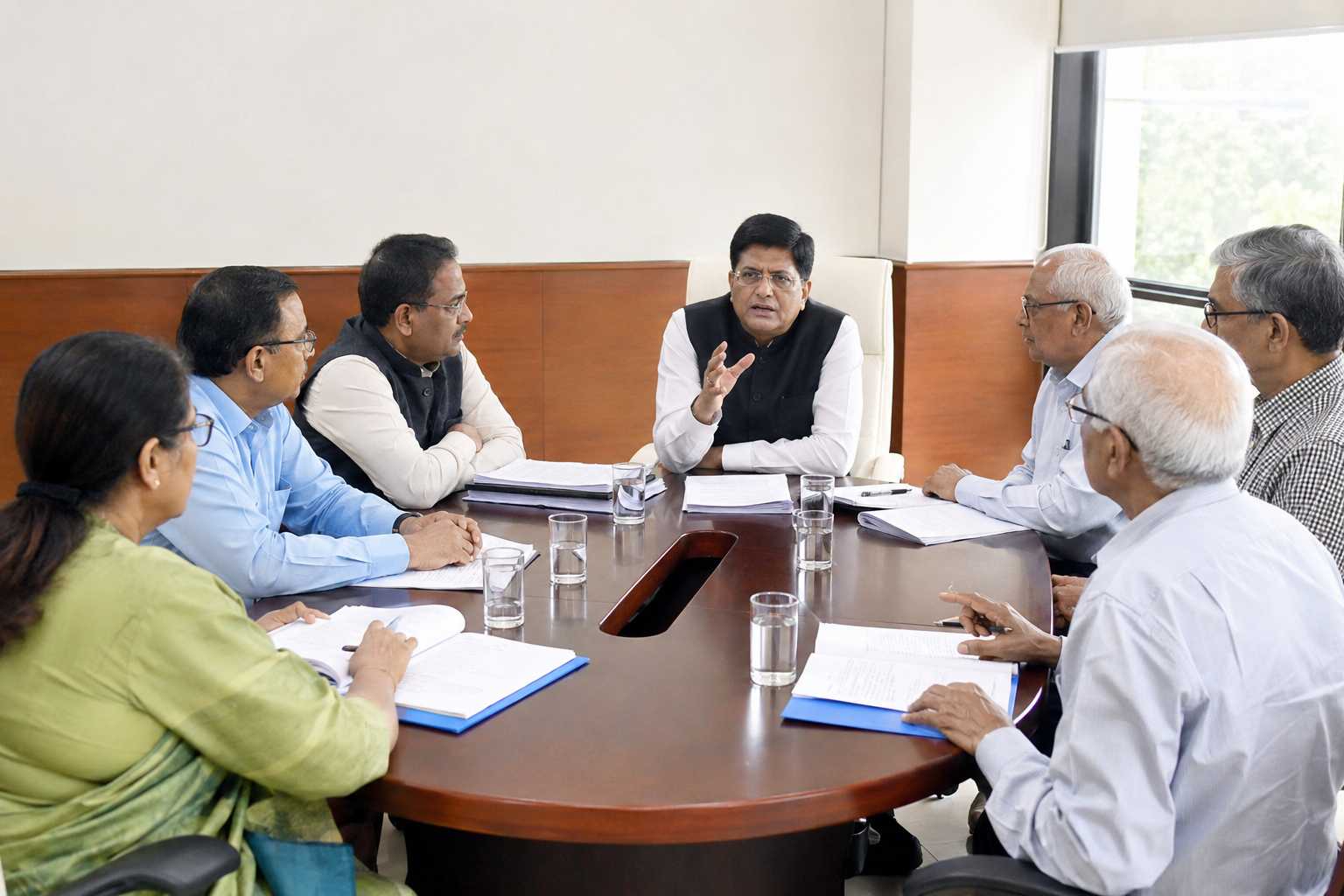
According to The Economic Times, AINPSEF met Justice Ranjana Prakash Desai and other 8th CPC officials on 30 April 2026 and submitted a set of demands that go well beyond the normal salary revision discussion. The federation asked that central government employees under the National Pension System be given an option to shift to the Old Pension Scheme after completing certain years in service. It also demanded that the retirement age of central government teachers be increased to 65, and that policy orders for central government employees should be issued simultaneously for Union Territories and Central Autonomous Bodies instead of reaching them much later.
This matters because the 8th CPC is already in a live consultation phase. The official 8th Central Pay Commission website confirms that the Commission was constituted by Government of India notification dated 3 November 2025. It also says that employees, pensioners, associations, ministries, departments and Union Territories can submit memoranda and suggestions through the official online route, and that the last date for submission is 31 May 2026. The same page clearly says that paper copies, hard copies, PDFs and emails are not being considered. So these demands are not just media chatter. They are part of a formal consultation environment where organised bodies are trying to influence the Commission’s final thinking.
The OPS option for NPS subscribers is easily the most sensitive part of the new demand list. NPS is a market-linked pension system, while OPS offers a defined, assured pension. Business Today reported that AINPSEF initially pushed for the complete abolition of NPS, but that did not find support with the Commission. The federation then proposed a more limited route: allow NPS subscribers, after certain years of service, to switch to OPS so that they can retire with a more predictable pension. It also suggested a mechanism under which the government could retain its own contribution and the growth on it, while employees would keep their own contribution and related gains.
Why is this demand resonating with so many employees? Because pension is not an abstract policy point. It is the foundation of life after retirement. Under NPS, final outcomes depend partly on market performance. That means the timing of retirement and the condition of markets can influence how secure an employee feels about old age. The Economic Times quoted AINPSEF president Manjeet Singh Patel as saying that if markets remain weak for a long period when an employee retires, the person could end up with a lower pension than expected. In simple terms, the federation is arguing that retirement should not become a gamble.
The second big demand, raising the retirement age of central government teachers to 65, carries a different kind of logic. AINPSEF argues that if UGC-linked teachers already serve till 65, then similar parity should be considered for teachers in central government institutions, Union Territories and Central Autonomous Bodies. That demand is likely to draw support from many education-sector employees because it connects service length, expertise and parity. Teachers are not only staff members in a payroll system. They carry institutional memory, subject expertise and long-term mentoring roles. A higher retirement age, supporters argue, would recognise that value while also creating fairer treatment across different education structures.

There is also a third issue in this story that deserves more attention than it is getting. AINPSEF has argued that orders issued for central government employees often reach UTs and autonomous bodies later, sometimes so late that the practical window for implementation has already narrowed. This may sound administrative, but it matters a lot in real life. A pay or pension order loses value when one set of employees receives it quickly and another has to wait through layers of procedural delay. In that sense, the demand is not only for a new benefit. It is for timely equality in implementation.
At the same time, readers should keep one important point in mind. These are demands, not decisions. No OPS option has been approved. No retirement-age increase has been announced. No final fitment factor has been declared. The 8th CPC is still collecting inputs, hearing groups and building its record before making recommendations. That is why this update should be read as a signal of where employee pressure is moving, not as a final policy outcome.
Still, this is a significant development in the larger 8th CPC story because it broadens the conversation. For months, public interest around the Commission has been dominated by salary speculation, fitment factor rumours and basic-pay calculations. The AINPSEF demands remind everyone that the Commission’s final impact will be wider than pay. It may shape pension design, retirement-age policy, administrative parity, and the long-term security of employees who are not thinking only about current salary but about life after service.
The broader demand package also shows how organised employee bodies are trying to strengthen their negotiating position. The Economic Times reported that AINPSEF reiterated its earlier demands for a 3.833 fitment factor, ₹69,000 minimum basic pay, and 6% to 7% annual increment for central government employees. That means the federation is not treating OPS and teacher retirement as isolated issues. It is combining pension security, pay revision and service-condition reform into one wider argument before the Commission.
For your readers, the biggest takeaway is simple. This is not just another 8th CPC headline. It is a sign that the debate is becoming deeper and more complicated. Employees are no longer talking only about how much more they want to earn. They are also asking what kind of pension system they want to retire under, how long some categories should be allowed to serve, and whether all classes of central government employees should receive orders and benefits on the same timeline. That makes this one of the more serious and policy-rich 8th CPC developments so far.
In the weeks ahead, these demands may or may not survive the Commission’s scrutiny in their current form. But they have already done something important: they have widened the 8th Pay Commission conversation from a salary story into a much larger debate about fairness, security and retirement dignity. And for employees, pensioners and teachers who are watching closely, that shift may matter just as much as any fitment factor headline.

Leave a Reply