

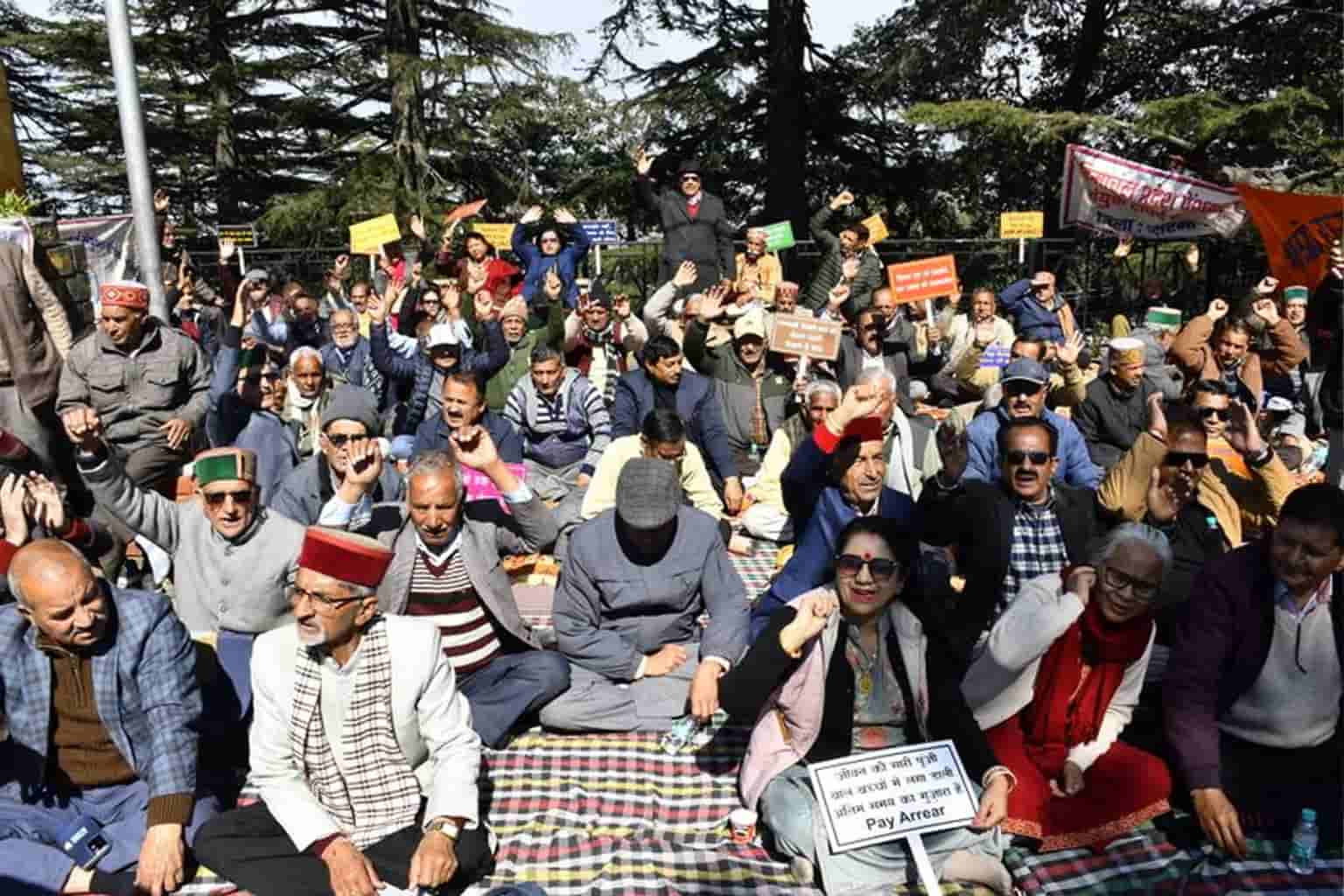
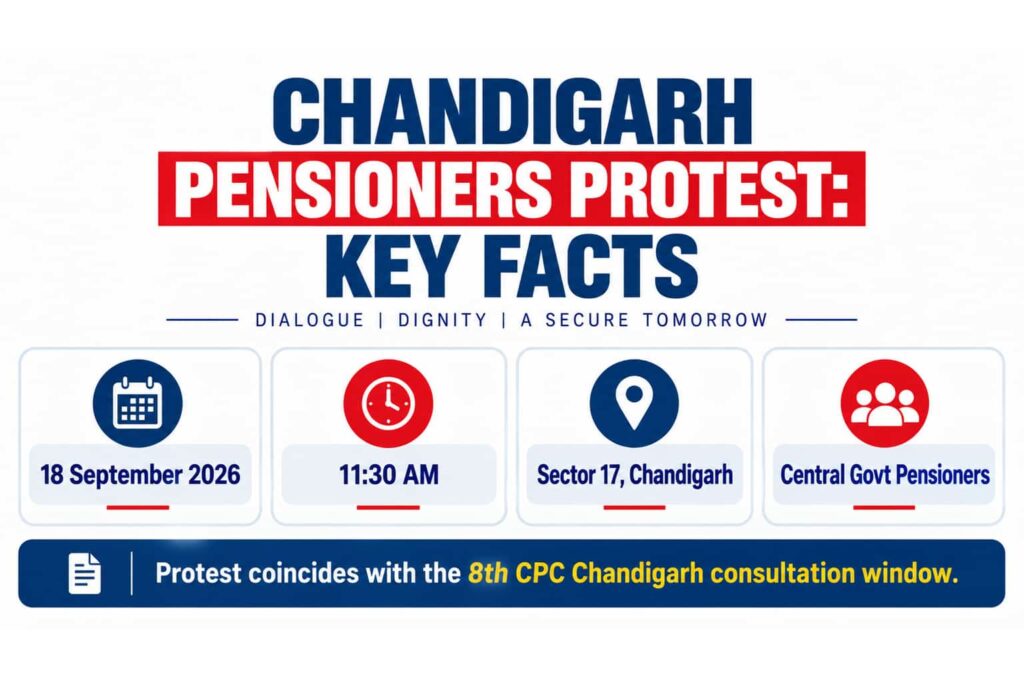
Central Government pensioners in Chandigarh are preparing to hold a demonstration on 18 September 2026, at a time when the 8th Central Pay Commission is itself visiting Chandigarh for stakeholder interactions.
According to The Tribune, the Association of Retired Officers of the Indian Audit and Accounts Department (IA&AD), Chandigarh, in coordination with the Central Government Pensioners’ Association, will hold the demonstration at 11:30 AM near Sindhi Sweets, Sector 17, Chandigarh.
The timing makes the development particularly relevant: the 8th CPC’s official Chandigarh visit runs from 16 to 18 September 2026.
What are pensioners demanding?
The protest is centred on pension-related issues that pensioners’ organisations want addressed before the 8th CPC process moves further.
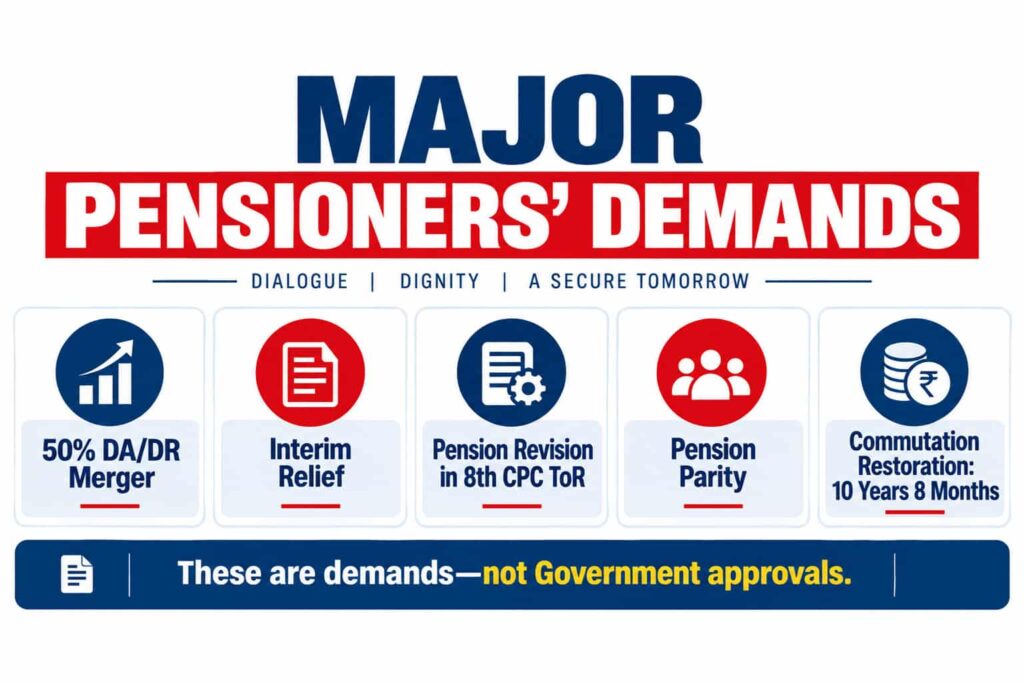
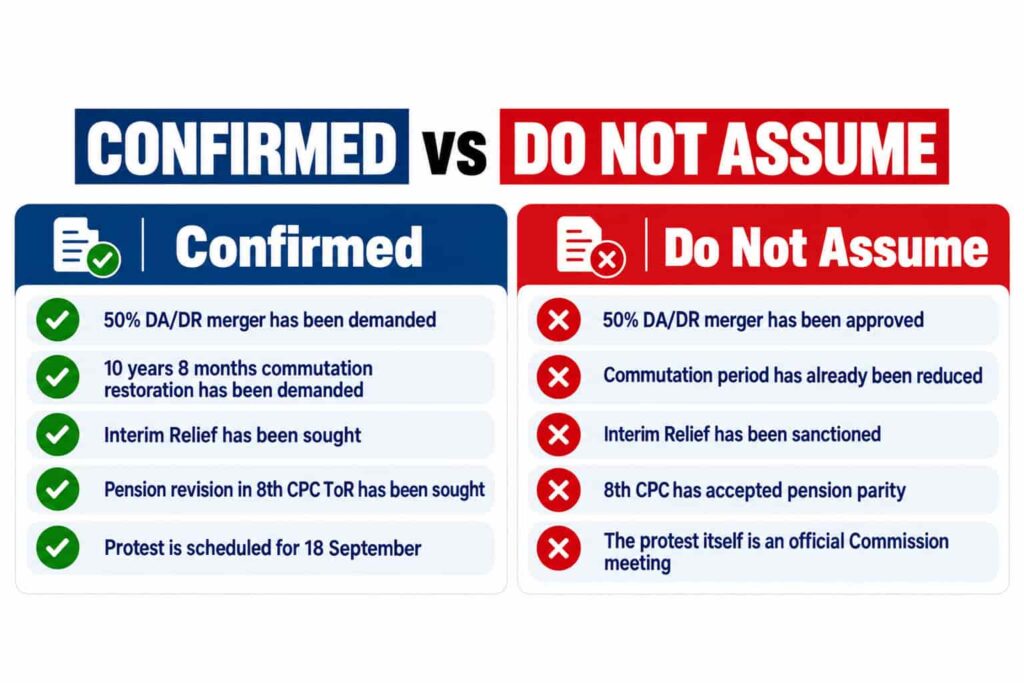
The reported demands include merger of 50% DA/DR with pay and pension, Interim Relief, pension parity, restoration of commuted pension after 10 years and 8 months, and amendment of the 8th CPC Terms of Reference to explicitly cover revision of existing pensioners’ pensions. The groups are also seeking withdrawal of the Validation Act, 2025 and restoration of pension protections they associate with the D.S. Nakara judgment.
A broader pensioners’ charter published by the Forum of Civil Pensioners’ Associations carries substantially similar demands, including 50% DA/DR merger, Interim Relief, pension revision through the 8th CPC and commutation restoration after 10 years and 8 months.
Why is the 50% DA/DR merger demand important?
The demand is straightforward: pensioners want 50% Dearness Relief merged with pension, while employee organisations are seeking a similar merger of DA with pay.
However, the key distinction is that this is currently a representation from pensioners’ organisations. There is no Government order in the sources reviewed here approving a 50% DA/DR merger under the 8th CPC.
That difference matters because a demand submitted during a Pay Commission exercise does not automatically become an entitlement.
Why are pensioners asking for commutation restoration after 10 years 8 months?
This is one of the more significant demands in the protest.
Under the existing Central Government commutation framework, the commuted portion of pension is restored after 15 years. The Department of Pension & Pensioners’ Welfare rules specifically provide for restoration on completion of 15 years from the date the pension reduction on account of commutation becomes operative.
Pensioners’ organisations are now asking that this period be reduced to 10 years and 8 months.
So the correct interpretation is:
Existing position: 15 years
Demand: 10 years 8 months
There is currently no basis in the cited material to say that the Government has already reduced the restoration period.
What does the Interim Relief demand mean?
Pensioners are also seeking Interim Relief while the 8th CPC completes its work and the Government subsequently considers its recommendations.
This is again a demand, not a notified benefit. The pensioners’ argument is that some temporary financial relief should be provided during the period between the Pay Commission exercise and eventual implementation.
Why does the 8th CPC Terms of Reference matter?
Another important issue is the demand to explicitly include revision of pensions of existing pensioners in the 8th CPC’s Terms of Reference.
For pensioners’ organisations, this is not merely a drafting issue. They want the Commission’s mandate to leave no ambiguity about consideration of existing pensioners while examining the next pay-and-pension revision framework.
The protest should therefore be viewed as an attempt to place pension-policy concerns prominently before the ongoing 8th CPC process—not as evidence that the Commission has already accepted those demands.
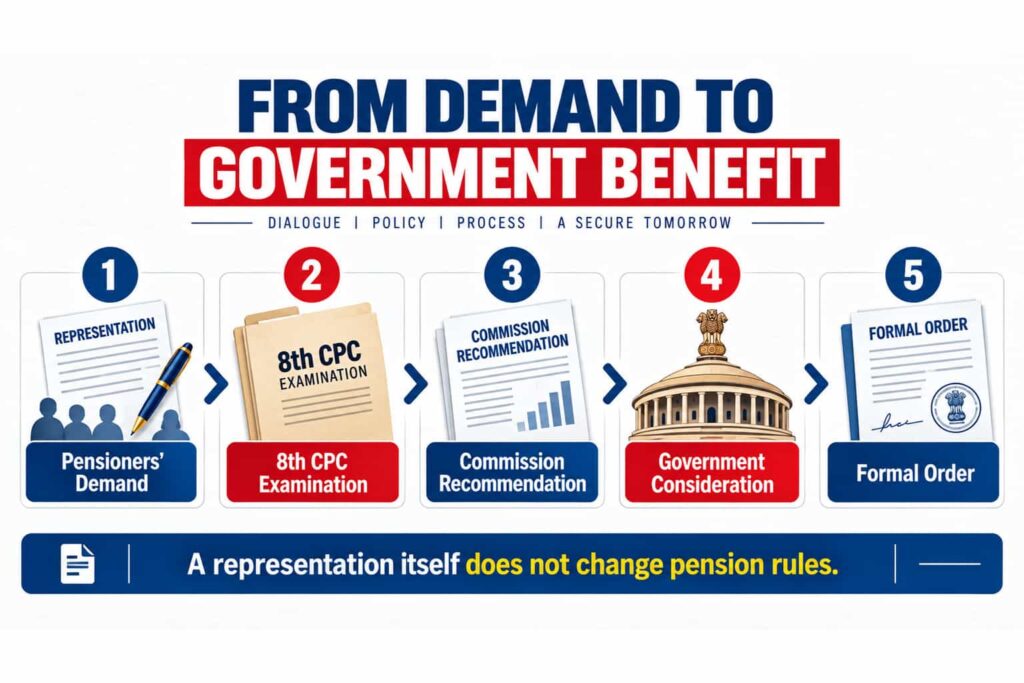
18 September protest and 8th CPC meeting are not the same thing
This distinction is important.
The 8th CPC officially scheduled its Chandigarh visit for 16, 17 and 18 September 2026.
The pensioners’ demonstration, however, is separately reported as a protest at Sector 17. The available report does not establish that the demonstration itself is an official 8th CPC hearing or that the Commission has agreed to any of the protesters’ demands.
Therefore, the safer interpretation is that the pensioners are using the Commission’s Chandigarh visit window to highlight their concerns.
What is confirmed and what should not be assumed?
What happens next?
The immediate development to watch is what happens on 18 September—whether pensioners submit any formal representation during the Chandigarh visit, whether the Commission engages with their organisations, and whether any official statement follows.
Until then, the major issues should be reported precisely as pensioners’ demands before the 8th CPC, not as recommendations or Government decisions.
Sources
8th Central Pay Commission — Official Chandigarh Visit Notice
Official 8th CPC Chandigarh notice
The Tribune — Pensioners’ protest on September 18
Forum of Civil Pensioners’ Associations — Charter of Demands
Department of Pension & Pensioners’ Welfare — CCS Commutation Rules



Leave a Reply