


The 8th Central Pay Commission (8th CPC) has moved deeper into its data-collection exercise by seeking detailed information on Government posts, cadre structures, recruitment rules, vacancies and promotional channels from Ministries, Departments and Union Territory Administrations.
The development is important because the Commission is not collecting only salary, pension and expenditure figures. The latest Annexure-L on Cadres seeks granular information about how Government manpower is actually structured—from sanctioned posts and pay levels to long-pending vacancies and the history of cadre reviews.
The official 8th CPC portal itself states that the Commission has “extensive data requirements” and that information is being collected through designated Ministries, Departments, organisations and offices.
What is Annexure-L?
According to the Commission’s communication, information had already been sought through earlier formats covering areas such as personnel strength, employee age profile, pension, GPF, MACP and expenditure.
The latest addition, Annexure-L — Cadres, goes further by seeking information across around 32 fields relating to individual posts and cadres.
In simple terms, the Commission wants to know:
- what the post and cadre are;
- where the post exists in the organisational structure;
- applicable Recruitment Rules;
- year in which those rules were notified;
- existing pay level;
- Group classification;
- sanctioned strength;
- long-standing vacancies;
- qualifications and experience required;
- mode of recruitment;
- promotional hierarchy; and
- history of cadre reviews.
This makes Annexure-L more than a salary-data format. It creates a picture of how individual Government cadres are organised.
Why are posts vacant for more than five years being identified?
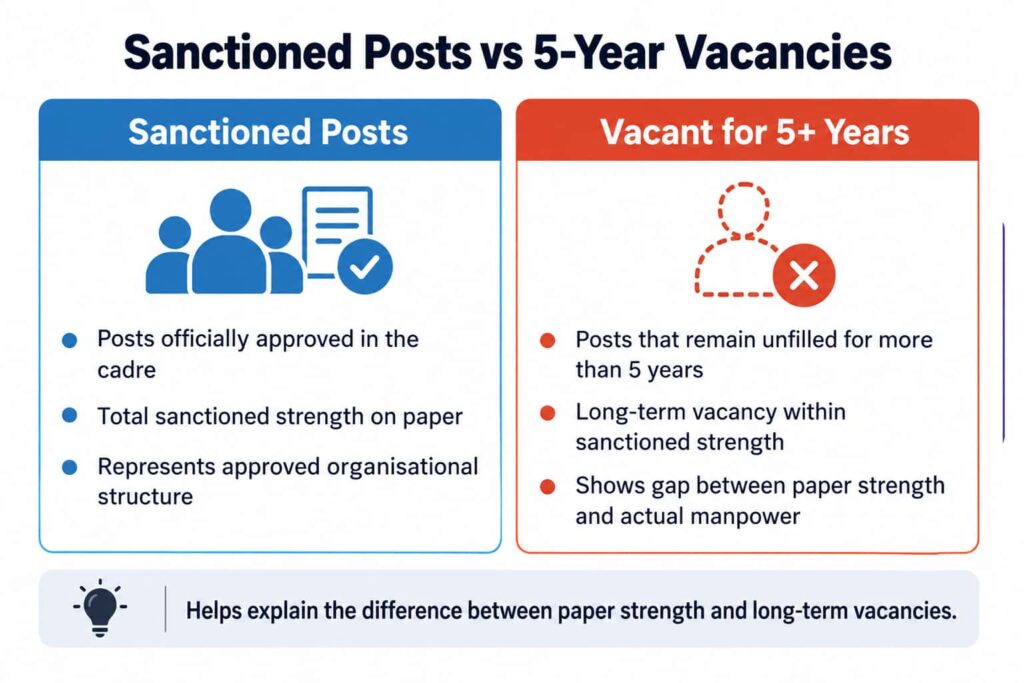
One of the most notable data points sought is the number of posts that have remained vacant continuously for more than five years.
This allows the Commission to distinguish between:
Sanctioned strength — posts officially existing on paper
and
Long-term vacancies — sanctioned posts that have remained unoccupied for years.
This could help the Commission understand the gap between an approved cadre structure and the manpower actually functioning within a Department.
However, the data request should not be interpreted as an announcement that such posts will either be filled, abolished or merged. No such decision follows automatically from Annexure-L.
Recruitment Rules and appointment pattern are also being examined
The Commission is also seeking information about how employees enter each cadre.
The data includes the prescribed:
- educational qualifications;
- mandatory experience;
- direct recruitment share;
- promotion share;
- seniority-cum-fitness route;
- departmental examination route;
- deputation; and
- other modes of appointment.
Departments have been asked to provide the recruitment-mode percentages in a manner that adds up to 100%.
This can give the Commission a clear picture of whether a cadre primarily depends on fresh recruitment, internal promotion, departmental examinations or deputation.
It does not, however, mean that the 8th CPC has already decided to change any recruitment formula.
Why is promotion data important?
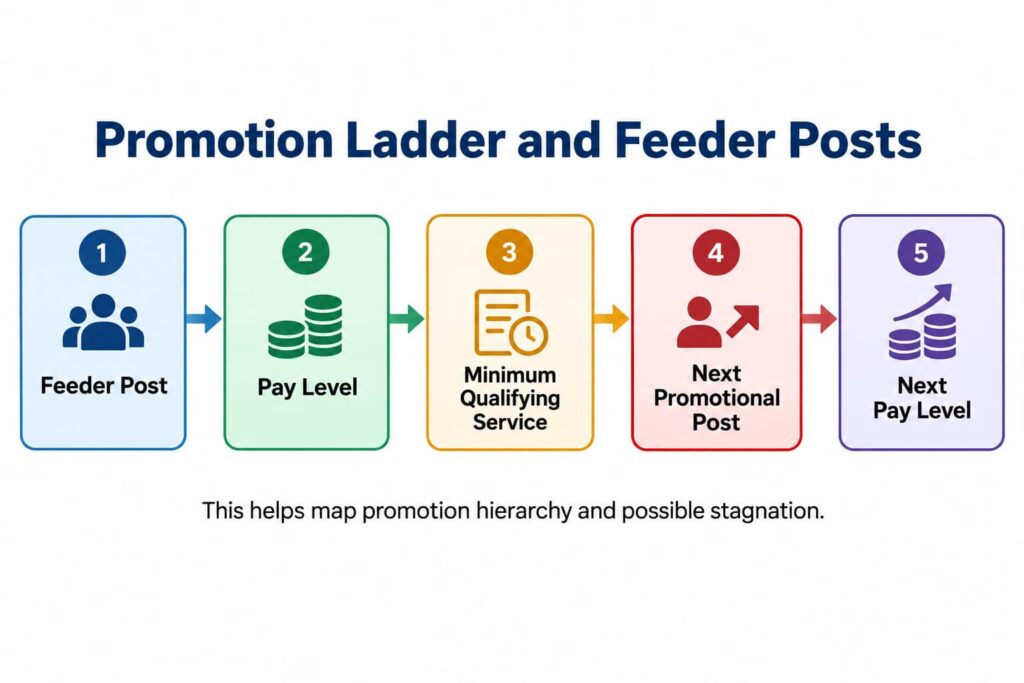
Annexure-L also seeks detailed information about the career path attached to a post.
Departments are required to provide details such as:
- immediate feeder post;
- pay level of the feeder post;
- minimum service required for promotion;
- sanctioned strength of the feeder grade;
- next promotional post;
- pay level of the promotional post; and
- qualifying service required.
Where a post has multiple feeder or promotional channels, the information has to be separately reflected.
This data could help create a clearer picture of promotion hierarchies and possible career stagnation across different cadres.
For example, if a large feeder cadre has only a small number of posts at the next promotional level, the structure will become visible in the Commission’s dataset.
That does not mean promotion rules have been changed. At present, the Commission is collecting the factual structure.
Cadre review history is another key part of the exercise
The Commission has also sought information on when each cadre was last reviewed.
Departments are being asked to indicate cadre-review history across different periods and identify the year of the latest review.
This is significant because Government organisations can change considerably over time while their sanctioned post structure or Recruitment Rules may continue from an earlier period.
The information can help show which cadres have been reviewed periodically and which have operated for long periods without a major structural review.
What does this tell us about the 8th Pay Commission exercise?
The broader picture emerging from the data collection is that the Commission is examining more than:
Fitment Factor → Basic Pay → Allowances → Pension
It is also gathering information on:
Manpower → Posts → Vacancies → Recruitment → Pay Levels → Promotion → Cadre Reviews
That can allow pay and service-condition representations to be considered alongside the actual structure of the concerned Department or cadre.
The official 8th CPC process has separately invited structured representations from Central Government employees, Defence Forces personnel, pensioners, associations, Ministries, Departments and other covered stakeholders.
What Annexure-L does NOT announce?
Employees should avoid reading final outcomes into the present data exercise.
Annexure-L does not currently confirm:
- a new pay level;
- salary increase for a particular post;
- change in promotion rules;
- automatic filling of vacancies;
- abolition of long-vacant posts;
- cadre restructuring; or
- any fitment factor.
Those would require subsequent recommendations and, where applicable, Government decisions.
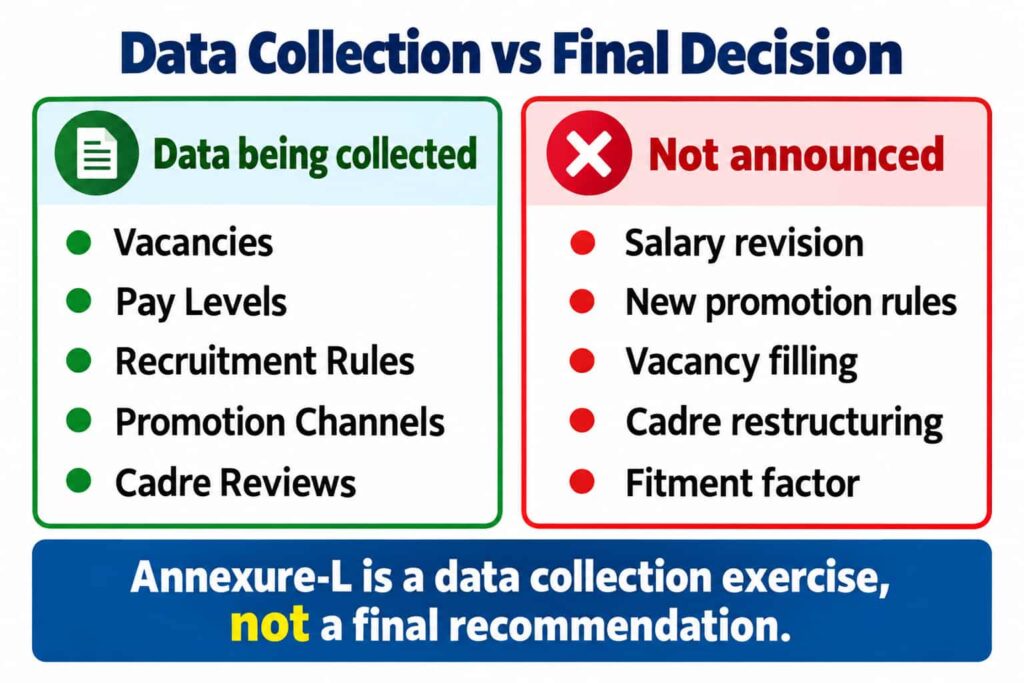
Data being collected: vacancies, pay levels, recruitment, promotion, cadre reviews
Not announced: salary revision, new promotion rules, vacancy filling or cadre restructuring
Why should employees and associations pay attention?
For employees and recognised associations dealing with issues such as pay anomalies, promotion stagnation, outdated Recruitment Rules or cadre restructuring, this phase is particularly relevant because the Commission is collecting the factual data connected with those issues.
A representation supported by actual cadre information—such as sanctioned strength, long-term vacancies, feeder-post ratios, promotional levels and previous cadre reviews—can explain a structural problem more clearly than a demand based only on a proposed pay increase.
For now, the most important takeaway is simple:
The 8th Pay Commission is building a detailed picture of Government cadres and manpower. Annexure-L is a data-collection exercise, not a final recommendation—but the information being collected goes well beyond basic salary and pension figures.
Sources
8th Central Pay Commission — Official Online Data Portal
8CPC Online Data Portal
8th Central Pay Commission — Memorandum Submission Framework
8CPC Memorandum Submission





Leave a Reply