

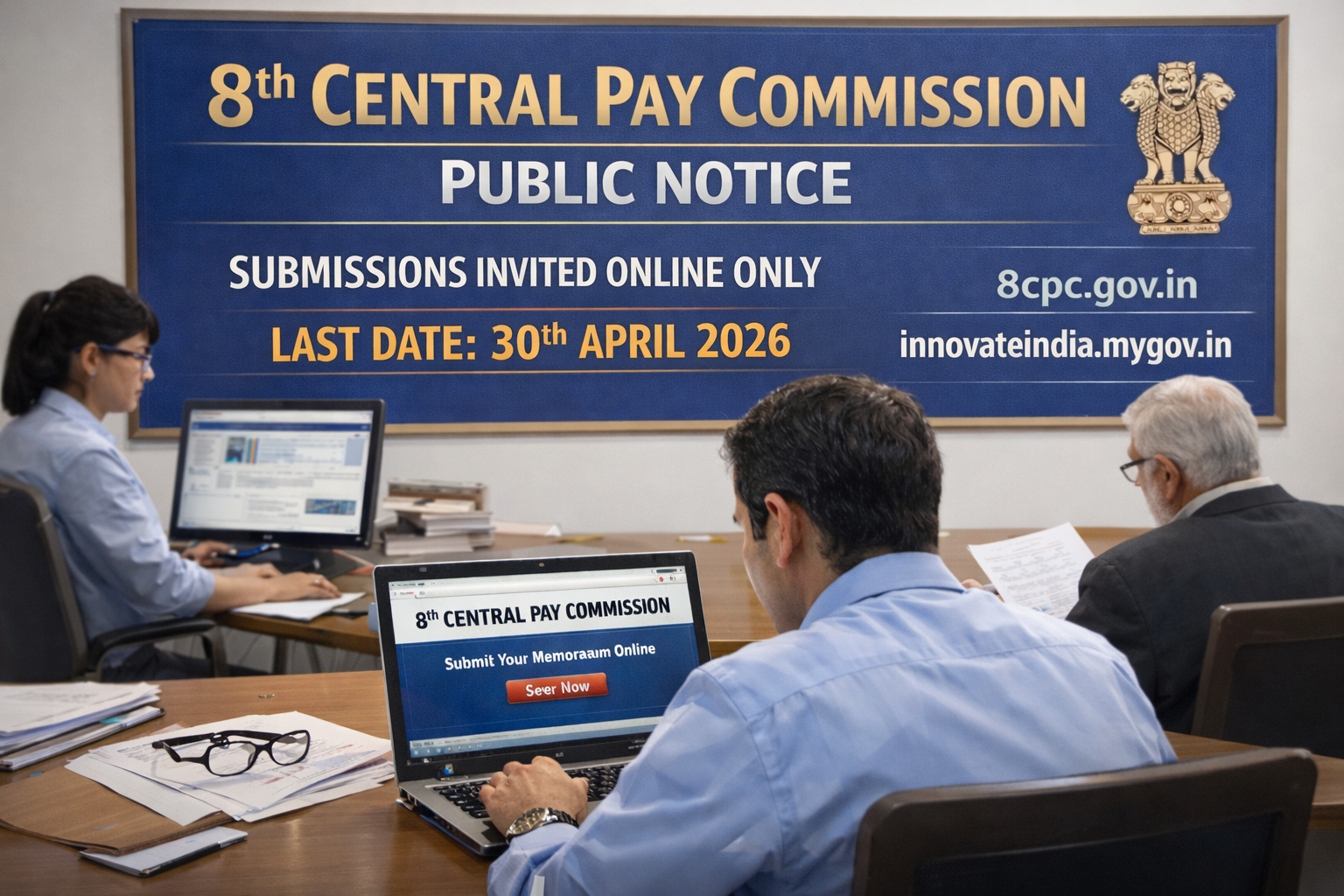
The 8th Central Pay Commission has issued an important public notice that may matter to employees, pensioners, associations and other stakeholders tracking the next pay revision process. The notice makes it clear that the Commission is now inviting memorandums and representations in a formal and structured manner, giving interested groups and individuals a direct opportunity to place their views on record.
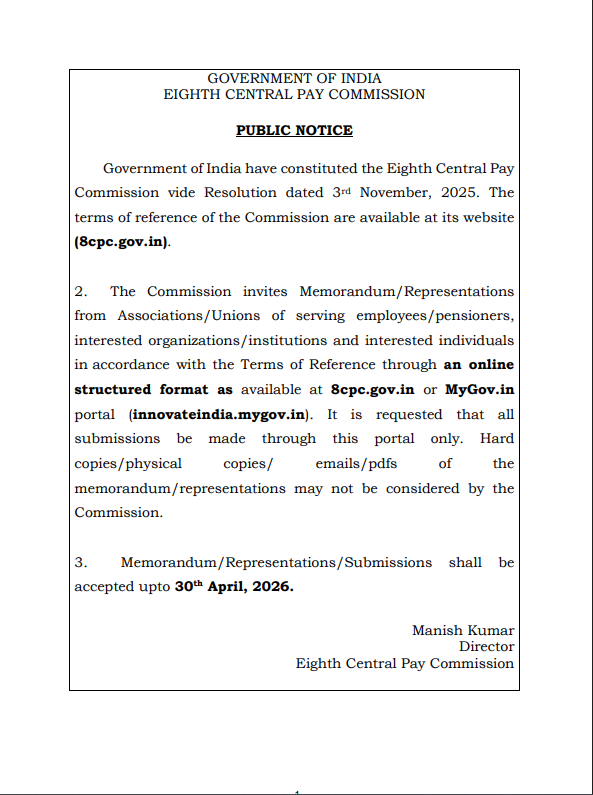
According to the notice, the Government of India had already constituted the Eighth Central Pay Commission through a resolution dated 3 November 2025. It also states that the terms of reference of the Commission are available on the official 8cpc.gov.in website. This is important because it confirms that submissions are expected to be made in line with the issues officially assigned to the Commission.
The most important part of the public notice is the invitation for memorandums and representations. The Commission has said that associations and unions of serving employees, pensioners, interested organisations, institutions and even individuals can send their submissions. This means the consultation process is not limited only to big employee bodies. A wider set of stakeholders has been given a chance to participate.
However, the notice also places a clear condition on how these submissions must be made. It says that representations have to be filed through an online structured format available at 8cpc.gov.in or through the MyGov portal, specifically innovateindia.mygov.in. In other words, the Commission is not asking for open-ended letters in different formats. It wants the process to follow a standard online structure.
This detail is especially important because the notice adds that hard copies, physical copies, emails and PDF submissions may not be considered. That means anyone planning to send suggestions or demands should avoid relying on traditional paper submissions or unofficial email communication. The clear message from the notice is that the online route is the main channel that matters.
Another key point is the deadline. The public notice states that memorandum and representation submissions will be accepted up to 30 April 2026. For employees, pensioners and organisations preparing detailed demands on pay, pension, allowances or service-related issues, this date becomes very important. Missing the online deadline could mean losing the opportunity to be part of the official consultation process.
From a broader 8th CPC perspective, this update is significant because it shows that the Commission’s consultation stage is now active in a practical way. Until now, many people were focused mainly on the Commission’s constitution, timeline and possible recommendations. This notice shifts attention to participation. It shows that the Commission is not just working internally but is also opening the door for external inputs.
For employee unions and pensioner bodies, this could be a crucial phase. It gives them a formal route to present their demands on issues such as pay revision, pension parity, allowances, restoration matters, fitment-related concerns or other long-pending service issues. For individuals too, the notice is important because it suggests that personal submissions may also be made, provided they follow the official format.
At the same time, this public notice does not announce any final decision on salaries, pensions or allowances. It should not be read as an indication that specific demands have already been accepted. What it does confirm is that the 8th Central Pay Commission is now collecting views in an organised, official and time-bound manner.
In simple terms, the latest 8th CPC public notice says three things very clearly: the Commission is active, submissions must be made online only, and the last date to send memorandums or representations is 30 April 2026. For anyone following 8th Pay Commission news, that makes this one of the most important procedural updates so far.

Leave a Reply