

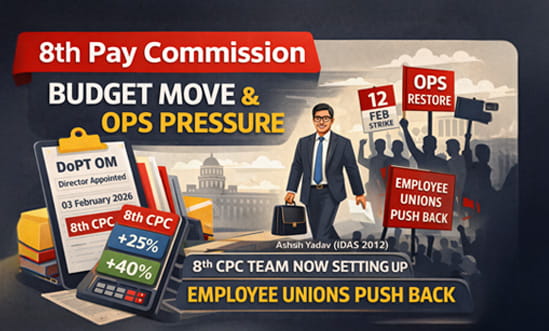
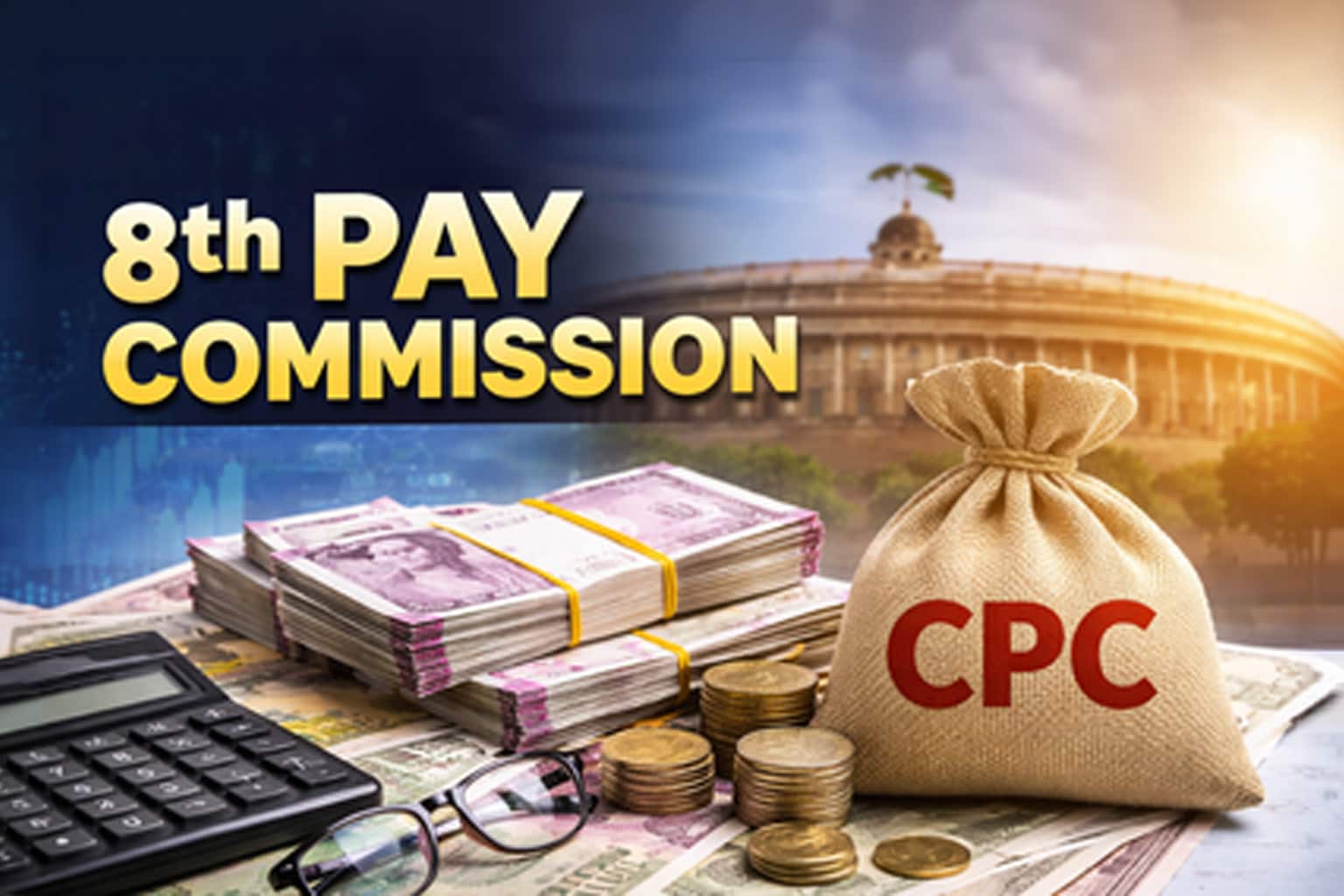
The conversation around the 8th Central Pay Commission changed noticeably after the Union Budget, not because employees got immediate relief, but because the government machinery behind the Commission began to take visible shape. The clearest signal came through a 3 February 2026 DoPT-linked appointment move tied to the Department of Expenditure, which approved Ashish Yadav, an IDAS officer of the 2012 batch, for the post of Director in the 8th Central Pay Commission setup on deputation basis. By 5 February, the official 8th CPC directory was already listing Ashish Yadav as Director, showing that the internal structure of the Commission was moving from announcement stage to operational stage.
This development matters because the 8th CPC is not just about a future salary hike. Before any fitment factor, pay matrix revision, or pension revision can take shape, the Commission needs staff, process, documentation, and consultations in place. The official 8th CPC website confirms that the Commission was constituted by Government of India notification dated 3 November 2025, and its later updates show a steady build-up through questionnaires, memoranda, and state-level consultations rather than any sudden pay announcement.
That is where the frustration of central government employees and pensioners becomes important. Around the same period, employee bodies argued that while the 8th CPC had been formed, the pace of visible progress remained too slow for people expecting relief from January 2026 onward. This dissatisfaction fed directly into the 12 February 2026 nationwide strike call by the Confederation of Central Government Employees and Workers. Recent reporting on that notice shows the organisation demanded changes to the 8th CPC Terms of Reference, 20 percent interim relief from 1 January 2026, merger of 50 percent DA/DR with basic pay or pension, release of the 18-month DA/DR freeze arrears, and restoration of the Old Pension Scheme in place of NPS/UPS.
This is why the update is bigger than a routine appointment order. The Director appointment showed that the government had started putting the administrative spine of the Commission in place. At the same time, the strike call showed that employees were not willing to wait quietly for a long, slow process. For many workers and pensioners, the issue was not only the final fitment factor. It was also about whether the government would provide any interim cushion while the 8th CPC took shape, and whether long-running issues like pension parity, anomaly correction, DA/DR arrears, and OPS versus NPS would get serious attention.
The official record also supports the view that this phase was about groundwork, not final approval. The 8th CPC website later opened a structured route for memorandum and representation submissions, and it separately ran an official questionnaire process that accepted responses only through MyGov until 31 March 2026. These steps show that the Commission has been collecting formal stakeholder input in stages. In other words, the administrative engine is running, but the final output on pay, pension, allowances, and fitment factor is still ahead.
That broader picture became even clearer in April. According to recent reporting, the NC-JCM drafting committee was scheduled to meet on 13 April 2026 to finalise the common memorandum for the 8th Pay Commission, while the official website’s latest “What’s New” items continued to highlight consultation-stage steps such as the 24 April Dehradun visit. This means the 3 February Director appointment was not an isolated event. It was one of the early signs that the 8th CPC process was shifting from announcement mode into structured administrative work.
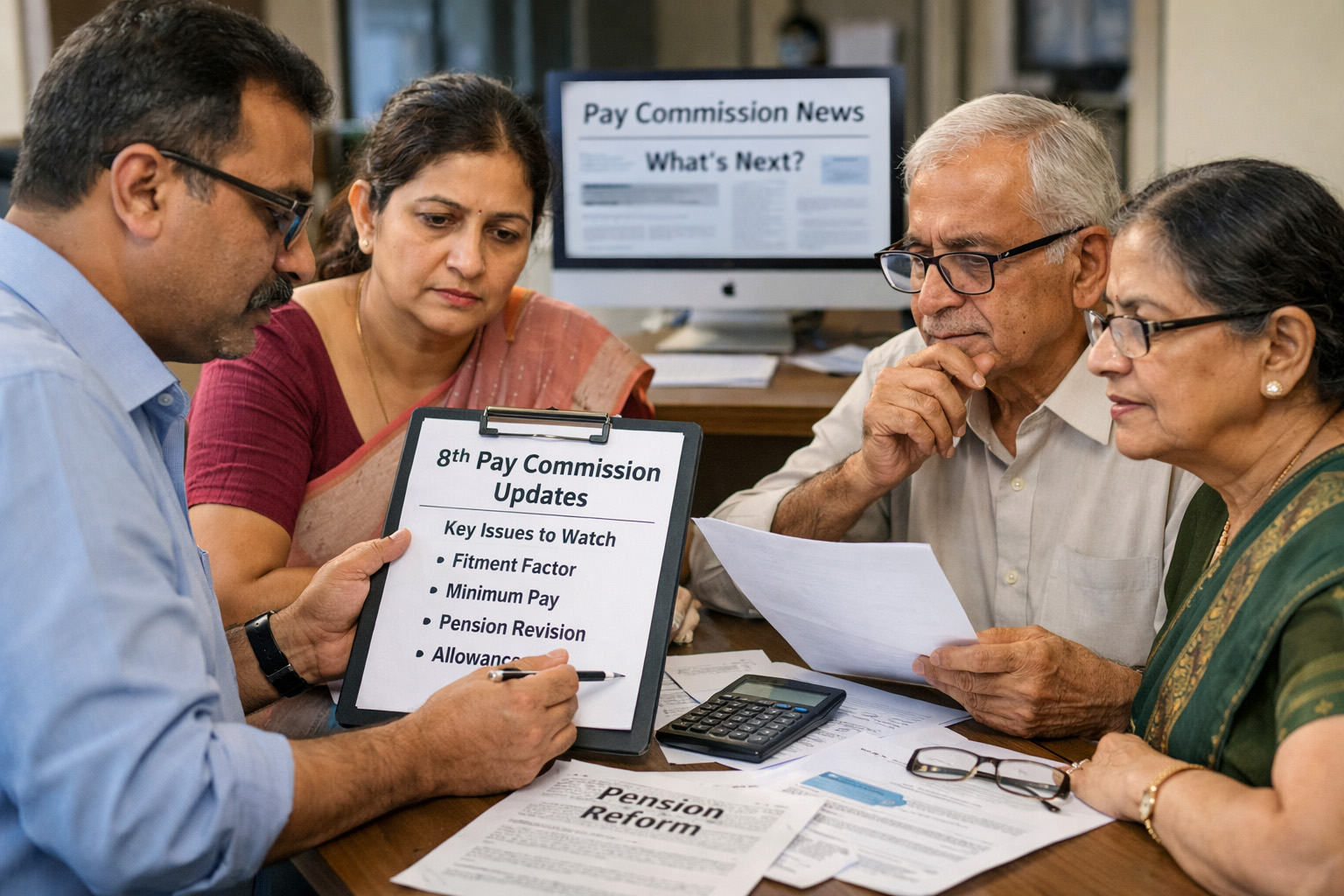
For your readers, the practical takeaway is simple. Budget 2026 did not bring direct 8th CPC relief, but it was followed by an important back-end move: the Commission’s staffing and setup began to firm up. That triggered a parallel surge in employee pressure around OPS, interim relief, DA/DR treatment, fitment factor, and pension revision. So the real story is not that the 8th CPC delivered benefits immediately after the Budget. The real story is that the government side started building the Commission’s structure, while unions and federations escalated pressure to ensure that the eventual recommendations address the issues employees care about most.
Wathc the full Video for Complete details!

Leave a Reply