


For lakhs of central government employees, pensioners, defence personnel, ex-servicemen, railway staff, postal employees, and other stakeholders, the 8th Pay Commission is no longer just a future promise. It has now entered a stage where official movement can be tracked, deadlines matter, and timely action can make a real difference. That is why one question is becoming increasingly important: how can people find out where the next 8th Pay Commission meeting or visit is happening?
The answer is simple but important. This time, the process is being handled in a more organised digital format, which means the official portal has become the main place to watch. Anyone who wants verified information should depend on the portal, not on rumours, forwarded messages, or incomplete social media updates. In the present phase, missing an official notice could mean missing the chance to submit a demand, seek an appointment, or prepare representation on time.
Why this update matters now
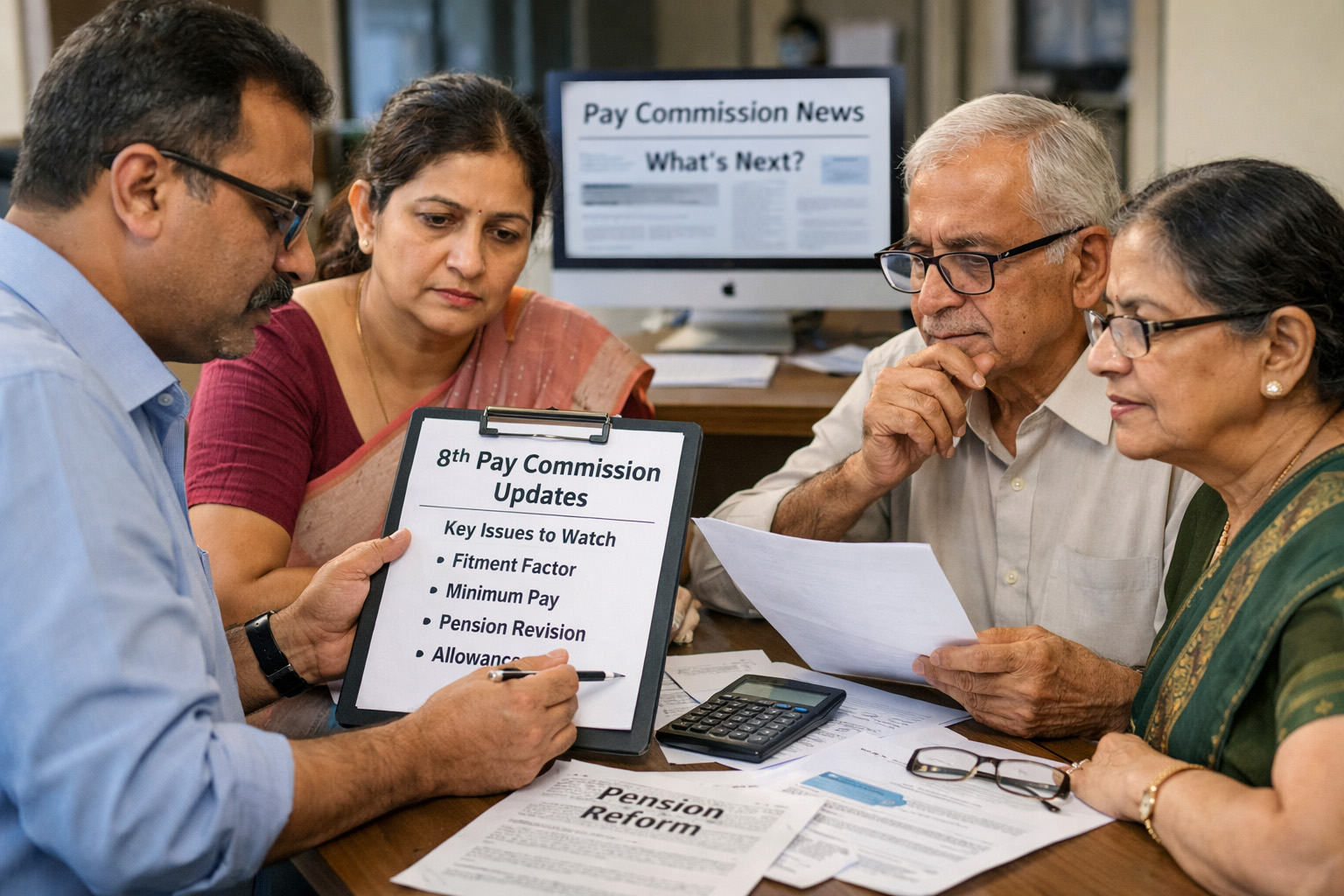
Most people follow the 8th Pay Commission for one reason: they want to know what could happen to salaries, pensions, allowances, fitment factor, and the pay matrix. But at this point, the bigger story is not a final announcement. The bigger story is the process.
The Commission has started functioning through an official online system where notices, visit schedules, contact information, and submission windows are becoming publicly visible. This changes everything for employees and pensioners. Instead of waiting passively for news channels or viral posts, stakeholders can now directly monitor official movement themselves.
This is especially important because the current stage is not only about internal government file work. It is also about collecting demands, hearing representations, and engaging with different groups in a structured way. In other words, this is the phase where preparation matters.
Where to check the next 8th Pay Commission meeting
If you want to know where the next official meeting, visit, or stakeholder interaction is scheduled, the first thing you should do is visit the 8th Pay Commission’s official portal. This is where users can check key sections such as the Terms of Reference, Commission composition, contact details, earlier Pay Commission records, and the latest notices.
One of the most useful parts of the portal right now is the calendar or visit schedule section. This is the area that can help users identify where the Commission is expected to go next, which events are publicly visible, and what kind of participation may be possible.
For many people, this calendar will become the most important section to follow in the coming weeks and months. It is not just a list of dates. It is a practical guide to where the action is moving.
The Dehradun visit is a major signal
Among the visible updates, the Dehradun, Uttarakhand visit scheduled for 24 April 2026 stands out as a key development. This matters because it shows that the Commission’s work is not limited to a closed administrative setup. There is now a visible outreach pattern, and scheduled visits may become an important part of the consultation process.
For associations, unions, pensioners’ bodies, and interested stakeholders, such visits are highly significant. They are a chance to track the Commission’s movement and understand when direct engagement may be possible. For serious stakeholders, this is the kind of information that should not be ignored.
The importance of the Dehradun visit also lies in the fact that it has been linked with a clear appointment procedure. That shows the process is being handled formally, not casually.
How appointment requests may work
According to the available update, anyone interested in meeting the Commission team during the Dehradun visit must send an appointment request within the prescribed deadline. The notice connected to the visit mentions 10 April 2026 as the deadline for sending such a request.
This detail is very important because many people assume that once a visit is scheduled, they can approach later. In reality, official processes rarely work like that. If a meeting request has to be made within a fixed timeline, then stakeholders need to act early. Waiting until the last moment can easily result in missed opportunity.
This also sends a larger message. The 8th Pay Commission process is becoming structured and deadline-based. Those who remain alert will be in a stronger position than those who depend only on last-minute information.
Memorandum submission is now the biggest route
Another major point for employees and pensioners is the memorandum submission window. At present, the memorandum route is one of the most important ways to formally put demands before the Commission, and the last date mentioned is 30 April 2026.
This matters even more because the earlier questionnaire response window, which had been extended up to 31 March 2026, has already closed. That stage is over. So now, the memorandum path becomes the main formal channel available for organised representation.
This is where unions, federations, associations, pensioners’ groups, and service bodies need to be especially active. It is also relevant for individuals who want their concerns recorded properly and within time.
Why relying only on social media is risky
A common mistake people make is assuming that important developments will automatically reach them through YouTube videos, WhatsApp groups, or social media summaries. While these platforms help spread awareness, they are not a substitute for official notices.
A major update often first appears as a small notice, a downloadable circular, a schedule entry, or a deadline instruction on the official portal. By the time it becomes widely discussed online, the real action window may already be narrowing.
That is why serious stakeholders should make it a habit to check the official website directly. Even a five-minute review of the notices and calendar section can prevent confusion and help people stay ahead of deadlines.
Who should pay close attention
The 8th Pay Commission process does not affect just one category of people. Its impact spreads across multiple groups, and each group has different concerns.
For serving central government employees, the key issues may include pay revision, allowances, transfer-related support, TA/DA, hardship-related matters, housing concerns, and service conditions. These issues need proper representation before recommendations take shape.
For pensioners, the concerns are often different and sometimes more urgent. Pension revision, commutation, medical support, parity issues, and pending anomalies are all areas that require careful attention. Pensioners cannot assume that general employee demands will automatically cover their concerns in full.
For defence personnel, ex-servicemen, and CAPF stakeholders, the matter is even more sensitive. Uniformed service conditions, field hardship, disability-related concerns, operational risk, and service-specific realities need clear and separate articulation. These are not routine civilian issues and should not be diluted in broad generic demands.
Can an individual also take part?
One encouraging feature of the current process is that it is not restricted only to big unions or large representative bodies. There is scope for individuals also to make submissions through the prescribed system. This is a useful option for those who may not be linked to any major association but still want to present a reasoned point of view.
At the same time, people must be careful about the mode of submission. If the official process says that representation must be made through the portal, then that route must be followed. Sending a separate email or forwarding a standalone PDF may not carry the same value unless it fits the official system.
In short, good intent is not enough. Proper procedure matters too.
Common mistakes to avoid
The first mistake is delaying action. Government portals can slow down close to deadlines, and technical problems tend to appear when too many people try to act at the same time. Anyone planning to submit at the very end is taking an avoidable risk.
The second mistake is reading only headlines and skipping the full notice. In many cases, the real conditions are written only inside the linked document. Without reading that, people may misunderstand deadlines, meeting eligibility, or submission steps.
The third mistake is sending weak or unstructured demands. A good memorandum should be clear, category-specific, and logically presented. Random points without structure rarely create the same impact as a properly prepared submission.
The 8th Pay Commission has now moved into a stage where official activity can be followed more closely than before. That is why the question of the next meeting or visit is not just about curiosity. It is about participation, preparation, and timing.
With the memorandum submission process open till 30 April 2026, the questionnaire stage already closed, and the Dehradun visit on 24 April 2026 visible on the official schedule, this is a crucial period for every interested stakeholder. Whether you are a serving employee, pensioner, defence veteran, or part of an association, this is the time to stay alert and use the official system properly.
The biggest lesson from this phase is simple: verified information is power. Those who track the portal regularly, read notices carefully, and act before deadlines will have the best chance to make sure their concerns are heard and officially recorded.
Watch the full video for complete details!



Leave a Reply