


The conversation around the 8th Pay Commission has now moved beyond speculation and into the official Parliamentary record. That is what makes this update important.
In the Rajya Sabha, 15 Members of Parliament jointly raised questions related to the 8th Central Pay Commission, putting the issue directly before the Government. For lakhs of Central Government employees and pensioners, this is not a routine procedural development. It is a sign that the subject of salary revision, allowances, pension, and service conditions is being formally tracked at the national level.
For months, the 8th Pay Commission has been one of the most discussed subjects among employees, retirees, and family members waiting for clarity on pay revision and future benefits. But most public discussion has stayed limited to assumptions, demands, and social media claims. A Parliamentary question changes the tone completely. Once an issue is raised in the House, the Government has to place its reply on record. That gives the matter a seriousness that casual commentary simply cannot match.
The questions raised by the MPs focused on the areas that matter most to employees and pensioners. These included the present status of the 8th Pay Commission, the broad issues under its review, the expected timeline for submission of its report, and whether the Government has assessed the likely financial burden of implementing its recommendations.
These are not small questions. Together, they go to the heart of what people actually want to know. Is the Commission moving in a meaningful direction? Is pension firmly included in its scope? How long could the process take? And most importantly, is the Government already preparing for the financial impact of a large-scale revision in pay and retirement benefits?
The Government’s response has offered some clarity, even if it has not answered every expectation. It has confirmed that the resolution to constitute the 8th Pay Commission was notified on 3 November 2025. It has also stated that the Commission is expected to submit its recommendations within 18 months of its constitution on matters relating to Central Government employees. This is important because it gives a broad official timeline for the process, even though it does not yet provide a final implementation date.
One of the most significant aspects of the response is the clear reference to pension. That matters because many employees and pensioners were concerned about whether pension-related issues would receive due weight in the Commission’s overall framework. With the Government explicitly referring to pension as part of the discussion, there is stronger reason to believe that retirement-related concerns remain central to the Commission’s mandate.
At the same time, the reply also highlights the limits of what is known today. On the question of fiscal impact, the Government has said that the exact financial burden can only be assessed after the Commission submits its recommendations and after those recommendations are accepted. In other words, there is no final public estimate yet. This means the process is progressing, but it is still far from the stage where one can talk confidently about implementation cost or confirmed budget provisioning.
That point is worth understanding carefully. Many people tend to assume that once a Pay Commission is announced, the rest of the path is automatic. In reality, there are several stages. The Commission has to examine pay structures, pension arrangements, allowances, and service-related issues. It then has to submit recommendations. After that, the Government studies them, decides what to accept, and only then does the financial picture become concrete. So while this Parliamentary development is encouraging, it should not be mistaken for a final salary revision announcement.
Still, the political and institutional significance of this development should not be underestimated. When 15 MPs raise a coordinated question on the same subject, it sends a message. It shows that the issue has traction, visibility, and public importance. It also indicates that pressure for clarity is likely to grow in the months ahead.
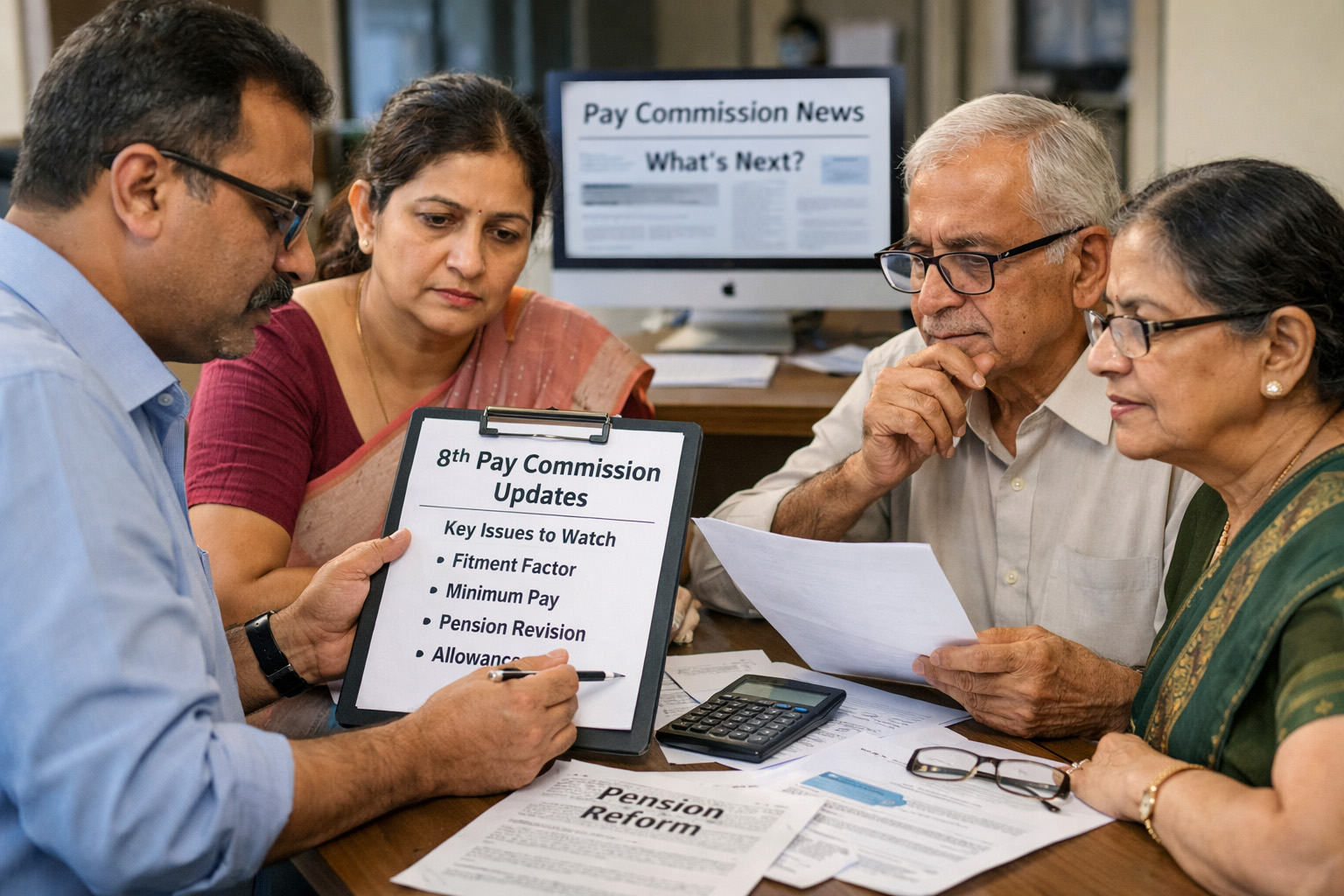
That is why this Rajya Sabha development matters far beyond one written reply. It signals that the debate around the 8th Pay Commission is entering a more serious phase. Questions about fitment factor, minimum pay, allowance restructuring, DA and DR treatment, pension protection, and implementation timing are likely to become sharper from here. Employees and pensioners may not yet have all the answers, but they now have something much more valuable than rumour: an official acknowledgement that the matter is under active consideration and public scrutiny.
For Central Government employees and pensioners, this is the real takeaway. The 8th Pay Commission is no longer just a topic of expectation. It is a live institutional process being watched in Parliament. That alone makes this update important.
The road to any Pay Commission outcome is always gradual, but official questions in Parliament often reveal where the real momentum is building. In this case, the message is clear: salary, allowances, pension, and service conditions are now under sharper national focus. The final recommendations may still take time, but the issue is very much alive, and the pressure for answers is increasing.
For employees and pensioners, the smartest approach now is to follow only verified developments and watch how the discussion evolves in the coming months.
Watch the Full Video for Complete Details



Leave a Reply