

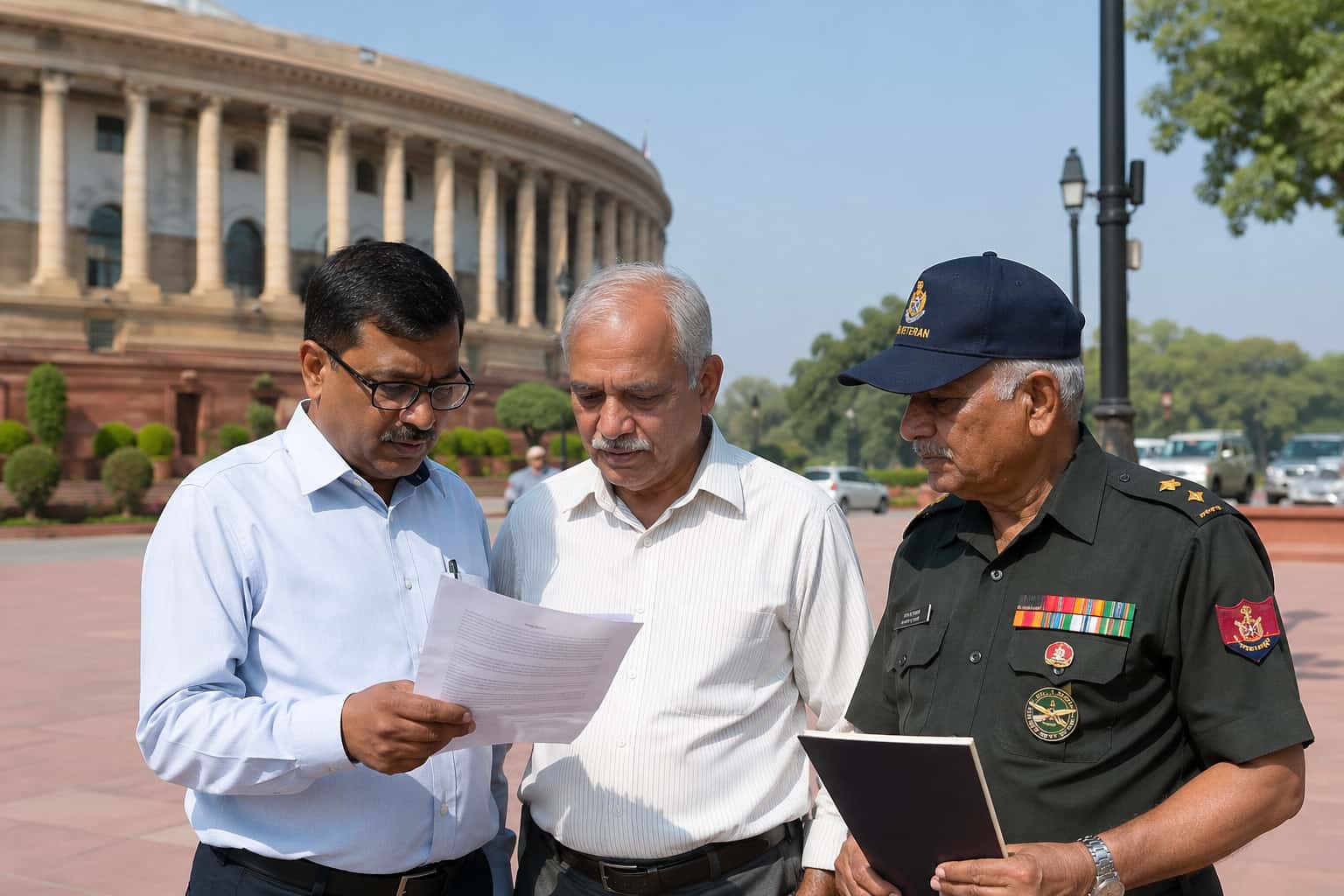
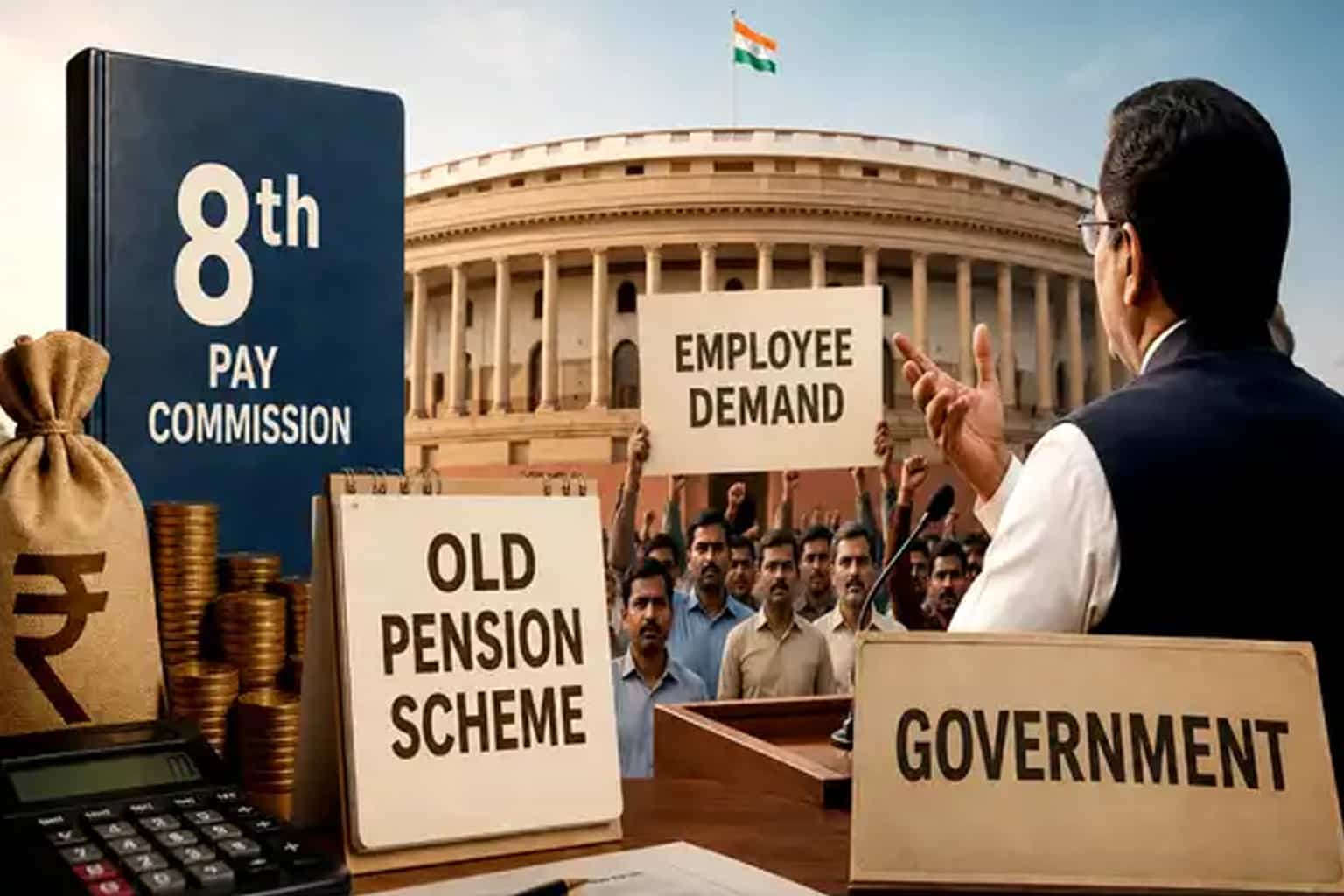
For central government employees, pensioners, defence pensioners and ex-servicemen, the 8th Pay Commission has become one of the most closely watched developments of the year. Every update is being discussed because the final recommendations may influence salaries, pensions, allowances, retirement benefits and long-term financial planning for lakhs of families.
But the latest official position gives one important message very clearly: the 8th Pay Commission process is active, but the final salary and pension outcome has not been announced yet.
This difference is important.
Many employees are still looking for direct answers on minimum pay, fitment factor, arrears and implementation date. Pensioners are waiting to understand how pension revision, Dearness Relief, commutation and family pension matters will be handled. Defence veterans are also watching issues like MSP, OROP anomalies, disability pension, ECHS, CGHS and rank-related parity.
These expectations are natural. A Pay Commission directly affects household income, retirement dignity and future planning. But it is equally important to understand how the process actually works.
The 8th Central Pay Commission has already been constituted by the Government of India through notification dated 3 November 2025. The official website also states that the Commission has been established at Chanderlok Building, Janpath, New Delhi. The same official page lists Justice Ranjana Prakash Desai as Chairperson, Prof. Pulak Ghosh as Part-Time Member and Shri Pankaj Jain as Member-Secretary.
This means the formation stage is complete. But formation does not mean automatic salary increase.
A Pay Commission first studies the existing system. It examines pay structure, pension issues, allowances, service conditions, representations, economic conditions and the possible financial impact on the government. Only after this process does it submit recommendations. After that, the central government examines those recommendations and decides what to accept, modify or implement.
This is exactly why the Finance Ministry’s reply is important.
In Lok Sabha Unstarred Question No. 4851, answered on 23 March 2026, Minister of State for Finance Shri Pankaj Chaudhary stated that the government had notified the resolution dated 03.11.2025 for the constitution of the 8th CPC, along with appointment of the Chairperson and Members. The reply also said the Commission will make recommendations on pay, allowances, pension and related matters within 18 months of its constitution.
This is the key point employees and pensioners must understand. The government has confirmed the process and timeline, not the final benefit amount.
The same reply also clarified that the fiscal impact of the 8th CPC recommendations will be known only after the Commission makes its recommendations and the government accepts them. In simple language, this means the final cost to the Union Budget cannot be calculated before the recommendation and acceptance stage.
Therefore, any viral claim about a confirmed fitment factor, confirmed arrears amount or final pension formula should be treated carefully unless it comes from an official source.
This does not mean there is no progress. In fact, the opposite is true. The process has moved from announcement to active examination. The official 8th CPC website has shown updates on forthcoming meetings, Delhi interactions on 28 and 29 April 2026, and Pune visit on 4 and 5 May 2026. This shows that the Commission is not only formed on paper. It has entered the consultation and working stage.
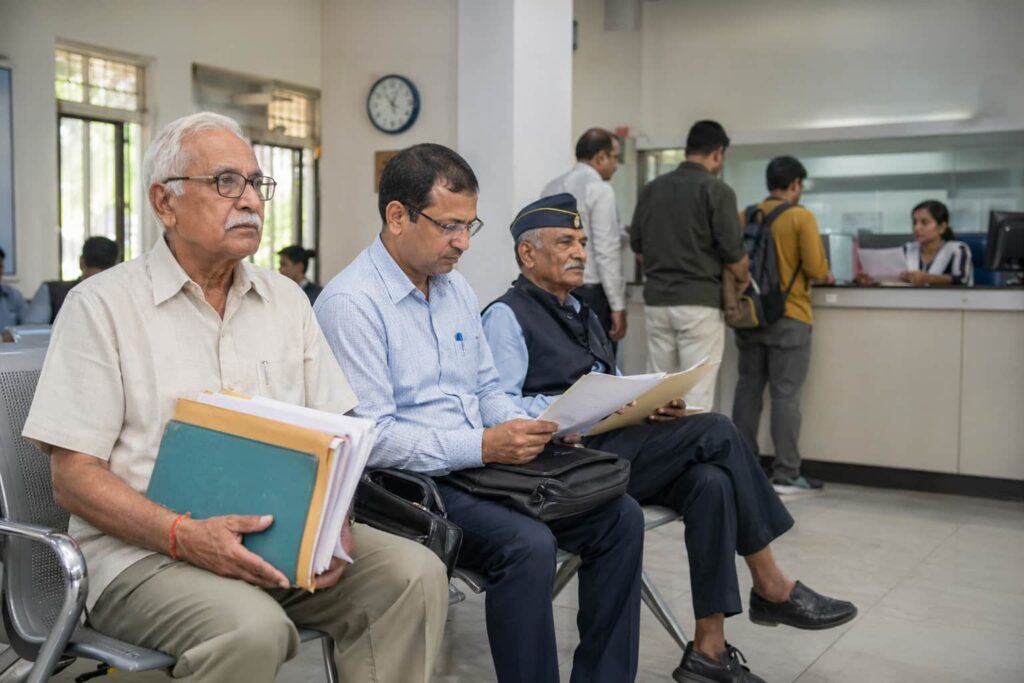
For employees and pensioners, this stage is extremely important because it is the time when issues must enter the official record.
The Commission has invited representations, memorandums and suggestions from central government employees, All India Services personnel, defence forces personnel, Union Territory personnel, audit and accounts employees, pensioners, service associations, unions, ministries, departments and other listed stakeholders.
This invitation should not be taken lightly. A Pay Commission cannot examine every social media comment or forwarded message. It works through documents, submissions, data and structured representations. If a genuine issue is not placed properly before the Commission, it may not receive the attention it deserves.
That is why employees and pensioners should focus on preparation instead of only waiting for headline announcements.
A strong representation does not need to be emotional or very long. It should be clear. It should explain the issue, who is affected, what the present problem is, what correction is requested and why that correction is justified.
For example, instead of writing only “pensioners are facing hardship,” a better representation should explain which category of pensioners is affected, what rule or calculation is causing the problem, how it affects monthly income or medical security, and what specific change is being requested.
The same approach should be used for minimum pay, fitment factor, annual increment, MACP, pay matrix, promotion stagnation, HRA, TA, LTC, medical facilities, commutation, gratuity and defence-related anomalies.
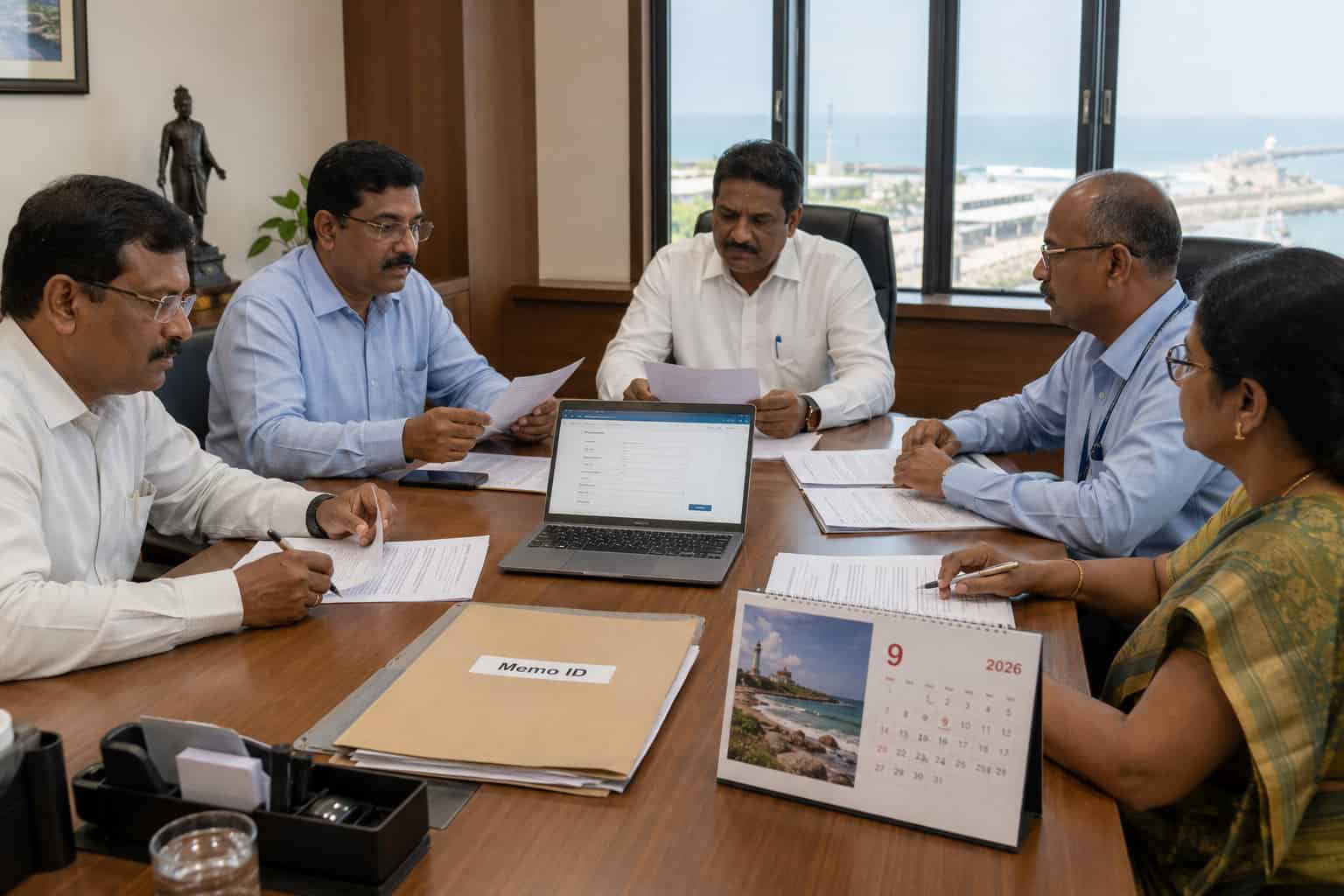
One more major point is the mode of submission. The official memorandum page clearly says that submissions are to be made only through the specified online link. It also states that paper-based memoranda, hard copies, PDFs or emails are not being considered or entertained by the Commission.
This is a very serious detail. Many employees and pensioners may still believe that sending a PDF or hard copy is enough. But the official instruction shows that the structured online route is the key channel.
This is especially important for elderly pensioners, veer naris and veterans who may not be comfortable with online systems. Families, welfare groups and local associations should help them prepare and submit their concerns correctly. A genuine issue should not be left out only because the person affected could not manage the online process.
The Finance Ministry’s reply should therefore be seen as a reality check, not a disappointment. It tells employees and pensioners that the 8th CPC is active, but the final result will come only after a structured process. It also reminds everyone that the present stage is not empty waiting. It is the stage where representations, meetings, data and official analysis will shape the future report.
For central government employees, the smart approach is to follow official updates, avoid unverified claims and prepare issue-wise submissions.
For pensioners, the priority should be clarity on pension revision, medical support, commutation, family pension and inflation protection.
For defence pensioners and ex-servicemen, the focus should be on service-specific issues that require separate treatment due to early retirement, field conditions, rank structure and military hardship.
The real message is simple. The 8th Pay Commission has moved forward, but the final salary and pension picture is still not ready. The Commission has time to study, recommend and submit its report. The government will then examine the recommendations and decide implementation.
Until then, the most useful action is not speculation. It is participation.
Employees, pensioners, veterans and associations should use this phase carefully. Submit issues properly. Keep records. Follow official communication. Help seniors who cannot submit online. Avoid rumours about confirmed figures.
The 8th Pay Commission reply does not give an instant hike. But it gives something equally important: a clear reminder that the process is alive, the timeline exists, and the opportunity to place concerns before the Commission is still the most powerful step available right now.


Leave a Reply