

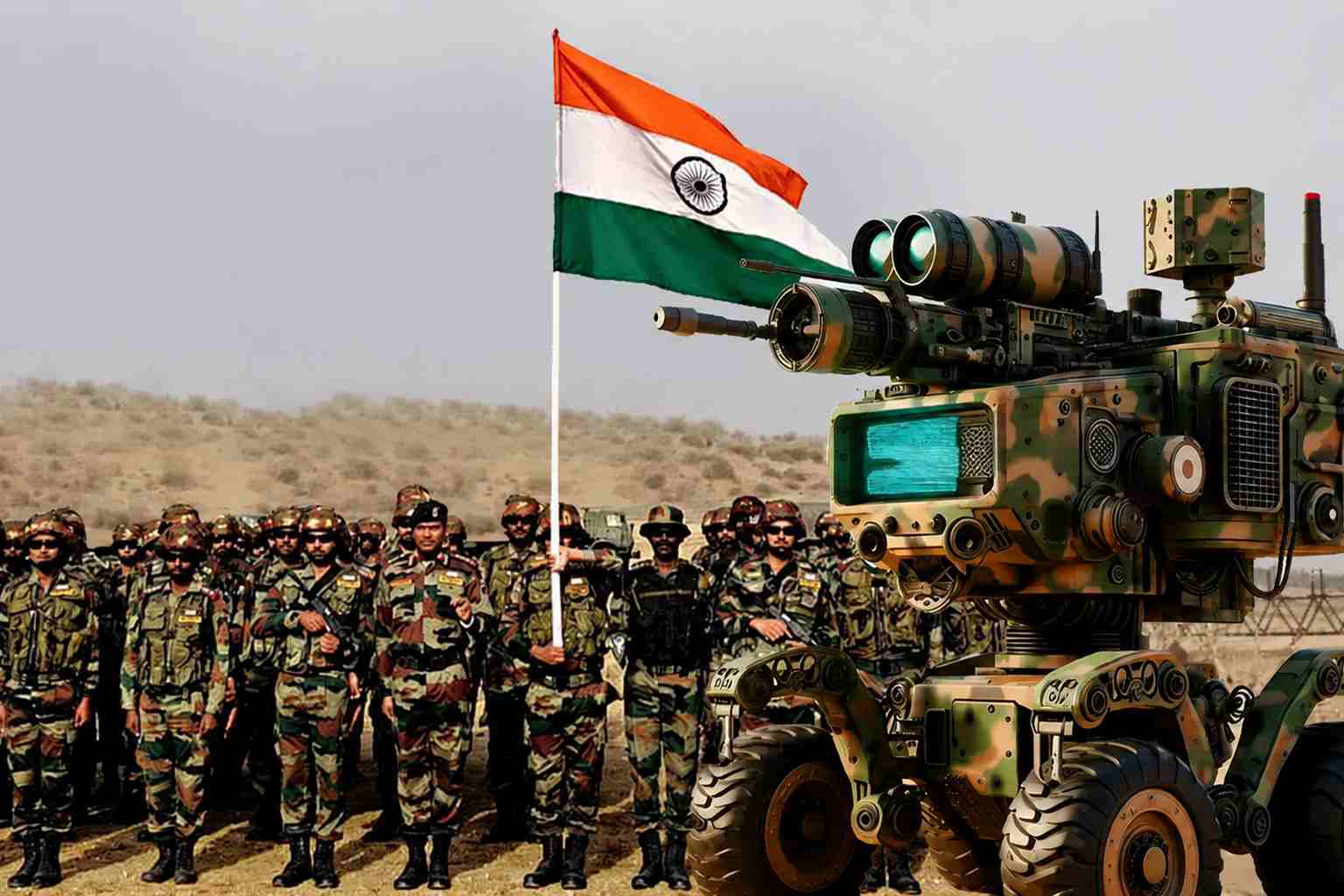
When people think of military power, they usually imagine tanks, rifles, missiles, fighter aircraft or artillery. Those are the visible symbols of strength. But modern conflict is not shaped only by what can be seen. It is also shaped by what can be detected, intercepted, analysed and understood in silence. That is why the Indian Army’s latest electronic warfare deal deserves closer attention.
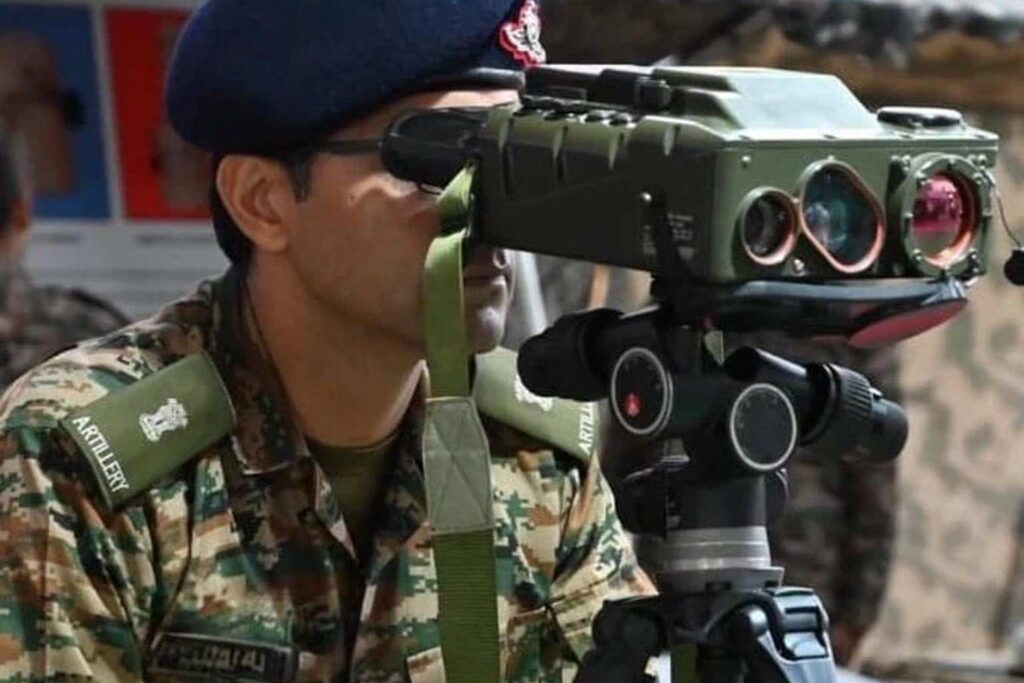
The Ministry of Defence has signed a contract with Bharat Electronics Limited for the procurement of five Ground-Based Mobile Electronic Systems for the Indian Army. The official government announcement places the contract value at ₹1,476 crore and says the acquisition carries minimum 72% indigenous content under the Buy (Indian, Indigenously Designed, Developed and Manufactured) category. That alone makes it a significant step in India’s push for both military modernisation and indigenous capability building.
At the same time, readers may notice another number being quoted in coverage of the same deal. BEL’s own press release says it has signed a contract valued at ₹1,251 crore excluding taxes for the supply of the system. That difference should not be treated as a contradiction. The most reasonable reading is that the larger ₹1,476 crore figure reflects the broader Ministry of Defence contract value, while BEL’s ₹1,251 crore figure refers to the company’s order value before taxes. When both numbers are presented with that context, the story becomes clearer instead of confusing.
The next question is the one that matters most to ordinary readers: what does this system actually do?
According to BEL, the Ground Based Mobile ELINT System, or GBMES, is a fully indigenous system designed and developed by DLRL, Hyderabad, and manufactured by BEL. The company says the system can detect, classify and locate different kinds of radars. It can also intercept and analyse communication signals. In simple language, that means it helps the Army understand what is happening in the electromagnetic environment around it. Instead of waiting only for a physical attack or visible target, the force gets an opportunity to sense the battlefield through signals and radar activity.
That capability matters because modern military operations are increasingly shaped by information. Radars search for aircraft, communication systems link units, sensors feed command networks, and drones constantly transmit data. Before any visible exchange of fire, there is often a quieter contest already underway in the background. Which side is transmitting. Which radar is active. Where are the signatures coming from. What kind of electronic pattern is building in a given sector. The side that understands that picture faster can often make better decisions earlier. That is where electronic warfare becomes a force multiplier. This is an inference from what the system is designed to do and from the official description of its radar and communications intelligence role.
The “mobile” part of the system is also important. A fixed electronic intelligence system has value, but a mobile one can move with formations, adapt to changing sectors and support different operational environments. In Indian conditions, that flexibility matters. The Army may need such capability in deserts, border regions, high-threat sectors or sensitive deployment zones. A mobile system allows commanders to position capability where it is needed, rather than being tied to one permanent site. That gives the system greater practical relevance in real operations. This again is a reasoned conclusion from the fact that the contract is for Ground-Based Mobile Electronic Systems rather than static installations.
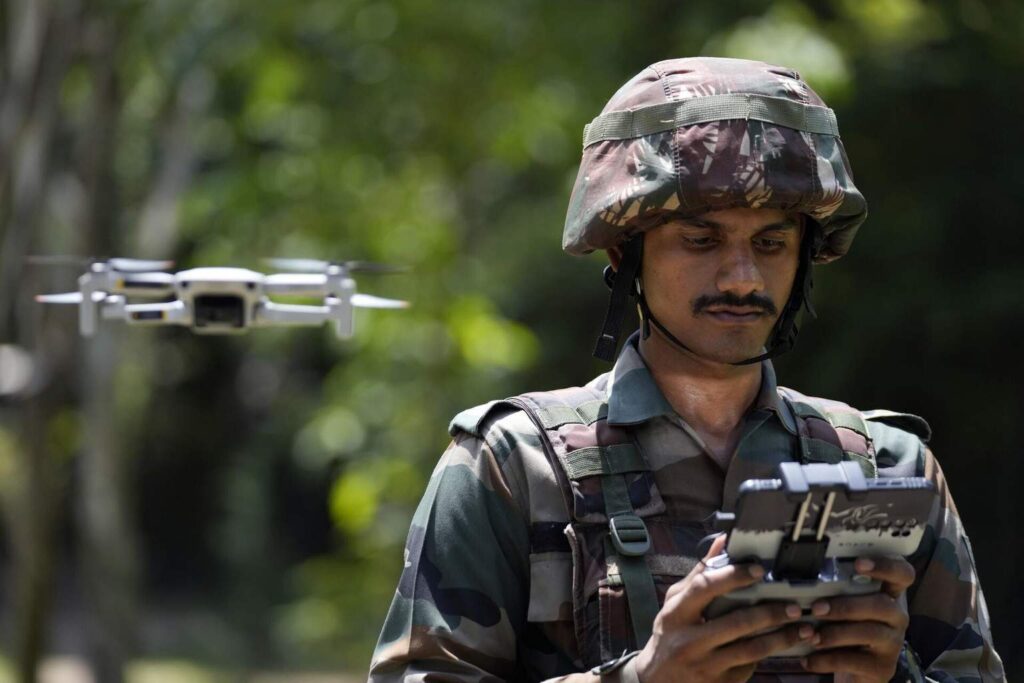
This deal also shows that India’s military preparation is moving beyond purely visible firepower. A tank helps in direct combat. Artillery provides long-range strike. Air defence protects against airborne threats. But electronic warfare adds another layer entirely: awareness. If commanders know more about radar activity, communication patterns and electronic emissions, they can react earlier, protect assets better and shape operations more intelligently. In many situations, knowing first can be as valuable as firing first.
The indigenous angle makes the story even stronger. The Ministry’s release emphasises the 72% indigenous content, while BEL’s statement underlines that the system is designed by DLRL and manufactured domestically. In electronic warfare, this matters more than it may in some routine procurement categories. Sensitive systems linked to signals intelligence, radar analysis and communications interception are not areas where countries like to remain dependent on external suppliers. Indigenous design and production give India more control over upgrades, support, secrecy and long-term operational confidence.
For defence industry watchers, this is another sign of how Indian military modernisation is increasingly tied to electronics, sensors and information systems, not only traditional platforms. The battlefield of the future will involve drones, communication networks, integrated air defence, electromagnetic sensing and faster data-driven decision-making. The Army does not only need weapons. It needs the ability to see, understand and respond inside a much more complex operational environment. This contract fits into that larger direction.
At the same time, no procurement should be romanticised as a complete solution by itself. A system becomes effective only when it is supported by training, doctrine, operators, maintenance and real integration into command decisions. Buying technology is the beginning, not the end. The Army will need skilled teams who can read the signals correctly, pass information quickly and turn electronic intelligence into useful operational choices. Without that ecosystem, even advanced equipment remains underused. That is a practical conclusion rather than a new factual claim, but it is the right way to understand defence modernisation.
For readers, the biggest takeaway is simple. This is not just a story about a ₹1,476 crore contract. It is a story about how the Indian Army is preparing for a kind of conflict where control of information, signals and radar awareness may matter as much as visible weapons. The battlefield of tomorrow may not begin with the first shot. It may begin with who reads the electronic picture first. And that is exactly why this deal matters.






Leave a Reply