

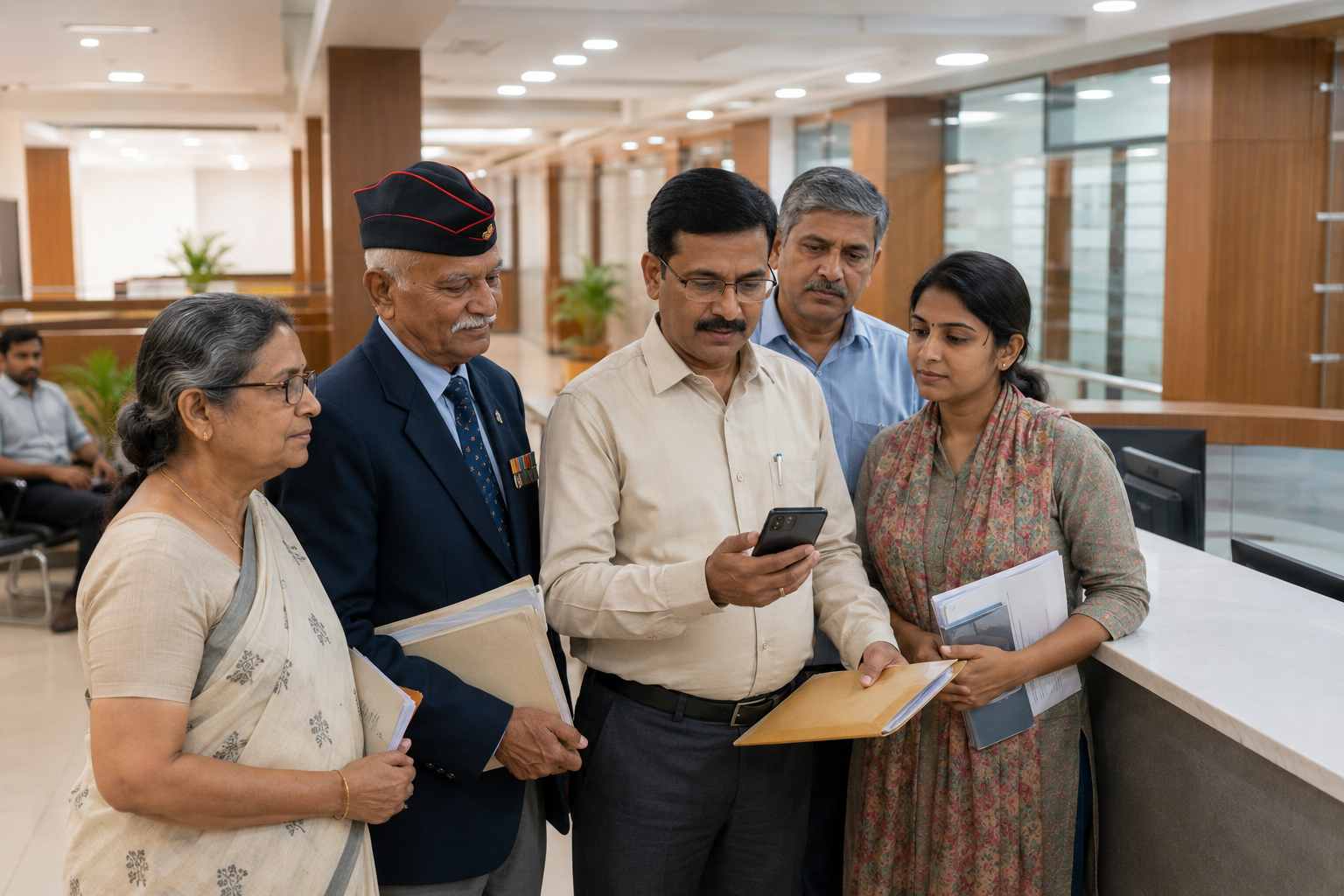
The 8th Central Pay Commission process has entered a very important stage. Until now, many employees, pensioners, defence personnel and service associations were mainly focused on submitting memorandums online. But now the Commission has also made the appointment process easier by adding a dedicated Link for Appointment/Meeting on its official portal.
This may look like a small website update, but for stakeholders it is a big practical step. It means that people no longer have to search for scattered links or depend only on forwarded messages. The official portal now gives city-wise appointment links for scheduled interactions with the Commission.
According to the official 8th CPC website, the appointment page includes links for Hyderabad, Telangana on 18 and 19 May 2026, Srinagar, Jammu and Kashmir UT from 1 to 4 June 2026, UT of Ladakh on 8 June 2026, and Delhi interactions on 13 and 14 May 2026.
For Central Government employees and pensioners, this is an opportunity that should not be taken lightly. Pay Commission interactions are limited, time-bound and process-driven. Not everyone can personally meet the Commission, but those who want to seek an appointment must follow the official method.
The most important rule is simple: submit your memorandum first and generate your Memo ID. Without the Memo ID, the appointment request may not be considered properly because the Commission needs proof that your issue is already submitted in the official system.
This is why the Memo ID has become more than an acknowledgement number. It is now the link between your written representation and your request for a public meeting. If you want to speak before the Commission, your point must already be on record.
The MyGov memorandum submission page clearly says that the 8th CPC invites representations, memorandums and suggestions from Central Government employees, defence forces personnel, pensioners, service associations, unions, ministries, departments, organisations and other eligible categories. It also states that the online submission began on 5 March 2026 and will close on 31 May 2026.
This deadline is very important. Some people may think that because the appointment link is live, they can first book a meeting and later prepare the memorandum. That is the wrong approach. The safer process is to submit the memorandum first, save the Memo ID, and then use the appointment link for the relevant city.
The official website also confirms that the Eighth Central Pay Commission was constituted by the Government of India through the notification dated 3 November 2025 and is functioning from Chanderlok Building, Janpath, New Delhi. The portal lists its composition, including Chairperson Justice Ranjana Prakash Desai, Part-time Member Prof. Pulak Ghosh and Member-Secretary Shri Pankaj Jain.
This means the consultation process is now happening through a formal structure. Every employee, pensioner, association or organisation must treat this as an official opportunity, not a social media campaign. Comments, WhatsApp messages and informal PDF sharing may create awareness, but they do not replace portal submission.
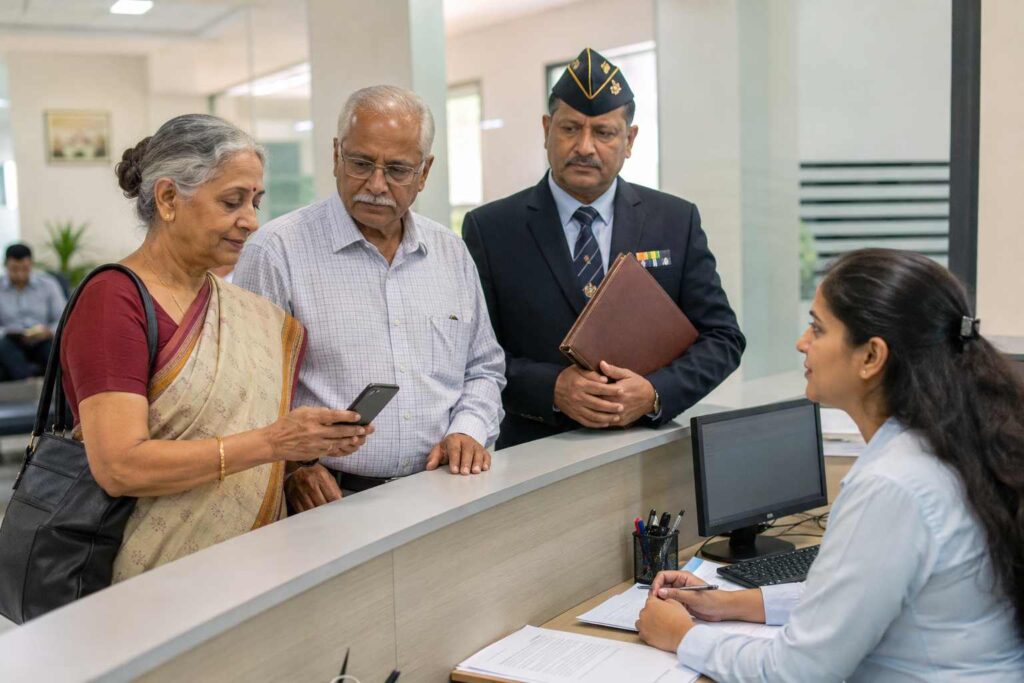
The appointment form may ask for several important details. These can include Memo ID, category of applicant, association or union details, registration details, representative names, ministry or department mapping, service or cadre details, mobile number and email address. If the details are incomplete or incorrect, the appointment request may face difficulty.
For associations, the process becomes even more important. If an association wants to represent thousands of employees or pensioners, it must clearly state its level, membership strength, registration number and authorised representatives. The usual rule is to keep representation crisp, documented and specific.
The biggest mistake many stakeholders make is writing emotional points without clear demand. A memorandum should not only say “salary should increase” or “pensioners are suffering”. It should clearly explain the issue, who is affected, what anomaly exists, what correction is requested and what justification supports the demand.
For example, employees can include issues related to fitment factor, minimum pay, pay matrix anomalies, annual increment, promotion pay fixation, MACP, HRA, TA, risk and hardship allowances, medical facilities and cadre-specific problems. Pensioners can include pension revision, commutation restoration, DR, family pension, gratuity, medical support and old anomalies.
Defence personnel, ex-servicemen and veterans should also focus on defence-specific concerns. These may include Military Service Pay, X Group Pay, disability pension, OROP-linked concerns, risk and hardship allowances, field area entitlements, ECHS-related issues, commutation, rank-related anomalies and early retirement-related pension impact.
The main purpose of the appointment is not to repeat a long speech. It is to highlight the most important issues in a structured manner. The Commission will have limited time. Therefore, a short written summary with five to ten key points can be more effective than a long emotional presentation.
This is also why individual employees should not depend only on unions or associations. An association may submit common demands, but individual issues can still be submitted separately if they are specific and genuine. The memorandum portal allows different categories of stakeholders to participate, including individuals, employees and pensioners.
The city-wise meetings are especially important because they give stakeholders outside Delhi a chance to interact with the Commission. Hyderabad, Srinagar and Ladakh cover different geographical and service realities. For defence personnel and pensioners in difficult regions, such visits can help bring local and service-specific issues into the discussion.
However, nobody should misunderstand this update as an approval of any demand. The appointment link does not mean salary revision has been finalised. It does not mean fitment factor is approved. It does not mean pension revision is decided. It only means the consultation process is becoming more accessible and organised.
That is why the right message is: be hopeful, but stay factual. The Commission is listening, but the final recommendations will come only after study, consultation and report preparation. After that, the Government will take the final decision.
The action plan is clear. First, submit your memorandum through the official MyGov link. Second, save the Memo ID. Third, check the appointment page on the official 8th CPC portal. Fourth, choose the relevant city if eligible. Fifth, fill all details carefully and keep your written summary ready.
Employees and pensioners should also avoid last-minute mistakes. Do not wait till the final date. OTP delays, server load, document confusion and incomplete details can create problems. Submit early, take screenshots, save email or SMS acknowledgement and keep the Memo ID safely.
In the end, this update gives employees, pensioners, defence personnel and associations a proper chance to place their issues before the 8th Pay Commission. But the chance will help only those who follow the official process.
The message is simple: No Memo ID, no serious appointment request. No clear memorandum, no strong representation. The 8th CPC appointment link is live, but the real power is in a well-written, timely and properly submitted memorandum.



Leave a Reply