

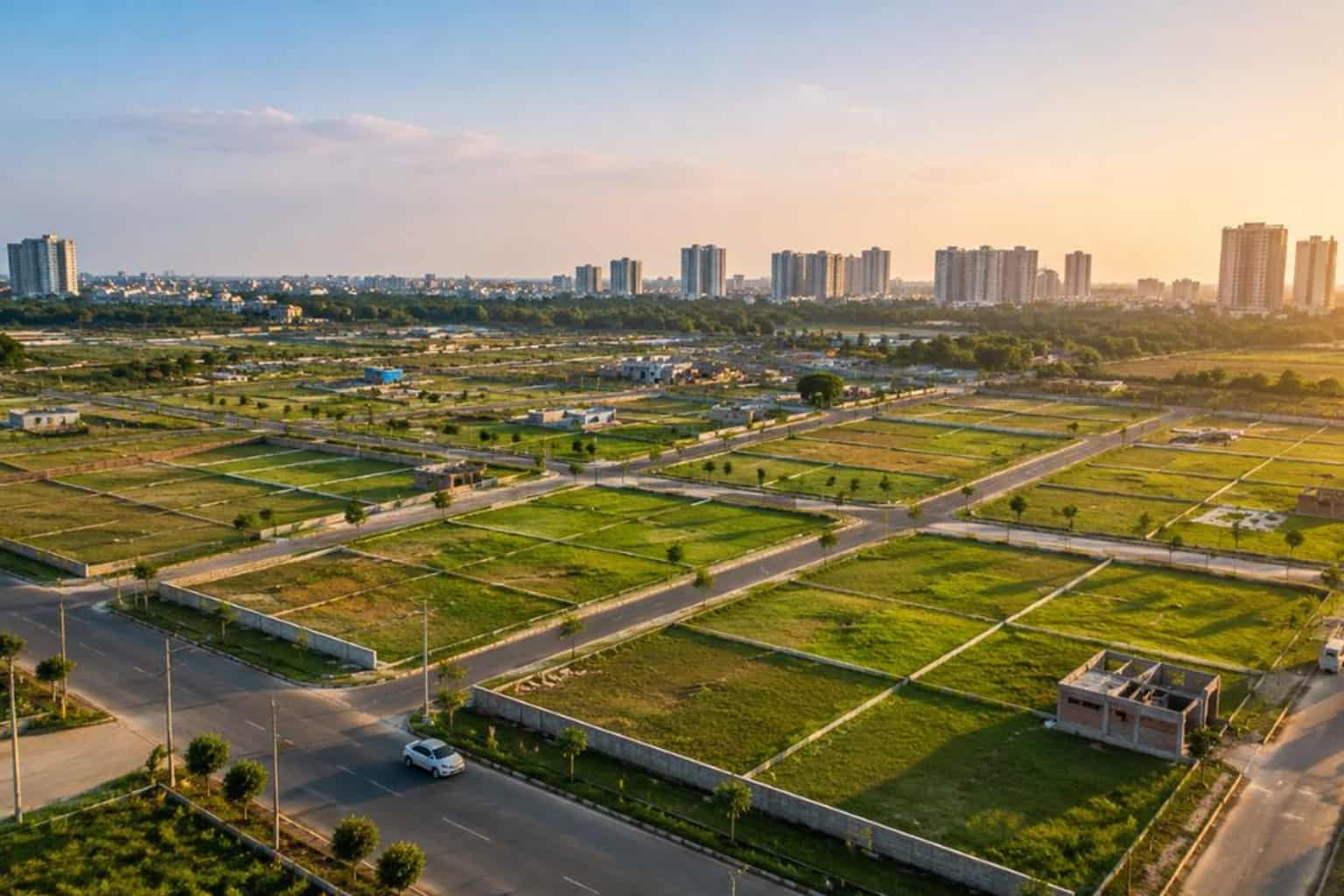
or many buyers in Ghaziabad and NCR, a development authority plot carries a different level of comfort. People often feel more confident when the allotment process is officially structured, the pricing is clearly notified and the project comes through an authority framework instead of an unverified private offer. That is why the new Madhuban Bapudham residential plot scheme 2026 is likely to attract attention.
But buyers should approach it carefully.
This is not only about filling an online form and hoping for a lottery win. It is a financial commitment with strict terms. Anyone planning to apply should first understand the plot sizes, pricing, booking amount, payment timeline, eligibility restrictions and refund conditions. A wrong assumption at the start can create a much bigger burden later.
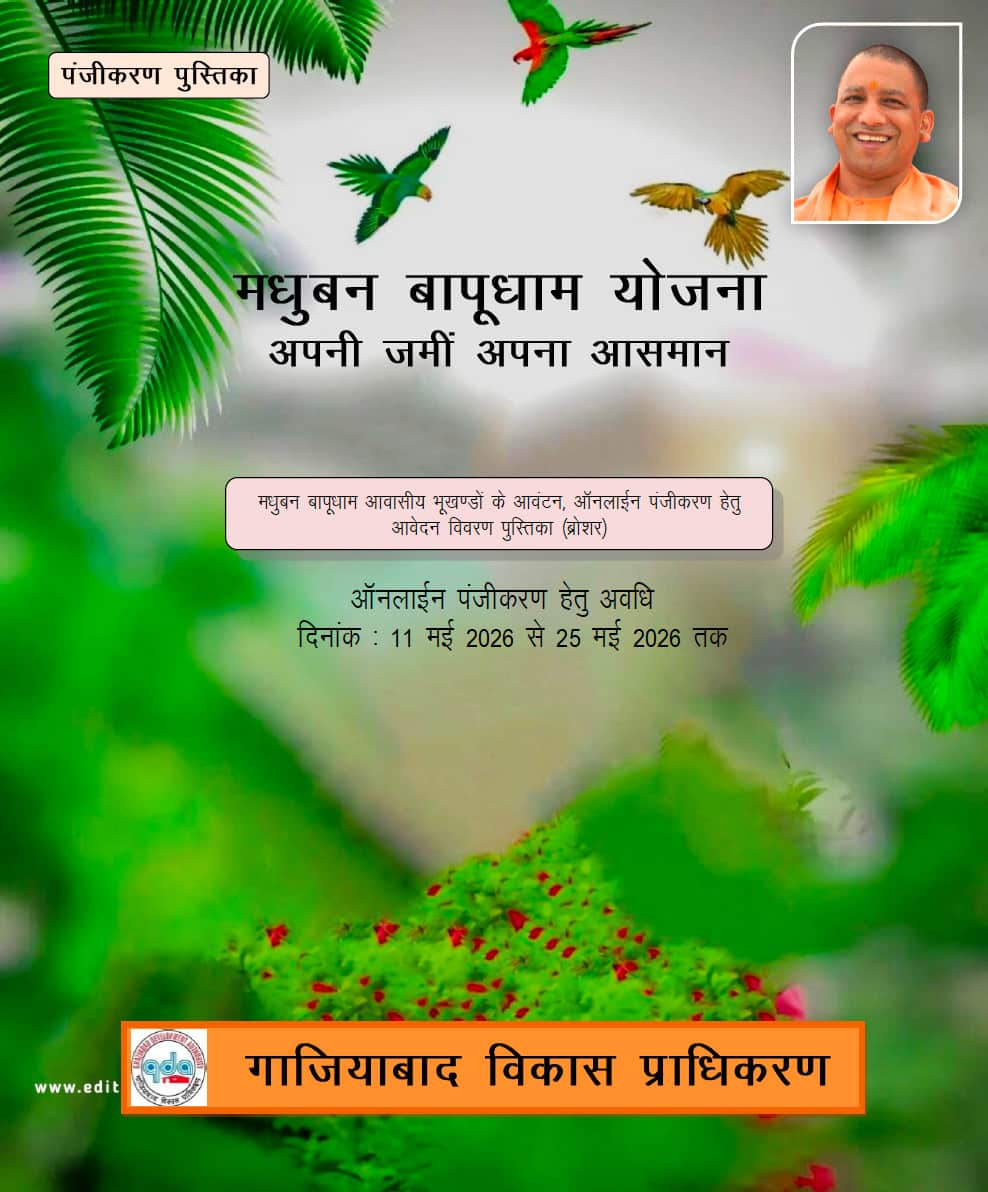
According to the brochure details, the scheme is open for online registration from 11 May 2026 to 25 May 2026. The scheme code is 935, and applications are to be submitted online. This means buyers should not wait for offline processing or assume that manual submission will be accepted.
One of the key attractions of the scheme is the variety of plot sizes.
The available categories range from 40 sq m to 200 sq m, which means the scheme is trying to cater to both budget-conscious buyers and those looking for a larger residential option. The listed sizes include 200 sq m, 150 sq m, 120 sq m, 115 sq m, 112.50 sq m, 90 sq m, 60 sq m and 40 sq m.
This range makes the scheme relevant for multiple buyer groups. Someone planning a modest first plot may naturally look at the smaller sizes, while a buyer wanting a larger independent house option may focus on the bigger categories. As per the scheme details, the smaller-size inventory appears more substantial, especially in categories like 40 sq m, 60 sq m and 90 sq m, which may attract the highest public interest.
The price point is another important factor.
The allotment rate mentioned is ₹35,000 per sq m. Based on this, the broad plot cost works out to around:
- ₹70 lakh for 200 sq m
- ₹52.50 lakh for 150 sq m
- ₹42 lakh for 120 sq m
- ₹40.25 lakh for 115 sq m
- ₹39.37 lakh for 112.50 sq m
- ₹31.50 lakh for 90 sq m
- ₹21 lakh for 60 sq m
- ₹14 lakh for 40 sq m
At first glance, some buyers may focus only on this base price. That would be a mistake.
The brochure makes it clear that the quoted rate does not include freehold charges, which are payable separately at 12% plus GST. This extra amount can significantly raise the final outflow, especially for larger plots. So the real cost is not just the reserved plot price. Buyers should calculate the full payable amount before making any decision.
The registration amount is another key consideration.
For general category applicants, the booking amount is 10% of the plot cost. For SC/ST applicants, it is 5%. This means the upfront payment can still be substantial. For example, a buyer applying for a 200 sq m plot would need to deposit a much larger registration amount than someone applying for a 40 sq m plot.
This is where many people get misled in such schemes. They think only about whether they can arrange the booking amount. But the bigger question is whether they can handle the payment pressure after allotment.
That pressure starts quickly.
After allotment, general category allottees have to deposit 15% of the plot value within one month, while reserved category allottees have to deposit 20% within one month. After that, the remaining 75% amount is payable in eight quarterly instalments, with interest linked to SBI’s current MCLR plus 1%.
This means buyers should not apply only because the initial deposit looks manageable. They should ask themselves a harder question: if allotment happens, can they realistically arrange the next payment within one month and continue the instalments on time?
That is the real test.
For buyers with strong liquidity, the scheme also gives a lump-sum payment incentive. As per the scheme terms, after adjusting the registration amount, if the remaining money is paid in one go, a discount may be available. The discount structure mentioned includes 6% within 45 days, 5% within 60 days, and 4% within 90 days. This may benefit buyers with ready funds, but it is relevant only for those who can actually mobilise the full payment quickly.
Eligibility is another area where applicants must be careful.
The basic conditions say the applicant should be an Indian citizen and 18 years or older. But the scheme also includes an important restriction linked to existing property ownership. The applicant or family should not already hold certain residential property benefits in the Ghaziabad area through GDA, Awas Vikas or similar government allotment channels beyond the allowed limits mentioned in the scheme conditions.
This is not a formality. If wrong information is submitted or property details are hidden, the authority has the power to cancel registration or allotment and forfeit the amount deposited. So buyers should avoid casual or incomplete declarations.
For 40 sq m and 60 sq m plots, there is an additional income condition.
These categories fall under the lower-income bracket and are intended for applicants with annual income between ₹3 lakh and ₹6 lakh. A valid income certificate from the competent authority is required. If the applicant’s income is above that level, they would not be eligible for those smaller categories. This is a major filter, and applicants in these plot sizes should verify their documents before applying.
Reservation provisions are also part of the scheme.
The brochure provides reservation under applicable categories such as SC, ST, OBC, ex-servicemen and dependents, senior citizens, persons with disabilities, government servants and other notified segments. One notable point is the mention of 3% reservation for ex-servicemen and their dependents and 10% horizontal reservation for senior citizens. For many applicants, this may become a meaningful factor in deciding whether to apply.
The allotment method is lottery-based.
This is important because no buyer should treat the registration amount as a guaranteed route to plot ownership. The allotment is to be done through draw of lots, and the results are expected to be displayed through the official process. So this remains a chance-based authority scheme, not a first-come-first-served confirmed booking.
The refund rules should also be understood before applying.
Many buyers assume that if they change their mind before allotment, they can simply seek a refund. That is not always so straightforward. The scheme conditions indicate that unsuccessful applicants will receive refund under the stated timeline, and if the refund is delayed beyond the specified period, interest provisions may apply. But buyers should read this carefully because registration money in authority schemes is never something one should deposit casually without understanding the terms.
The documentation side is equally important.
Applicants are expected to upload documents such as photo, Aadhaar, PAN, signature, affidavit and category-related certificates wherever applicable. Income certificate is also important for lower-income categories. Bank account details must match properly because any refund process is linked to the applicant’s bank records.
In practical terms, the Madhuban Bapudham plot scheme may appeal to genuine end-users who want an authority-backed residential plot in Ghaziabad. It may also interest those who value a structured official process over an uncertain market transaction. But it is not suitable for careless applicants.
Before applying, buyers should do four things clearly.
First, confirm eligibility.
Second, calculate the full cost including freehold charges and taxes.
Third, plan the post-allotment payment burden, not just the booking amount.
Fourth, keep all documents ready before making the online application.
The biggest takeaway is simple.
This scheme may look attractive because of its official structure and multiple plot sizes, but the real decision should be based on financial preparedness and documentation, not excitement. A lottery win is useful only when the buyer is ready for the payment responsibility that follows.



Leave a Reply