

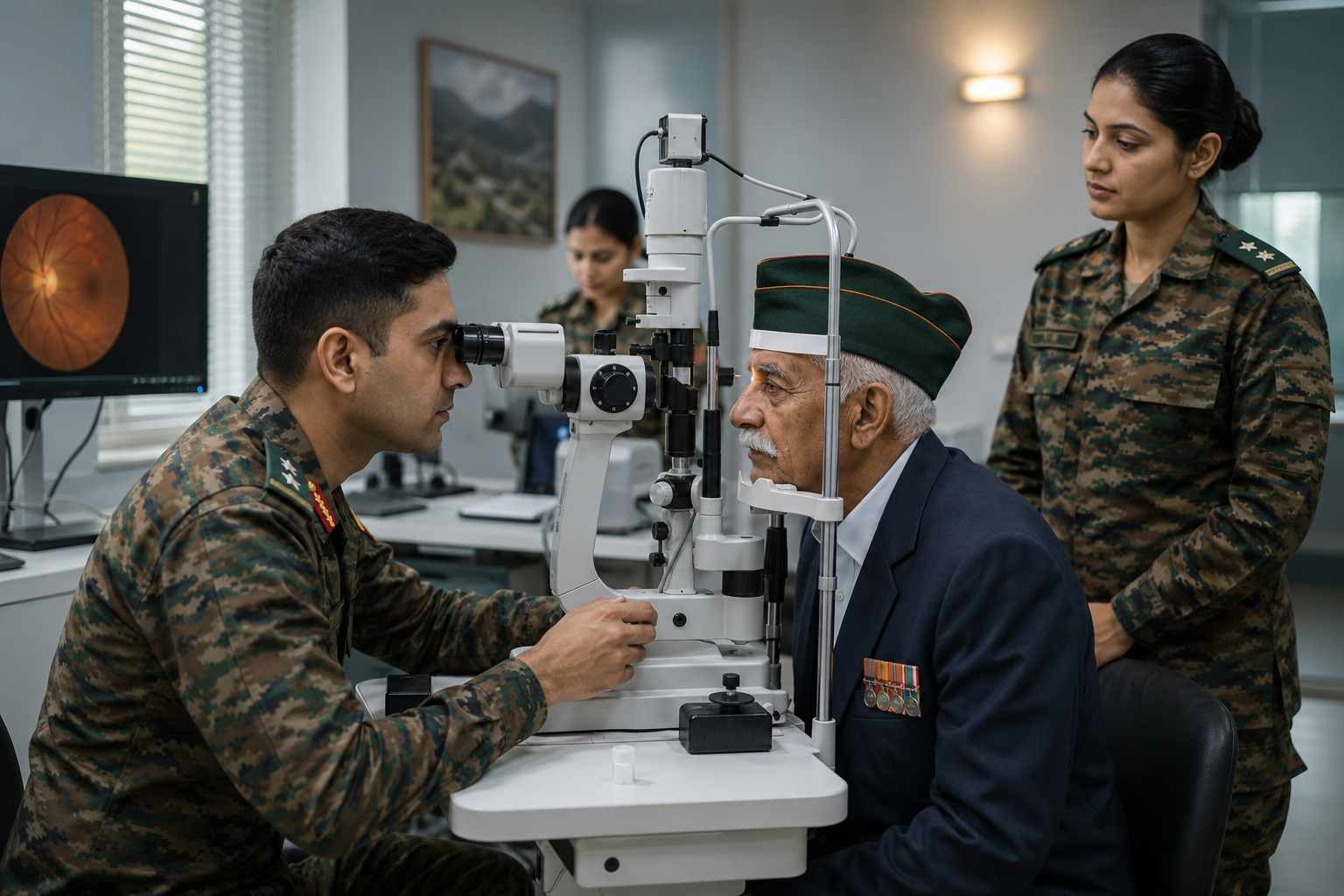
When people think about military strength, they usually think about weapons, borders, operations and combat readiness. But every strong military also depends on something less visible and equally important: a medical system that keeps soldiers fit, restores health when things go wrong and protects the long-term well-being of veterans and families. That is why the recent focus on military ophthalmology deserves attention. It tells us that eye care is no longer being treated as a routine hospital service. It is becoming a much bigger welfare mission inside the Armed Forces medical system.
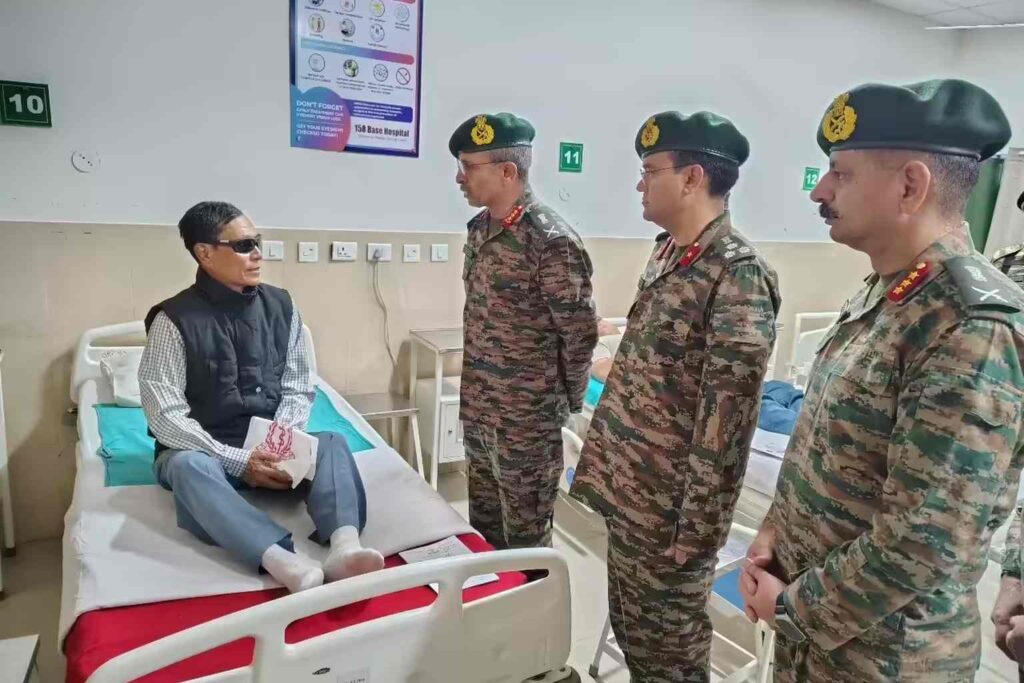
The AIOS-Armed Forces Ophthalmology Update 2026 was inaugurated in New Delhi on 9 May 2026 by Raksha Rajya Mantri Sanjay Seth. It was organised by the Department of Ophthalmology at Army Hospital (Research & Referral), New Delhi, in collaboration with the All India Ophthalmological Society. According to the official release, the event brought together military ophthalmologists, civilian experts from major institutions and international specialists on a common platform.
This matters because vision is not a minor issue in military life. Good eyesight affects firing accuracy, driving, night movement, surveillance, flying, navigation, map reading and basic operational alertness. A problem with vision can reduce confidence as well as capability. For veterans and elderly dependents, eye disease can quietly damage independence. Cataract, glaucoma, retinal disorders and diabetic eye disease do not just reduce eyesight. They affect mobility, safety, daily routine and dignity. That is why military eye care should be seen as a serious welfare subject, not only a specialised medical one.
The New Delhi conference also signals that the Armed Forces Medical Services are moving toward a more advanced model of treatment and research. The official note described the event as a first of its kind academic platform for military ophthalmology. It included participation from major civilian institutes and international experts, which shows that military medicine is not working in isolation. It is connecting with wider medical knowledge, new techniques and better systems of diagnosis. That is good news for patients because better professional collaboration usually means better care over time.
But the bigger story is not only inside conference halls. It is in the outreach work that has followed this broader medical vision. In November 2025, the Ministry of Defence announced Op Drishti at Command Hospital, Northern Command, Udhampur, where more than 2,000 people were screened and over 400 surgeries were performed during a large advanced surgical eye camp. The official release said the camp served people from multiple districts of Jammu and Kashmir and covered complex procedures related to cataract, glaucoma and retina.
That kind of effort changes the meaning of welfare. For a veteran in a remote area, or for an elderly dependent who cannot easily travel to a major city hospital, such a camp is not just a medical convenience. It can restore independence. It can reduce pain, prevent avoidable blindness and bring specialist treatment closer to people who would otherwise wait too long or not get access at all. Military medicine in such cases becomes a bridge between high-end expertise and hard-to-reach communities.
A similar message emerged from Gorakhpur in February 2026, where a mega advanced surgical eye camp at 12 Air Force Hospital brought together Indian Army and Indian Air Force doctors. The official release first said over 100 surgeries were performed on the first day, and a later PIB update said the camp concluded with 374 surgeries over four days. That update also noted that world-class ophthalmic equipment had been moved in for the mission and that the camp served ex-servicemen, dependents and underprivileged civilians.
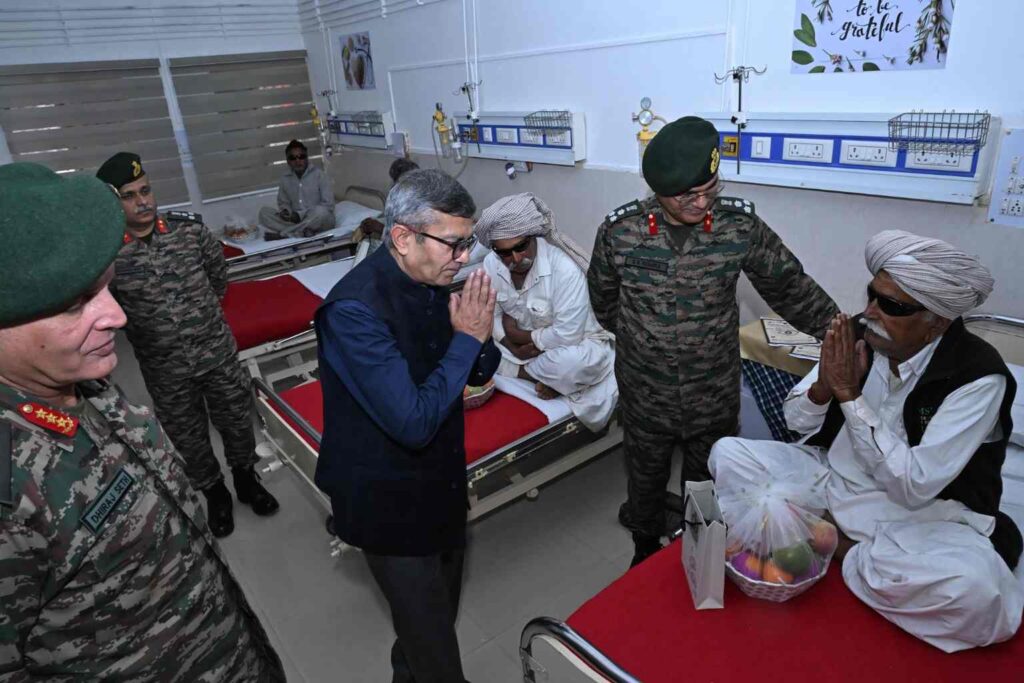
This tells us something important about the Armed Forces medical model. The military has logistics, discipline and the ability to mobilise specialists and equipment quickly. When that strength is used for eye-care outreach, it can deliver high-quality treatment in places where advanced ophthalmology support is not always easy to access. In welfare terms, that is a powerful capability. It helps soldiers, veterans and families, but it can also build trust in regions where access to specialist healthcare is limited.
Technology is another reason this story matters. In December 2025, the Armed Forces Medical Services launched India’s first AI-driven community screening programme for diabetic retinopathy, using the MadhuNetrAI platform in partnership with AIIMS and the Ministry of Health. The official announcement said the system helps screen, grade and triage retinal images, making earlier detection possible in different types of regions, including remote and difficult areas.
That step is especially relevant because diabetic eye disease often progresses silently. Many patients do not realise how serious the condition has become until vision is already affected. Early screening can prevent major damage. So when the military medical system adopts AI-based community screening, it shows that eye care is not only about surgery after the problem becomes severe. It is also about catching disease earlier and protecting eyesight before loss becomes irreversible.
The wider welfare message is clear. Soldier welfare is not only about pay, pensions or canteen access. It is also about the quality of healthcare available during service and after retirement. Eye care sits right in the middle of that. A serving soldier needs it for operational readiness. A veteran needs it for quality of life. A dependent may need it for daily functioning. A widow or elderly family member may depend on timely diagnosis for independence and safety. When military hospitals invest in this area, the benefits spread far beyond one department.
That is why the ophthalmology update in New Delhi should be read as more than a conference. It is part of a broader pattern. Advanced military eye care is becoming more specialised, more outward-looking and more connected to outreach, technology and public service. The Armed Forces are showing that healing and readiness are not separate ideas. They are part of the same system. And when that system restores someone’s vision, especially a veteran or a dependent living far from a major centre, the welfare value becomes impossible to ignore.
In the end, military eye care matters because it protects more than eyesight. It protects confidence, mobility, independence and service dignity. That is why this story deserves to be seen not as a niche medical update, but as a serious welfare development with a human impact that reaches far beyond the hospital ward.


Leave a Reply