

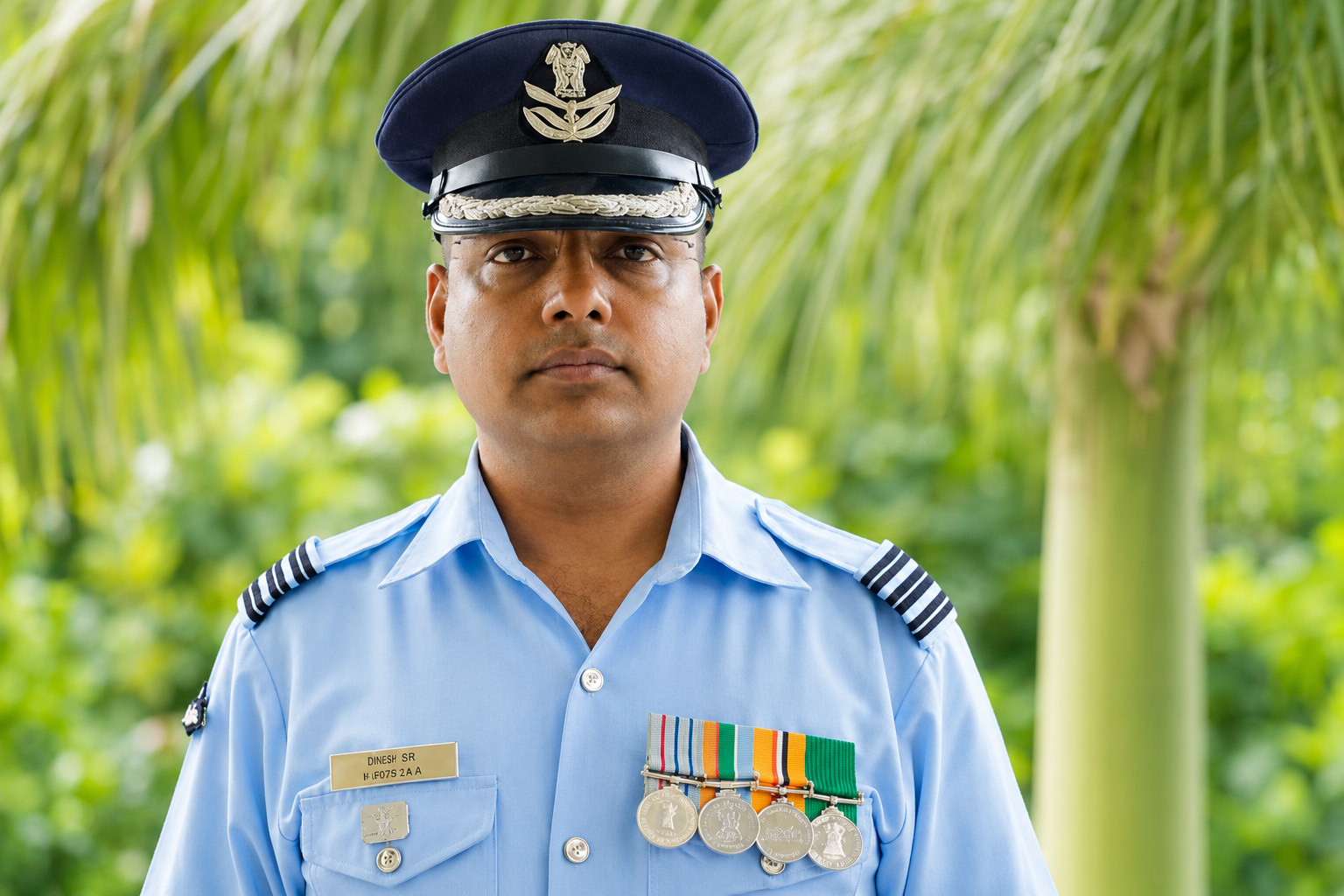
A military career is often judged by uniform, rank and posting. But the real value of service is much deeper.
The Indian Air Force gives a person exposure to technology, discipline, teamwork, pressure, responsibility and national service. These qualities do not end when a person leaves uniform. They continue to shape leadership, career decisions and public life.
For young aspirants, this is an important lesson. Joining the Air Force is not only about selection. It is about entering a system where every action has meaning, every technical check matters and every decision can affect a larger mission.
Air Force service is not only about flying?
When people think of the Indian Air Force, they often imagine fighter jets, air shows and pilots.
That is only one part of the story.
Modern air power depends on a wide network of officers, engineers, technicians, logisticians, instructors, administrators and communication teams. Aircraft cannot operate safely unless maintenance, planning, systems, weapons, ground support and technical inspection work together.
This is why technical officers and engineering teams are central to Air Force readiness.
A small technical fault can affect mission availability. A delayed repair can disturb operational planning. A careless check can create risk. The Air Force teaches that professionalism is not optional. It is a daily requirement.
Why technology is now central to defence careers?
The future of defence is becoming more technology-driven.
Aircraft systems, drones, radars, missiles, electronic warfare, cyber systems, sensors and communication networks are changing the way armed forces operate.
For technically minded students, this makes the Air Force a serious career option. It offers a chance to work with advanced platforms while serving the country.
But technical knowledge alone is not enough. A defence career also demands responsibility, discipline, teamwork and calm decision-making.
A good officer must understand both machines and people.
What does SSB really test?
Many defence aspirants look at SSB as a short selection event. In reality, it is a personality assessment.
SSB does not exist to reward memorised answers. It tries to find whether a candidate has officer potential, practical thinking, communication ability, responsibility and team behaviour.
This is why originality matters.
A candidate who copies fixed answers may look prepared for a few minutes, but real personality comes out through interview, group tasks and psychological assessment.
The better preparation is to become more aware, more responsible and more expressive over time.
Why courage is not always dramatic?
Military life teaches that courage is not only seen in battle.
Sometimes courage means jumping from an aircraft during training. Sometimes it means handling a technical emergency calmly. Sometimes it means accepting responsibility when something goes wrong. Sometimes it means doing the right thing even when nobody is watching.
In uniform, fear does not disappear. Training teaches a person how to act despite fear.
That lesson is valuable even outside the military.
Students, officers, employees and professionals all face moments of doubt. The person who can stay calm, follow process and act with clarity has already learned a form of courage.

Why communication matters in military life?
A common mistake is to think that technical officers only need technical knowledge.
They also need communication.
An officer may have to brief seniors, guide juniors, explain problems, coordinate with other teams and make technical issues understandable. If a person understands a system but cannot explain it clearly, his effectiveness becomes limited.
This is true in the Air Force and in civilian careers.
Clear communication builds trust. It reduces confusion. It helps teams move faster. It also makes leadership more effective.
What military service teaches about crisis handling?
In military work, unexpected problems are part of life.
A vehicle may get stuck during movement. A technical task may face delay. A weapon system may need careful handling. A team may have to coordinate quickly with different agencies.
The Air Force environment teaches people not to panic.
First understand the problem.
Then assess the risk.
Then use available resources.
Then coordinate clearly.
Then complete the task safely.
This structured thinking becomes a lifelong asset.
In civilian language, this is risk management, project handling and leadership under pressure.
Why readiness is a duty?
Operational life is not always action. Much of it is waiting, preparation and alertness.
During large deployments or tense situations, personnel may stay ready for long periods. Equipment must remain serviceable. Teams must remain disciplined. Communication must remain clear. Morale must remain steady.
This is the hidden side of national security.
Readiness looks quiet from outside, but it requires constant work.
For young readers, this is an important career lesson. Success is not built only on big moments. It is built during preparation, routine and discipline.
How veterans can use military experience after retirement?
A veteran carries many strengths into civilian life.
Leadership, time management, technical exposure, discipline, training ability, teamwork, crisis response and people handling are valuable in many sectors.
The challenge is language.
Military experience must often be translated into civilian terms.
Command experience can become team leadership.
Maintenance responsibility can become asset management.
Operational planning can become project execution.
Training juniors can become people development.
Crisis response can become risk management.
Discipline can become workplace reliability.
Veterans should not underestimate their experience. They only need to present it in a way civilian employers understand.
Comment
The most important message from an Air Force career is that service builds a complete professional.
It gives technical knowledge, but also discipline. It gives confidence, but also humility. It gives courage, but also respect for procedure. It gives leadership, but also the ability to work inside a system.
This is why military experience remains valuable even after retirement.
A person who has worked in a high-responsibility environment does not leave those qualities behind with the uniform. The uniform may retire, but the habits of service continue.
What should aspirants and parents understand?
Defence selection should not be seen only as an exam to clear.
It is a decision to enter a demanding life.
Aspirants should build fitness, communication, awareness, responsibility and practical thinking. Parents should support preparation without creating fear or artificial pressure.
A child who learns responsibility at home, communicates clearly, stays active, reads widely and handles small duties well is already preparing for a bigger life.
Final takeaway
Indian Air Force service is a journey of technology, discipline and responsibility.
It teaches a person how to think under pressure, work with advanced systems, communicate clearly, trust training and adapt after retirement.
For aspirants, the lesson is to prepare for the life, not only the selection.
For veterans, the lesson is to value their experience and translate it confidently into civilian opportunities.
For citizens, the lesson is to understand that military service builds people who continue contributing to society long after they leave uniform.



Leave a Reply