


For lakhs of central government employees and pensioners across India, healthcare is not just a benefit. It is a necessity that shapes financial security, family peace, and quality of life. That is exactly why the future of the Central Government Health Scheme, better known as CGHS, is once again becoming a major topic of discussion after the announcement of the 8th Pay Commission.
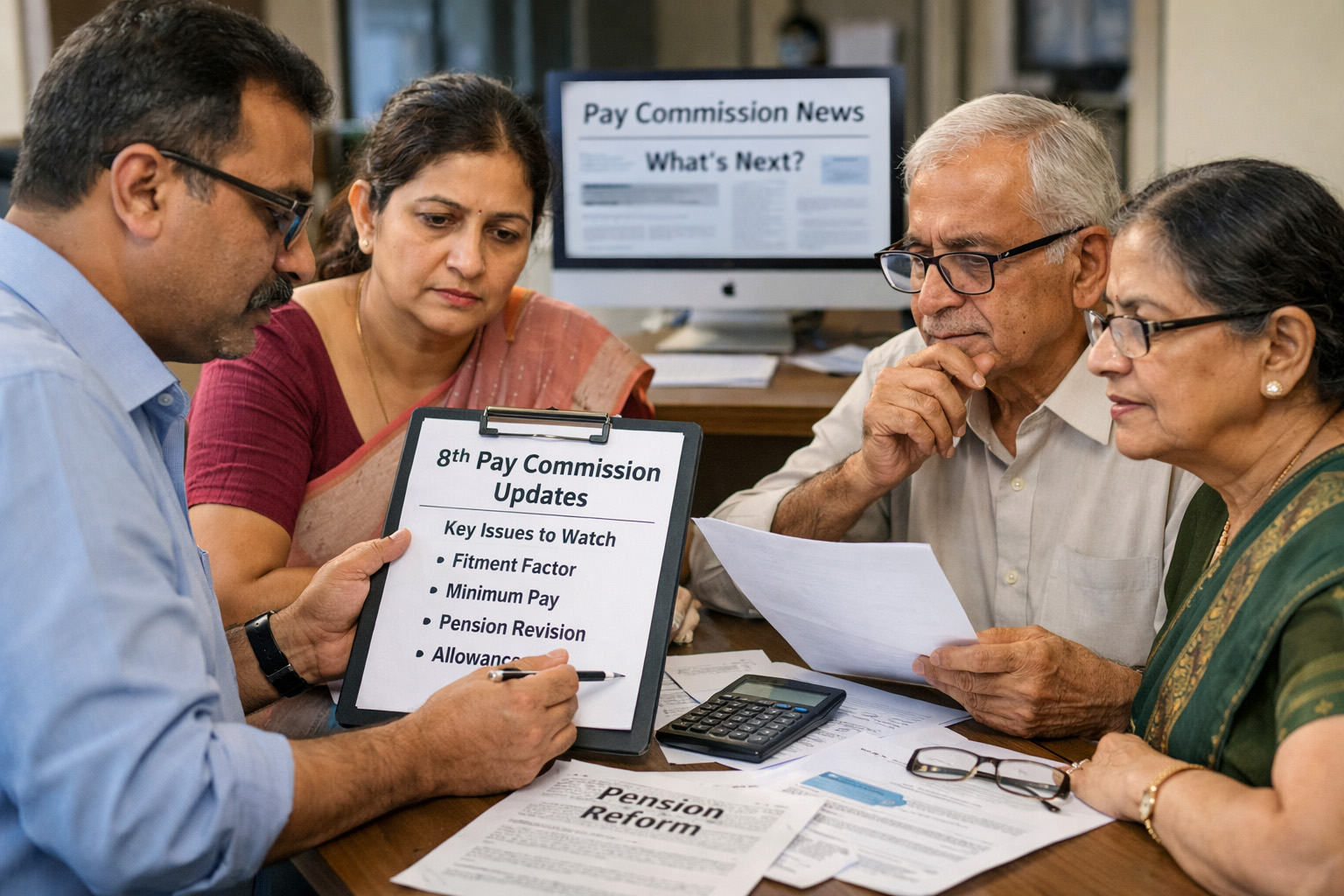
Most people usually connect a Pay Commission with salary hikes, pension revision, fitment factor, and allowances. But that is only one side of the story. Every Pay Commission also gets the chance to review welfare measures that affect employees in their everyday lives. Healthcare is one of the most important among them. This is why the debate around CGHS and a possible new health scheme matters so much.
For years, central government employees and pensioners have raised concerns about the practical limitations of CGHS. While the scheme has undoubtedly supported a large number of beneficiaries, it has also faced criticism for limited reach and uneven convenience. Now, as fresh discussion begins around a possible insurance-based replacement, one question is becoming louder: will the 8th Pay Commission finally recommend a new healthcare system for government employees and pensioners?
CGHS has long served as the main healthcare support system for central government employees, pensioners, and their dependents. It provides access to consultations, diagnostics, medicines, and treatment through approved facilities. On paper, the system is broad and useful. In many places, it continues to provide meaningful support. But the real difficulty appears when beneficiaries living outside major cities try to use it.
The biggest challenge with CGHS has been accessibility. Its coverage is not equally convenient across India. In areas where CGHS infrastructure is weak or absent, employees and pensioners often struggle to access quality and timely treatment. For retired personnel, this becomes even more serious because healthcare support is not a luxury for them. It is a basic need. A scheme that works well in select cities but remains difficult to use elsewhere naturally invites questions.
That is why the idea of reforming or replacing CGHS is not new. Earlier Pay Commissions had already taken this issue seriously. The 6th Pay Commission suggested the introduction of an optional healthcare scheme for central government employees and pensioners. It proposed that current employees could join voluntarily by paying a fixed contribution, while new recruits in the future could be brought under such a system more systematically. It also recommended that retiring employees should receive the benefit once the new scheme came into effect.
The 7th Pay Commission took a stronger view. It made it clear that health insurance appeared to be a more practical long-term option for wider and more effective medical protection. The commission noted that employees, pensioners, and their families needed a system that offered dependable and broader medical support. This was an important observation because it moved the discussion from limited reform to a larger healthcare redesign.
The 7th Pay Commission also recognized a major ground-level concern. Many pensioners lived outside the effective area of CGHS facilities and found it difficult to get cashless treatment. To address this, the commission suggested that hospitals already empanelled under CS(MA) or ECHS should also be connected in a way that helps such pensioners. This recommendation reflected a practical reality. Healthcare is only meaningful when it can actually be accessed without delay and stress.
This is why recent discussions about a new insurance-based health model have gained so much attention. In early 2025, reports suggested that the Health Ministry was considering replacing CGHS with an insurance-based scheme that could be called the Central Government Employees and Pensioners Health Insurance Scheme, or CGEPHIS. Even though no final official rollout has been confirmed, the possibility alone has revived major interest among employees and retirees.
The reason is simple. A properly designed insurance-based system could solve many of the complaints linked to CGHS. It could expand hospital access beyond traditional CGHS locations. It could improve portability for employees and pensioners who live in different cities. It could also make treatment easier in areas where the present system struggles. For pensioners especially, such a change could mean less dependence on geography and better access to care when it is needed most.
This issue matters today more than ever because healthcare costs continue to rise and medical dependency increases with age. Many retirees now live away from the cities where they once served. Families are spread across states. Children often work in other locations. In such a situation, a healthcare model with limited practical reach creates anxiety. Employees and pensioners do not just want a benefit on paper. They want a system that works smoothly during illness, emergencies, and long-term treatment.
That is where the 8th Pay Commission becomes highly important. Its role will not be limited to salary and pension revision alone. Like earlier commissions, it can also review the overall welfare structure supporting central government employees and pensioners. Healthcare is one of the most sensitive and meaningful parts of that structure. If the new commission gives serious attention to this issue, it may shape one of the most important reforms for lakhs of families.
At the same time, any move toward a new scheme will require clarity. Employees and pensioners will want answers to several practical questions. Will the new system be fully cashless? How much contribution will be required? Will pensioners receive equal protection? How broad will the hospital network be? Will the benefits be stronger than CGHS or just differently named? These questions matter because reform is useful only when it genuinely improves the real experience of beneficiaries.
It is also possible that the government may choose not to completely replace CGHS, but instead modernize and expand it. That too would be a major development. If CGHS becomes more accessible, more digitally efficient, and more widely empanelled, it could address many of the same complaints. So the coming debate is not just about replacement versus continuation. It is really about whether the government is finally ready to build a healthcare system that works better for the present generation of employees and pensioners.
For now, there is no final decision. But the direction of discussion clearly shows that healthcare reform has become one of the most closely watched issues connected to the 8th Pay Commission. Salaries and pensions matter, but healthcare touches life more directly. It affects dignity, confidence, and peace within families. That is why so many people are watching this issue with genuine hope.
The coming months may decide whether this long-pending discussion turns into real reform. Whether through an improved CGHS or a new insurance-based system, central government employees and pensioners are expecting one thing above all: a healthcare framework that is accessible, practical, and reliable when they need it the most.

Leave a Reply