


When most pension-related news appears online, readers usually expect one of three things: a rise in Dearness Relief, a court order, or a new circular with direct financial impact. But the release of the 35th SCOVA minutes is a different kind of story. It is not about one headline decision. It is about the health of the pension system itself. And in many ways, that makes it more important than a routine announcement.
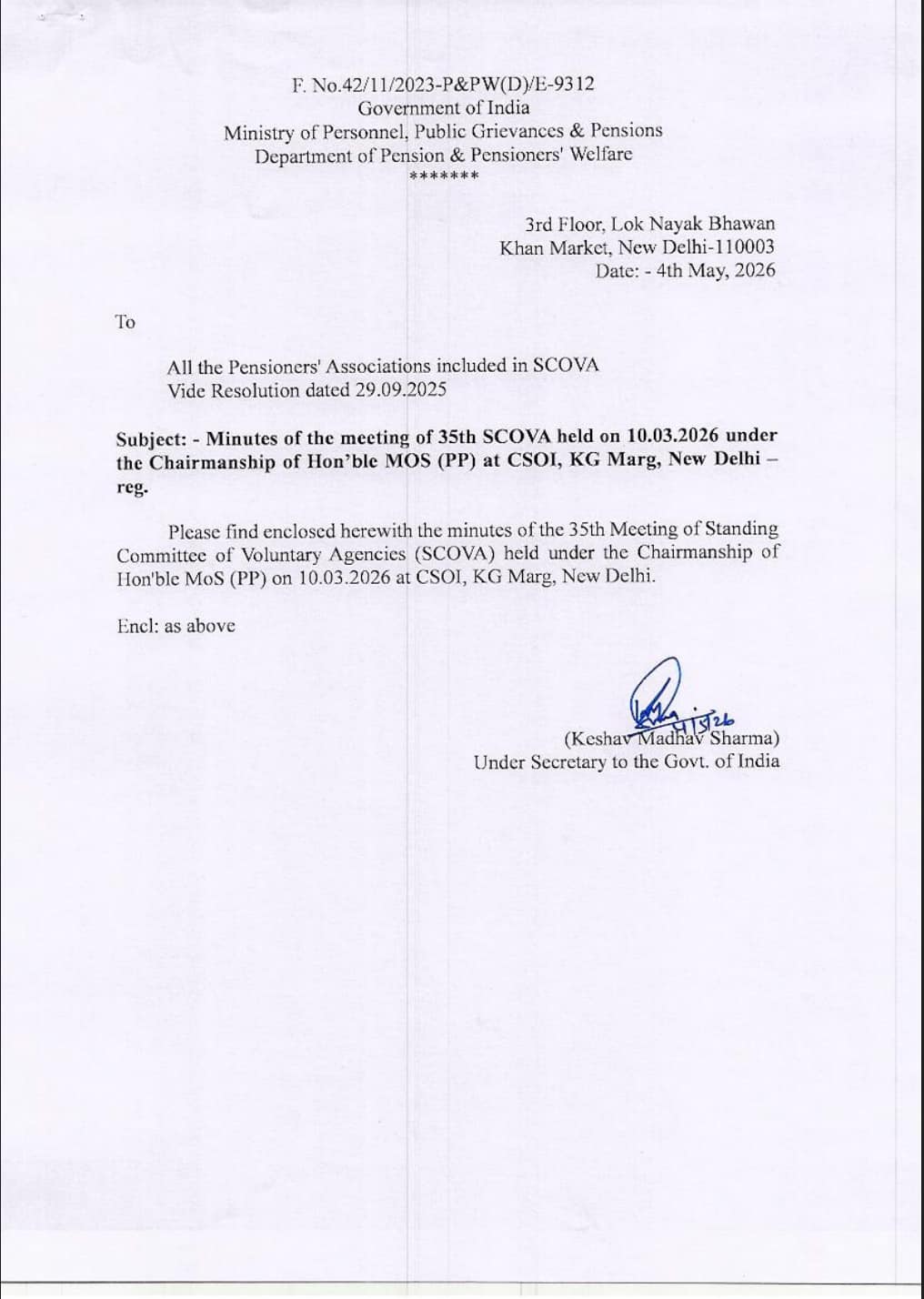
That is because SCOVA is not just a meeting format. It is a window into how pensioners’ problems travel through the government.
The official minutes describe SCOVA as a platform where pensioners’ welfare associations can raise issues directly before the concerned ministries and departments, and where feedback on the implementation of pension policies and programmes is discussed. That means the document is not simply ceremonial. It is a record of what pensioners are still complaining about, what the departments are saying in reply, and where the system is moving too slowly.
This is what gives the document its real storytelling power.
If you read it like a bureaucratic paper, it looks dry. If you read it like a welfare document, it tells a much more human story. It tells the story of pensioners who still struggle with medical access, family pension procedures, Digital Life Certificate problems, bank-level errors, and unresolved administrative gaps even after multiple reforms have already been announced. In other words, the minutes show that pensioner welfare is not decided by one order alone. It is shaped by how well different departments actually solve problems on the ground. This is an inference based on the agenda-wise structure and recorded responses in the official minutes.
The government side, of course, also uses the meeting to show progress.
The opening section of the minutes says more than 74% of grievances were resolved on the spot in the last 15 Pension Adalats. It also highlights the role of Pension Mitras for handholding pensioners, and the department notes the success of the DLC campaign and earlier guidelines for timely retirement dues and issue of PPOs. That is the positive side of the story: the government wants to show that the pension administration system is becoming more responsive.
But the most meaningful part of the minutes is that they do not stop at self-congratulation.
The document also records several practical welfare concerns, especially around CGHS. It notes that recent reforms included revision of CGHS packages, lowering the age for referral-free consultation in empanelled hospitals from 75 to 70, extending single-referral validity from 1 month to 3 months, and integration with Bhavishya so that the CGHS card can be generated on the first day of retirement. For many pensioners, especially older ones, these are not minor technical tweaks. They directly affect how often a person has to travel, how many counters they must visit, and how quickly treatment can begin.
The CGHS section of the minutes also shows something else: reform is not just about opening new centres.
There are discussions around medicine availability, empanelment of healthcare organisations in tier II and III cities, rationalisation of staffing across wellness centres, and feasibility of services like home delivery of medicines. Some items are marked closed because the ministry believes action has already been taken. But from a pensioner’s perspective, even a “closed” item tells a story: it shows what kinds of difficulties had become large enough to formally enter SCOVA in the first place.
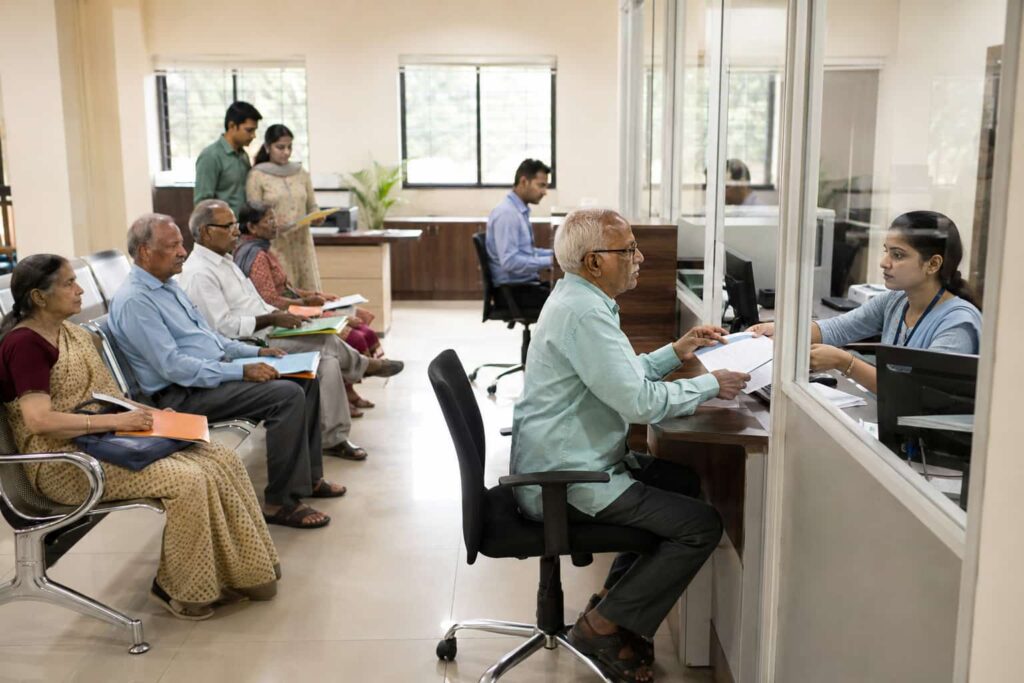
They show where the government believes progress has happened. They show where ministries are still defensive. They show where associations are still pressing for change. And they show where action is ongoing rather than complete. For example, while some items were treated as closed, the minutes still record that the Department of Telecommunications had not submitted its reply on one coordination issue, which is a reminder that pensioner welfare often depends on how efficiently multiple departments move together.
They show where the government believes progress has happened. They show where ministries are still defensive. They show where associations are still pressing for change. And they show where action is ongoing rather than complete. For example, while some items were treated as closed, the minutes still record that the Department of Telecommunications had not submitted its reply on one coordination issue, which is a reminder that pensioner welfare often depends on how efficiently multiple departments move together.
There is also a deeper institutional message in the document.
The pension system is becoming more digital, more integrated, and in some areas more responsive. But digitisation alone does not solve everything. The minutes repeatedly suggest that the real challenge is not only building portals or issuing OMs. The real challenge is ensuring that banks, telecom departments, medical systems, pension disbursing authorities, and welfare departments all handle pensioner-facing situations in a way that is timely and humane. That is not stated in one sentence in the document, but it is the strongest conclusion that emerges when the agenda is read as a whole.
So what should readers take away from the release of the 35th SCOVA minutes?
The first takeaway is that this is an official and important document, not just background paperwork. The second is that the minutes are useful precisely because they show both progress and continuing pain points. And the third is that pensioners should not read them looking only for one new benefit. They should read them as a reality check on the welfare system: what has improved, what still goes wrong, and which issues are still waiting for stronger follow-up.
In the end, the story of the 35th SCOVA minutes is simple.
It is the story of a pension system that is improving in some areas, but still leaving too many pensioners to fight avoidable battles in healthcare, family pension processing, DLC updating, grievance closure and inter-department coordination. That is why the release of these minutes matters. They do not just tell us what the government discussed. They tell us what pensioners are still living through.


Leave a Reply