

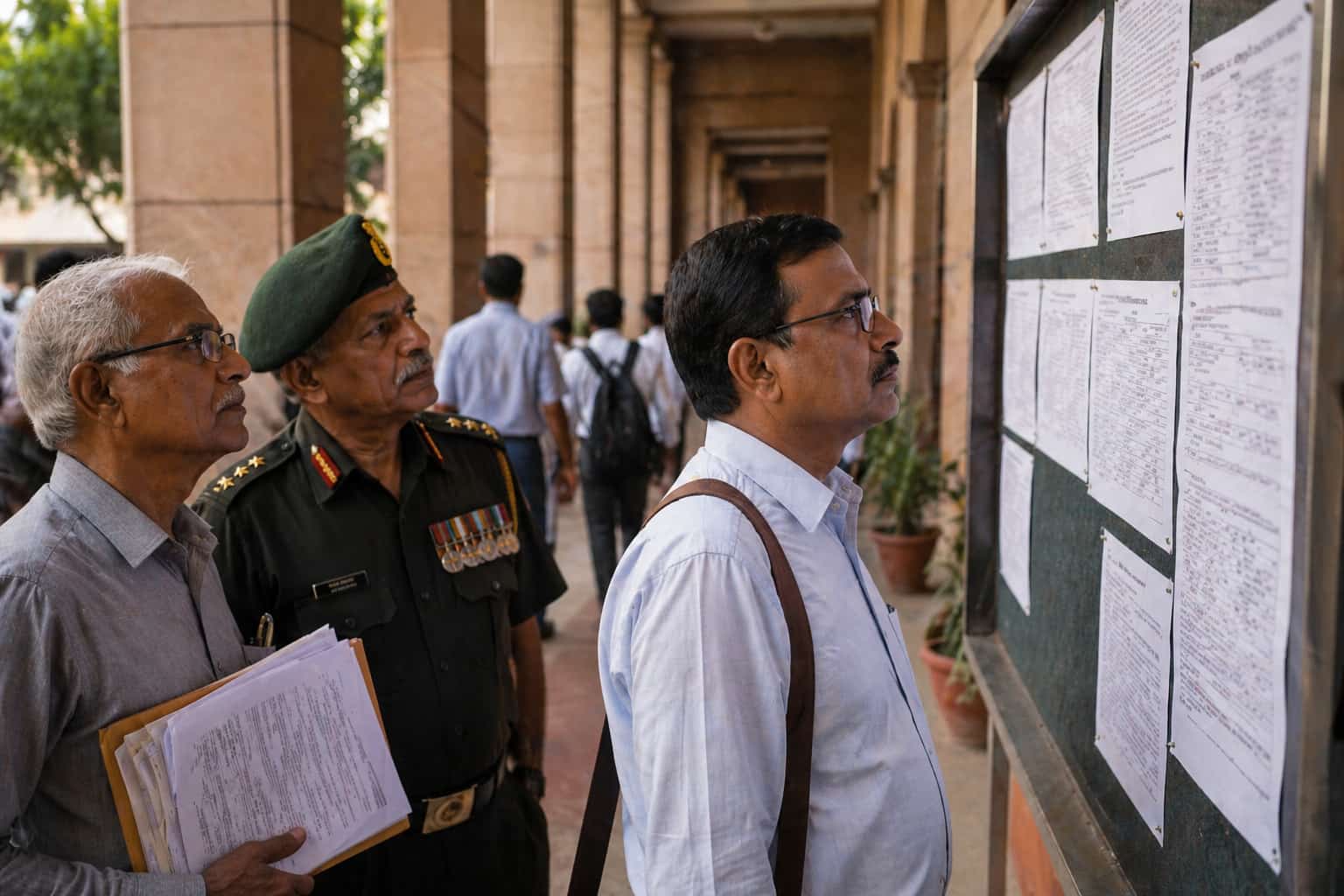
The formation of the 8th Pay Commission was expected to bring clarity and direction to one of the most important financial processes affecting central government employees and pensioners. Instead, it has opened up a different kind of conversation. Not about how much salaries will rise, but about what exactly the Commission has been asked to examine.
That distinction is important, and it is at the centre of the current debate.
The Terms of Reference, or ToR, define the scope of any pay commission. They are not just formal lines in a notification. They act as the boundary within which the Commission studies pay structures, pensions, allowances and related policies. In simple terms, they decide what gets attention and what risks being overlooked.
This is why even small changes in wording can create large concerns.
why the focus has shifted from salary to scope
In earlier pay commission cycles, discussions among employees usually began with expectations. What could be the fitment factor? How much might salaries increase? What changes could come in allowances? But this time, the starting point itself has changed.
Employee bodies and pensioner groups are focusing first on the ToR.
The reason is straightforward. If the scope of the Commission is not clearly defined, then expectations about outcomes become uncertain. Instead of debating final numbers, stakeholders are asking whether the foundation of the process is strong enough.
This shift from outcome to scope is not accidental. It reflects a growing awareness that what is written at the beginning often shapes what is delivered at the end.
the concern around the date of effect
One of the most discussed aspects of the current ToR debate is the absence of a clearly stated “date of effect” for the Commission’s recommendations.
Traditionally, pay commissions in India have followed a ten-year cycle. Implementation dates have generally aligned with the start of that cycle. Over time, this pattern has created a sense of predictability among employees and pensioners. They plan their finances, expectations and retirement decisions around this timeline.
When the ToR does not explicitly mention this aspect, it creates uncertainty.
This is not just about one date. It is about what that date represents. It influences arrears, salary adjustments, pension revisions and long-term financial planning. A clear mention provides confidence. A missing reference opens the door to speculation.
That is why employee organisations are asking for clarity at this stage rather than waiting for final recommendations.
pension coverage and the need for explicit language
Another area of discussion is how pension-related matters have been framed in the ToR. While pension and gratuity are included within the scope of the Commission, the language used has led to questions among pensioner groups.
The concern is not whether pensions will be reviewed. It is about how clearly different categories of pensioners are covered, especially those who retired before the implementation of the new pay structure.
For pensioners, this is a sensitive issue.
Retirement marks the end of active service, but financial dependence continues. Pension revisions are often the only way to ensure that retirees keep pace with rising costs. If there is any ambiguity about how these revisions will be handled, it creates anxiety among a large section of society that relies on fixed income.
This is why clarity in wording becomes as important as the policy itself.
stakeholder expectations and the human side of pay policy
Beyond numbers and clauses, there is another layer to this discussion. The idea of stakeholder expectations.

Pay commissions are not purely financial exercises. They also influence morale, career planning, recruitment and retention in government service. When employees feel that their expectations are recognised, it builds confidence in the system. When that connection weakens, even well-structured policies can feel distant.
The current debate highlights this aspect.
Employee groups are not just asking for higher salaries or better pensions. They are asking for a process that reflects their realities. Whether it is the cost of living, family responsibilities or service conditions, they want these factors to be acknowledged within the Commission’s framework.
This is where the language of the ToR becomes symbolic.
It signals whether the process is purely administrative or also responsive to the people it affects.
the larger economic context cannot be ignored
At the same time, it is important to recognise that pay commissions operate within a broader economic framework. The government has to balance employee welfare with fiscal responsibility. Decisions taken by the Commission have a long-term financial impact on the country.
This is why the ToR also includes references to economic conditions, sustainability and overall expenditure.
From a policy perspective, this balance is necessary. But from an employee’s perspective, it can create concern if financial considerations appear to outweigh welfare aspects. The challenge for the Commission will be to maintain equilibrium between these two priorities.
This is easier said than done, which is why early clarity becomes even more important.
why this stage of the process is critical
One of the key takeaways from the current situation is timing. The 8th Pay Commission is still in its early stages. The framework is being interpreted, inputs are being gathered and discussions are shaping the direction of the process.
This is the phase where questions matter the most.
Once the Commission moves deeper into analysis and drafting, the scope becomes more defined. At that point, changes are harder to introduce. This is why employee unions and pensioner associations are raising concerns now rather than later.
It is not about creating panic. It is about ensuring that the foundation is clear before the structure is built.
what employees and pensioners should do now
For individuals, the most practical approach is to stay informed and engaged.
Understanding the ToR may not seem as exciting as discussing salary increases, but it is far more important. It helps in identifying what issues need to be highlighted and how they should be presented. Whether through associations or individual submissions, structured inputs backed by facts carry more weight than general concerns.
Documentation matters. Clarity matters. Timing matters.
Instead of relying on speculation, employees and pensioners should focus on verified information and official communication. This not only reduces confusion but also strengthens their ability to participate effectively in the process.
the real issue behind the debate
At its core, the discussion around the 8th Pay Commission ToR is not about missing lines alone. It is about confidence in the system.
Employees want assurance that the traditional timelines will be respected. Pensioners want clarity that they will be treated fairly. Serving personnel want to know that their future benefits are secure. Veterans want their service-related concerns to be understood in the right context.
These are not unreasonable expectations.
They reflect the role that pay commissions play in shaping financial security for millions of families.
In conclusion, the current debate is a reminder that policy processes are as important as policy outcomes. The 8th Pay Commission has the potential to bring meaningful changes, but the clarity of its mandate will determine how effectively those changes address real concerns.
For now, the focus should remain on understanding the framework, engaging with the process and ensuring that key issues are clearly placed on record. Because when the final recommendations arrive, they will reflect not only economic calculations but also the quality of inputs received at this stage.
And that makes this moment more important than it may initially appear.


Leave a Reply