

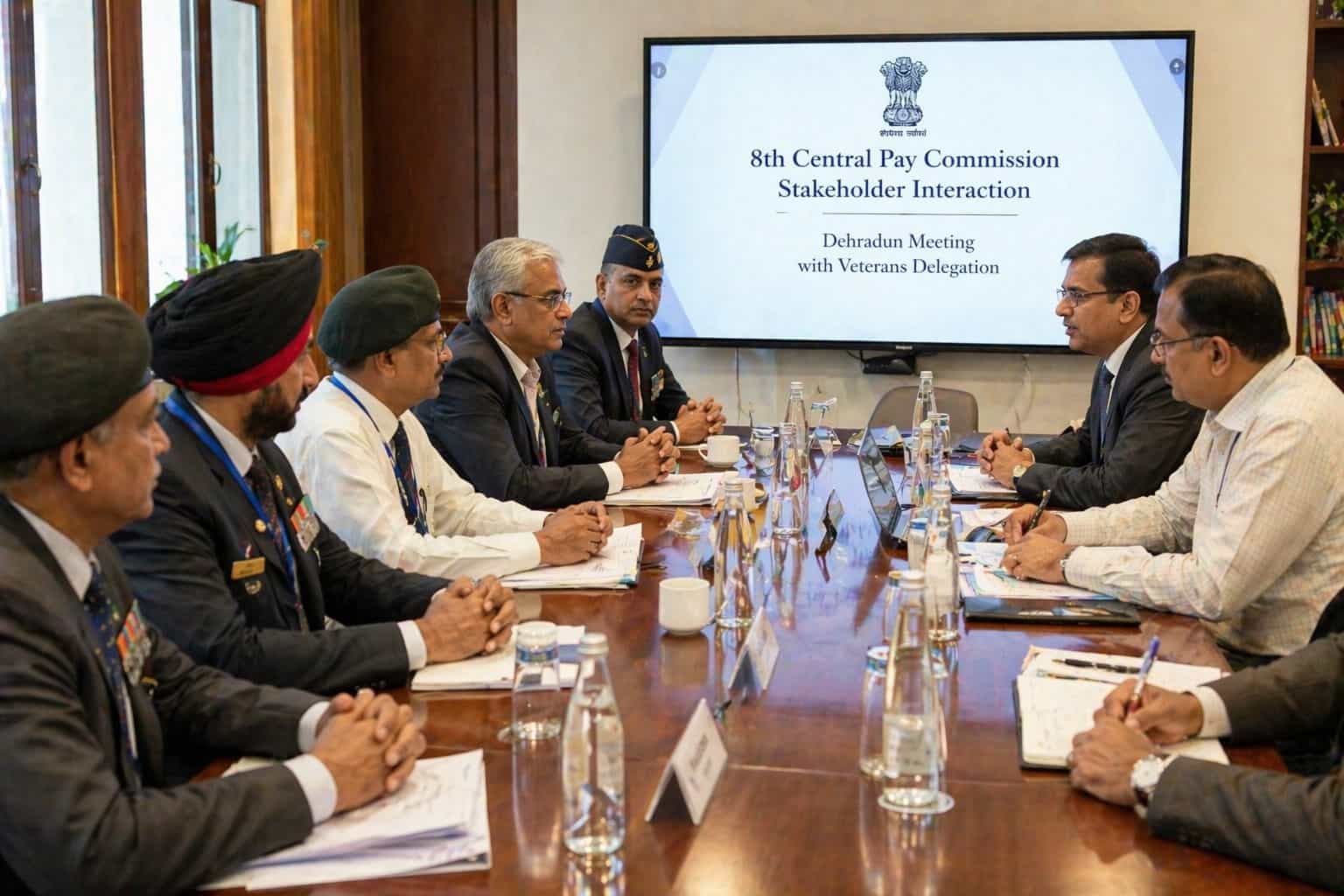
The 8th Pay Commission process has now moved from announcements to action. After weeks of internal developments, staffing updates and memorandum submissions, the next critical phase has officially begun. The Commission has started direct stakeholder interactions, and one of the first major meetings has been confirmed in Dehradun.
For veterans, defence pensioners and serving personnel, this is not just another meeting. It is a rare opportunity to influence decisions at the stage where they actually matter.
The Federation of Veterans Associations delegation, along with representatives from Sainik Welfare News and local veteran bodies, has received a formal invitation to attend this interaction. The delegation has accepted the invitation and will be presenting key issues related to pay, pension, allowances and long-standing anomalies before the Commission.
This marks an important shift in the process.
why the Dehradun meeting is more than just a routine interaction
At first glance, stakeholder meetings may appear procedural. But in the context of a pay commission, these interactions play a much deeper role. They are not just for discussion. They are part of the evidence-building process that shapes final recommendations.
Every point raised, every document submitted, and every argument presented becomes part of the official record. This is what the Commission later refers to while drafting its report.
That is why timing matters.
Many issues faced by veterans today are not new. They have carried forward from previous pay commissions, especially the 7th CPC. These include anomalies in pay fixation, gaps in pension parity, and inconsistencies in allowance structures across different categories and terrains.
If these issues are not addressed at the submission stage, they often become much harder to correct later.
This is where the Dehradun interaction becomes significant.
what the veterans delegation plans to present
The delegation heading into the meeting is not going empty-handed. A detailed memorandum has already been prepared, covering a wide range of concerns that directly impact veterans, serving jawans and their families.
At a high level, the focus areas include:
Pay and pension anomalies that have remained unresolved despite earlier revisions. Many veterans continue to feel that the transition from one pay commission to another has not always been smooth or equitable.
Allowances linked to field conditions, risk exposure and operational hardship. These vary widely depending on geography and role, and there is a strong demand to ensure that these differences are recognised fairly.
OROP-related gaps that still affect older pensioners. While One Rank One Pension was a major reform, implementation challenges and interpretation differences have left certain sections dissatisfied.
Fitment factor and minimum pay logic, especially for jawans at the entry level. This is emerging as one of the most important areas because it influences the entire pay structure.
Ground realities faced by veer naris and disabled soldiers. These cases require special attention because they involve long-term financial security and dignity.
Each of these points is not just a demand. It is backed by lived experience and documented examples, which is what makes the submission stronger.
why early submission can change outcomes
One of the key messages coming out of this development is the importance of early participation. Pay commissions do not operate in isolation. They rely heavily on inputs received from stakeholders during the initial phases.
If concerns are raised after recommendations are finalised, they often lead to prolonged litigation, representations and policy corrections. This is something that has been seen repeatedly after previous pay commissions.
The lesson is clear.
If the objective is to reduce future disputes and anomalies, the best time to act is before the report is written, not after it is released.

The Dehradun meeting is part of that early window.
how this connects to the larger 8th CPC narrative
The 8th Pay Commission is being closely watched across the country, not just by defence personnel but also by central government employees and pensioners. Issues like minimum pay, fitment factor, DA integration and pension revision are part of a larger national conversation.
What happens in stakeholder meetings like Dehradun often influences how these broader issues are interpreted.
For example, discussions around sepoy-level pay are not isolated. They connect directly to debates on minimum salary, family responsibilities and cost of living. Similarly, allowance-related discussions feed into how the Commission views hardship, risk and compensation fairness.
In that sense, the Dehradun interaction is both specific and symbolic.
It addresses defence-related concerns, but it also contributes to the overall thinking of the Commission.
the role of documentation and public participation
Another important aspect of this process is transparency and participation. The memorandum that will be presented is already being shared across platforms like WhatsApp channels and association networks. This allows veterans and families to review the document and suggest additions or corrections.
This is a significant shift from earlier processes where many decisions felt distant and inaccessible.
Now, individuals have the opportunity to contribute inputs, highlight missing issues and ensure that their concerns are at least placed on record. Even if every suggestion cannot be included, the process itself becomes more inclusive.
This also increases accountability.
When a large number of people are aware of what has been submitted, it becomes easier to track whether those points are reflected in later recommendations.
what happens after the Dehradun meeting
The Dehradun interaction is just the beginning. The 8th Pay Commission has planned a series of stakeholder meetings across different cities, including Delhi and Pune. Each meeting will add new inputs, perspectives and data points.
After these interactions, the Commission will move towards consolidating its findings, analysing submissions and drafting recommendations.
For those following the process closely, the period immediately after these meetings will be crucial. It is during this phase that the direction of the final report starts becoming clearer.
This is why updates from each interaction matter.
the bigger takeaway for veterans and employees
The confirmation of the Dehradun meeting sends a clear message. The 8th Pay Commission is now actively engaging with stakeholders, and the window to influence outcomes is open.
For veterans, this is a moment to ensure that past issues are not repeated. For serving personnel, it is a chance to shape future compensation structures. For pensioners, especially older ones, it is an opportunity to highlight long-standing gaps that affect daily life.
The key is participation.
Whether through associations, individual submissions or feedback on shared memorandums, every input adds weight to the overall case being presented. The stronger and more evidence-based these inputs are, the higher the chances of meaningful change.
In conclusion, the Dehradun meeting is not just a scheduled interaction. It is a critical step in a process that will define pay, pension and allowance structures for years to come. What is said, submitted and discussed at this stage will echo in the final recommendations.
And for lakhs of families connected to the defence and government ecosystem, those recommendations will directly shape financial security, dignity and long-term stability.


Leave a Reply