

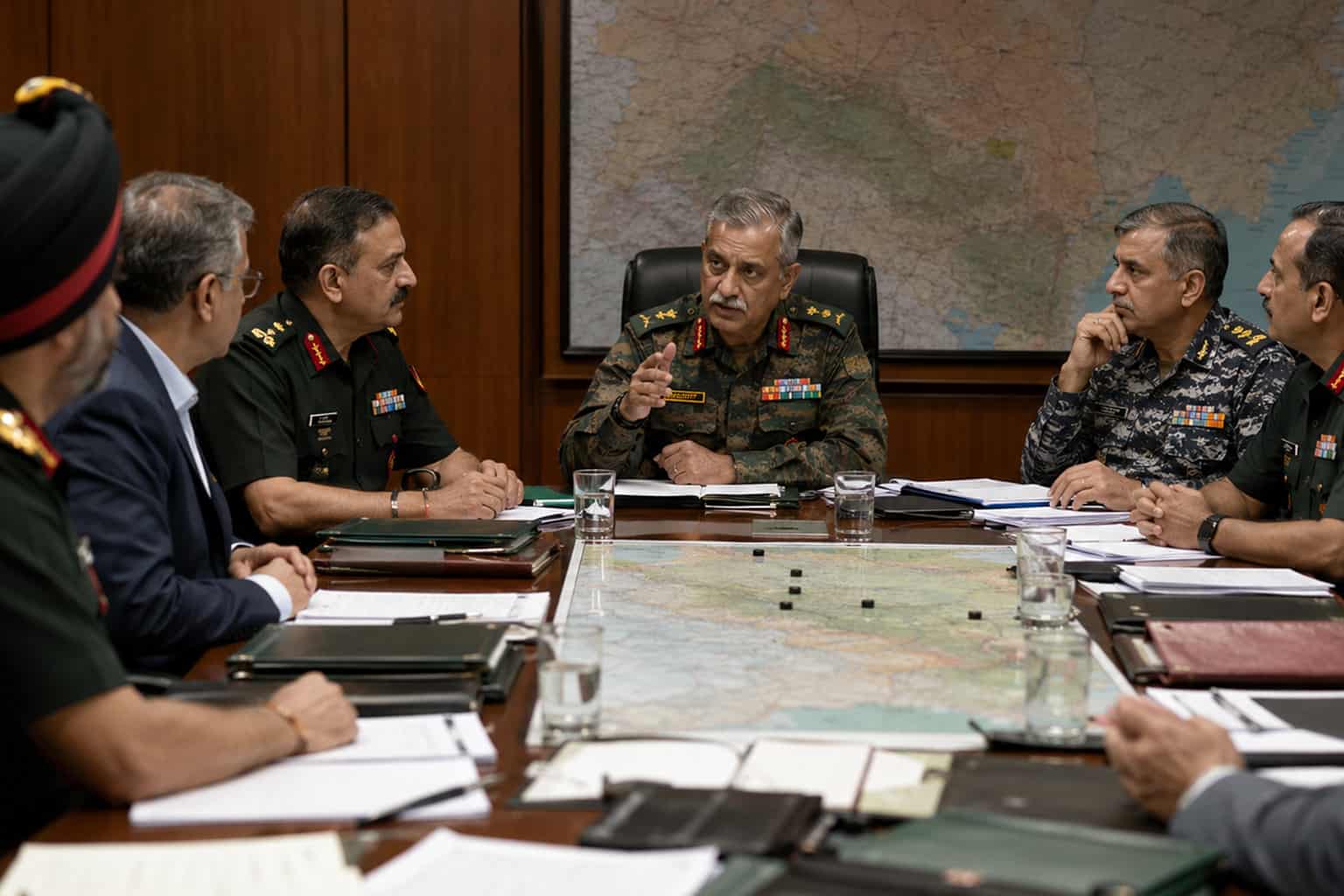
Maj Gen SVP Singh recalls a powerful leadership lesson from a civil-military security meeting, showing why senior commanders must give correct advice, protect Army dignity and stand for soldiers’ welfare.
In uniformed service, courage is not always shown with a weapon in hand.
Sometimes courage is shown inside a meeting room.
Sometimes it is shown when a senior commander gives honest advice, even when the room expects a different answer.
In a powerful recollection, Maj Gen SVP Singh, VSM, shared an incident from his staff-duty days that carries a clear lesson for today’s military leadership, civil administration and citizens: the Army must support the nation, but it must also protect its core role, its men and its institutional dignity.
The Amritsar meeting and a difficult question
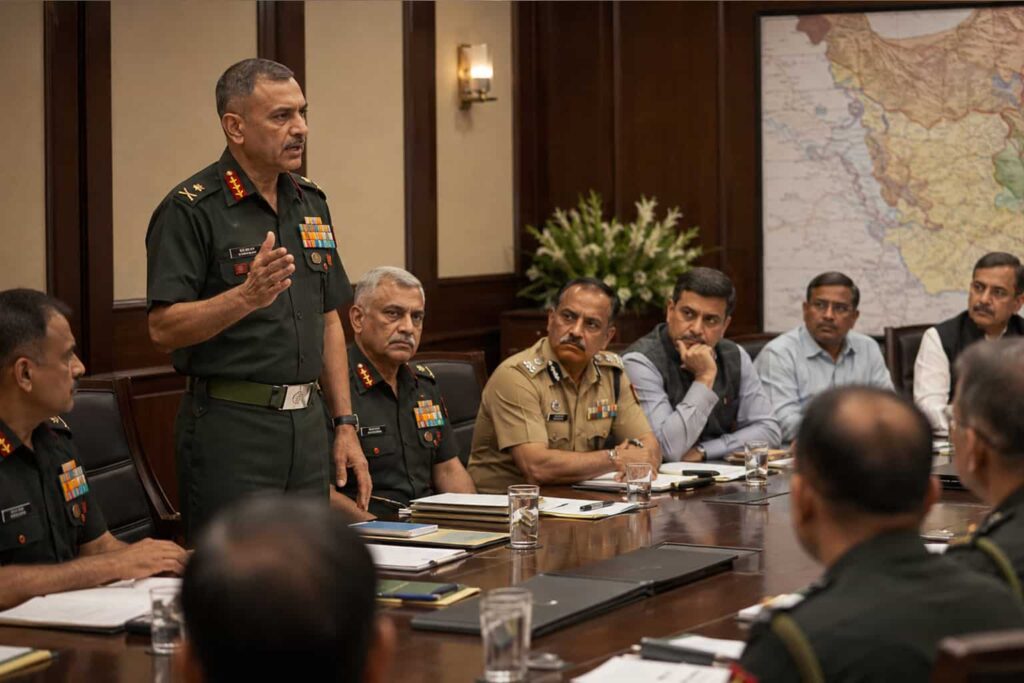
During his staff appointment, Maj Gen Singh recalled accompanying a senior Corps Commander to an important civil-military security meeting in Amritsar.
The period was difficult. Punjab was facing a serious internal security situation. The meeting reportedly included senior government functionaries, police leadership, paramilitary heads and Army leadership.
In such high-level rooms, words are not casual. One sentence can shape policy, deployment and public perception.
The question came up whether the Army should take over a larger internal security role.
That was the moment where leadership was tested.
Why the Corps Commander’s answer mattered?
According to the recollection, the Corps Commander gave a firm and professional response: internal security was primarily a police responsibility, and the Army should not be pulled away from its main role unless the situation truly demanded it.
This was not refusal of national duty.
It was correct military advice.
There is a difference between helping the country and becoming the default answer for every civil problem. The Army can support civil administration when required, but its primary role remains operational preparedness, border defence, training and national security.
A senior commander must know this balance.
Moral courage is also a command quality
Many people think military courage means physical bravery only.
But command also demands moral courage.
Moral courage means saying the correct thing when silence is easier. It means advising honestly when pressure is high. It means protecting the long-term interest of the Army and the nation, even if the answer sounds uncomfortable in the moment.
The lesson from the incident is simple: a senior commander is not present in such meetings only to agree. He is present to give clear, professional and responsible advice.
That is what makes command meaningful.
Why Army should not lose its primary focus?
The Army is trained for war, border defence, operational readiness and national security. Its training cycle, equipment preparation, field deployment and command structure are built for that purpose.
If the Army is repeatedly used for roles that civil police or administration should handle, its core focus can be affected.
This does not mean the Army should not assist. It has always stood with the nation in disasters, emergencies and internal crises.
But assistance should not become permanent substitution.
Civil institutions must do their duty. Police forces must do their duty. The Army must remain ready for its own constitutional and operational responsibilities.
Punjab’s people and the Army’s bond
One of the most important points in the recollection was the Corps Commander’s understanding of the people.
He reportedly reminded the room that the people of Punjab had stood shoulder to shoulder with the Army during earlier wars. Border populations have supported soldiers, helped during difficult periods and shared hardship in times of conflict.
This thinking shows maturity.
A military commander does not see citizens only through the lens of immediate security pressure. He also understands history, public trust and long-term national unity.
That is why a decision to use the Army internally should never be taken casually.
Why this lesson matters today?
Maj Gen Singh connected the incident with a larger concern: senior leaders must stand up for the Army’s role, welfare, dignity and privileges.
This point matters because soldiers, officers, veterans and families often look towards senior commanders for protection of institutional honour.
Whether the issue is operational role, pay and pension, order of precedence, welfare, or incidents of misbehaviour with serving personnel and veterans, the expectation is clear: leadership must speak strongly and act through proper channels.
The Army’s dignity is not an emotional slogan. It is linked with national confidence.
When soldiers face disrespect
The transcription also refers to recent concerns where serving or retired military personnel and families allegedly faced misbehaviour in civil situations.
Such incidents create anger in the defence community because the uniform represents service to the nation. If a soldier, veteran, officer, JCO, family member or Veer Nari is treated with disrespect, it is not only a personal issue. It affects morale and public trust.
The answer should be lawful, firm and institutional.
No one is above the law. But those who serve the nation must not be left helpless when dignity is attacked.
Command is larger than rank
A rank on the shoulder gives authority. But command is larger than authority.
A commander is responsible for operations, discipline, welfare, promotions, punishment, family support, morale and reputation of the unit or formation.
Maj Gen Singh’s message is that this responsibility should not disappear as officers rise higher. In fact, the higher the rank, the greater the duty to stand for the men and the institution.
Red tabs, stars and appointments are not only symbols. They carry obligation.
Comment
This story gives a timely leadership lesson.
The Army does not need loud words. It needs clear words at the right time.
A commander who gives correct advice protects the nation. A commander who protects the Army’s core role protects readiness. A commander who stands for soldiers protects morale.
Civil-military balance is not about ego. It is about using every institution for its correct purpose.
Police must handle policing. Civil administration must handle governance. The Army must remain ready for national security and assist where its role is genuinely required.
That balance is the real strength of a mature nation.
Final takeaway
The incident shared by Maj Gen SVP Singh is more than a memory from staff duty.
It is a leadership lesson for all times.
A senior commander must have the courage to give correct advice, even in a high-pressure room. The Army must support the nation, but it must also protect its operational focus, its men, its families and its institutional dignity.
For citizens, the message is equally important.
Respect the soldier not only during war or ceremony, but also in daily life.
A nation that respects its defenders strengthens its own security.
Sources:-
1. Background source on Punjab internal security context
https://www.satp.org/satporgtp/icm/Profiles/kpsgill.html
2. Background analysis on Army supporting police, not replacing them in counter-terror situations
https://idsa.in/publisher/comments/army-should-back-the-state-police-not-replace-them-in-counter-terror-operations
3. Colonel Pushpinder Singh Bath case background
https://timesofindia.indiatimes.com/city/chandigarh/col-bath-assault-case-wife-feels-cheated-by-punjab-cm-after-no-action-against-erring-cops/articleshow/119879632.cms
4. Brigadier Parminder Singh Arora Delhi assault report
https://www.indiatoday.in/cities/delhi/story/brigadier-and-son-thrashed-in-delhi-after-objecting-to-drinking-alcohol-in-car-crime-news-indian-army-2895732-2026-04-14




Leave a Reply