

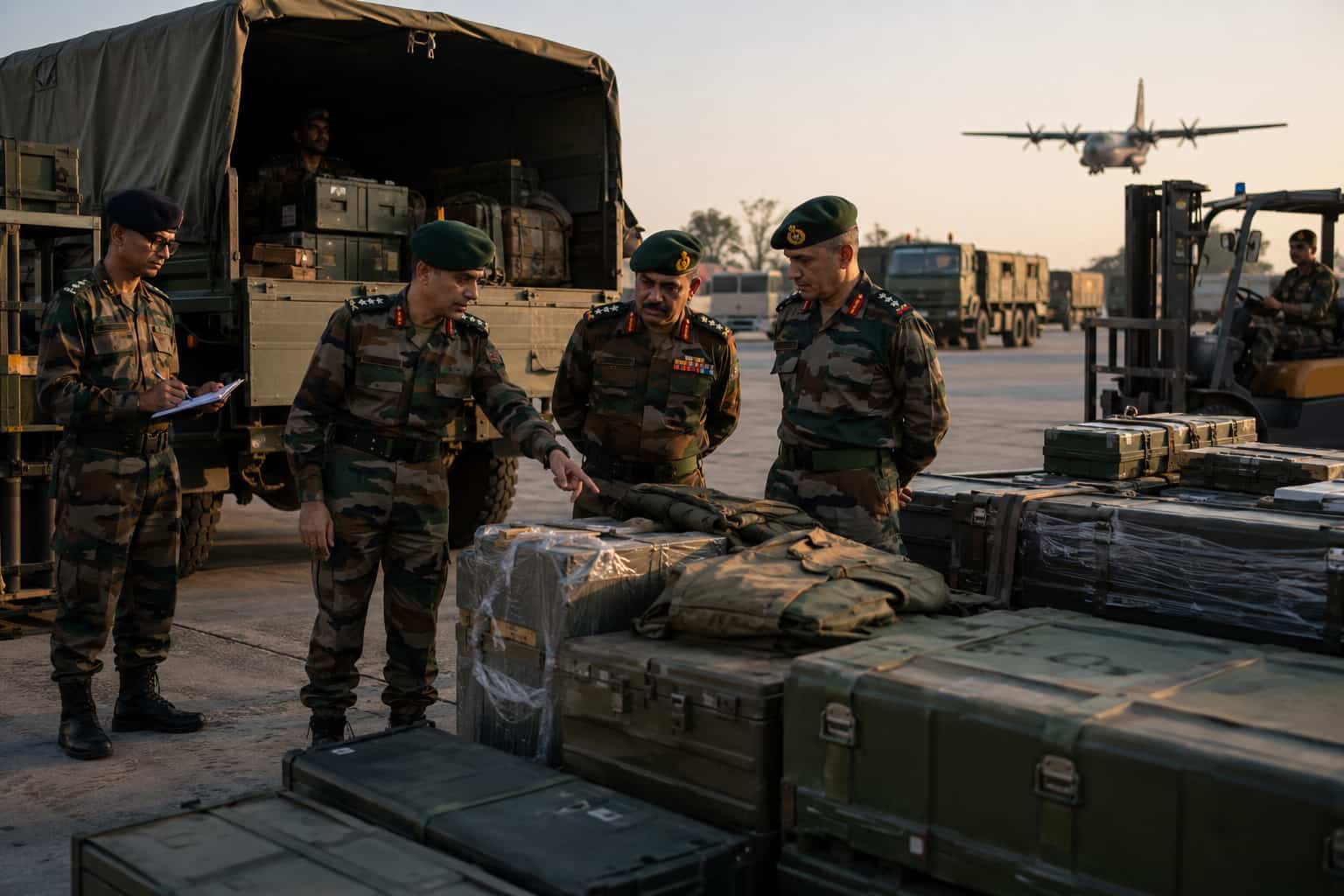
A strong military does not depend only on weapons. It also depends on how quickly the right requirement is approved, funded, purchased and delivered.
This is why the revised financial authority for Defence Services in 2026 is important.
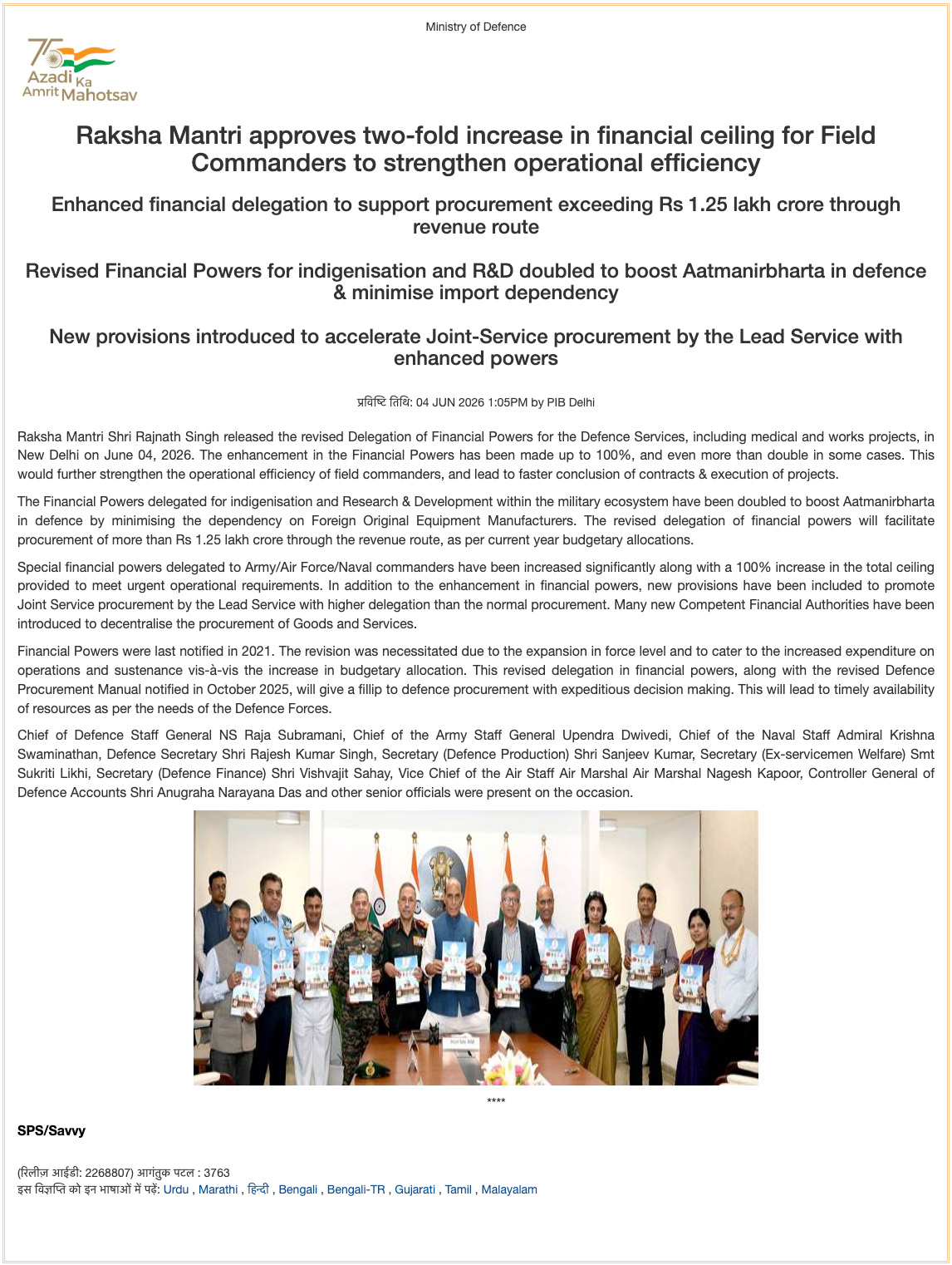
Raksha Mantri Rajnath Singh has released the revised Delegation of Financial Powers for the Defence Services. The official update states that financial powers have been enhanced up to 100 percent, and in some cases more than double. The purpose is to improve the operational efficiency of field commanders and support quicker contract finalisation and project execution.
For readers, this may look like a finance-related defence order. In reality, it is closely linked with military preparedness.
Why financial delegation matters in defence?
In defence administration, time is a serious factor.
A unit may need equipment repair. A formation may need operational stores. A field hospital may need a medical facility. A project may need urgent local execution. A deployed formation may require a service or system within a limited timeline.
If every requirement moves slowly through a long chain, the result on ground is delay.
Higher delegated powers can reduce that waiting period. It gives commanders more authority to approve spending within rules and budget limits.
The benefit is simple: decisions can move closer to the place where the requirement actually exists.
What has been approved?
According to the Ministry of Defence release, the revised financial powers cover Defence Services, including medical and works projects.
The enhancement has been made up to 100 percent, and even more than double in some cases.
The revised delegation is expected to support procurement worth more than ₹1.25 lakh crore through the revenue route, as per current year budgetary allocations.
The release also says that financial powers for indigenisation and Research and Development within the military ecosystem have been doubled.
New provisions have also been introduced for Joint-Service procurement by the Lead Service with enhanced powers.
These are major points because the reform is not limited to one branch of defence spending. It covers operational support, project execution, indigenous development and joint procurement.
Why revenue procurement is important?
Revenue procurement is often less visible than big capital purchases, but it is extremely important for day-to-day military functioning.
Capital purchases may include large platforms and major systems. Revenue procurement supports recurring needs such as maintenance, services, spares, repairs, operational supplies and sustenance requirements.
A force cannot remain ready only with big-ticket acquisitions. Existing assets also need support.
Vehicles need maintenance. Communication systems need repair. Equipment needs spares. Field locations need services. Medical systems need supplies. Operational readiness depends on these smaller but essential requirements.
That is why procurement through the revenue route matters.
How can field commanders benefit?
Field commanders understand local operational needs better because they are closer to the ground.
A requirement in a high-altitude area may be different from a desert sector. A forward location may need faster repair support. A remote station may need urgent works-related approval. A medical requirement may need quick response.
When commanders have higher financial authority, they can respond more effectively within the approved framework.
This does not remove rules. It simply allows faster decision-making within delegated limits.
For personnel on ground, the real benefit is not the technical wording of the order. The real benefit is timely availability of resources.
Why this matters for medical and works projects?
The official release specifically mentions medical and works projects.
This is important.
Military readiness is not only about weapons, ammunition or vehicles. It also includes medical support, infrastructure, accommodation, field facilities, roads, storage, workshops and operational buildings.
A delayed works project can affect efficiency. A slow medical procurement can affect care. A pending maintenance requirement can reduce availability of equipment.
By including medical and works projects under the revised framework, the order recognises that readiness is built through a complete support system.
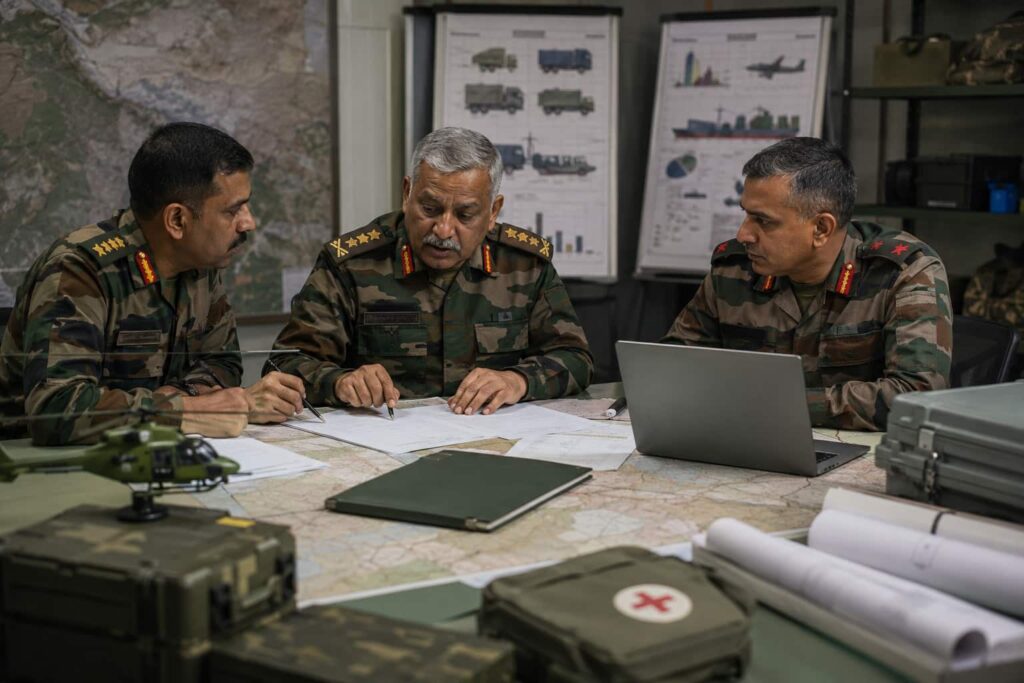
Link with Aatmanirbhar Bharat
The revised powers for indigenisation and R&D have been doubled.
This point has long-term importance.
India is trying to reduce dependence on foreign original equipment manufacturers and strengthen domestic defence capability. Faster financial approval for indigenous solutions can help the services support local innovation, trials, development and field-specific improvements.
Modern warfare is changing quickly. Drones, counter-drone systems, electronic warfare tools, surveillance systems, communication upgrades and soldier-level technology need faster adoption.
If financial powers are better aligned with field needs, Indian defence innovation can move faster from idea to use.
Why joint-service procurement is important?
The new provisions for Joint-Service procurement by the Lead Service are also significant.
The Army, Navy and Air Force may have similar requirements in several areas. If every service buys separately, duplication can increase. If one Lead Service can procure for a common requirement under enhanced authority, the system may become faster and more coordinated.
This supports the larger idea of jointness in defence.
Future military operations will require closer coordination across land, air, sea, cyber, space, intelligence and communication domains. Procurement also needs to reflect that joint approach.
Why was revision needed?
The official release says financial powers were last notified in 2021.
Since then, force levels and expenditure on operations and sustenance have increased. Defence costs have also changed because of technology, maintenance demand, inflationary pressure, new systems and operational requirements.
A financial ceiling that worked earlier may not be enough for present needs.
The 2026 revision attempts to align delegated authority with current defence realities.
It also works alongside the Defence Procurement Manual 2025, which was released to simplify and streamline revenue procurement for the Armed Forces.
Comment
This reform should be understood as an administrative step with operational value.
People often discuss defence preparedness only through aircraft, tanks, missiles or ships. But the speed of approval, contracting and delivery is equally important.
A requirement that reaches late is less useful than a requirement that reaches on time.
The revised financial powers can help only if used with discipline, transparency and accountability. Faster approval must not mean careless spending. It should mean better response, clearer responsibility and quicker support to operational needs.
The best outcome will come when speed and financial discipline move together.
What should readers understand?
This decision does not mean every defence purchase will happen instantly.
It also does not mean all operational gaps will disappear automatically.
Financial delegation works within rules, budgets, audit systems and procurement procedures. The real impact will depend on implementation, clarity, vendor response, documentation and monitoring.
Still, the direction is important. The system is trying to push decision-making closer to commanders and reduce unnecessary delay.
That is a positive signal for defence preparedness.
Final takeaway
The revised Defence Financial Powers 2026 can be seen as a readiness-linked reform.
It increases financial authority for field commanders, supports more than ₹1.25 lakh crore procurement through the revenue route, doubles powers for indigenisation and R&D, includes medical and works projects, and introduces provisions for Joint-Service procurement.
For the Armed Forces, the value lies in faster decision-making and better support to operational needs.
For the public, the lesson is clear: military strength is not built only by buying major weapons. It is also built by giving commanders the authority to solve practical problems quickly, responsibly and within the rules.
Sources:-
PIB official release:
Raksha Mantri approves two-fold increase in financial ceiling for Field Commanders to strengthen operational efficiency
https://www.pib.gov.in/PressReleasePage.aspx?PRID=2268807
PIB release on Defence Procurement Manual 2025:
https://www.pib.gov.in/PressReleseDetailm.aspx?PRID=2181894
PIB Year of Reforms 2025 background:
https://www.pib.gov.in/PressReleasePage.aspx?PRID=2210549&lang=2®=3





Leave a Reply