

When most people hear the phrase national security, they think first of the border, the soldier, the bunker and the battlefield. That instinct is understandable. But the way modern threats work has changed. A secure country is no longer defined only by what happens at the Line of Control or along a mountain frontier. It is also shaped by how well important civilian institutions can detect danger, manage panic, protect people and keep systems running during an emergency.
That is why the recent Indian Army training programme for Reserve Bank of India security managers matters far more than it may appear on the surface.
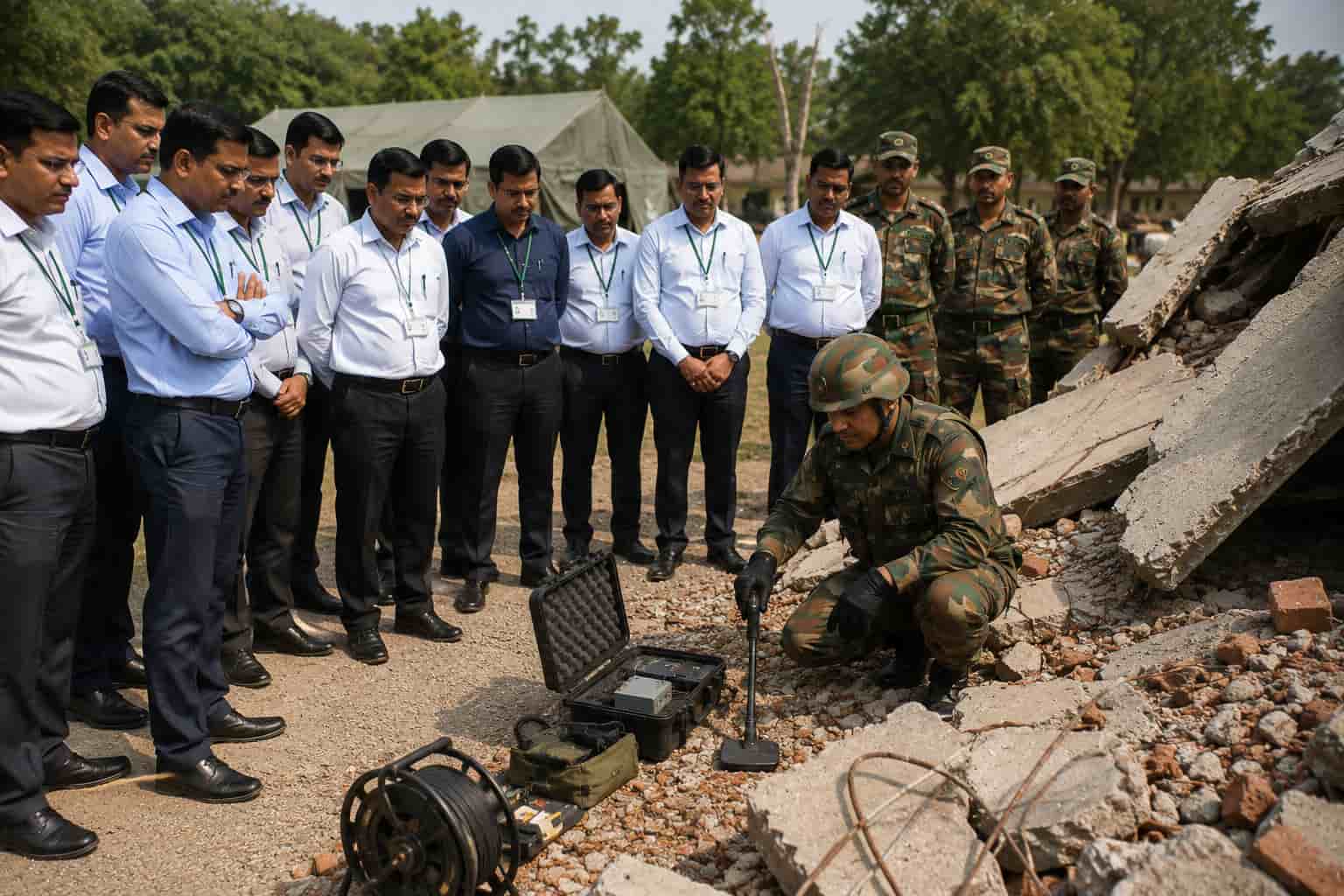
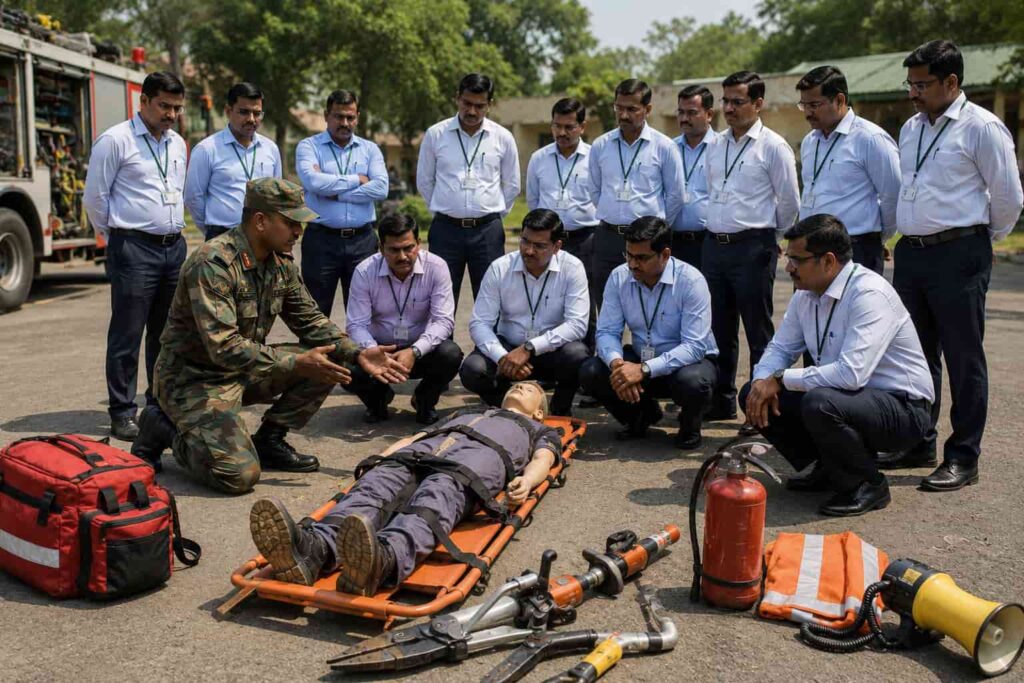
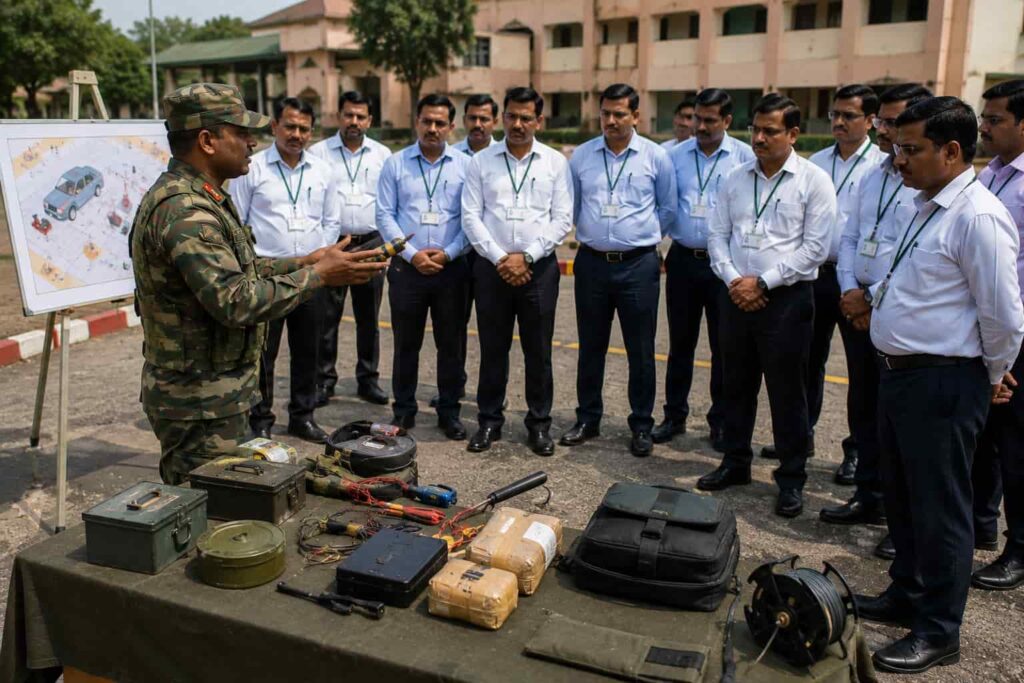
According to reported details, the College of Military Engineering in Pune conducted an inaugural Counter-IED and Disaster Management capsule course for RBI security managers from 11 to 15 May 2026. Reports say the programme gave participants practical exposure to counter-IED handling, search operations, search and detection techniques, rendering-safe procedure, drone-related awareness and disaster-response management.
That training focus is important because it goes straight to the first minutes of a crisis.
In many emergencies, the first people on the scene are not elite commandos or bomb-disposal experts. They are the on-site security staff, the manager in charge, the officer who notices a suspicious object, the team member who decides whether to isolate an area, evacuate a building or wait for higher instructions. Those early decisions can shape everything that follows. A trained response can reduce confusion and save lives. A poor response can worsen risk very quickly.
This is exactly why RBI security managers are not an accidental audience for such a course.
The Reserve Bank of India is not just another office institution. It is part of the country’s financial backbone. That means its physical security has a value beyond the building itself. Any serious disruption at such a place can affect confidence, continuity and public trust. It is reasonable to infer, therefore, that security training for RBI-linked personnel is also part of broader resilience planning for critical civilian infrastructure.
The counter-IED part of the programme deserves special attention.
Improvised explosive devices are among the most difficult threats to manage because they do not follow one fixed pattern. They can be concealed, improvised with locally available materials, triggered in different ways and placed in everyday environments. That makes early awareness extremely important. Security personnel are not expected to become explosive-disposal specialists overnight, but they do need to know the basics: what suspicious indicators look like, what not to touch, how to secure the area, how to report correctly and how to protect people until specialist teams arrive.
The inclusion of rendering-safe procedure and search-and-detection techniques suggests the course was designed to build exactly that kind of disciplined awareness. It was not only about theory. It was about helping participants understand the logic of threat recognition and the sequence of safe response.
The drone-awareness component also makes the programme timely.
Security risks today are not limited to suspicious packages or physical intrusions. Drone-related threats have become part of the modern security landscape, especially for sensitive sites. Even where a drone is not directly used for attack, it can still create surveillance, disruption or panic-related concerns. That means civilian security teams need broader situational awareness than before. The reported inclusion of drone deployment and drone-related threat exposure in the RBI training shows that the Army is helping civilian institutions think ahead, not just react to yesterday’s danger.
Disaster-response management is the other major reason this story matters.
In a real incident, whether caused by an explosive threat, structural damage, fire or a cascading emergency, the challenge is never only technical. It is human. People need direction. Entry and exit routes must stay clear. Communication has to remain calm. Coordination between responders becomes critical. Security managers often become the bridge between the first signs of trouble and the arrival of police, medical or specialist rescue teams. That is why disaster-management training belongs in the same conversation as counter-IED readiness.
This also shows the continuing value of Army expertise beyond combat roles.
The Indian Army is widely respected for battlefield readiness, but institutions like the College of Military Engineering also carry deep experience in areas such as field engineering, emergency response, operational safety and structured crisis handling. The same broader readiness culture was visible in the Army’s humanitarian assistance and disaster-relief exercise Sanyukt Vimochan 2024, which showcased multi-agency disaster-response coordination. Seen in that larger context, the RBI course is part of a pattern: Army expertise is being used to strengthen national resilience well beyond purely military settings.
That inter-agency angle is one of the most encouraging parts of the story.
Modern crises rarely stay inside one department. A security threat at a major institution can require police action, medical support, local administration, technical experts, bomb-disposal teams and communication control, all in a short time. Training programmes like this help create a shared professional language before an actual emergency occurs. They make it easier for different systems to work together when seconds matter.
For ordinary readers, the takeaway is simple but important.
Preparedness often looks quiet. It does not always produce dramatic images. There may be no operation, no siren, no visible crisis. But this kind of training is exactly what helps institutions avoid panic and respond with discipline if a real emergency does occur. That is why such programmes deserve more attention than they usually get.
In the end, the Army’s training of RBI security managers is not only a defence news item from Pune. It is a reminder that national security today includes the protection of the systems that keep India functioning in everyday life. Banks, financial institutions and other critical civilian spaces are also part of the country’s security map. If the people guarding those spaces are better trained, more alert and more prepared to coordinate under pressure, the country as a whole becomes stronger.
That is why this programme matters.
Not because it creates headlines about fear, but because it reflects a smarter idea of security: a nation is safest when its civilian institutions are ready before a crisis begins.




Leave a Reply