

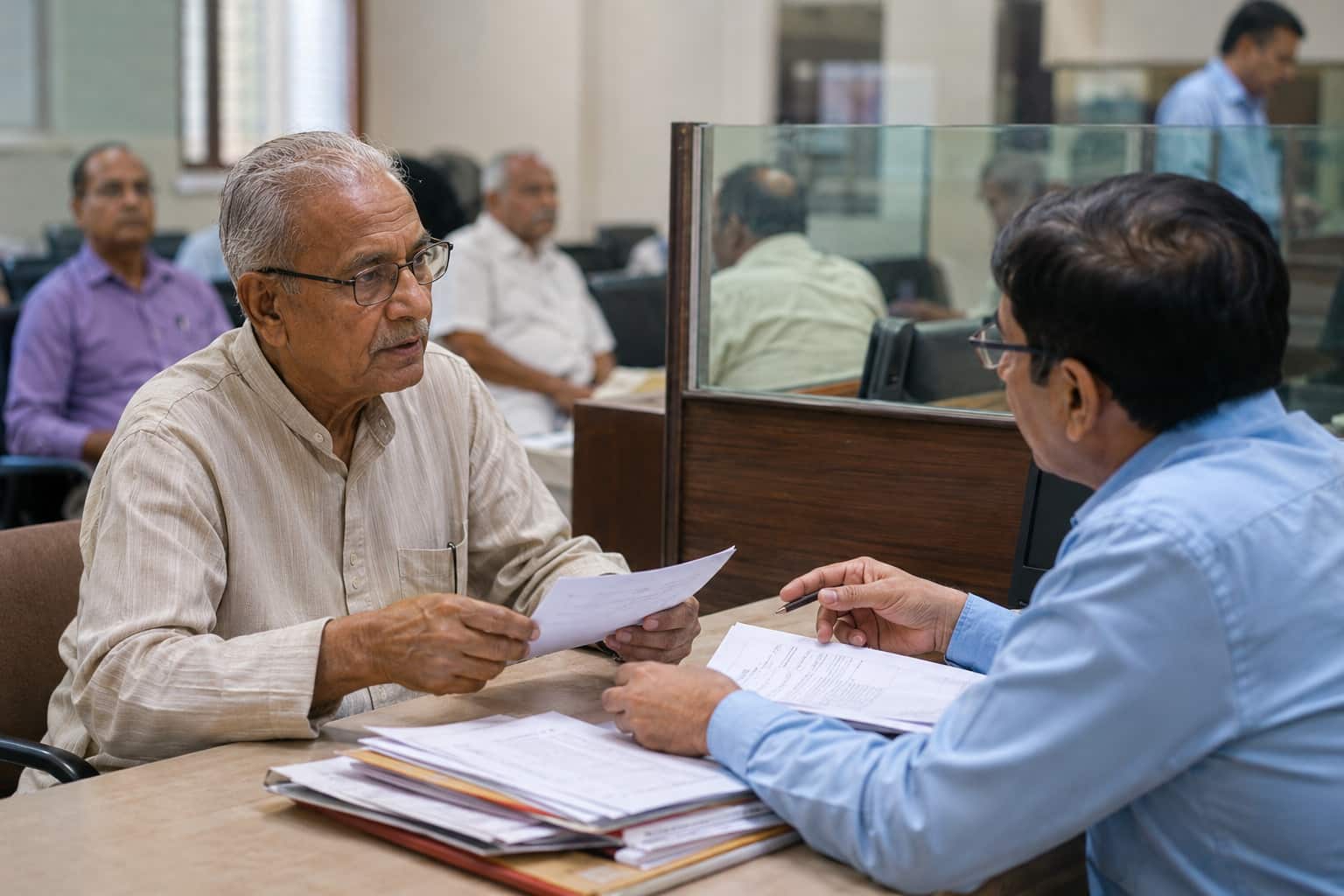
For most retired employees, pension is not just a post-retirement benefit. It is the monthly support system that keeps everyday life stable. It pays for medicines, home expenses, electricity bills, family commitments and the quiet dignity of old age. That is why any issue involving pension reduction or restoration quickly becomes emotional as well as financial.

That is exactly what is happening again with the 15-year pension commutation rule.
A recent report said the Himachal Pradesh High Court has asked the Centre and the State government to explain why a pensioner should wait the full 15 years for restoration of the commuted portion of pension, especially if the amount appears to have been recovered earlier. That report has naturally raised hope among pensioners, but it has also led to confusion and premature claims on social media.
The first thing pensioners should understand is simple: the rule has not changed yet.
As of now, the official Central Government position still says that the commuted portion of pension is restored after 15 years. The CCS (Commutation of Pension) Rules, 1981 state that the commuted amount of pension shall be restored on completion of fifteen years from the date the reduction of pension becomes operative. The Pensioners’ Portal also reflects the same position and notes that the commuted part is restored after 15 years from the date of retirement or from the date of payment of commuted value, whichever is later in the applicable context.
So why has the issue returned to the spotlight?
Because pensioners have long argued that the government effectively recovers the commuted amount, along with the interest element built into the formula, much earlier than 15 years. In many public discussions, pensioners refer to roughly 11 years and 3 months, or around 135 monthly deductions, as the point by which the amount is effectively recovered. Their question is practical and easy to understand: if the money has already been recovered, why should the cut in monthly pension continue until the end of 180 months?
That is the real heart of the dispute.
From the pensioner’s perspective, this is not an abstract legal argument. It is about a monthly deduction that continues to affect daily life. For an elderly pensioner, even a few thousand rupees every month can make a real difference to medicines, food, support staff, rent or emergency spending. So when a court asks the government to justify the 15-year period, pensioners naturally see that as a meaningful development.
But it is important to stay accurate.
What has happened, based on the currently available reporting, is that the Himachal Pradesh High Court has questioned the logic behind the 15-year restoration period and sought an explanation. That is not the same thing as a final judgment striking down the rule for everyone. In other words, the court’s intervention is significant, but it is not yet a blanket rule change.
This distinction matters because pension-related misinformation spreads very quickly.
In the past few months, multiple viral messages have claimed that the Supreme Court has already reduced the pension commutation recovery period nationally. That claim is false. A fact-check by FACTLY found no official national change reducing the 15-year recovery period in the way viral messages were suggesting. So pensioners should not rely on WhatsApp forwards, YouTube thumbnails or loose social media claims when the issue is still under legal and policy discussion.
To understand why the matter is legally complicated, one has to look at how the government views commutation.
A pensioner often sees commutation in direct financial terms: a lump sum was taken at retirement, monthly deductions have been going on since then, and once that amount plus interest is recovered, the full pension should return. The government, however, treats commutation through a broader actuarial and rule-based framework. The rules are tied to notified commutation tables, age factors and standardized restoration periods, rather than a simple month-by-month recovery logic. The Himachal Pradesh High Court record in the Rajider Kumar Bhardwaj matter shows exactly this conflict between the pensioner’s recovery argument and the government’s rule-based position.
That case is especially important because it lays out the dispute in clear terms.
The judgment record notes that the petitioner argued he had effectively repaid the commuted value along with interest in 135 installments and therefore wanted full pension restored earlier instead of waiting 15 years. The respondents, on the other hand, relied on the existing rule position and the commutation payment orders, which provided for restoration after 180 months. The judgment also records the rule framework under the CCS pension and commutation rules.

This shows that the current debate is not based on rumor. It is rooted in a real and recurring legal question.
At the same time, courts have not spoken in one uniform voice on the issue. Search results and legal reporting show that the Telangana High Court has also dealt with the restoration question and referred to the rule structure that provides restoration after 15 years. That means pensioners should not assume that every court is automatically moving toward early restoration. Some benches have examined the fairness argument, while others have continued to uphold the rule framework as it stands.
This is why the present moment should be seen as a fresh legal scrutiny phase, not as a victory already achieved.
Still, the question raised by pensioners remains a strong one.
Economic conditions have changed. Interest rates have changed. Pension structures have changed after multiple Pay Commissions. Many retirees therefore believe that a rule framed in earlier financial conditions should not continue indefinitely without being revisited. Even if the government ultimately chooses to retain 15 years, pensioners are entitled to demand a clear and transparent explanation of why that period still remains financially justified today. That much is entirely reasonable.
In fact, the larger issue here may be transparency.
Most pensioners know the monthly commutation deduction, but they are rarely given a simple, reader-friendly explanation of the full calculation. A transparent system should ideally show the lump sum paid, the commuted portion deducted every month, the restoration date, and the basis on which the 15-year period is being applied. Without that clarity, confusion grows, rumors spread and court cases multiply.
That is why this matter is bigger than one case in one court.
It is also about whether pension administration communicates clearly enough with the people who depend on it most. If lakhs of pensioners repeatedly feel that a deduction continues beyond fair recovery, the government should not answer only with technical formulas. It should explain the logic in plain language.
For pensioners, the practical takeaway right now is straightforward.
The 15-year restoration rule is still in force under the current official framework. The Himachal Pradesh High Court development is important, because it puts the government under pressure to justify the continuing logic of that rule. But there is no confirmed nationwide change yet, and no pensioner should assume that restoration will now automatically happen after 11 years and 3 months unless an official order or binding judgment says so.
So what should pensioners do now?
They should track the case carefully, but calmly. They should verify every update through official notifications, court records or reliable reporting. They should ignore sensational claims that announce victory before an order exists. And they should also press for something bigger than just one case outcome: a clearer, more transparent explanation of how pension commutation is calculated and why restoration still takes 15 years under the present rules.
That is the real reason this story matters.
It is not because the law has already changed. It matters because the old rule is now being questioned again in a serious forum, and the government may have to explain whether it is still fair, rational and financially justified. For pensioners, that question itself is important.
And until that answer comes, hope is understandable, but caution is necessary.




Leave a Reply