

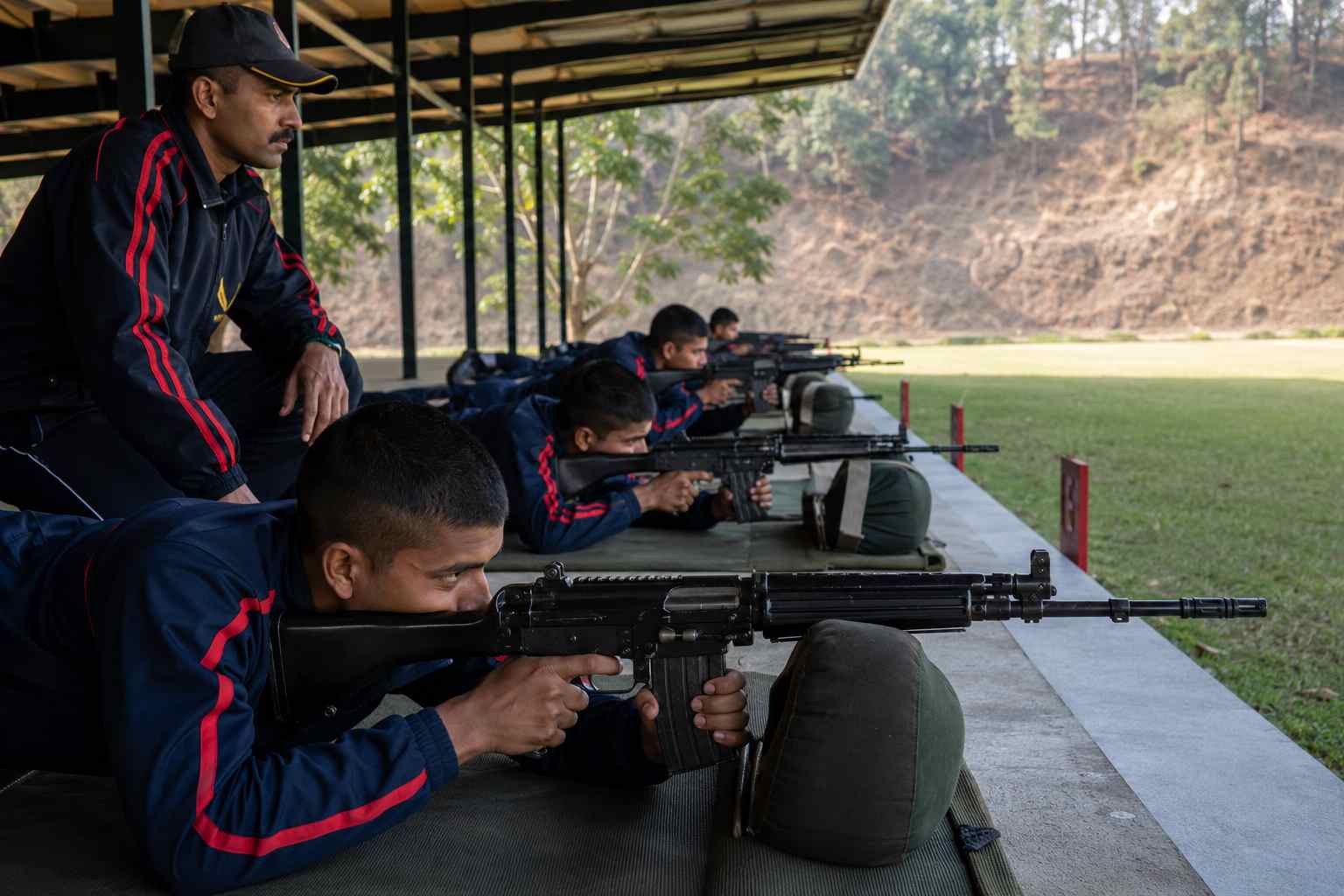
The National Defence Academy has always been seen as the place where future military leaders begin their transformation. For generations of cadets, NDA has represented discipline, physical toughness, academic rigour and the first serious step into the world of service life. But military training cannot remain fixed while the battlefield keeps changing. That is why the reported induction of the SIG 716 rifle into NDA’s training environment matters much more than it may appear at first glance.
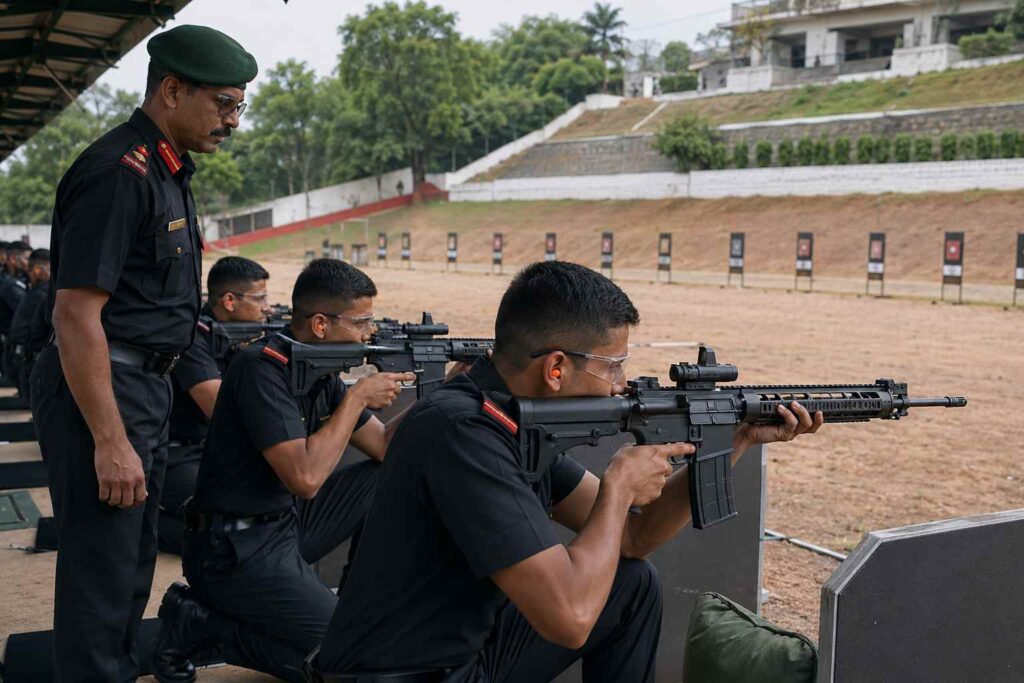
This is not only a weapon story. It is a training story.
When a premier military academy introduces a rifle already associated with frontline operational use, it sends a clear message about how officer preparation is evolving. The idea is simple: cadets should not spend their early military years training in a world that feels too far removed from what soldiers are already carrying in active service. If the Army on the ground is modernising, the academy that prepares its future officers must modernise too.
That is what makes this development important.
The SIG 716 is not being viewed merely as a new rifle in the armoury. Its significance lies in what it represents. It represents stronger alignment between academy training and operational reality. For defence aspirants and parents, that should be seen as a positive step. For the Army, it is part of a wider effort to reduce the gap between training institutions and field expectations.
A young cadet may spend years learning drill, physical endurance, leadership, teamwork and basic military skills. All of this remains essential. But when it comes to weapons, exposure to modern systems changes the quality of learning. A cadet who handles only legacy systems may still learn fundamentals, but his understanding of present-day infantry firepower remains incomplete. Once a modern rifle enters the training cycle, the experience becomes closer to what he may later encounter as an officer in a real unit.
That closeness matters.
An officer is not expected only to shoot well. He is expected to understand what his men carry, how that weapon behaves, what its strengths are, how it performs under pressure, and what kind of confidence or challenge it creates in the field. If he develops that understanding earlier, his transition into unit life becomes smoother and more credible.
This is why early weapon exposure has leadership value.
A young officer who understands the rifle system used by his soldiers is in a stronger position to lead from the front. He can appreciate issues that go beyond theory, such as recoil, accuracy under pressure, comfort in difficult terrain, firing control, weapon handling discipline and practical battlefield use. Soldiers notice very quickly whether an officer understands their realities. Familiarity with frontline-style equipment helps build that connection.
The reported use of the SIG 716 at NDA also reflects a broader training philosophy.
Military academies are no longer expected to prepare cadets only in abstract terms. They must prepare them for a rapidly changing operational environment. Today’s battlefield is shaped by better surveillance, faster decision-making, more complex terrain challenges and increasing technological integration. But in all these discussions, the infantry rifle still remains central to soldiering. It is still one of the most basic and most personal tools of combat. That is why training on a more powerful and operationally relevant rifle has meaning far beyond marksmanship.
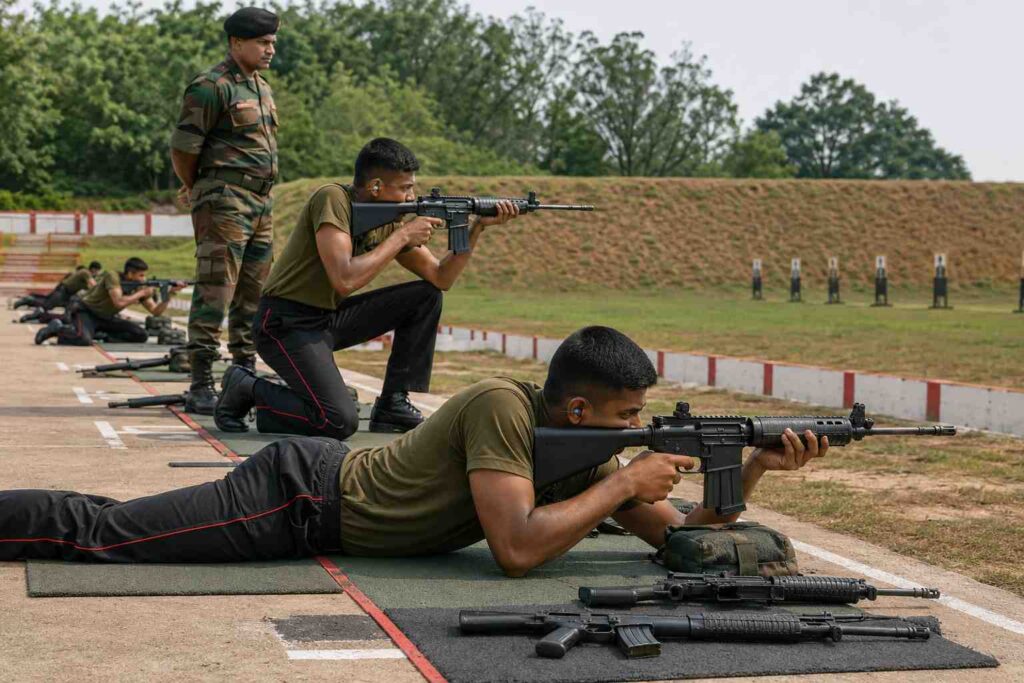
It brings realism into military grooming.
Cadets do not become officers only by learning commands and theory. They become officers by developing confidence under realistic conditions. When a cadet trains with a weapon already linked to frontline service, he begins to understand that soldiering is not about ceremonial appearance or abstract motivation. It is about responsibility, precision, discipline and preparedness. That understanding is valuable at the academy stage itself.
The distinction between ordinary range practice and meaningful weapons training is also important here.
Learning to fire at a static target is only one layer of military preparation. The more important part is learning control, safety, consistency and judgment. Modern weapon training is not meant to glorify firepower. It is meant to build maturity around its use. A cadet must learn that a rifle is not a symbol of thrill. It is a weapon of duty, and duty demands seriousness.
This is why induction of a weapon like the SIG 716 should be seen in professional terms, not dramatic ones.
For many defence aspirants, any new rifle story immediately sounds exciting. But the real value lies in what it teaches. It teaches that the Army wants its future officers to be better prepared for the real standards of service. It teaches that training institutions are watching operational needs closely. And it teaches that military leadership today requires more technical awareness than ever before.
This also reflects respect for the modern soldier.
The soldier on the ground today operates in difficult and often unforgiving conditions. Whether in border deployments, high-altitude areas or demanding tactical environments, the standards of readiness are high. An officer who will lead such troops should not enter that world without some familiarity with the equipment and expectations already shaping operational life. By introducing cadets earlier to such systems, the academy is effectively telling them that leadership begins with understanding reality, not just giving orders.
That makes this update meaningful not only for cadets, but for the institution as a whole.
NDA is a tri-services academy, and that makes its training culture especially important. It shapes the attitude, seriousness and professional mindset of future officers before they move into their specialised service streams. Any improvement in the realism of training at that stage has long-term value. It helps ensure that cadets do not see military life in outdated or over-romantic terms. Instead, they begin to see it through the lens of preparation, competence and operational relevance.
For Army-bound cadets in particular, this matters even more.
A future Army officer must eventually lead men in difficult circumstances, often under stress, uncertainty and risk. He must understand not only map reading, tactics and command responsibility, but also the physical and technical realities of the weapon systems in use. When training begins to reflect that environment earlier, the officer’s mental adjustment later becomes easier.
This is also an important message for defence aspirants outside the academy.
Many young candidates are inspired by the uniform, the prestige of service and the emotional appeal of military life. Those motivations are valuable, but they are not enough on their own. The modern armed forces demand adaptability, professionalism and readiness to engage with a more advanced operational environment. The SIG 716 story is a reminder that the future officer will be expected to grow into a leader who is comfortable with that environment from an early stage.
Parents too may see this as a reassuring sign.
It suggests that India’s premier military training institutions are not standing still. They are updating training methods to reflect present-day requirements. That is good for cadet development, good for leadership quality and good for long-term combat readiness.
At the same time, this should not be reduced to a simple comparison between one rifle and another. That would miss the larger point. The bigger message is that military training is becoming more grounded in current operational needs. A cadet is not only being taught how to fire. He is being prepared to enter an Army that already expects higher familiarity with modern systems, stronger situational understanding and better battlefield readiness.
In the end, the reported induction of the SIG 716 at NDA is important because it brings training closer to truth.
It tells cadets that the Army they dream of joining is not a distant idea. It is a real institution with real weapons, real risks and real expectations. And the earlier they begin understanding that, the better prepared they will be to lead.
That is why this is not just a rifle update.
It is a sign that future Army officers are being trained not for the past, but for the Army they will actually inherit.






Leave a Reply