

A soldier’s salary is not only a monthly figure.
It carries the weight of field duty, command discipline, family separation, early retirement, operational risk and a service life that is very different from a normal civil office routine.
That is why every Pay Commission becomes important for the defence community.
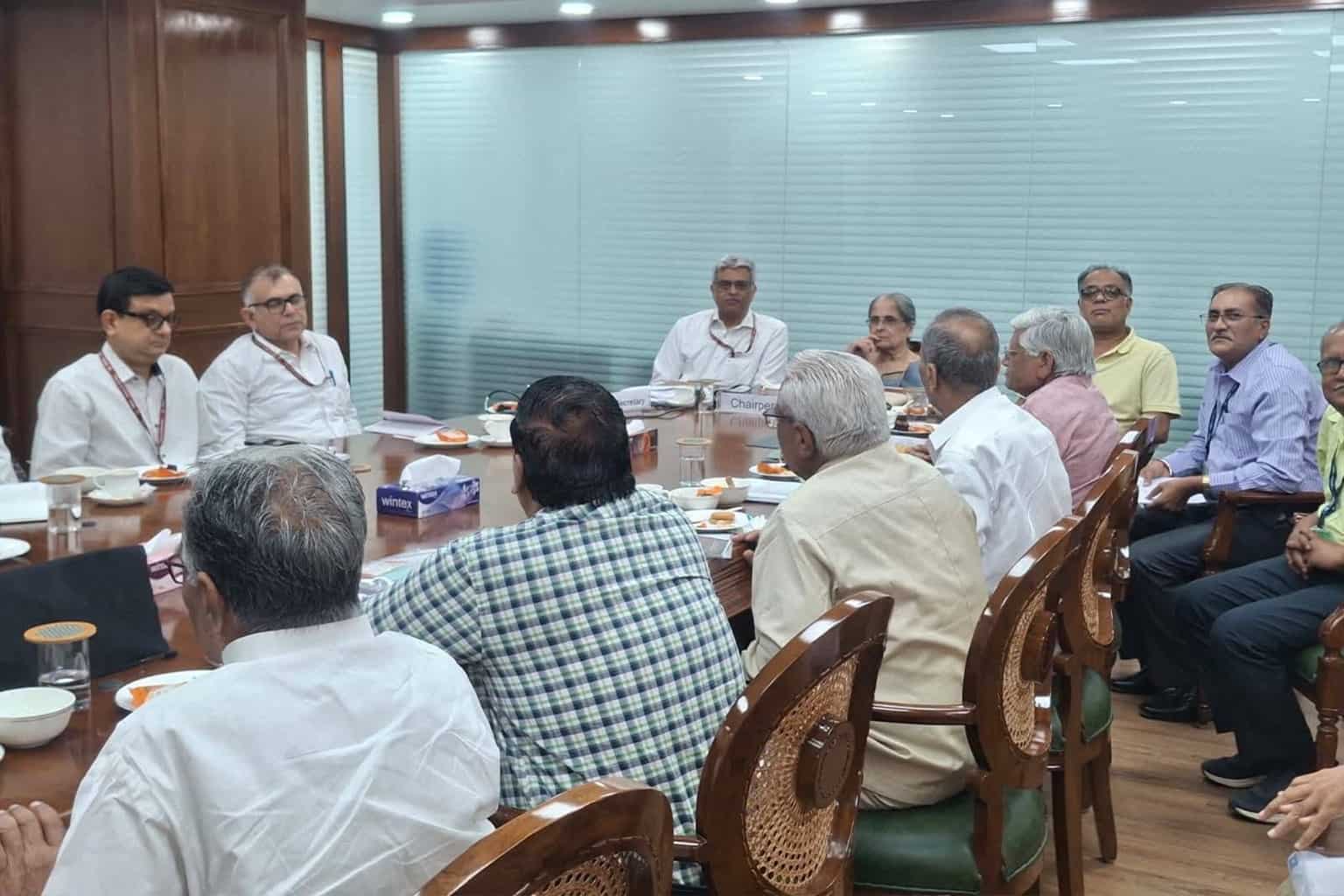
The 8th Central Pay Commission’s Lucknow visit has again brought this question into focus: should military pay, pension and welfare issues be examined only through general government service logic, or should they be studied through the realities of uniformed life?
According to updates shared by veterans’ representatives, defence-related concerns were placed before the 8th CPC panel during its Lucknow interaction on 22 and 23 June 2026. The official 8th CPC notice had invited stakeholders for the Lucknow visit, and the interaction reportedly gave veterans’ representatives time to explain several military-specific issues.
The larger meaning of this meeting is important.
It was not only about one allowance or one pension formula.
It was about reminding the Commission that military service has a structure, hardship and retirement pattern that needs a separate lens.
Why the Lucknow interaction matters?
The Lucknow visit was part of the Commission’s stakeholder consultation process.
For ordinary readers, a Pay Commission may look like a technical body that studies pay tables and allowances. But for serving personnel, veterans and pensioners, it affects household income, pension security, medical support and post-retirement stability.
In the defence community, the impact is even deeper.
A soldier joins young.
He trains under strict discipline.
He accepts postings away from home.
He may serve in field areas, high-pressure environments and counter-insurgency locations.
He may retire much earlier than many civilian employees.
This is why veterans’ organisations try to place military-specific issues before every Pay Commission.
The Lucknow interaction should be seen in that context.
What makes defence service different?
Military service is not only employment.
It is a controlled life under command.
A soldier cannot freely choose where he will serve. He cannot easily refuse movement. He cannot always take leave when family needs arise. His working environment can change from peace station to field area, from training to operational deployment, from routine duty to sudden alert.
This is why defence pay issues cannot be judged only by basic salary comparison.
The Commission must look at conditions attached to service.
Military pay and pension concerns are linked with the nature of duty itself.
The real issue behind pay-level demands
One of the key concerns reportedly placed by veterans relates to the starting level of military personnel in the pay structure.
This point is not only about a number in the pay matrix.
It is about recognition of the nature of soldiering from the first day of service.
A young soldier is trained for weapon handling, field discipline, physical endurance, unit responsibility and possible deployment in difficult conditions. The argument from the defence side is that entry-level military service should reflect the seriousness of that role.
That is why demands around starting pay level are not merely financial demands.
They are also about status, recognition and service dignity.
Why fitment factor remains closely watched?
Every Pay Commission creates discussion around fitment factor.
The reason is simple: fitment factor becomes the bridge between old pay and new pay.
For serving personnel, it affects revised salary.
For pensioners, it can influence pension revision.
For family pensioners, it may affect monthly support after the death of the pensioner.
Veterans’ representatives reportedly placed a demand for a fitment factor of 3 before the panel.
But readers must understand this carefully.
A demand is not a decision.
The 8th CPC has not announced any final fitment factor. The final figure will depend on the Commission’s recommendations and the Government’s decision
Military Service Pay: Why it is more than an allowance?
Military Service Pay, commonly known as MSP, remains one of the most emotional issues in the armed forces community.
For many soldiers and veterans, MSP is not seen as a small additional amount. It is viewed as formal recognition of the special nature of military duty.
The armed forces operate under a different service environment.
There is risk.
There is mobility.
There is restriction.
There is separation from family.
There is obligation to serve under orders in all conditions.
That is why MSP continues to be discussed strongly whenever pay revision comes.
The issue before the 8th CPC is not only how much MSP should be. The deeper question is whether the structure of MSP properly reflects military service across ranks.
Why leave-related demands matter in uniform?
Leave in military life is different from leave in many civilian services.
A soldier may earn leave, but he may not always be able to use it as planned.
Operational requirement, training schedule, unit commitment, field posting and emergency duty can affect leave movement.
This is why leave encashment and additional leave demands should not be treated casually.
If a soldier cannot use leave because service conditions restrict him, the value of that unused leave becomes a real welfare question.
Similarly, additional leave for personnel in counter-insurgency or high-pressure areas is not merely a comfort demand. It is connected with mental recovery, family connection and long-term morale.
Why ECHS is central to veteran life?
For retired soldiers and families, ECHS is not an optional benefit.
It is often the main medical support structure after retirement.
Many veterans are elderly.
Many live away from large military hospitals.
Many depend on empanelled hospitals, polyclinics and referral systems.
Any discussion around ECHS contribution, entitlement or category must therefore be handled with sensitivity.
Medical security after retirement is one of the strongest pillars of veteran welfare.
A pensioner may somehow manage a lower income, but medical uncertainty can break family confidence.
That is why ECHS-related concerns deserve close attention in the 8th CPC conversation.
Family pension: The silent issue inside defence homes
Family pension is sometimes discussed as a percentage.
For a widow or dependent family, it is not a percentage.
It is the monthly support that keeps the household stable after the pensioner is gone.
Veterans’ representatives reportedly raised the demand for increasing ordinary family pension from 30% to 60%.
The emotional reason behind this demand is easy to understand.
After the death of a pensioner, household expenses do not fall in the same proportion as pension. Medical needs, rent, utilities, food, dependents and social obligations continue.
In many defence families, the surviving spouse may be elderly and financially dependent.
This is why family pension revision is not only a financial topic.
It is a dignity issue.
Disability pension and the principle of fairness
Disability during service can affect a person’s entire life.
It can change mobility, health, employability, family planning and long-term independence.
That is why disability pension is not charity.
It is recognition of loss connected with service.
Veterans’ representatives reportedly raised concerns around non-discrimination in disability pension matters.
This is a sensitive area because the defence community expects disability linked with service to be treated with clarity and fairness.
Any Pay Commission review should examine this subject with a welfare-first approach.
Why Agniveer welfare entered the discussion?
Agniveer-related welfare concerns were also reportedly placed before the panel, especially in cases where an Agniveer loses life or suffers disability during service.
This issue needs careful wording.
The Agnipath scheme may be a policy subject, but the human reality is clear: a young person in uniform carries real responsibility and risk.
If an Agniveer becomes disabled or dies during service, the family impact is not temporary.
That is why veterans’ concerns around deceased and disabled Agniveers should be studied with seriousness, not only from a contractual angle but from a national-duty perspective.
Why jawan pension needs special attention?
A jawan’s retirement pattern is very different from that of many civilian employees.
Many soldiers retire young, often when family responsibilities are at their peak.
Children’s education may still be underway.
Parents may be dependent.
Housing loans or social responsibilities may remain.
Second-career options may not always match military experience.
This is why pension demands for jawans must be examined in the context of early retirement and shorter uniformed career span.
A fair pension formula for soldiers must recognise that their service life ends earlier, but family responsibilities continue.
Why honorary ranks and technical pay are emotional issues?
Honorary rank is not a casual title for a soldier.
It reflects service record, discipline and long years of commitment.
If honorary recognition does not carry meaningful financial benefit, many veterans feel the recognition remains incomplete.
Similarly, technical pay or X Group-related concerns are linked with specialised training and skill recognition.
For soldiers who served in technical roles, such issues are not minor accounting disputes.
They reflect whether the system properly values skill, qualification and service contribution.
What is confirmed and what is only reported?
This distinction is very important.
The official position is that the 8th CPC issued a notice for its Lucknow visit on 22 and 23 June 2026 and invited stakeholders to seek appointments using Memo ID.
The specific points discussed by veterans’ representatives are based on representative updates and transcript-based information.
No official minutes of the detailed veterans’ meeting were found at the time of writing.
Therefore, these points should be described as demands reportedly placed before the panel, not as approved recommendations.
The meeting shows representation.
It does not show acceptance.
What should not be claimed?
Readers should not misunderstand this update.
The 8th CPC has not announced the final fitment factor.
It has not approved a new MSP structure.
It has not declared Pay Level 5 as the starting military level.
It has not revised family pension to 60%.
It has not announced jawan pension at 67% of last emoluments.
It has not issued final recommendations on ECHS, disability pension, Agniveer welfare or honorary rank benefits.
The responsible way to write this story is simple: veterans’ concerns were reportedly placed before the panel during the Lucknow interaction, and the Commission will examine inputs as part of its wider process.
Why documentation is as important as discussion?
A meeting gives voice.
A memorandum gives record.
This is one of the most important lessons from the 8th CPC process.
Veterans’ representatives may explain issues in person, but the Commission also needs structured documents, data and written submissions.
This is why Memo ID, memorandum submission, data portal and official formats are important in Pay Commission work.
A demand becomes stronger when it is clearly written, supported with facts and placed through the official channel.
Why this stage matters for the defence community?
The 8th CPC is still moving through consultation, stakeholder engagement and data collection.
This is the stage where issues must be placed clearly.
Once recommendations are framed, it becomes much harder to influence the direction of the report.
For the defence community, the Lucknow interaction is important because it shows that veterans’ organisations are trying to ensure that military realities are not lost in a general pay-revision exercise.
The final outcome will come later.
But participation at this stage matters.
Comment
The Lucknow meeting should be understood as part of a larger defence-pay conversation.
The armed forces have a separate service environment, and that environment creates separate financial and welfare questions.
A soldier’s pay is linked with risk.
A jawan’s pension is linked with early retirement.
A widow’s family pension is linked with survival and dignity.
ECHS is linked with medical security.
MSP is linked with recognition of military duty.
Disability pension is linked with service-related loss.
These issues deserve careful examination, not hurried judgement.
Final takeaway
The 8th CPC Lucknow interaction has brought defence pay, pension and welfare concerns back into focus.
Veterans’ representatives reportedly raised issues connected with fitment factor, military pay levels, MSP, leave encashment, ECHS, disability pension, Agniveer welfare, family pension, jawan pension, honorary ranks and technical pay.
But these remain demands and representations at this stage.
No final approval has been announced.
The real importance of the Lucknow visit is that military-specific concerns were placed before the Commission during the consultation phase.
For serving personnel, veterans, pensioners and family pensioners, the message is clear:
defence service conditions must be understood separately,
welfare issues must be documented properly,
and every claim should be followed through official sources.
The 8th CPC process is still moving.
The defence community has placed its voice.
Now the country will wait to see how the Commission studies these issues in its recommendations.
Sources:-
Official 8th CPC Lucknow visit notice:
https://8cpc.gov.in/document/notice-regarding-8cpc-visit-to-lucknow-uttar-pradesh-22-23-june-2026/
Official PDF of Lucknow visit notice:
https://cdnbbsr.s3waas.gov.in/s354b2b21af94108d83c2a909d5b0a6a50/uploads/2026/05/20260521886747762.pdf
8CPC Memorandum Submission page:
https://8cpc.gov.in/8cpc-memorandum-submission/
8CPC Online Data Portal:
https://8cpc.gov.in/8cpc-online-data-portal/


Leave a Reply