


ECHS beneficiaries के लिए 2026 में सबसे ज्यादा confusion दो अलग developments को एक ही “new rate update” समझने से पैदा हो रही है।
पहली बात है revised CGHS package rates, जो ECHS में 15 December 2025 से लागू हैं।

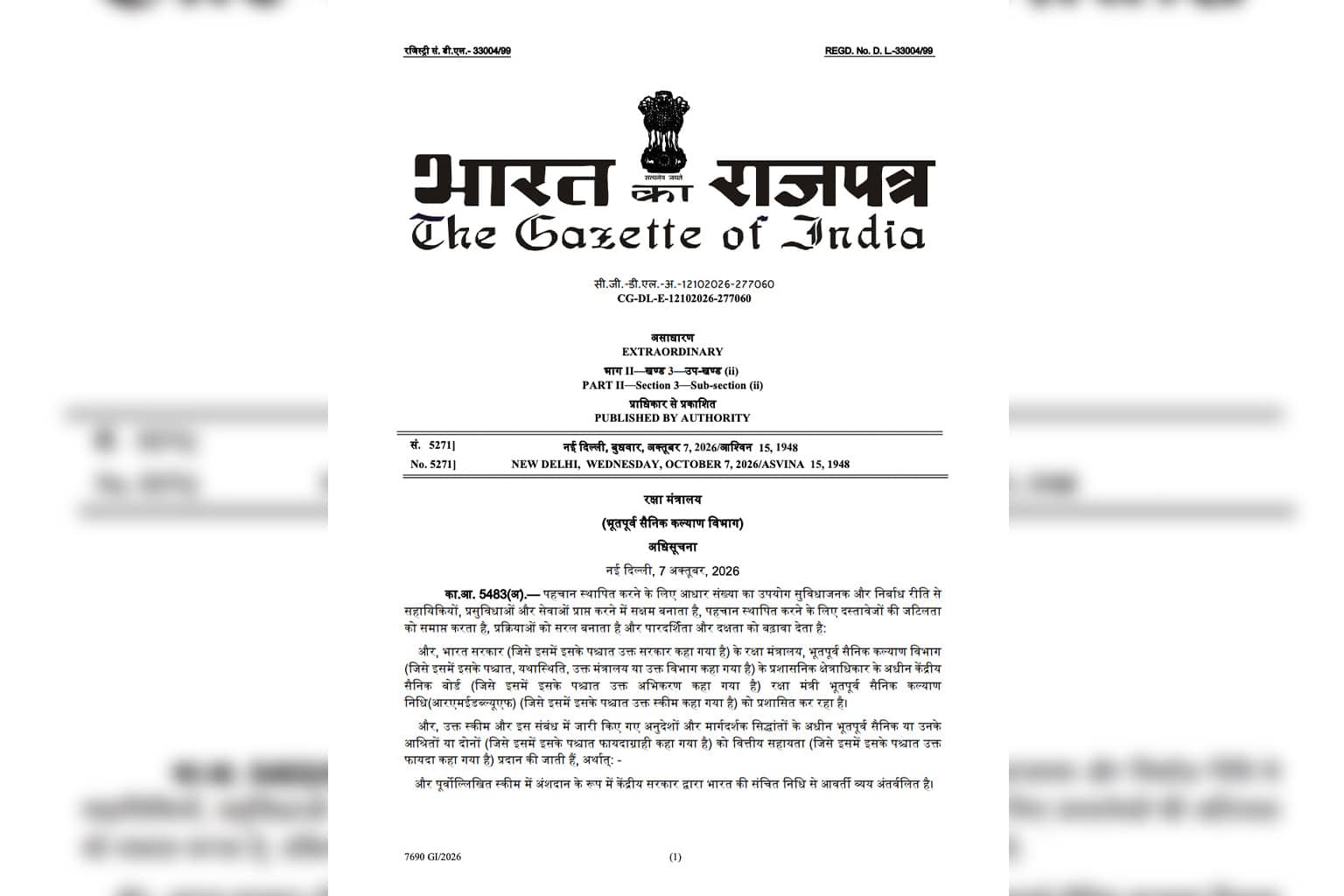
दूसरी बात है 27 July 2026 का Ministry of Defence/Department of Ex-Servicemen Welfare order, जिसने existing empanelled Healthcare Organisations के revised Memorandum of Agreement (MoA) execute करने की deadline को 30 September 2026 तक बढ़ाया है। उसी order में Central Organisation ECHS को fresh empanelment portal सहित necessary implementation steps deadline से पहले complete करने को कहा गया है।
इसलिए 30 September की तारीख को veterans की application deadline या किसी नई medical-rate launch date के रूप में नहीं समझना चाहिए।
इस पूरे development को समझने का बेहतर तरीका यह है:
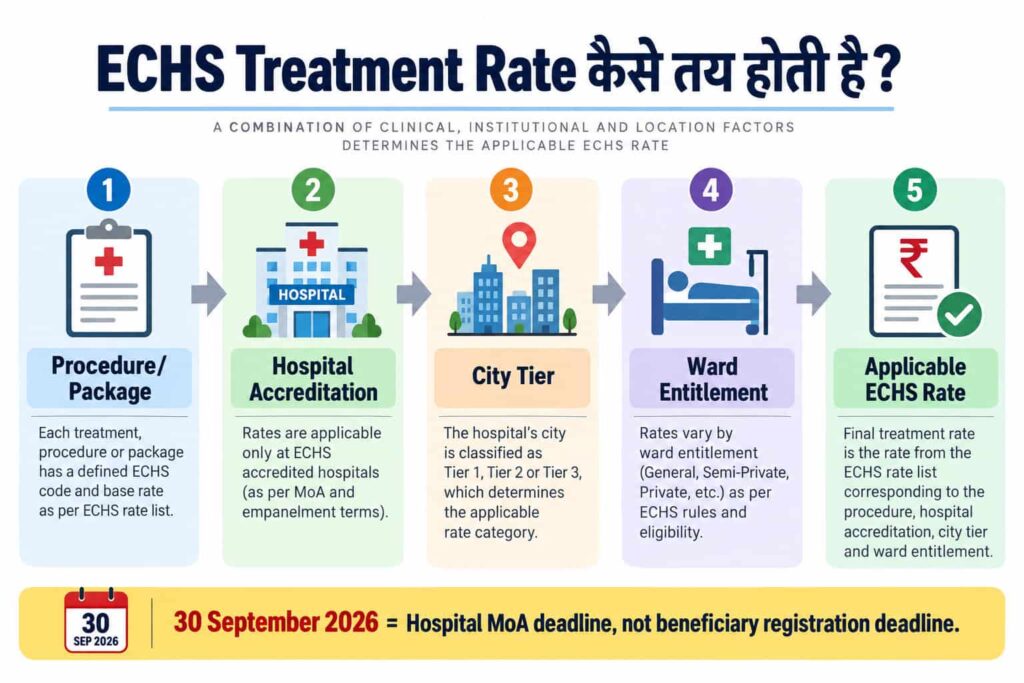
Rate कब लागू हुई? → Hospital किस category में है? → City किस tier में है? → Beneficiary की ward entitlement क्या है? → Hospital का revised ECHS agreement valid है या नहीं?
सबसे पहले: क्या July 2026 में नई ECHS treatment rates आई हैं?
No.
Department of Ex-Servicemen Welfare ने 5 December 2025 के order के जरिए Ministry of Health & Family Welfare द्वारा revised CGHS package rates को ECHS के लिए adopt किया था।
Order साफ कहता है कि revised rates 15 December 2025 से effective होंगी और ECHS empanelled HCOs में healthcare services, eligible medical reimbursement claims और applicable cashless treatment framework में इस्तेमाल होंगी।
इसलिए July 2026 development को:
“नई CGHS rates अब ECHS में लागू हुईं”
कहना सही नहीं होगा।
Better description है:
Rates पहले से लागू हैं; 2026 के subsequent orders hospital empanelment और revised contractual framework को transition करने से संबंधित हैं।
30 September 2026 की deadline वास्तव में किसके लिए है?
27 July 2026 के DESW order में स्पष्ट रूप से empanelled HCOs के MoA execution की deadline को 30 September 2026 तक extend किया गया है।
Order का दूसरा important हिस्सा Central Organisation ECHS को यह direction देता है कि revised MoA implement करने के लिए required arrangements—including fresh empanelment of HCOs के लिए portal opening—30 September से पहले timely complete किए जाएं।
इसका मतलब यह तारीख मुख्य रूप से hospital-side administrative transition से जुड़ी है।
यह नहीं है:
ECHS card application last date, veteran registration deadline, reimbursement claim deadline या treatment लेने की आखिरी तारीख।
MoA क्या है और veteran को इसकी चिंता क्यों होनी चाहिए?
MoA यानी Memorandum of Agreement ECHS और empanelled private Healthcare Organisation के बीच contractual framework है।
Revised CGHS rates लागू करते समय 5 December 2025 instructions में existing private empanelled hospitals के पुराने MoAs को replace करने और hospitals को revised framework में renewal/acceptance process पूरा करने को कहा गया था। HCOs को revised rates स्वीकार करने का undertaking भी देना था।
Veteran खुद MoA sign नहीं करता।
लेकिन beneficiary के लिए इसका indirect importance बड़ा है क्योंकि hospital का:
valid empanelment + applicable MoA + ECHS terms acceptance
उस facility में ECHS treatment availability को प्रभावित कर सकता है।
इसलिए 30 September deadline को beneficiary paperwork की बजाय hospital-network continuity issue के रूप में देखना ज्यादा सही है।
2026 में MoA deadline कितनी बार आगे बढ़ी?

13 March order ने existing hospitals के MoA execution की deadline 31 March तक बढ़ाई थी. 30 April order ने इसे 31 July तक extend किया और latest 27 July order ने इसे 30 September कर दिया।
अब सबसे useful सवाल: actual treatment rate कैसे तय होती है?
Revised CGHS/ECHS framework में केवल procedure का नाम देखकर final rate तय नहीं होती।
Rate structure कई variables पर depend करती है:
Hospital accreditation status
Hospital type / super-speciality status
City classification
Ward entitlement
Official ECHS rate policy specifically इन factors के आधार पर differential rate structure provide करती है।
इसलिए दो veterans का same procedure अलग location या hospital category में होने पर applicable package amount अलग हो सकता है।
Factor 1: NABH/NABL accreditation rate को कैसे affect करती है?
Official revised structure में Non-NABH / Non-NABL Healthcare Organisations के rates accredited NABH/NABL HCOs की तुलना में 15% lower रखे गए हैं।
इसका practical meaning यह है कि:
same procedure + same city
होने के बावजूद hospital का accreditation status applicable rate को बदल सकता है।
Beneficiary को इसलिए केवल hospital का नाम नहीं देखना चाहिए।
Useful questions हैं:
Is the hospital currently ECHS empanelled?
Is it NABH accredited for the relevant purpose?
Which rate category applies to it?
Factor 2: Super-speciality hospital के लिए अलग rate हो सकती है
Revised framework eligible super-speciality hospitals के corresponding super-speciality treatment के लिए उसी city category के NABH rate से 15% higher rate structure provide करता है।
लेकिन इसका मतलब यह नहीं कि किसी hospital के नाम में “super speciality” लिखे होने भर से हर procedure पर 15% extra rate automatically लागू हो जाएगी।
Hospital और speciality को applicable criteria satisfy करने होंगे और treatment उस corresponding super-speciality category में होना चाहिए।
Factor 3: City Tier treatment package को कैसे बदलती है?
Revised framework में city classification एक major variable है।
Official structure के अनुसार:
Tier-II / Y-class rates → Tier-I/X-class से 10% lower
और
Tier-III / Z-class rates → Tier-I/X-class से 20% lower.
यानी Delhi जैसे Tier-I location में applicable package और किसी Tier-II या Tier-III city में उसी treatment का applicable rate अलग हो सकता है।
यह geographical discrimination नहीं बल्कि CGHS differential package-rate methodology का हिस्सा है।

NABH Status → Super-Speciality → City Tier → Ward Entitlement
Callouts:
Non-NABH: 15% lower
Eligible Super-Speciality: 15% higher
Tier-II: 10% lower
Tier-III: 20% lower
लेकिन Faridabad, Noida, Gurugram जैसे cities को कैसे treat किया जाता है?
City name देखकर tier assume करना हमेशा safe नहीं है।
ECHS ने 16 December 2025 को separate addendum जारी करके कुछ locations की rate-purpose mapping clarify की।
Official addendum के अनुसार:
Faridabad, Ghaziabad, Noida और Gurugram को rate purposes के लिए Delhi / X-Class / Tier-I के बराबर treat किया जाता है।
Jalandhar Cantt को Jalandhar / Y-Class / Tier-II के बराबर treat किया जाता है।
Goa और Port Blair को भी Y-Class / Tier-II rates के लिए classify किया गया है।
इसलिए veteran के लिए correct approach है:
Official ECHS city mapping देखें—not just general assumption about whether a city is metro or non-metro.
Factor 4: Ward entitlement से rate में कितना difference आ सकता है?
Revised package rates का base semi-private ward entitlement के लिए है।
Official framework कहता है:
General Ward → applicable rate में 5% decrease
Semi-Private Ward → base rate
Private Ward → applicable admissible amount में 5% increase.
इसलिए hospital का displayed package rate और beneficiary का admissible amount automatically identical नहीं माना जा सकता।
Beneficiary की ward entitlement भी देखनी होगी।
क्या हर medical service पर ward वाला ±5% adjustment लगता है?
No.
यह nuance important है।
Official revised policy के अनुसार consultations, radiotherapy, investigations, day-care procedures और minor procedures not requiring admission जैसी कुछ services के rates ward entitlement से irrespective uniform रहते हैं।
यानी:
Private Ward entitlement है → हर test automatically 5% higher
यह conclusion गलत होगा।
Ward differential primarily उन applicable package situations में relevant है जहां policy उसे allow करती है।

एक hypothetical example से पूरा mechanism समझें
मान लीजिए किसी procedure की package entry available है।
Final admissible framework understand करने के लिए केवल उस procedure की base number देखना पर्याप्त नहीं होगा।
पहले identify होगा:
hospital accredited है या non-accredited
फिर:
city Tier-I, Tier-II या Tier-III किस category में mapped है
फिर:
hospital ordinary NABH है या eligible super-speciality
और जहां applicable हो:
beneficiary की ward entitlement क्या है
इसलिए internet पर किसी single CGHS package amount का screenshot देखकर यह कहना कि:
“ECHS मुझे exactly इतना ही reimburse करेगा”
safe conclusion नहीं है।
Correct applicable rate official rate table और case conditions से निकलती है।
Revised rates किन ECHS situations में apply करती हैं?
5 December 2025 DESW order के अनुसार revised rates:
ECHS empanelled HCOs में availed healthcare services
और eligible beneficiaries के Medical Reimbursement Claims
के लिए applicable हैं।
Order यह भी कहता है कि ECHS cashless treatment Service Pensioners और अन्य eligible ECHS beneficiaries को extant rules के अनुसार continue किया जाएगा।
इसलिए rate revision ने cashless ECHS system को खत्म नहीं किया।
लेकिन इसका मतलब existing referral, approval या treatment rules भी खत्म नहीं हुए।
क्या revised rates का मतलब veteran को direct cash benefit मिलेगा?
No.
यह कोई:
pension increase, allowance, bank transfer या direct financial grant नहीं है।
CGHS/ECHS package rates treatment billing और reimbursement ecosystem का हिस्सा हैं।
Veteran का actual financial outcome case के अनुसार depend कर सकता है:
cashless treatment था या reimbursement case
listed procedure है या unlisted
empanelled hospital है या non-empanelled
authorisation/referral requirements पूरी हुईं या नहीं
और
applicable admissible rate क्या है।
इसलिए headline:
“ECHS veterans को revised rate का cash benefit मिलेगा”
misleading होगी।
Non-empanelled private hospital में treatment हो जाए तो क्या होगा?
5 December policy exceptional circumstances में non-empanelled private HCO treatment के reimbursement को existing instructions के तहत consider करने की possibility रखती है।
लेकिन ऐसे cases में reimbursement concerned city के Non-NABH rate तक restricted हो सकता है।
इसका मतलब:
non-empanelled hospital bill = full reimbursement
नहीं है।
Emergency, referral, admissibility और supporting documentation के existing rules अलग से matter कर सकते हैं।
Fresh hospital empanelment portal का veteran के लिए क्या मतलब हो सकता है?
27 July order का दूसरा important element fresh HCO empanelment है।
DESW ने CO ECHS को required implementation actions, including fresh empanelment portal opening, 30 September से पहले complete करने के लिए कहा है।
Potentially इसका long-term impact beneficiary के लिए:
more hospitals applying
→ eligible hospitals being evaluated
→ network expansion where approved
हो सकता है।
लेकिन अभी यह लिखना गलत होगा:
“30 September तक इतने नए hospitals ECHS में जुड़ जाएंगे।”
Order number या guaranteed final network size नहीं देता।
Application और actual empanelment दो अलग stages हैं।
30 September से पहले veteran को क्या करना चाहिए?
Normal beneficiary के लिए इस order के कारण कोई नया form भरना prescribed नहीं किया गया है।
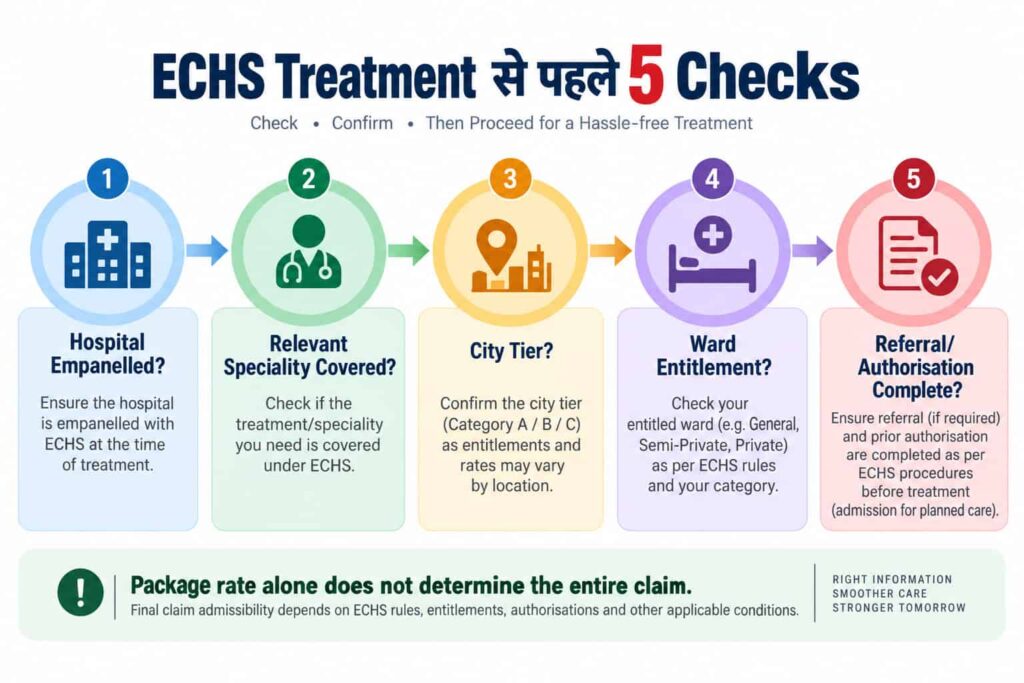
Practical तौर पर ज्यादा useful है treatment से पहले current hospital status verify करना।
ECHS website beneficiary utilities में Empanelled Hospital Details और hospital empanelment-related information available कराती है।
Hospital से treatment लेने से पहले beneficiary को यह check करना useful हो सकता है कि facility:
currently empanelled है या नहीं
required speciality covered है या नहीं
और applicable referral/authorisation requirements क्या हैं।
Rates और Hospital Deadline को एक table में समझें
| Question | Correct position |
|---|---|
| Revised CGHS rates ECHS में कब effective हुईं? | 15 December 2025 |
| 27 July 2026 order ने नई rate list जारी की? | No |
| Latest MoA deadline? | 30 September 2026 |
| Deadline किसकी है? | Empanelled HCOs के revised MoA execution की |
| क्या veteran को 30 Sep तक register करना है? | इस order में ऐसा नहीं कहा गया |
| Non-NABH rate | NABH से 15% lower |
| Eligible super-speciality rate | Corresponding NABH rate से 15% higher |
| Tier-II | Tier-I से 10% lower |
| Tier-III | Tier-I से 20% lower |
| General Ward | 5% lower where ward differential applies |
| Private Ward | 5% higher where applicable |
| Cashless ECHS treatment | Extant rules के अनुसार continues |
क्या confirmed है और क्या assume नहीं करना चाहिए?

Veteran के लिए सबसे practical takeaway क्या है?
इस entire update में beneficiary के लिए सबसे useful distinction यह है:
Hospital rate और hospital empanelment status दोनों अलग चीजें हैं—but treatment access के लिए दोनों important हैं।
एक rate table यह बताती है कि eligible procedure के लिए framework में क्या admissible package हो सकता है।
Empanelment/MoA यह तय करने में relevant है कि hospital ECHS framework के अंदर treatment provide करने के लिए किस status में है।
और beneficiary-specific rules यह तय करते हैं कि:
referral, ward, cashless treatment, reimbursement या authorisation
कैसे apply होंगे।
इसलिए केवल “CGHS rates revised” headline veteran को पूरा answer नहीं देती।
15 December 2025 से revised treatment package rates ECHS में लागू हो गई थीं।
इसके बाद 2026 में hospital-side revised MoA transition को कई बार time extension मिली—31 March, फिर 31 July और अब 30 September 2026 तक।
इसलिए latest update का सबसे accurate meaning है:
नई medical rate announcement नहीं, बल्कि revised rate framework के तहत hospital agreements और fresh empanelment process को complete करने के लिए extended implementation window।
Veterans के लिए practical focus headline date पर नहीं, बल्कि current hospital empanelment, procedure category, NABH status, city tier, ward entitlement और existing ECHS treatment rules पर होना चाहिए।
Sources
Department of Ex-Servicemen Welfare — ECHS Circulars
Official circular list showing the revised-rate orders dated 5 December 2025, 13 March 2026, 30 April 2026 and 27 July 2026.
Official DESW ECHS Circulars
DESW — 27 July 2026 Order
Official order extending revised MoA execution deadline to 30 September 2026 and directing fresh empanelment-related implementation action.
Open the 27 July 2026 official PDF
DESW / ECHS — Revised CGHS Rates, 5 December 2025
Official policy establishing 15 December 2025 implementation and revised rate structure.
ECHS official revised-rate policy
ECHS — City/Tier Mapping Addendum, 16 December 2025
Clarifies Delhi-equivalent and Tier-II mappings for specified locations.
Official ECHS city-tier addendum



Leave a Reply