

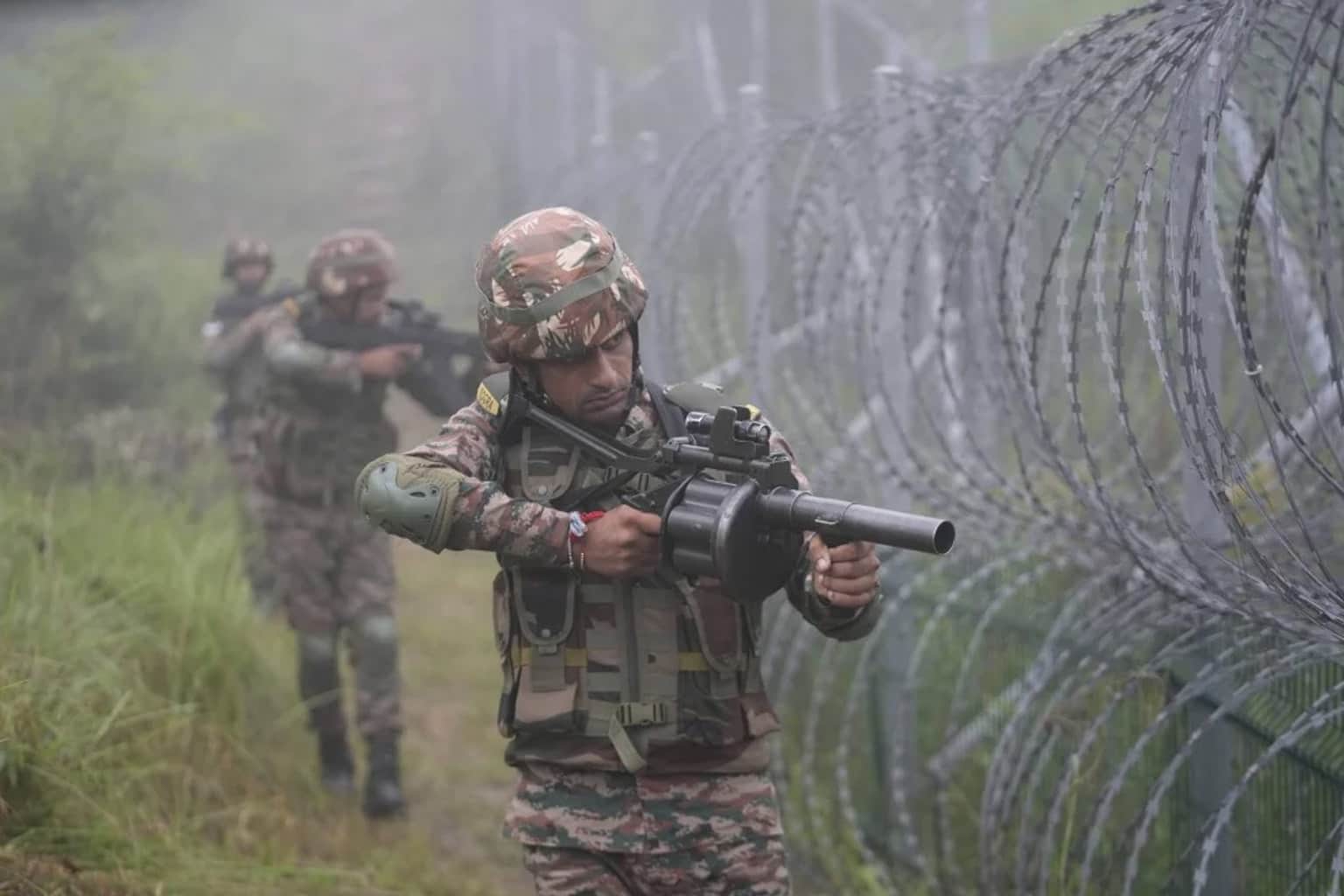
The Indian Army’s drone story is no longer only about how many drones it has.
The bigger question is different.
Who will operate them?
Who will maintain them?
Who will analyse the live feed?
Who will connect drone information with ground commanders?
Who will keep the system working during pressure?
This is where the reported plan for Baaz Battalions becomes important.
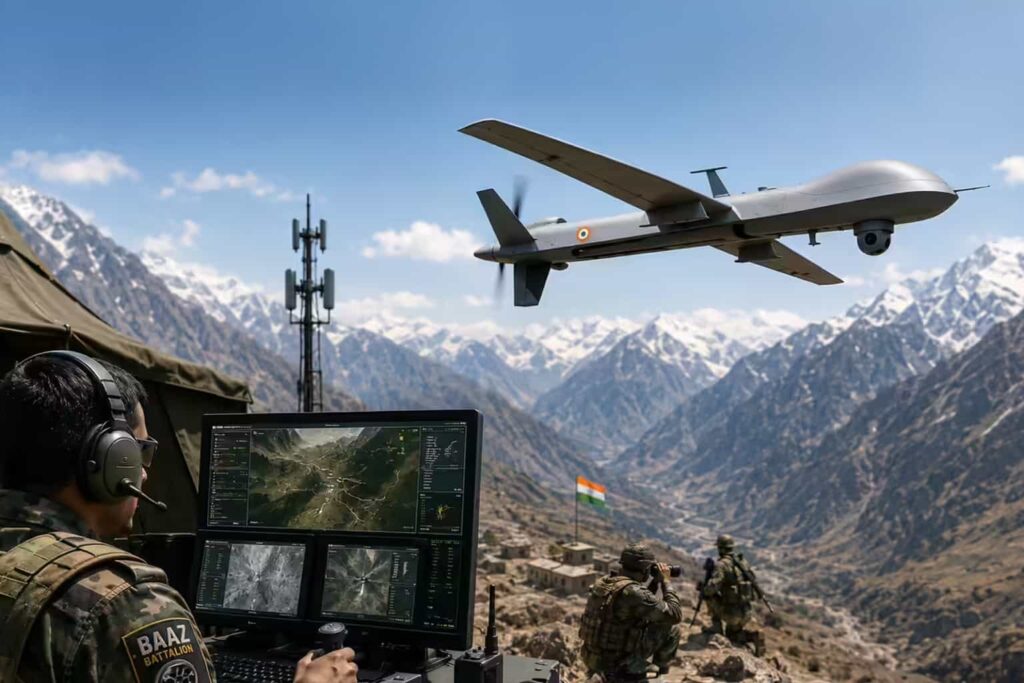
Media reports quoting outgoing Army Chief General Upendra Dwivedi say the Indian Army is raising specialised Baaz Battalions to strengthen drone-based intelligence, surveillance and reconnaissance. These battalions are expected to build on existing Remotely Piloted Aircraft Flights and create trained personnel for operating and managing drone systems.
In simple words, the Indian Army appears to be moving from “having drones” to “organising drones as a battlefield capability.”
That is the real shift.
What is the core idea behind Baaz Battalions?
Baaz Battalions can be understood as specialised drone-focused formations.
Their reported role is not limited to flying small UAVs. The bigger purpose is to manage a wider drone ecosystem for surveillance, battlefield awareness and rapid response.
A drone by itself gives a video feed.
A trained drone formation can turn that feed into useful military information.
That difference matters.
On a future battlefield, information will decide speed. The unit that sees first can prepare first. The commander who receives the right information at the right time can make better decisions.
Baaz Battalions are important because they may become the Army’s organised layer for this kind of aerial information support.
Why the Army cannot treat drones like ordinary equipment?
A rifle is issued to a soldier.
A radio is issued to a unit.
But drones are different.
They need trained operators, batteries, sensors, repair teams, secure communication links, anti-jamming protection, data handling and coordination with other arms.
If a drone is used without structure, its value remains limited.
If it is integrated properly, it can support infantry, armour, artillery, engineers, logistics and commanders.
This is why a drone-heavy Army needs more than drone purchases. It needs drone doctrine, training, maintenance and command systems.
Baaz Battalions are being reported in that larger context.
The problem of scale
The Indian Army’s drone fleet has reportedly grown very fast.
According to media reports quoting Gen Dwivedi, the Army had only a few hundred drones around two years ago, but now has more than 50,000 unmanned systems. The number may grow further in the next two to three years.
This scale changes the problem completely.
A few hundred drones can be managed as special assets.
Tens of thousands of drones require an ecosystem.
That ecosystem needs:
trained manpower,
repair and replacement chains,
spare parts,
battery management,
software updates,
data processing,
tactical integration,
counter-drone awareness,
and proper command responsibility.
Baaz Battalions may help the Army handle this scale more professionally.
ISR is the main keyword
The most important military term linked with Baaz Battalions is ISR.
ISR means intelligence, surveillance and reconnaissance.
In practical terms, it means finding out what is happening before the situation becomes dangerous.
A drone can watch a suspected area.
It can track movement.
It can confirm whether a route is safe.
It can support patrols.
It can help commanders understand the ground situation without exposing soldiers unnecessarily.
It can also help in target confirmation and quick response.
For a country with difficult borders, ISR is not a luxury. It is a necessity.
Why the name Baaz makes sense?
Baaz means hawk or falcon.
The name fits the reported role.
A hawk watches from above.
It sees movement early.
It has sharp vision.
It reacts quickly.
That is exactly what drone-enabled formations are expected to provide on the battlefield: aerial eyes, faster awareness and better response.
But the important point is this: Baaz Battalions are not just about flying machines. They are about creating a trained human system behind the machine.
From drone operator to drone warrior
In the coming years, drone operators will become more important in Army formations.
They will not only fly drones. They may have to understand terrain, enemy movement, electronic interference, weather, battery limitations, sensor quality, target reporting and coordination with ground troops.
This requires training.
A drone operator in a military environment is not the same as a hobby drone user.
He must know when to fly, where to fly, what to observe, what not to expose, how to report and how to protect the system from enemy countermeasures.
Baaz Battalions can create this specialist pool.
How this helps commanders?
Commanders need information before they make decisions.
Earlier, some information came from patrols, observation posts, human intelligence, reconnaissance teams or higher headquarters.
Now, drones can provide live or near-real-time visibility.
This can help a commander ask better questions:
Is the enemy moving?
Is the route open?
Is there a threat near the post?
Is the suspected activity genuine?
Can artillery or other support be guided better?
Can troops move with reduced risk?
Is there a hostile drone threat in the area?
A specialised drone formation can make this information flow more reliable.
Why border areas need this capability?
India’s borders include mountains, deserts, forests, riverine stretches and high-altitude areas.
In many of these areas, human observation has limits.
A drone can reach where a patrol may take longer.
It can scan difficult ground.
It can support surveillance without immediately risking lives.
It can also provide confirmation before a commander moves troops.
This is why Baaz Battalions can be important for border monitoring as well as battlefield readiness.
The Army’s future will depend not only on firepower, but also on awareness.
The counter-drone angle
The same technology that helps India can also be used by adversaries.
Enemy drones can watch Indian positions, drop small munitions, guide fire, disturb logistics or create confusion.
So drone growth must go together with counter-drone capability.
A future-ready Army must be able to do two things at the same time:
use its own drones effectively,
and defeat hostile drones effectively.
This requires detection, tracking, jamming, spoofing, neutralisation and electronic warfare support.
That is why drone warfare is not only about flying UAVs. It is also about controlling the drone battlespace.
How this fits into Army transformation?
Baaz Battalions should be seen as part of the broader Army transformation story.
The Ministry of Defence has officially pushed the idea of technology-driven, future-ready and multi-domain Armed Forces through the Year of Reforms.
The Army has also been highlighting future battlefield systems, drone-related capabilities and technology absorption in public events and official updates.
This means the Baaz Battalion story fits a bigger trend:
The Army wants to move faster towards technology-enabled warfare.
Drone units are one part of that journey.
Why industry should pay attention?
If drone numbers continue to grow, the demand will not be limited to airframes.
The Army will need a larger support ecosystem.
This may include:
high-quality sensors,
secure communication systems,
batteries,
charging solutions,
repair centres,
training simulators,
anti-jamming systems,
AI-based video analysis,
payloads,
loitering munitions,
and counter-drone equipment.
For Indian defence startups, MSMEs and established companies, this can become a major opportunity.
But the requirement will be clear: battlefield reliability, not showroom technology.
What soldiers may need to learn?
The rise of drones will also change training.
Soldiers may need to become more careful about aerial visibility.
Camouflage will matter more.
Movement discipline will matter more.
Electronic signature control will matter more.
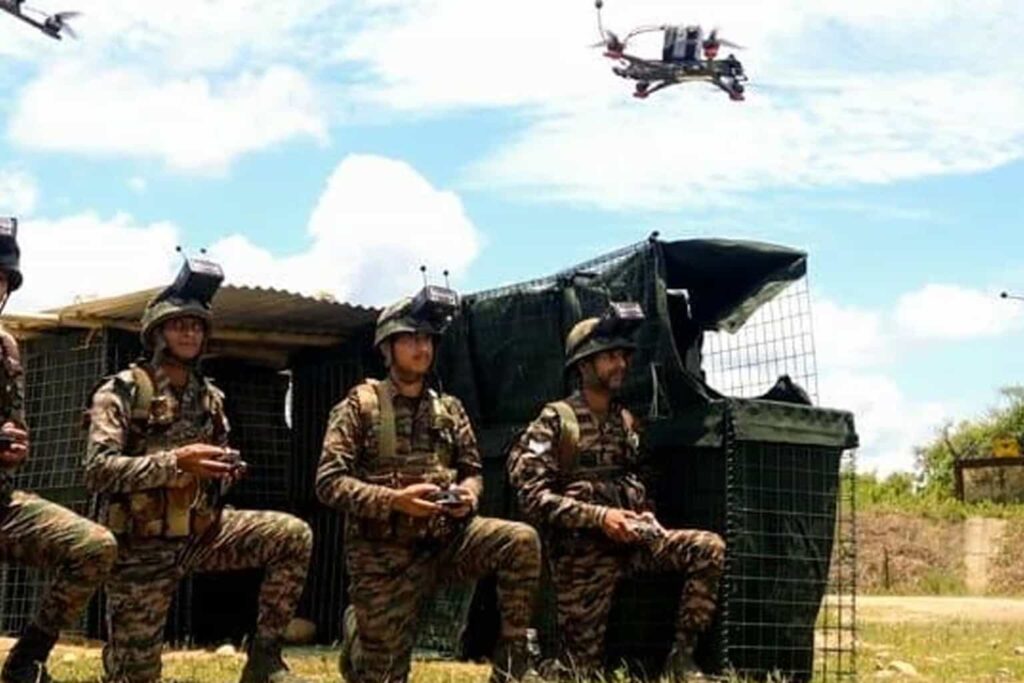
Units may need to learn how to work with drone feeds.
They may also need to know how to respond when enemy drones are detected.
This means drones will affect not only drone operators, but ordinary soldiers as well.
The battlefield is becoming more visible from above.
What should not be assumed?
There is one important caution.
The detailed official structure of Baaz Battalions has not been publicly released through a full MoD or Army document.
So it is better not to claim exact numbers, locations, composition or deployment areas.
The correct wording is:
Media reports quoting Gen Upendra Dwivedi say the Indian Army is raising specialised Baaz Battalions to strengthen drone-based ISR, aerial surveillance and battlefield awareness.
This keeps the article accurate and responsible.
Why this topic matters for the public?
For a normal reader, the term Baaz Battalion may sound technical.
But the idea is simple.
The Army is preparing for a battlefield where drones will become common tools, just like radios and night-vision devices.
This means future wars will not be fought only by soldiers seeing with their eyes.
They will be fought by soldiers, commanders, sensors, drones, data links and electronic systems working together.
Baaz Battalions may become one of the Army’s ways to manage that new battlefield reality.
Final takeaway
Baaz Battalions are important because they show that the Indian Army is thinking beyond drone numbers.
The focus is shifting towards trained drone specialists, organised RPA operations, better battlefield awareness and faster response.
A drone can fly.
But a specialist formation can turn drone data into military advantage.
That is why this development matters.
The future battlefield will reward the side that can see clearly, decide quickly and act accurately.
Baaz Battalions may become one of the Indian Army’s key steps in that direction.
Sources:-
Business Standard / ANI — Army to expand drone fleet, raise Baaz Battalions for better surveillance
https://www.business-standard.com/external-affairs-defence-security/news/army-to-expand-drone-fleet-raise-baaz-battalions-for-better-surveillance-126062900888_1.html
Moneycontrol — Indian Army’s Baaz Battalions: what they are and why they matter
https://www.moneycontrol.com/news/india/indian-army-s-baaz-battalions-what-they-are-and-why-they-matter-13961504.html
India Today — Indian Army Baaz Battalions and drone warfare capabilities
https://www.indiatoday.in/india/story/indian-army-baaz-battalions-new-drone-units-boost-battlefield-surveillance-warfare-capabilities-defence-news-india-news-2937072-2026-06-30
Times of India — Army raising specialised Baaz Battalions
https://timesofindia.indiatimes.com/defence/news/army-raising-specialised-baaz-battalions-for-aerial-surveillance-drone-warfare/articleshow/132101389.cms
BharatShakti — Baaz Battalions for drone surveillance and precision-strike ecosystem
https://bharatshakti.in/army-raises-specialised-baaz-battalions-for-long-range-drone-surveillance-precision-strikes/
India Sentinels — What are the Indian Army’s Baaz Battalions?
https://www.indiasentinels.com/army/what-are-the-indian-armys-baaz-battalions-new-uav-units-to-boost-border-surveillance-7481
PIB — Ministry of Defence declares 2025 as Year of Reforms
https://www.pib.gov.in/PressReleaseIframePage.aspx?PRID=2089184
PIB — Army Day 2026 official release
https://www.pib.gov.in/PressReleasePage.aspx?PRID=2214965
Brahmand / PTI — Indian Army UAS and loitering munitions roadmap
https://brahmand.com/news-detail/22337
DRDO / DESIDOC PDF clipping on Army UAS roadmap
https://drdo.gov.in/drdo/sites/default/files/drdo_news/NPC08Apr2026.pdf




Leave a Reply