

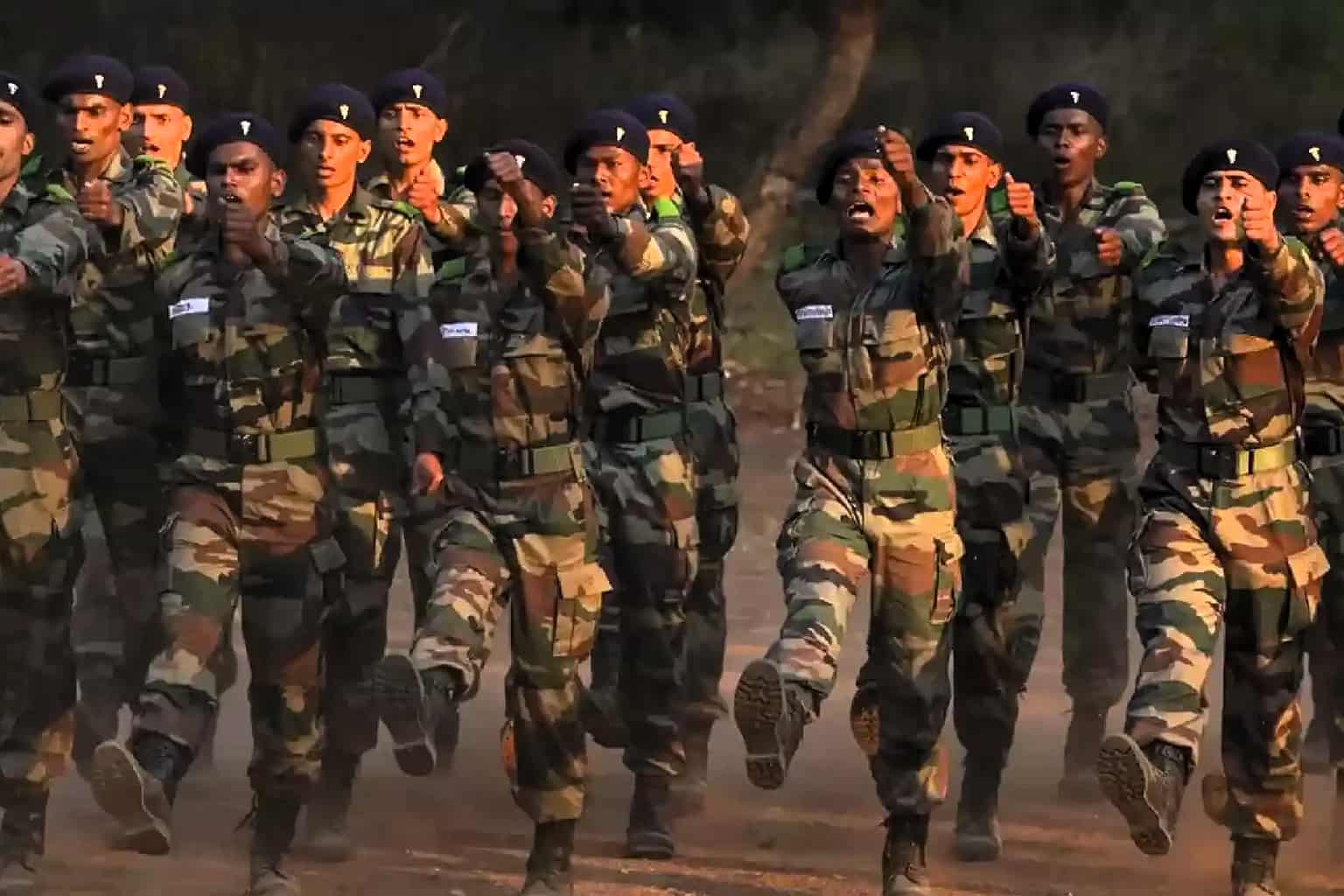
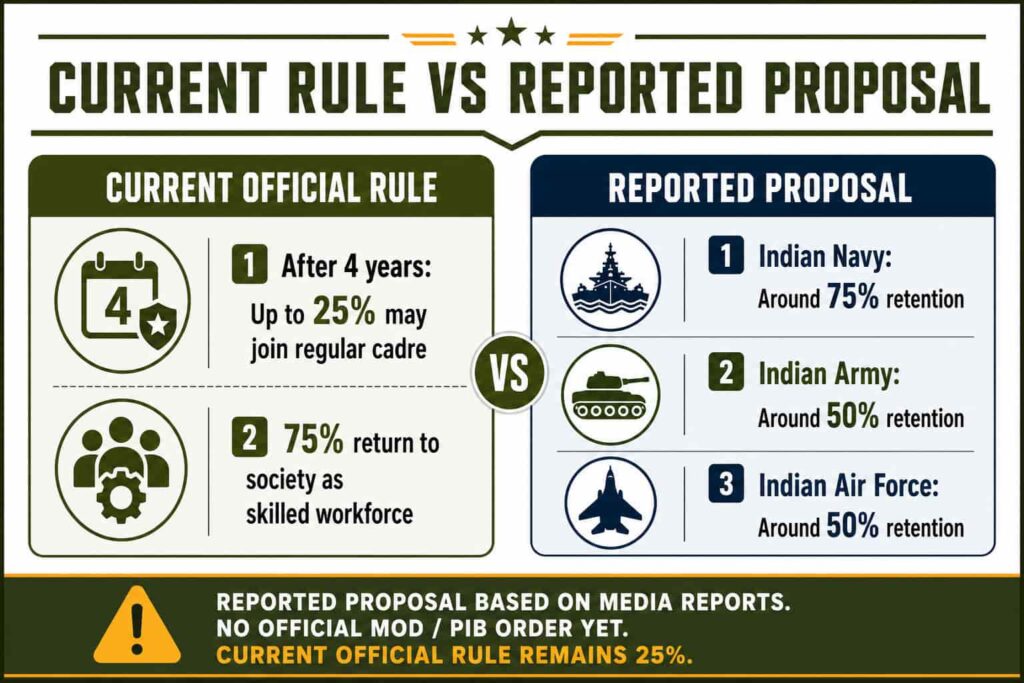
The Agnipath scheme is again in discussion because recent reports suggest that the Armed Forces may seek a higher retention percentage for Agniveers after completion of their four-year tenure. The reported numbers are significant: around 75% retention for the Indian Navy and around 50% retention for the Army and Indian Air Force. However, the most important point is this: no official government order has yet changed the existing 25% retention rule. The current official documents still mention four years of service and up to 25% retention in the regular cadre.
Why is Agniveer retention back in news?
The first batches of Agniveers are now moving closer to the end of their four-year engagement period. That is why the question of retention has become more important. According to media reports, the Armed Forces are looking at a larger retention pool because trained Agniveers have already gone through military training, unit exposure, discipline, physical conditioning and operational preparation.
This is not just an employment issue. It is also linked to military readiness, manpower planning and the practical value of trained personnel. In modern defence forces, soldiers, sailors and air warriors are not only doing basic duties. Many roles involve technical equipment, modern platforms, communication systems, weapons, sensors and specialised training. That is why a higher retention discussion may be important from an operational point of view.
What is the current official Agnipath rule?
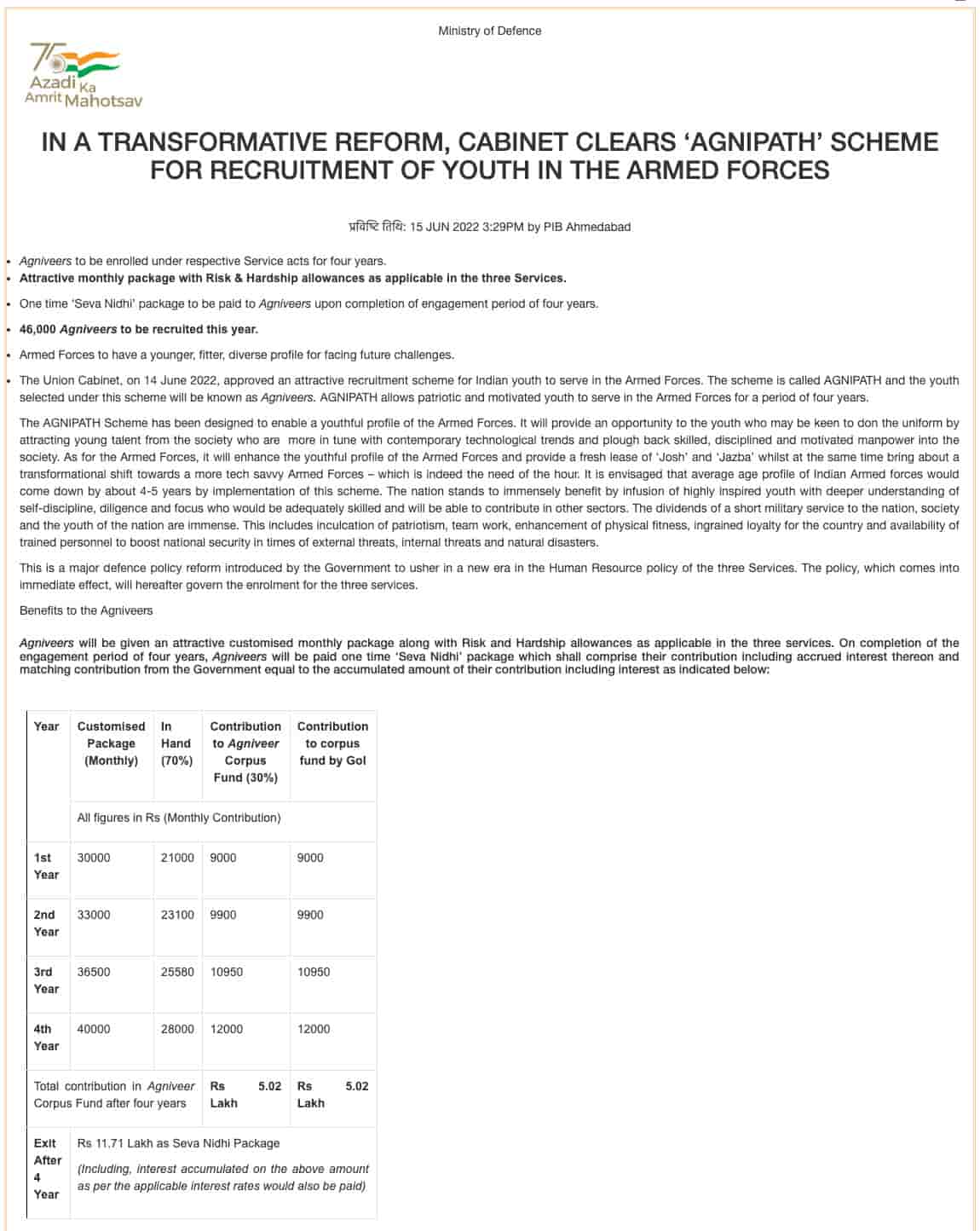
The Agnipath scheme was approved by the Union Cabinet on 14 June 2022. PIB described it as a recruitment scheme for Indian youth to serve in the Armed Forces for a period of four years.
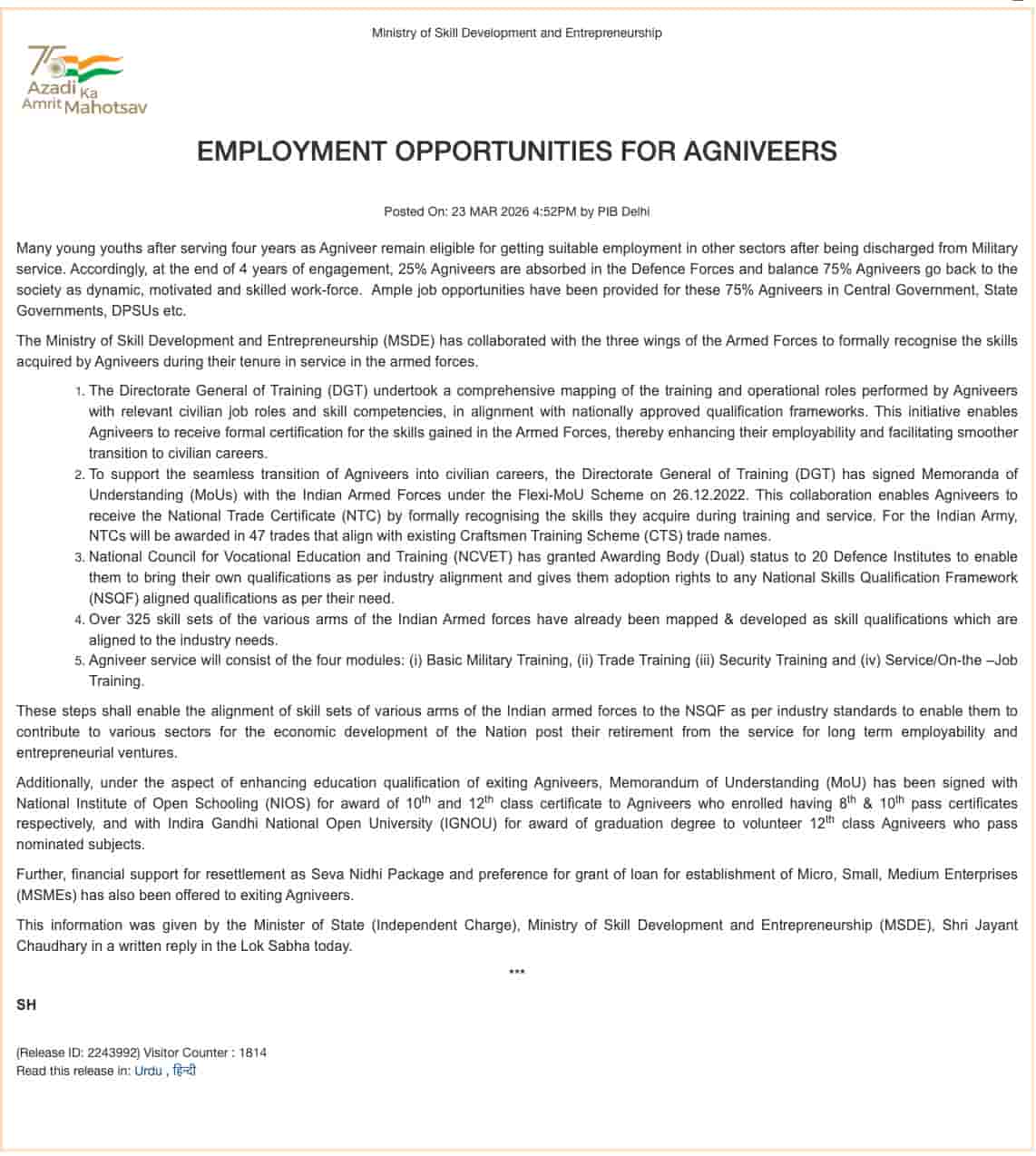
The Indian Army’s official terms and conditions also state that Agniveers are enrolled under the Army Act, 1950 for a service duration of four years including the training period. After completion of four years, not more than 25% of each specific batch may be enrolled in the regular cadre of the Indian Army, based on organisational requirements and objective criteria.
The Indian Navy’s official terms and conditions also follow the same broad structure. The Navy page says Agniveers are enrolled for four years and that the Indian Navy is not obligated to retain Agniveers beyond the engagement period. Another official Navy page states that not more than 25% of each specific batch will be re-enrolled as sailors in the regular cadre, based on organisational requirements and Navy policy.
So, as of now, the official position remains clear: up to 25% retention after four years, not automatic permanent service for all Agniveers.
What is the reported proposal?
According to Indian Express, the Armed Forces are seeking a higher retention percentage for Agniveers after completion of the four-year tenure. The report says the Navy is likely to seek around 75% retention, while the Army and Indian Air Force may seek up to 50% retention. The same report also notes that the current agreed percentage remains 25% for each of the three services at present.
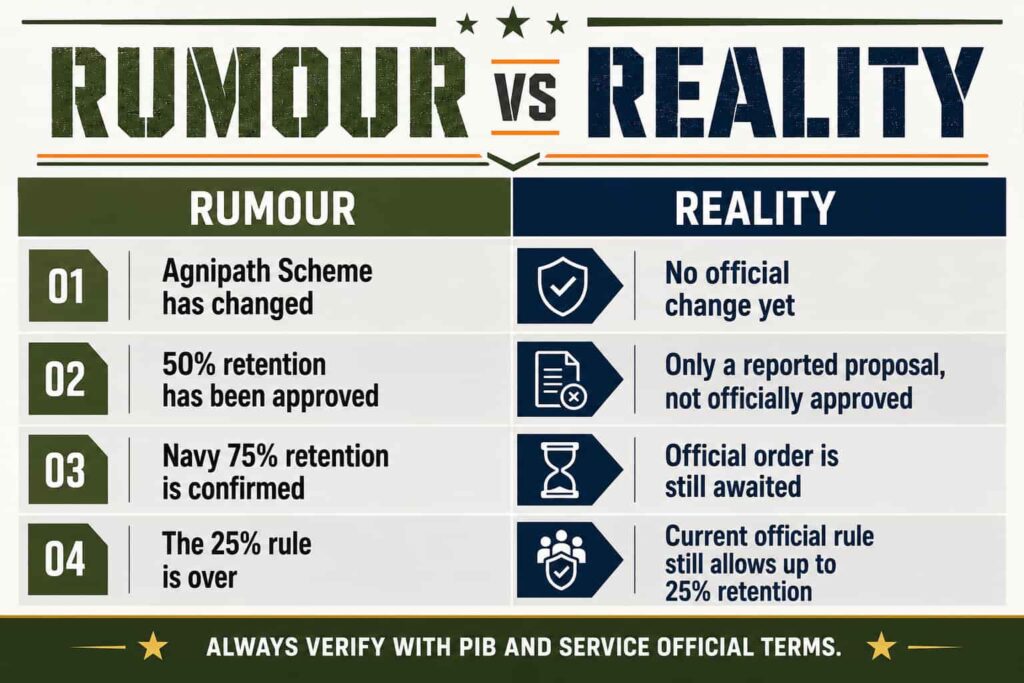
This difference is very important. A reported proposal is not the same as an approved government notification. Until the Ministry of Defence, PIB, or the respective Service headquarters issue a formal amendment, the current official rule remains unchanged.
This is where many social media claims become misleading. Some posts may say “Agniveer retention has become 50%” or “Navy retention is now 75%.” That is not the correct way to present the issue. The accurate position is: higher retention is being reported as a proposal or review, but official approval is still awaited.
Why may the Armed Forces want higher retention?
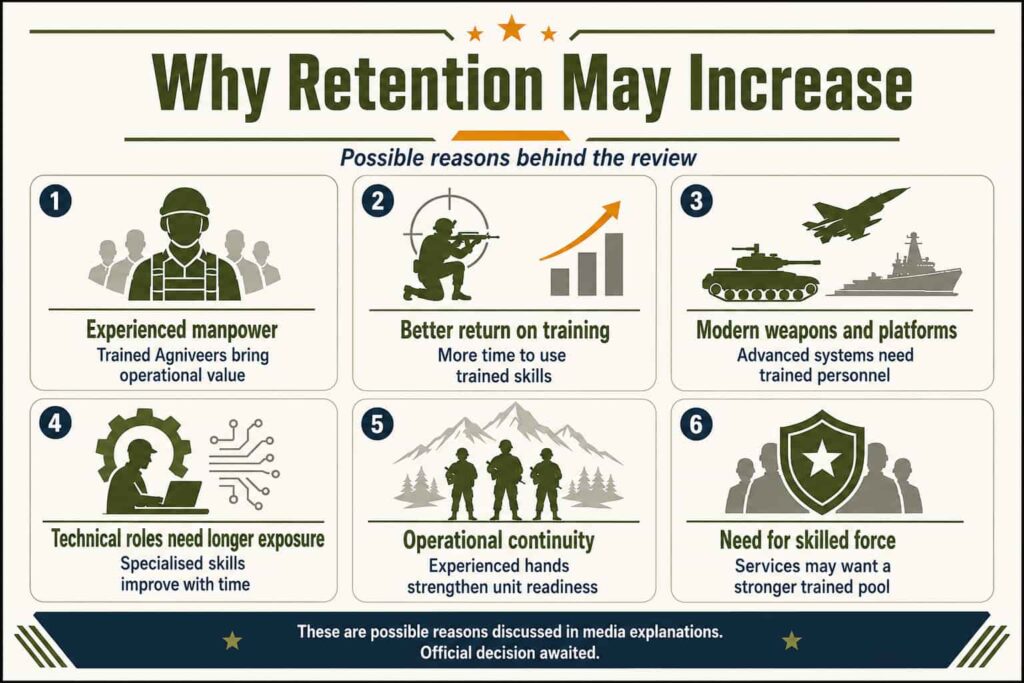
There are several practical reasons why the Armed Forces may want to retain more Agniveers.
First, trained manpower has operational value. An Agniveer who has completed training and spent time in service is already familiar with military discipline, unit culture, service routine, weapons, physical standards and basic operational expectations.
Second, training has a cost. If a large number of trained personnel leave after four years, the organisation has to continuously train new batches to replace them. Higher retention may give better return on training investment.
Third, modern defence roles are becoming more technical. The Navy and Air Force especially require personnel who can work with platforms, equipment, sensors, aviation systems, ships, communication networks and maintenance environments. In such roles, experience improves with time.
Fourth, operational continuity matters. Units function better when they have a stable pool of trained and experienced personnel. If too many trained people exit at one time, the unit may face a temporary experience gap.
Indian Express Explained also linked the retention discussion to experienced manpower, training on new platforms and manpower balance as the first Agniveer batches approach completion of tenure.
What has not been confirmed yet?
The following points are not officially confirmed yet:
The 25% retention rule has not been officially replaced.
A 50% retention rule for Army and Air Force has not been notified.
A 75% retention rule for Navy has not been notified.
There is no official confirmation that all Agniveers will become permanent.
There is no final official notification explaining whether any change, if approved, will apply to current batches, future batches, or specific trades and branches.
This uncertainty must be explained clearly because Agniveers and their families may take major career decisions based on such news. A responsible blog should not create false hope, panic or confusion.
What should Agniveers do now?
Agniveers should continue to treat the current official rule as valid until a formal amendment is issued. They should not rely only on viral posts, unofficial screenshots or social media claims.
The best approach is to focus on performance, discipline, physical fitness, medical fitness, trade proficiency, documentation and service records. Even if the retention percentage increases in future, selection is still likely to remain merit-based and linked to organisational requirements.
Agniveers should also keep checking official sources such as PIB, Ministry of Defence updates, Indian Army, Indian Navy and Indian Air Force/CASB portals.

Final takeaway
The Agniveer retention issue should be understood with clarity, not emotion. The official Agnipath framework still mentions four years of service and up to 25% retention in the regular cadre. Recent reports suggest that the Armed Forces may seek higher retention, possibly around 75% for Navy and 50% for Army and Air Force, but this is still a reported proposal, not a notified policy change.
Until an official amendment is issued, the safest and most accurate conclusion is:
The current official rule remains up to 25% retention. Higher retention is under discussion or reported consideration, but final government approval is still awaited.




Leave a Reply