


केंद्र सरकार के कर्मचारियों और pensioners के परिवारों के लिए CGHS rules में महत्वपूर्ण राहत दी गई है। Ministry of Health & Family Welfare ने 1 September 2026 को Office Memorandum जारी कर critical, severe या terminal illness से पीड़ित dependent sons और brothers के लिए age और marital-status conditions में relaxation दी है। Eligible cases में prescribed dependency conditions और competent Medical Board की recommendation के आधार पर CGHS/medical attendance facilities जीवनभर जारी की जा सकती हैं। यह आदेश तत्काल प्रभाव से लागू किया गया है।

Dependent daughters और sisters के लिए पहले से लागू provisions इस आदेश से समाप्त नहीं किए गए हैं। Divorced, abandoned, husband से separated और widowed daughters/sisters भी existing provisions के अनुसार eligible रह सकती हैं।

1 September 2026 के नए CGHS rule में सबसे बड़ा बदलाव क्या है?
अब ऐसे dependent sons और brothers के लिए CGHS/medical attendance facilities life-long extend की जा सकती हैं जो गंभीर medical condition के कारण लंबे समय तक dependent बने रहते हैं।
लेकिन यह benefit केवल age cross करने पर नहीं मिलेगा।
Government ने तीन मुख्य factors जोड़े हैं:
- qualifying chronic/severe/critical/terminal illness;
- continuing dependency;
- competent Medical Board की assessment और recommendation.
इसलिए 25 वर्ष से अधिक आयु का हर son या 18 वर्ष से अधिक आयु का हर brother इस relaxation के तहत automatically eligible नहीं हो जाता।
किन बीमारियों में lifetime CGHS facility consider की जा सकती है?
Office Memorandum ने illnesses की कोई fixed और closed list नहीं बनाई है।
इसमें ऐसे chronic, severe, critical या terminal illnesses को cover करने की बात कही गई है जिनके कारण substantial और continuing functional impairment हो या व्यक्ति अपनी livelihood earn करने अथवा self-sufficient बनने में असमर्थ हो।

यह list केवल indicative है। किसी disease का नाम list में होने मात्र से lifetime CGHS benefit automatic नहीं हो जाता।
Eligibility किस आधार पर तय होगी?
हर case को case-to-case basis पर examine किया जाएगा।
Assessment में यह देखा जाएगा कि:
- disease कितनी chronic या severe है;
- daily life में functional impairment कितना है;
- dependent व्यक्ति livelihood earn कर सकता है या नहीं;
- वह self-sufficient हो सकता है या नहीं;
- उसकी dependency वास्तव में जारी है या नहीं.
Complex या multi-system medical conditions में संबंधित specialists clinical condition और functional impairment का assessment कर सकते हैं।
यानी नया CGHS rule केवल disease diagnosis पर आधारित नहीं है। Medical condition + functional limitation + continuing dependency, तीनों महत्वपूर्ण हैं।
Marriage के बाद CGHS benefit जारी रह सकता है?
इस Office Memorandum का सबसे महत्वपूर्ण बदलाव marital status से संबंधित है।
Government ने स्पष्ट किया है कि इन provisions के तहत eligible dependent son या brother की marriage अपने-आप CGHS/medical attendance facility बंद करने का आधार नहीं बनेगी।
यह protection critical/terminal illness के साथ-साथ permanent disability के qualifying cases में भी लागू हो सकती है।
लेकिन marriage के बाद coverage जारी रखने के लिए:
- prescribed dependency conditions पूरी होती रहनी चाहिए; और
- competent Medical Board/authority continuation recommend करे.
इसलिए सही interpretation है:
Marriage alone CGHS benefit समाप्त नहीं करेगी, लेकिन dependency और medical eligibility फिर भी जरूरी रहेंगी।
क्या married dependent son की wife और children भी CGHS beneficiary बन जाएंगे?
नहीं।
Office Memorandum ने इस विषय पर स्पष्ट restriction दी है।
Marital-status relaxation के कारण applicable rules में “family” की definition expand नहीं होगी।
इसलिए benefit केवल qualifying dependent son या brother तक रहेगा।
उसकी:
- spouse;
- children
इस relaxation के कारण automatically CGHS beneficiaries नहीं बनेंगे।

CGHS cases में Medical Board कैसे काम करेगा?
CGHS beneficiaries के लिए eligibility का assessment और recommendation decentralised Medical Boards करेंगे।
इन Boards को:
Additional Director / CGHS Regional Headquarters
के level पर constitute किया जाएगा।
अगर किसी beneficiary को decentralised Medical Board की recommendation के खिलाफ appeal/reference करना हो तो CGHS Headquarters में Appellate Medical Board का provision रखा गया है।
इसका मतलब यह है कि CGHS beneficiaries के लिए केवल initial medical assessment ही नहीं, बल्कि appeal का रास्ता भी उपलब्ध है।
CS(MA) beneficiaries के लिए कौन फैसला करेगा?
जो Central Government beneficiaries CS(MA) Rules, 1944 के तहत covered हैं, उनके मामलों में eligibility का assessment और recommendation:
Directorate General of Health Services — DGHS
द्वारा किया जाएगा।
इसलिए CGHS और CS(MA) beneficiaries के approval mechanisms अलग हैं।

क्या 25 वर्ष की age limit अब पूरी तरह खत्म हो गई है?
नहीं।
यह clarification बहुत महत्वपूर्ण है।
Normal CGHS eligibility framework अपनी जगह बना हुआ है। नई relaxation उन special cases के लिए है जहां dependent son या brother qualifying serious medical condition के कारण livelihood/self-sufficiency हासिल नहीं कर पाता और dependency जारी रहती है।
इसलिए:
25 वर्ष से ऊपर होना = automatic lifetime CGHS नहीं।
Qualifying illness, continuing dependency और Medical Board assessment आवश्यक हैं।
क्या हर chronic illness इस relaxation में आएगी?
नहीं।
Government ने chronic illness शब्द का उपयोग किया है, लेकिन साथ में यह भी कहा है कि condition ऐसी होनी चाहिए जिससे substantial और continuing functional impairment हो या व्यक्ति livelihood earn/self-sufficient बनने में असमर्थ हो।
इसलिए सामान्य या manageable chronic condition को केवल diagnosis के आधार पर lifetime benefit मिलना निश्चित नहीं है।
Final assessment competent authority करेगी।
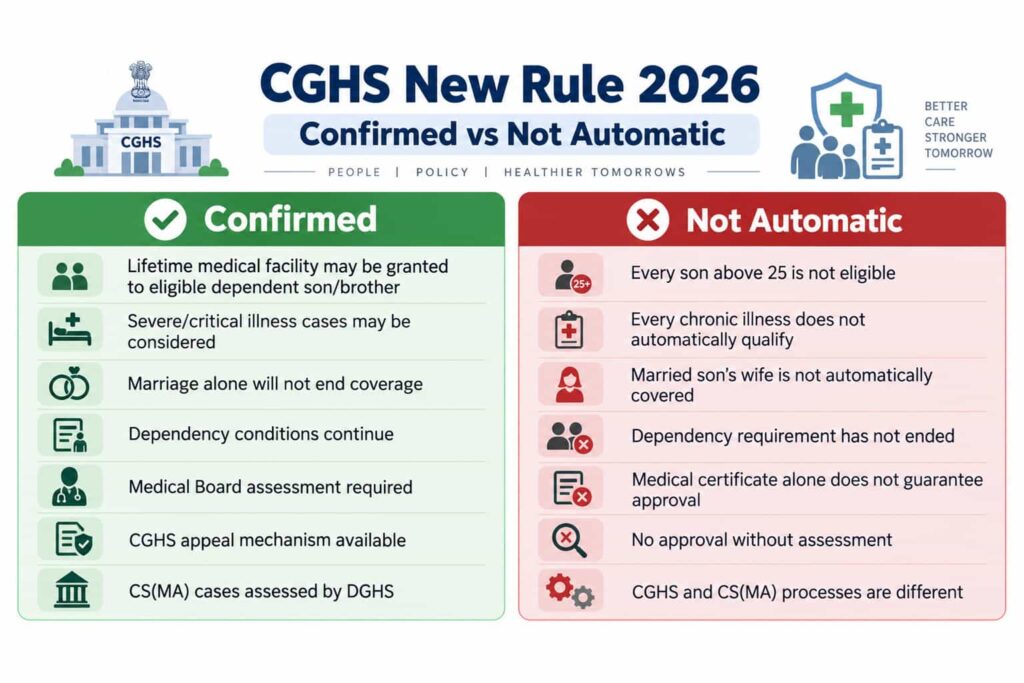
CGHS New Rule 2026: Confirmed vs Not Automatic
क्या यह relaxation ECHS beneficiaries पर भी लागू हो गई है?
यहां विशेष सावधानी जरूरी है।
1 September 2026 का यह Office Memorandum CGHS और CS(MA) Rules, 1944 के लिए जारी किया गया है। इसमें ECHS beneficiaries को इस relaxation के तहत cover करने की घोषणा नहीं की गई है।
इसलिए Defence veterans और ECHS beneficiaries को इस CGHS Office Memorandum के आधार पर benefit automatically लागू मानना उचित नहीं होगा।
यदि Ministry of Defence/ECHS इस प्रकार की relaxation को ECHS में लागू करती है तो उसके लिए संबंधित authority से implementation order/instruction देखना जरूरी होगा।
Central Government employees और pensioners के लिए यह बदलाव क्यों महत्वपूर्ण है?
इस modification का practical significance उन families के लिए सबसे अधिक है जहां adult dependent son या brother किसी ऐसी गंभीर बीमारी से पीड़ित है जिसके कारण वह लंबे समय तक self-sufficient नहीं हो सकता।
पहले age और marital status eligibility में महत्वपूर्ण boundaries थीं। नए provisions में Government ने गंभीर medical condition और continuing functional dependency को भी आधार बनाया है।
सबसे महत्वपूर्ण राहत यह है कि qualifying dependent son या brother:
age limit cross करने के बाद भी,
और
marriage होने के बाद भी
prescribed conditions पूरी होने पर medical coverage जारी रखने के लिए consider किया जा सकता है।
लेकिन यह automatic lifetime entitlement नहीं, बल्कि case-specific medical and dependency-based relaxation है।
Sources:-
Government of India — Ministry of Health & Family Welfare (EHS Section)
Office Memorandum dated: 1 September 2026
Subject: Relaxation in age and marital status criteria for dependent sons and brothers suffering from critical/terminal illnesses under CGHS/CS(MA) Rules, 1944
File No.: S.11030/54/2023-EHS(8248513)/I/3893459/2026

Leave a Reply