The 8th Central Pay Commission is now entering the phase where real influence begins. For months, public attention was focused on when the Commission would start functioning properly, how its staffing would be completed, how the portal would operate, and how employees and pensioners could submit their views. That early stage was important, but it was still largely procedural. What matters now is something bigger. The Commission has started moving into a live consultation environment, and that changes the entire meaning of the process.
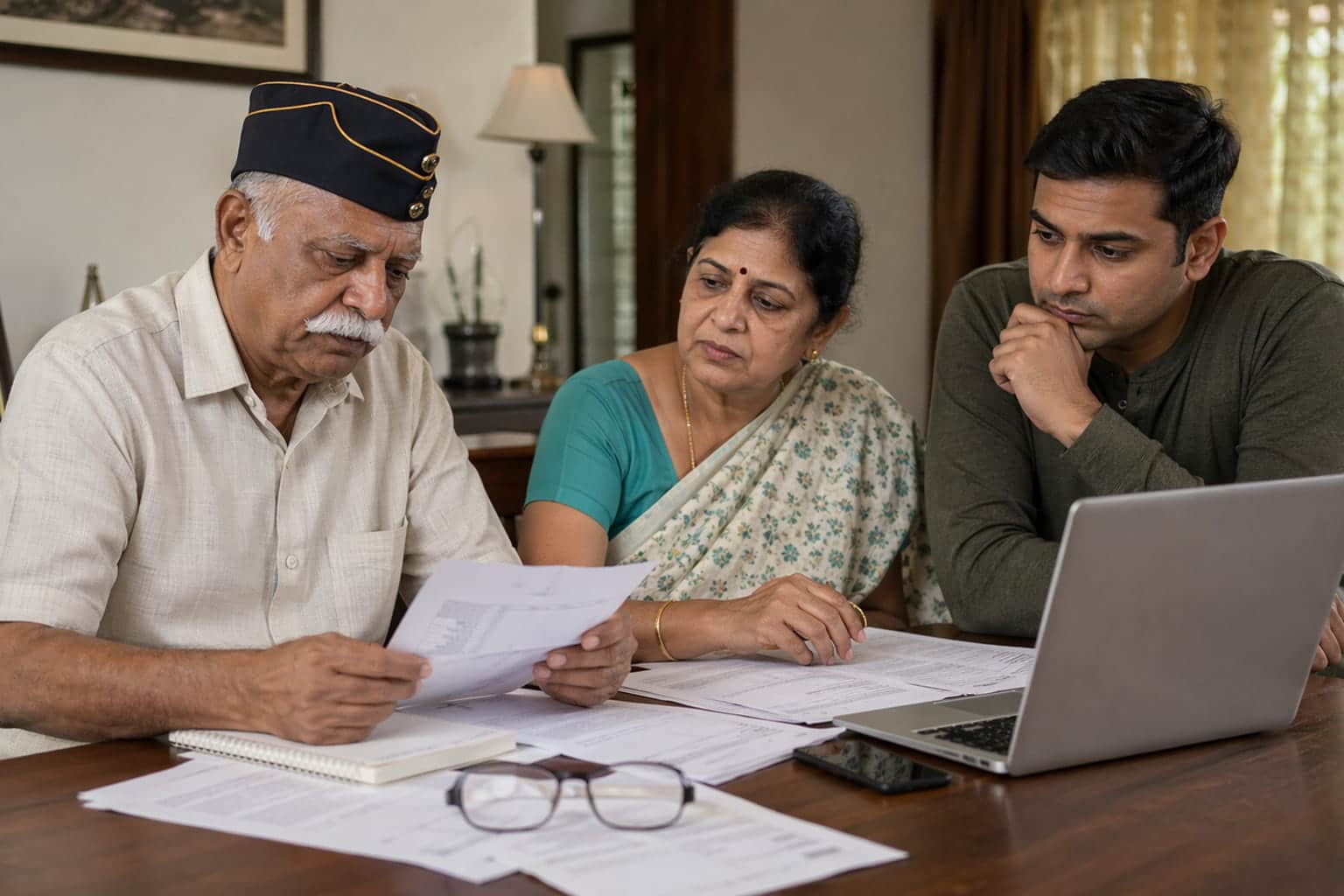
For ordinary readers, this may sound technical. For defence families, it is anything but technical. It is personal. It is about pension dignity after retirement, fair treatment across ranks, the logic of hardship compensation, and whether long-pending concerns will once again be pushed into the future. In many homes, these questions are not being discussed as policy theory. They are being discussed at dining tables, in pension offices, in veteran circles, and in households where monthly budgeting still depends on decisions taken by the government years after service has ended.
That is why the 8th Pay Commission matters so deeply to the defence community. It is not only about salary revision for serving personnel or a fresh round of government calculations. It is also about whether the next compensation framework will properly understand the military life cycle from recruitment to active service, from retirement to family support. The concerns of ex-servicemen, widows, disabled soldiers, and older pensioners do not exist in isolation. They are part of one larger question: has the system kept pace with the realities of sacrifice, inflation, fairness, and changing family needs?
This is also where the discussion naturally connects with OROP. Even though One Rank One Pension is not the same thing as the 8th Pay Commission, the two issues now stand side by side in the public mind. The reason is simple. Both are seen as tests of fairness. Both touch the question of how service is valued over time. Both affect how retired defence personnel judge whether the state has treated them with equality and respect. And both carry weight far beyond paperwork because they directly influence how lakhs of families live after retirement.
The importance of OROP lies not just in its legal or administrative meaning, but in its symbolic power. For many veterans, OROP stands for the promise that two people who served in the same rank and for the same length of service should not be treated unfairly simply because they retired in different years. That principle continues to hold emotional force because it speaks to a deeper issue than pension tables. It speaks to trust. Once that trust is weakened, every future compensation discussion becomes more sensitive.
This is why the 8th Pay Commission is being watched so closely. Even where it may not directly rewrite every OROP-related issue, its approach to pension fairness, fitment, minimum pay logic, parity, and hardship-based compensation can influence the broader policy environment. It can shape the way future grievances are judged. It can affect the language in which fairness is defined. And it can strengthen or weaken confidence among those who already feel that several important issues should have been resolved much earlier.
Another reason this moment matters is timing. A pay commission is most open to influence before its report is written, not after it is implemented. That distinction is crucial. Once recommendations are finalised and adopted, unresolved matters often turn into long cycles of representations, anomaly committees, court cases, and repeated demands for correction. Families that hoped for a timely solution are then forced into waiting again. But when the process is still alive and consultative, the door remains open for evidence-based intervention.
That is the real significance of the present phase. The story is no longer about whether the 8th Pay Commission exists. That question is settled. The real story now is who is being heard, whose submissions are being placed on record, and whether important issues are reaching the Commission in time and in the right form. This matters enormously for veterans and pensioners because their concerns are often complex. They involve not just basic pension amounts, but parity across retirement years, the treatment of hardship postings, the effects of old anomalies, the realities of family pension, and the long-term financial strain caused by unresolved policy gaps.

For many readers, the phrase “submission stage” may sound dry. But in practice, this stage can decide whether a concern is ignored, delayed, or taken seriously. Strong submissions are not built only on frustration. They are built on facts, comparison, documentation, financial impact, and a clear explanation of why a correction is justified. A well-made case can become part of the policy record. A poorly framed complaint can disappear into the background. That is why this stage is so important for organised associations, veteran bodies, and informed pension groups.
The wider atmosphere around the 8th Pay Commission adds even more urgency. Across different sectors, expectations are rising. Central government employees want better pay revision logic. Pensioners want stronger protection against erosion of income. Associations are discussing minimum pay, fitment factor, revision formulas, and fairness in retirement benefits. In such an environment, the defence community cannot afford to remain a passive observer. It must ensure that its concerns are not lost in a larger competition of demands.
This is especially true because military service has always carried realities that do not fit neatly into a standard civilian framework. Posting hardship, operational risk, physical sacrifice, family separation, medical consequences, and early retirement patterns all shape the defence compensation debate differently. That is why many veterans believe defence issues should not be treated as just another line item in a general pay discussion. They expect the system to recognise the distinct nature of service and reflect that in both pay and pension thinking.
At the human level, this debate is even simpler. Every delay, every unresolved anomaly, and every unclear policy decision eventually lands in a family budget. It affects medicine, household security, children’s support, and peace of mind in old age. That is why so many defence pensioners follow these developments with such intensity. They understand that what looks like administrative movement in Delhi can become financial relief or financial disappointment at home.
The larger takeaway is clear. The 8th Pay Commission is no longer a distant government exercise that people can watch casually from the sidelines. It has entered a stage where meaningful participation can still shape outcomes. At the same time, OROP remains one of the strongest emotional and policy reference points in the defence welfare conversation. Together, these two issues represent something larger than revision formulas and pension tables. They represent fairness after service, recognition after sacrifice, and the right to live with dignity after giving the best years of one’s life to the nation.
For lakhs of defence families, this is not just another government process. It is one of the most important tests of whether the next chapter of pay and pension policy will truly reflect the value of service.