


The 8th Central Pay Commission consultation process has brought several long-pending defence welfare issues back into focus.
Representations from the defence community include demands relating to OROP, fitment factor, pension, family pension, DA/DR, MSP, commutation, ECHS and SPARSH.
But one point must be clear from the beginning:
These are demands placed before the 8th Pay Commission. They are not approved benefits.
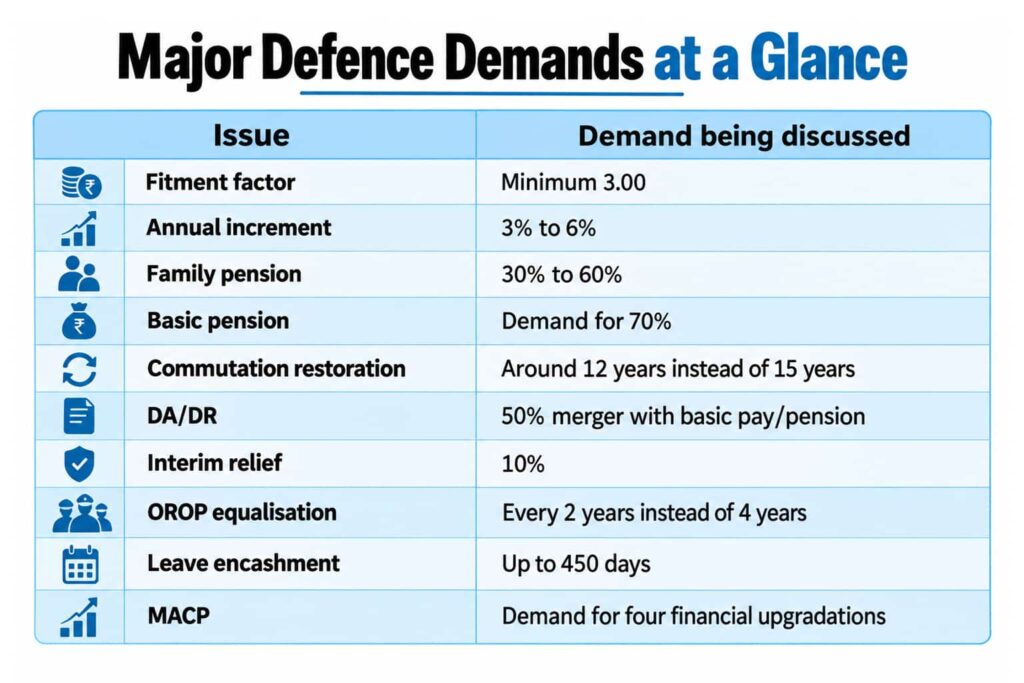
These proposals form part of the wider defence-community representation before the Commission.
Fitment factor and pay revision
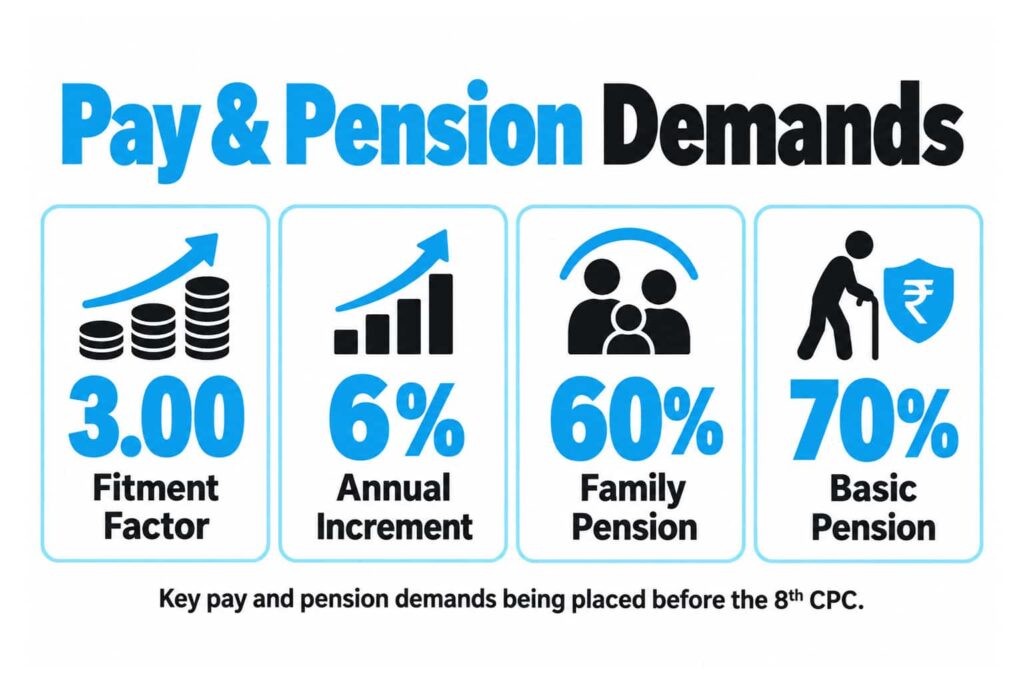
One of the biggest demands is for a minimum fitment factor of 3.00.
A higher fitment factor would directly affect the revised basic pay and, consequently, pension calculations.
The defence representation has also sought an increase in the annual increment from the present 3% to 6%, along with improvements in entry-level pay and MACP benefits.
The figure 3.83 is also being discussed in the wider 8th CPC debate, but it comes from other employee and pensioner representations and should not be treated as part of the same defence memorandum.
Pension and family pension demands
Pension reform is another major area of representation.
Among the key demands are:
ordinary family pension to increase from 30% to 60%;
basic pension to be considered at 70%;
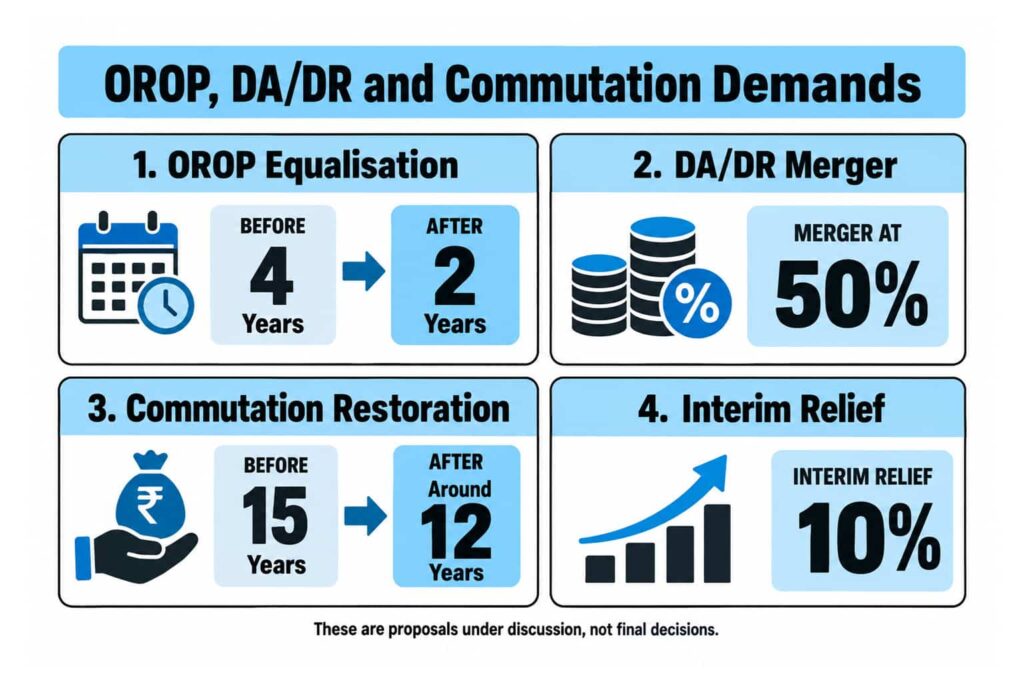
commuted pension to be restored after approximately 12 years instead of 15 years; and
additional pension benefits to begin at an earlier age.
These proposals are particularly relevant for veterans, widows and older pensioners.
What changes are being sought in OROP?
The defence community has also sought further correction of One Rank One Pension (OROP) anomalies.
One major proposal is to reduce the equalisation interval from the existing four-year cycle to every two years.
Representatives have also raised concerns relating to categories such as premature retirees and reservists.
The objective behind these demands is to reduce pension differences between similarly placed retirees.
DA/DR merger and interim relief
Another important demand concerns Dearness Allowance and Dearness Relief.
The proposal seeks:
50% DA/DR merger with basic pay/basic pension and 10% interim relief if implementation of the 8th Pay Commission takes additional time.
These are demands only. No such merger or interim relief has been approved under the 8th CPC so far.
MSP, leave and other defence-specific demands
The representation also goes beyond basic pay and pension.
Other proposals include:
restructuring Military Service Pay (MSP);
applying the principle of same risk, same allowance;
additional leave for eligible personnel serving in counter-insurgency areas;
increasing leave encashment to 450 days;
improving MACP provisions; and
strengthening compensation for difficult service conditions.
ECHS, SPARSH and Agnipath also included
The broader defence-welfare demands also cover healthcare and pension administration.
For ECHS, proposals include improvements in medical entitlement, FMA and support for dependants.
For SPARSH, the demand is for stronger human assistance and safeguards so that pension payments are not disrupted because of minor data or documentation errors.
The representation also seeks a review of Agnipath-related welfare provisions, particularly disability, medical and family protection in casualty cases.
What has actually been approved?
This is the most important part for serving personnel, veterans and pensioners.
At present:
3.00 fitment factor — Demand
6% annual increment — Demand
60% family pension — Demand
70% basic pension — Demand
12-year commutation restoration — Demand
50% DA/DR merger — Demand
10% interim relief — Demand
OROP equalisation every two years — Demand
None of these figures should currently be presented as an approved 8th Pay Commission benefit.
What happens next?
The 8th Pay Commission has been receiving representations from employees, pensioners, defence personnel and various organisations.
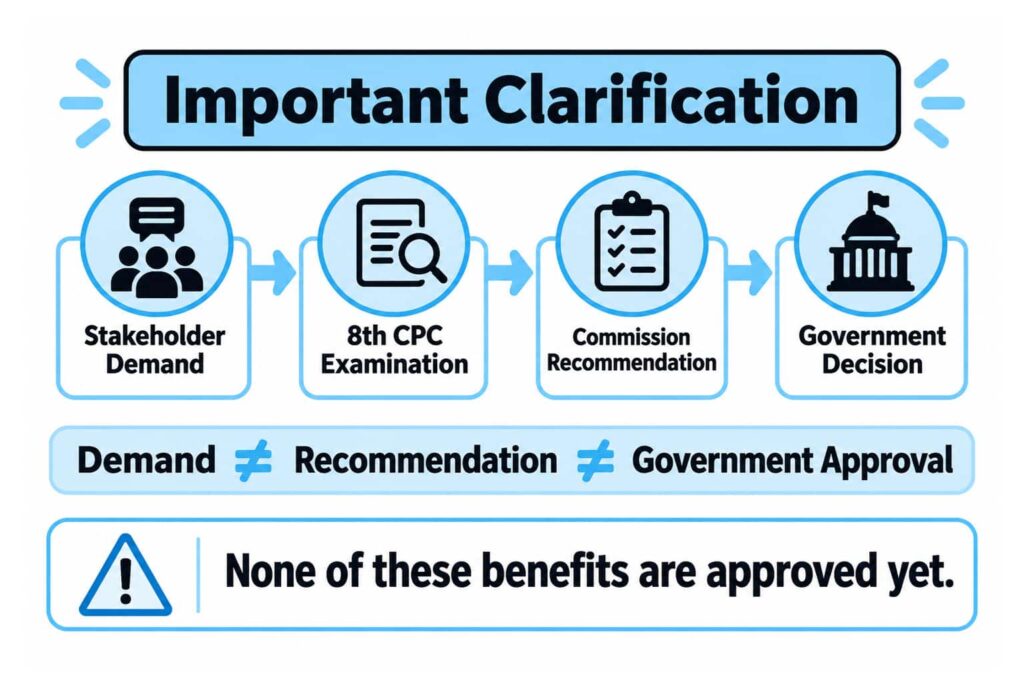
The Commission will examine these demands before preparing its recommendations.
Only after that will the Government consider the recommendations and take the final implementation decision.
Therefore, the process should be understood as:
Stakeholder Demand → 8th CPC Examination → Commission Recommendation → Government Decision
Conclusion
The defence community’s 8th CPC agenda is much wider than simply seeking a higher fitment factor.
The key issues include OROP correction, pension enhancement, higher family pension, DA/DR merger, shorter commutation restoration, MSP restructuring, ECHS improvements, SPARSH reforms and better welfare protection.
The demands are significant, but they remain part of the consultation process.
For now, the most important distinction is:
A proposal submitted to the 8th Pay Commission is not the same as an approved Government benefit.
The real change will come only when the 8th CPC submits its recommendations and the Government announces its final decision.


Leave a Reply