

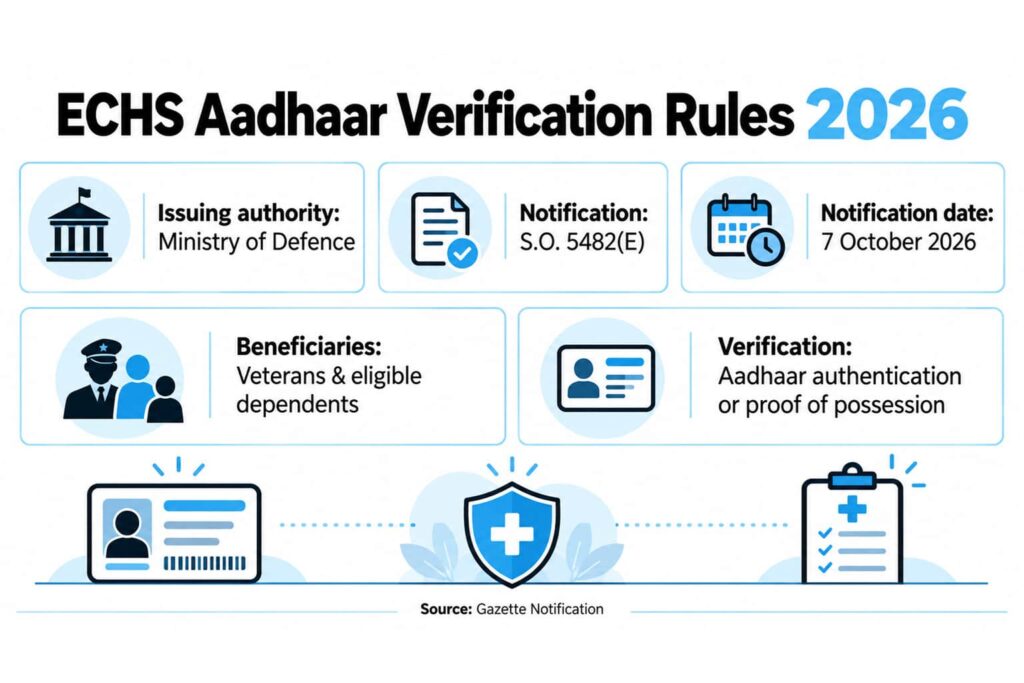
The Ministry of Defence has notified new Aadhaar verification requirements for Ex-Servicemen Contributory Health Scheme (ECHS) beneficiaries. The rules affect how eligible veterans and their dependents establish their identity while accessing ECHS healthcare services.
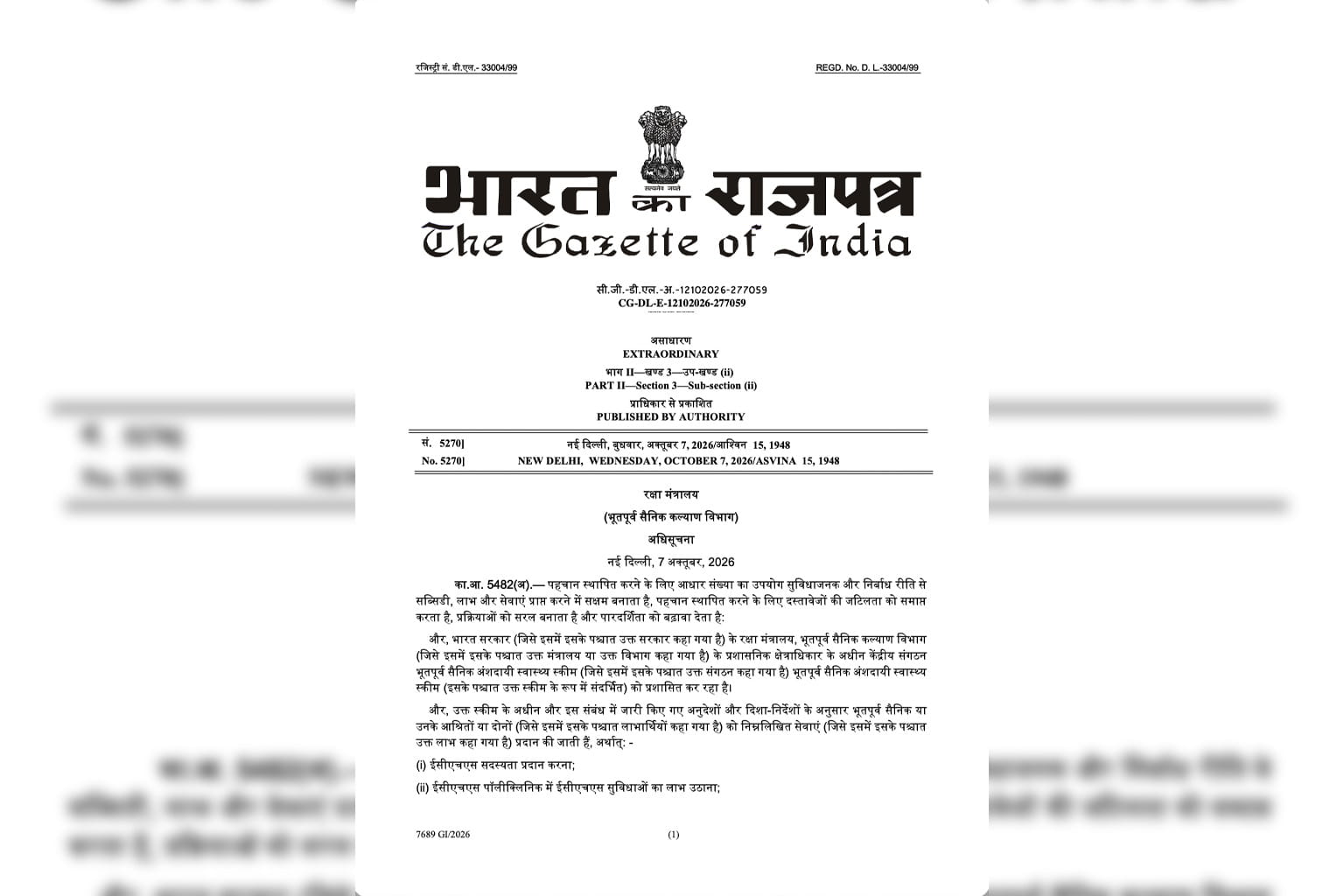
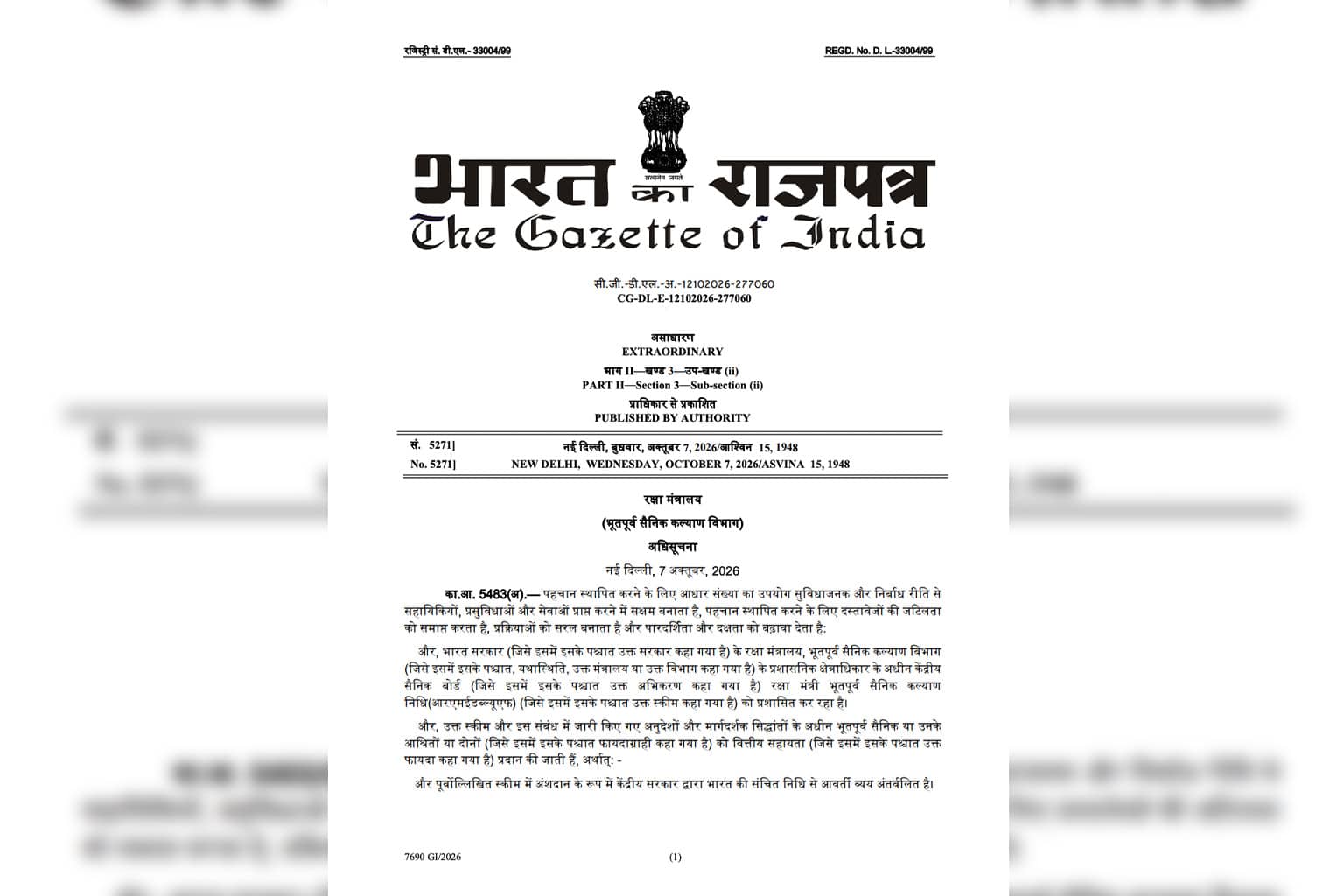
Issued through Gazette Notification S.O. 5482(E), dated 7 October 2026, the decision introduces Aadhaar authentication or proof of Aadhaar possession into the beneficiary verification process.
However, the order also addresses situations where Aadhaar has not been allotted, fingerprints cannot be verified, or a dependent child faces identification difficulties.
What changes for ECHS beneficiaries under the new notification?
The revised verification framework applies to ECHS membership, polyclinic services, treatment at Service Hospitals, empanelled hospitals and beneficiary-related claims.
The procedure depends on the beneficiary’s Aadhaar status.
| Beneficiary situation | Verification requirement |
|---|---|
| Aadhaar already allotted | Aadhaar authentication or proof of possessing an Aadhaar number |
| Aadhaar not yet allotted | Apply for Aadhaar enrolment and use prescribed documents pending allotment |
| Biometric authentication unsuccessful | Alternative biometric, OTP or prescribed offline verification |
| Dependent child without Aadhaar | Enrolment with parental/guardian consent and alternative identity verification |
The rules have been notified under Section 7 of the Aadhaar Act, 2016 and take effect from publication in the Official Gazette.
Veterans without Aadhaar: Which documents can establish identity?
For beneficiaries aged 18 years or above who have not received an Aadhaar number, the government has provided an alternative verification procedure.
They must apply for Aadhaar enrolment and produce the Enrolment ID (EID) acknowledgement along with one prescribed photographic identity document.
Recognised documents include a Voter ID, Indian Passport, Ration Card, Driving Licence, government-issued employee or pensioner identity document, government/PSU medical or insurance identity card, and prescribed disability certificates or UDID cards.
The Gazette also recognises certain educational certificates, guardianship documents and identification documents for specific categories of beneficiaries.
A designated official must verify the enrolment request and supporting records. This allows identity to be established while Aadhaar allotment is pending, subject to the notification’s conditions.
Fingerprint verification fails: What alternatives are available?
For elderly veterans, biometric verification can sometimes become difficult because fingerprint quality may deteriorate with age.
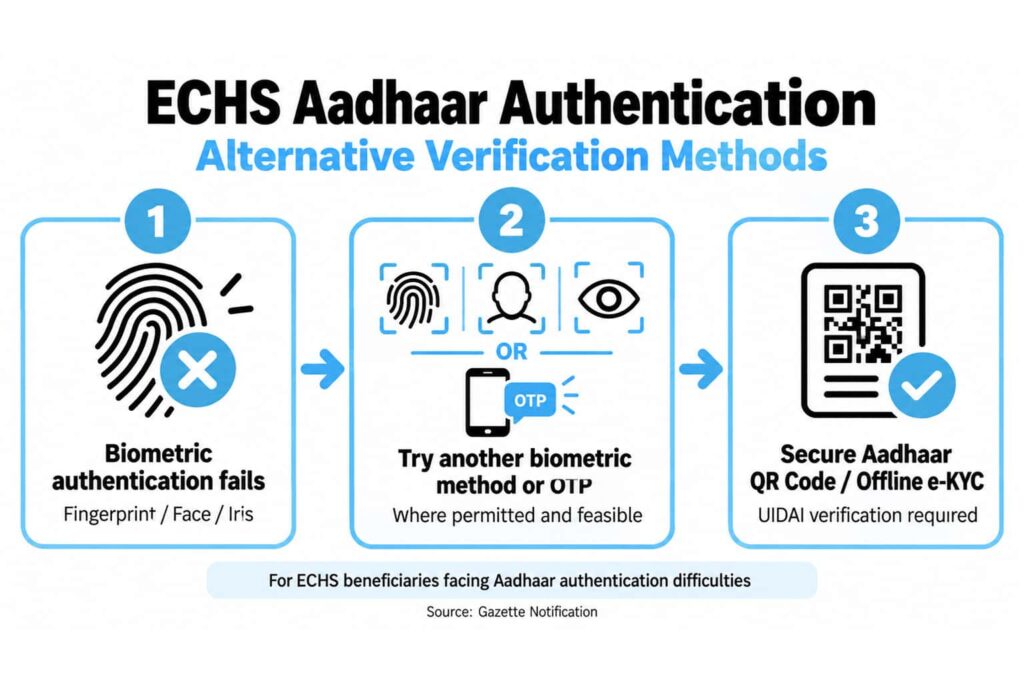
The new notification provides alternatives when fingerprint, facial-image or iris-based authentication fails.
Where permitted and feasible, another biometric method or OTP authentication may be used.
If these methods are unavailable, identity can be verified through the secure QR code on an Aadhaar card, Aadhaar letter or e-Aadhaar, or through Aadhaar Paperless Offline e-KYC.
These offline methods require verification of the relevant UIDAI digital signature or secure QR information.
What protection is available for dependent children?
Children below 18 years receive specific safeguards under the notification.
Where a child has not been allotted Aadhaar, enrolment requires the consent of a parent or legal guardian.
The prescribed verification procedure includes an enrolment acknowledgement, proof of age and documentary evidence establishing the relationship with the parent or guardian.
Acceptable evidence may include birth certificates, passports, recognised educational records and other specified documents, depending on the purpose of verification.
Importantly, an eligible child cannot be denied ECHS benefits solely because Aadhaar authentication fails or an Aadhaar number has not yet been allotted, provided identity and the required relationship are established through the prescribed procedure.
What responsibility has been given to ECHS authorities?
The notification places responsibilities on the implementing organisation, not just beneficiaries.
Central Organisation ECHS must facilitate Aadhaar enrolment or updates for beneficiaries who require them, including coordination with enrolment authorities and arrangements at convenient locations.
It must also follow the government-prescribed exception-handling mechanism to prevent genuine adult beneficiaries from being deprived of benefits because of identification difficulties.
The Ministry must ensure that beneficiaries are informed about the Aadhaar requirements.
Does the notification require a new ECHS card or change medical entitlements?
The Gazette does not announce compulsory replacement of existing ECHS smart cards, revised medical treatment entitlements or higher ECHS contribution charges.
It also does not prescribe a separate deadline by which every existing beneficiary must replace or link an ECHS card.
Its purpose is to establish the identity-verification requirements and exceptions applicable to existing ECHS services.
For veterans and dependents, understanding the correct procedure and keeping the relevant identity documents available can help avoid difficulties during verification.
Official government references
1. Ministry of Defence — Gazette Notification S.O. 5482(E), 7 October 2026
Read the complete 11-page ECHS Aadhaar notification (PDF)
2. Gazette of India — Official Government Portal
Gazette identification number: CG-DL-E-12102026-277059
Leave a Reply