

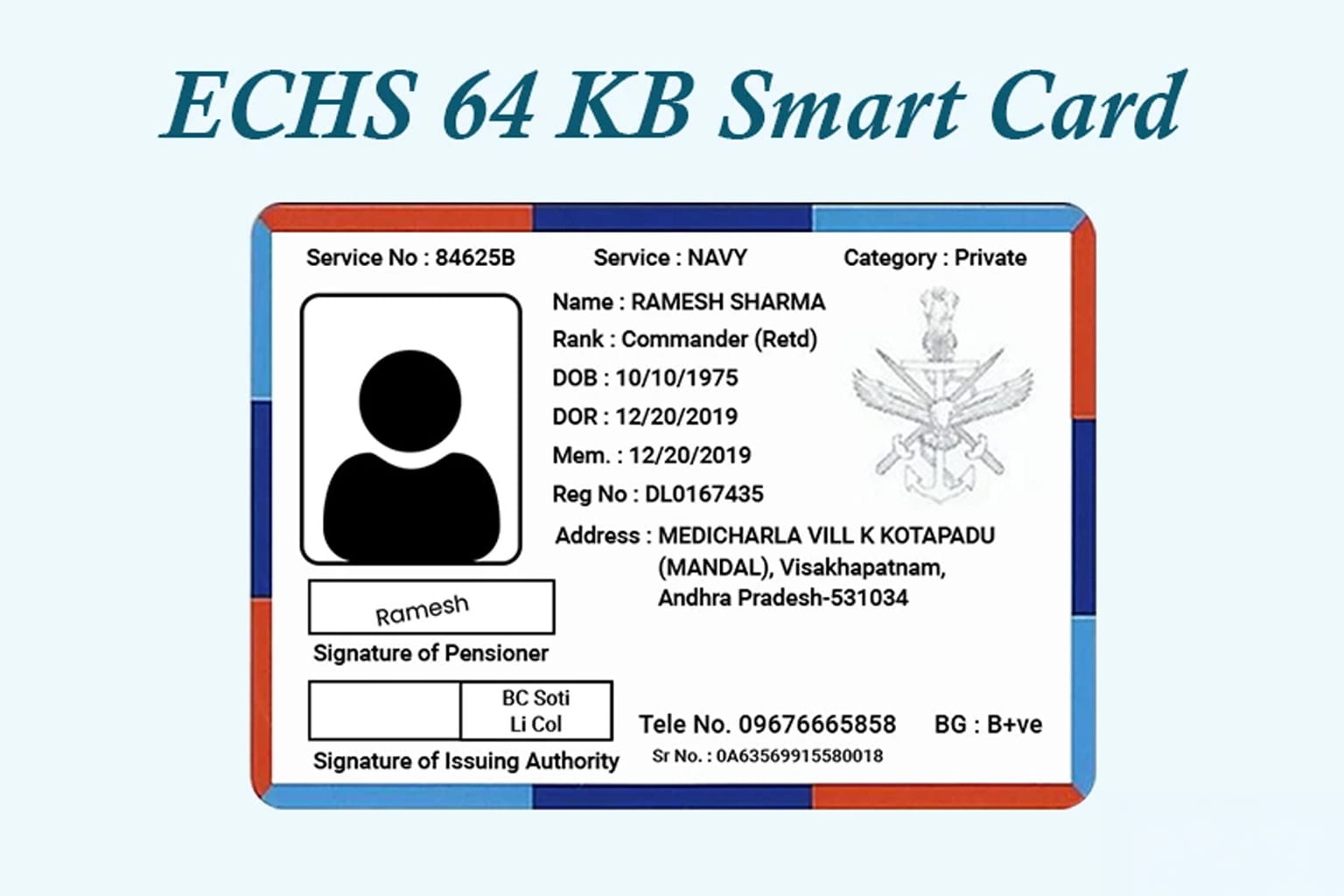
Ex-servicemen, family pensioners and eligible dependants using the Ex-Servicemen Contributory Health Scheme should take note of an important smart-card update.
The official ECHS website is currently displaying revised printing charges for fresh and replacement 64 KB ECHS smart cards. At the same time, beneficiaries who cannot access their online smart-card application can use the password-recovery procedure issued by Central Organisation ECHS on 10 June 2026.
The two developments address different problems. The revised rates explain how much a beneficiary may have to pay for a fresh or replacement card, while the password-recovery procedure explains how an applicant can regain access to an existing online application.
Beneficiaries should first identify the correct card category, verify their registered contact details and confirm the final amount displayed on the authorised ECHS payment page.
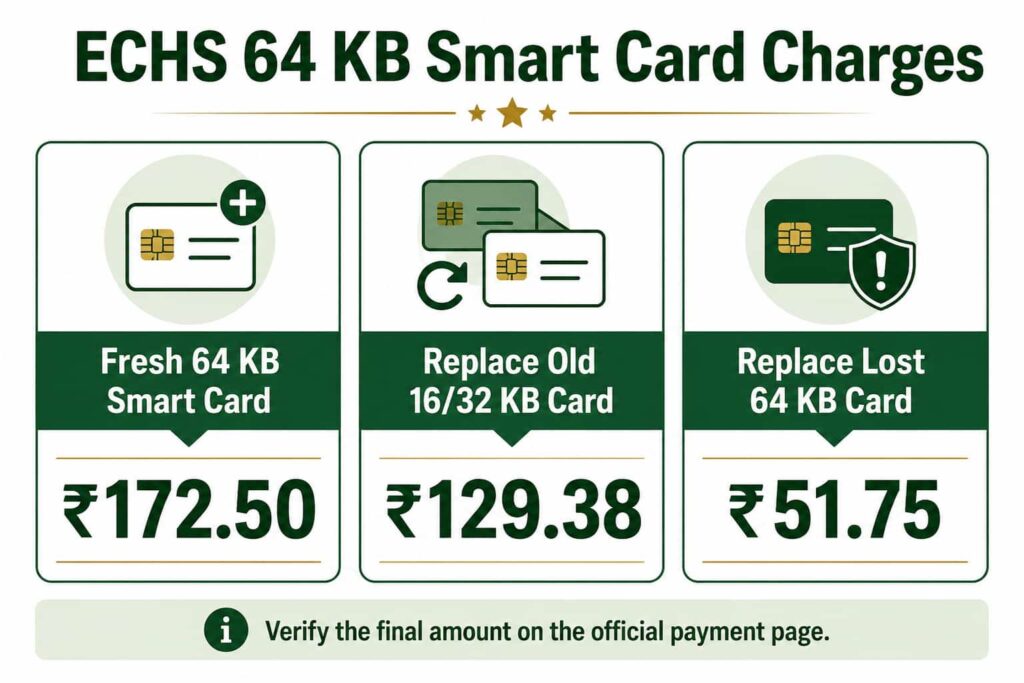
ECHS smart-card charges at a glance
The official ECHS website currently displays the following amounts:
| Smart-card requirement | Charge currently displayed | Important verification |
|---|---|---|
| Fresh 64 KB ECHS smart card | ₹172.50 | Confirm that the application has been filed under the fresh-card category |
| Replacement of an old 16 KB or 32 KB card | ₹129.38 | Verify the existing card type and beneficiary details |
| Replacement after loss of an existing 64 KB card | ₹51.75 | Select the lost 64 KB card replacement category |
These amounts relate to card printing or replacement. They are not annual subscription charges, treatment expenses or new ECHS membership contributions.
The final payable amount should always be checked on the authorised payment page because portal instructions and displayed rates may be revised in the future.
Which ECHS smart-card charge applies to you?
The applicable amount depends on the type of application being submitted. Beneficiaries should not select a category merely on the basis of the lowest displayed charge.
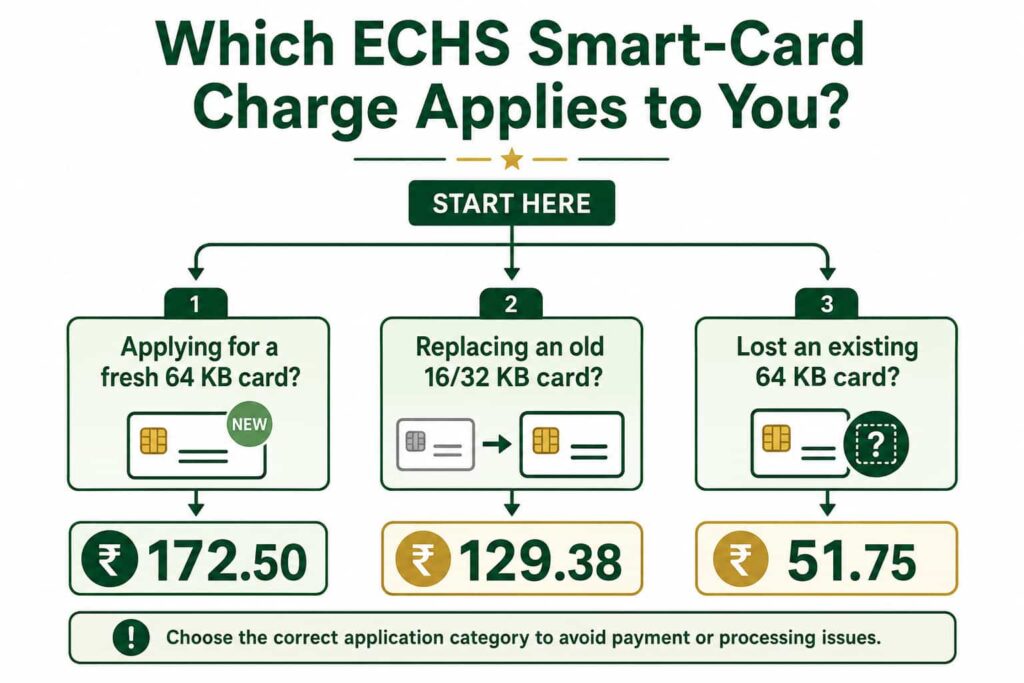
Fresh 64 KB ECHS smart card: ₹172.50
The displayed charge of ₹172.50 applies where a beneficiary is applying for a fresh 64 KB ECHS smart card.
Before proceeding, the applicant should confirm:
- that the application has been opened under the fresh-card category;
- that the correct beneficiary has been selected;
- that the service and pension details are accurate; and
- that the registered mobile number and email address are active.
Replacement of an old 16 KB or 32 KB card: ₹129.38
The displayed charge of ₹129.38 applies when an older 16 KB or 32 KB card is being replaced with the 64 KB version.
Applicants should verify the type of card already held. A beneficiary replacing an old-generation card should not mistakenly choose the fresh-card or lost-card category.
Replacement of a lost 64 KB card: ₹51.75
The displayed charge of ₹51.75 applies where an existing 64 KB ECHS card has been lost and another card is required.
This amount should not be interpreted as the standard fee for every replacement request. It is specifically displayed for replacement after the loss of an existing 64 KB card.
Supporting information or documents may be required depending on the instructions shown during the application process.
Are these new ECHS membership or treatment charges?
No.
The displayed amounts are related to smart-card printing and specified replacement situations.
They should not be confused with:
- the original ECHS contribution applicable to eligible categories;
- hospital or medical-treatment expenses;
- medicine costs;
- annual membership or subscription charges;
- polyclinic consultation charges; or
- any fee for routine access to an ECHS polyclinic.
The update concerns the physical smart card and not the cost of healthcare services available under ECHS.
Why does selecting the correct application category matter?
A wrong selection can create avoidable complications.
For example, a beneficiary replacing a lost 64 KB card may mistakenly apply under the fresh-card category. Similarly, a person holding an old 16 KB or 32 KB card may select the lost-card option even though the actual requirement is migration to a 64 KB card.
Incorrect selection may result in:
- payment of the wrong amount;
- additional document verification;
- delay in processing;
- rejection or return of the application;
- difficulty in correcting the application later; or
- the need to approach ECHS support.
Applicants should therefore confirm the card category before making payment.
Why is the 64 KB ECHS smart card important?
The ECHS smart card is an important beneficiary-identification and healthcare-access document.
It links the approved beneficiary’s identity and entitlement with the ECHS system. It may be required for beneficiary verification, card-related services and access to authorised healthcare facilities.
Beneficiaries should ensure that the following information remains accurate:
- name and service particulars;
- pension and PPO details;
- registered mobile number;
- registered email address;
- dependant details;
- existing card particulars; and
- online application status.
Outdated information may not only affect card processing but can also make OTP verification and password recovery more difficult.
What should applicants keep ready before starting?
Beneficiaries should collect the relevant information before opening a fresh-card, replacement-card or password-recovery request.
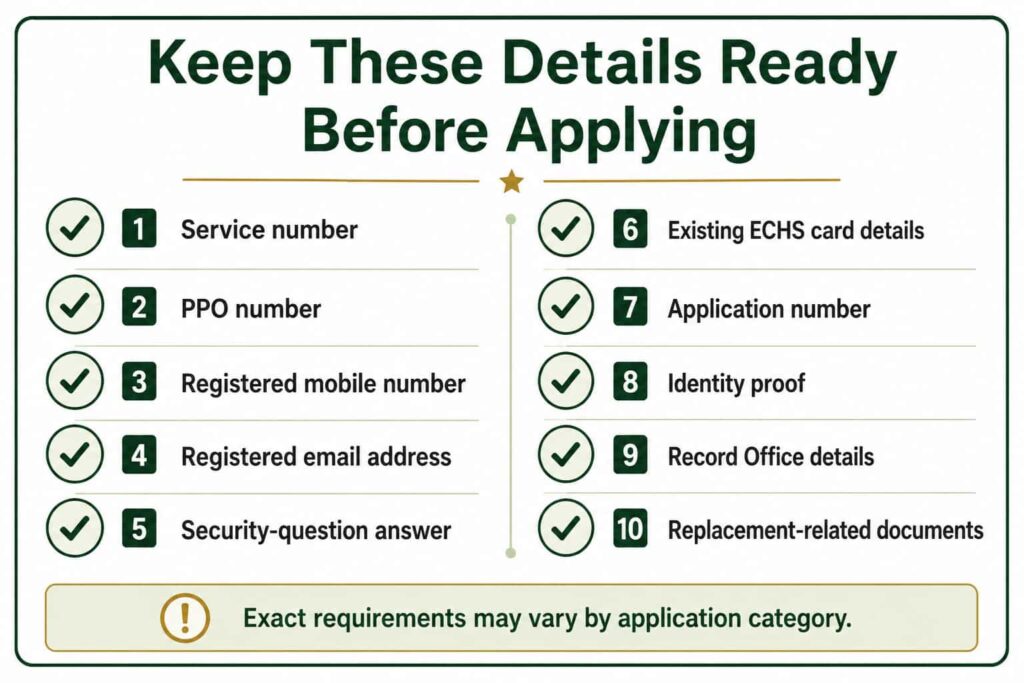
Depending on the application category, the beneficiary may need:
- Service number
- PPO number
- Registered mobile number
- Registered email address
- Answer to the saved security question
- Existing ECHS card details
- Smart-card application number
- Aadhaar or another authorised identity record, where required
- Record Office details
- Documents supporting the replacement request
The exact requirement can vary. A document that is needed for manual verification or replacement may not be compulsory for every fresh-card applicant.
What was provided under the ECHS password-recovery policy?
Central Organisation ECHS issued an official password-recovery procedure dated 10 June 2026 for ex-servicemen and primary beneficiaries who had forgotten the password used for their online 64 KB smart-card application.
The procedure provides three broad recovery routes:
- password reset through the registered email and OTP;
- password reset through the saved security question; and
- manual verification through Central Organisation ECHS or the concerned Regional Centre.
The first two routes are online recovery options. Manual verification becomes relevant where the beneficiary cannot use the registered email and is also unable to answer the security question.
How can an ECHS beneficiary reset the password through OTP?
The registered-email method is likely to be the most convenient option where the beneficiary still has access to the email address used during the original application.
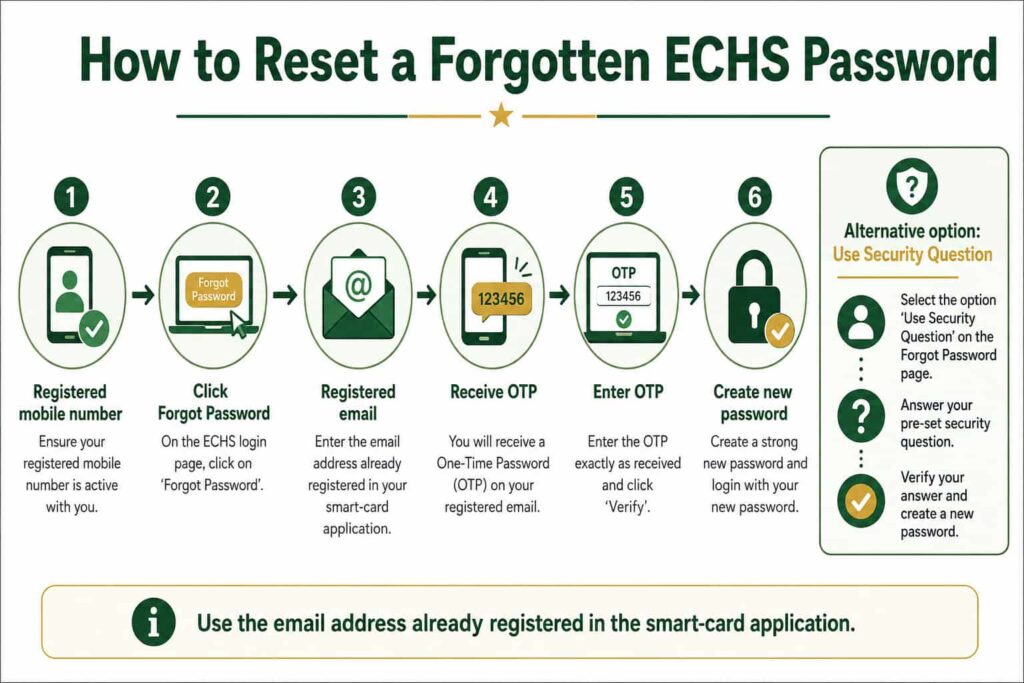
The process is:
- Open the official online 64 KB ECHS smart-card application portal.
- Select “Already Registered. Click to Login.”
- Enter the registered mobile number of the ex-serviceman or primary beneficiary.
- Select “Forgot Password.”
- Enter the email address already registered with the application.
- Check the registered email inbox for the OTP.
- Enter the OTP received.
- Create a new password.
- Use the new password to access the application.
The email entered during recovery must match the email already linked with the existing application. Entering a new or unrelated email address may not complete the verification.
Can the password be reset through the security question?
Yes.
The security-question option may be used where the beneficiary remembers the answer selected during registration.
The broad process is:
- Open the registered-applicant login page.
- Enter the registered mobile number.
- Select “Forgot Password.”
- Choose the “Using Security Question” option.
- Enter the saved answer.
- Complete verification.
- Create a new password.
The answer should match the response originally entered during registration. A similar answer written differently may not necessarily be accepted by the system.
What should you check if the ECHS OTP is not received?
An OTP delay does not always mean that the portal has failed. The problem may be connected with the registered email account or incorrectly entered information.
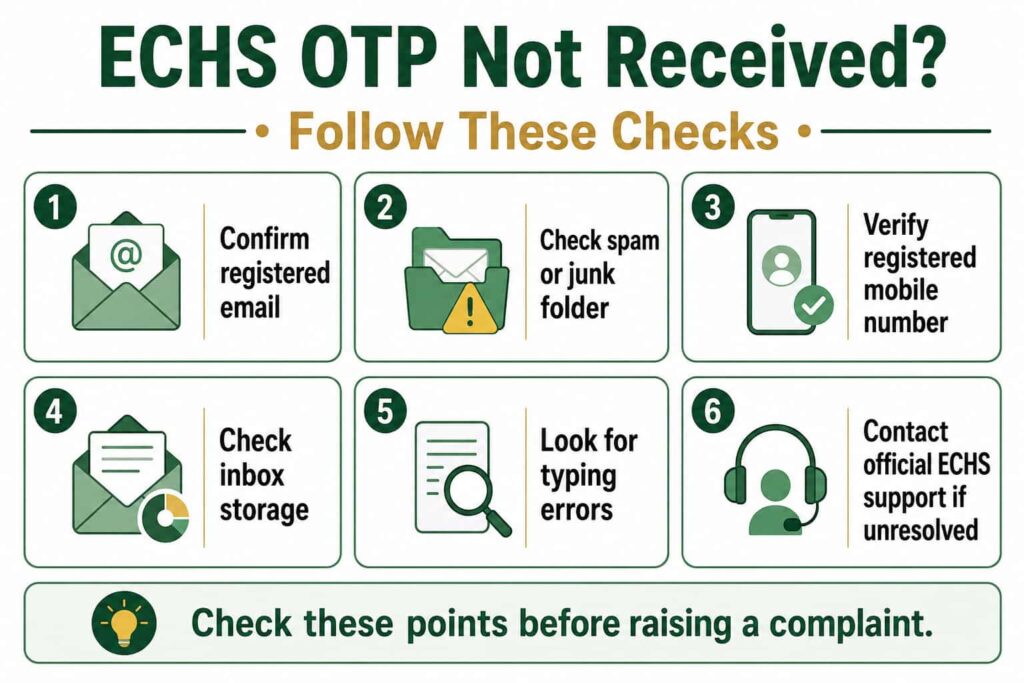
Before raising a complaint, verify:
- whether the email entered is the same email registered in the application;
- whether the registered mobile number has been entered correctly;
- whether the OTP has reached the spam or junk folder;
- whether the email account is still active;
- whether the inbox has sufficient storage;
- whether there is a typing mistake in the email address; and
- whether enough time has been allowed for the message to arrive.
Beneficiaries should avoid repeatedly changing email addresses or creating duplicate applications merely because the OTP has not arrived.
How can a password-reset request be escalated?
Where the OTP is still not received, a password-reset request may be sent from the registered email address.
The subject line should be:
FORGET PASSWORD
The request should include:
- service number; and
- registered mobile number.
The beneficiary may approach Central Organisation ECHS or the concerned ECHS Regional Centre for verification.
Only the information required for verification should be shared. A complete OTP or existing password should never be included in an ordinary email.
What if the registered email is no longer accessible?
A beneficiary may remember the registered mobile number but no longer have access to the email address used during the smart-card application.
In such a situation, the security-question option should be attempted first.
Where the beneficiary cannot access the registered email and cannot provide the correct security answer, manual verification may be required.
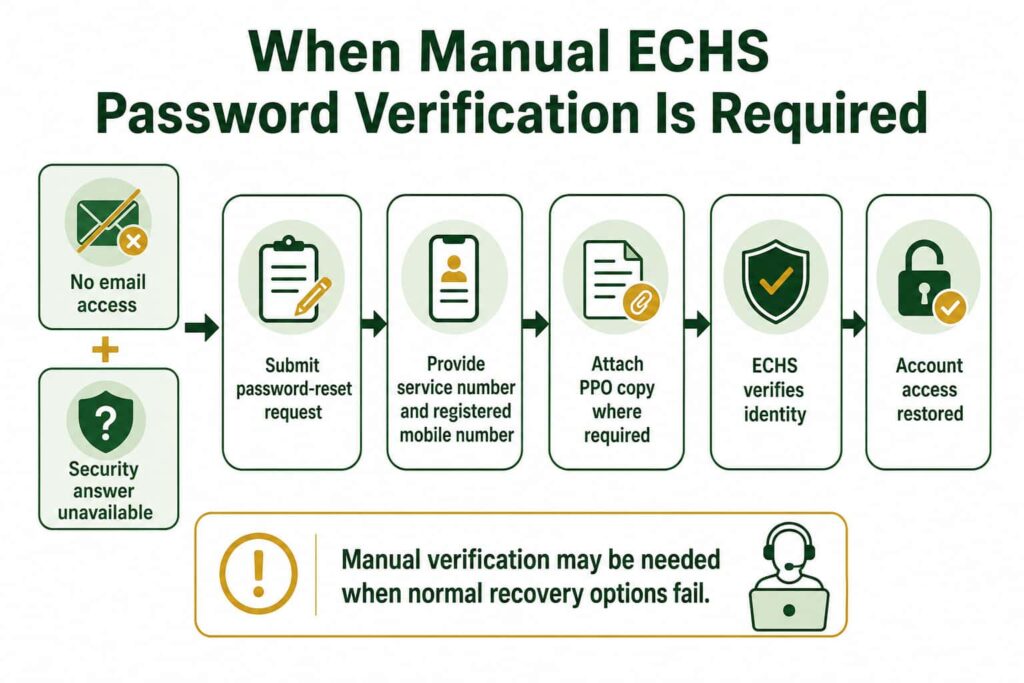
The beneficiary may be asked to provide:
- service number;
- registered mobile number;
- password-reset request;
- PPO copy; and
- any additional identity record requested by the concerned ECHS authority.
A PPO copy may be particularly relevant where no registered email is available for verification.
This process is an identity-protection measure. It helps prevent unauthorised persons from gaining access to a beneficiary’s smart-card application.
Why should beneficiaries maintain access to their registered email?
The registered email address is not merely used for general communication.
It may be required for:
- password-reset OTPs;
- application-related communication;
- status notifications;
- correction requests;
- identity verification; and
- card-processing updates.
An email account that is no longer used, has been closed or cannot be recovered may create difficulty when the beneficiary urgently needs to access the application.
Ex-servicemen and primary beneficiaries should therefore periodically confirm that both the registered email and mobile number remain active.
What should be checked before paying an ECHS card charge?
The payment stage should be treated carefully because an incorrect category or unauthorised payment link can lead to financial and processing problems.
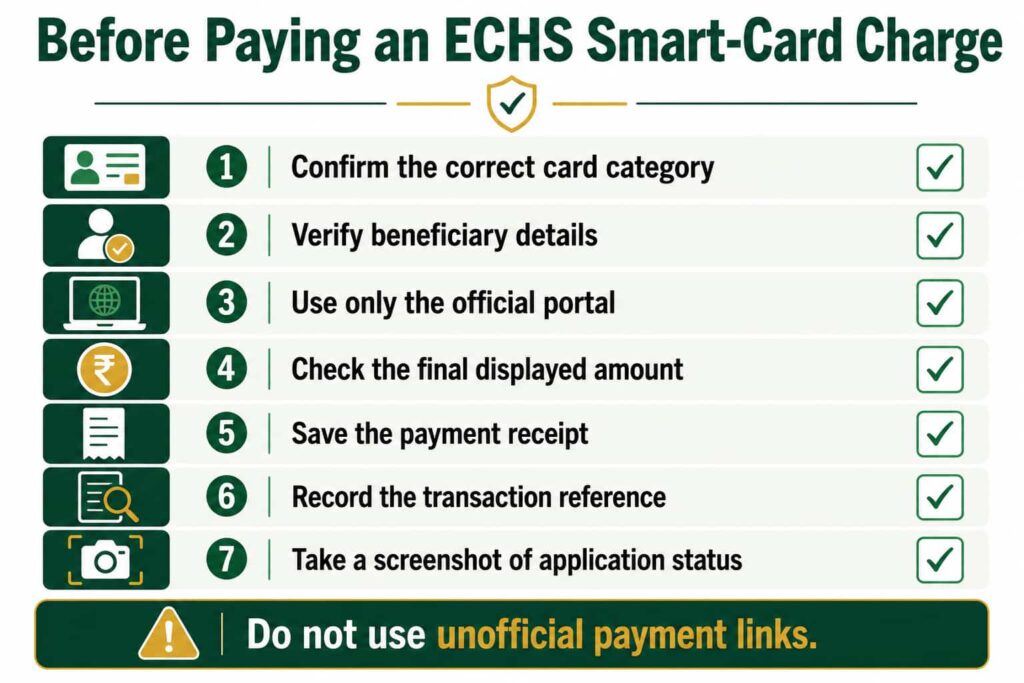
Before completing the transaction, confirm:
- Whether the application is for a fresh card, old-card replacement or lost-card replacement.
- Whether the correct beneficiary has been selected.
- Whether personal details match the official records.
- Whether service and pension particulars are accurate.
- Whether the application page belongs to the authorised ECHS system.
- Whether the final displayed amount matches the selected category.
- Whether a receipt or transaction acknowledgement will be available.
- Whether the application number has been recorded.
- Whether the registered email and mobile number are accessible.
- Whether the application status can be checked after payment.
After payment, preserve:
- transaction receipt;
- payment reference number;
- application acknowledgement;
- confirmation email;
- bank transaction details; and
- screenshot of the application status.
These records can become important if the payment is deducted but the application is not updated.
What should you do if payment is deducted but the status does not change?
Do not immediately repeat the payment.
First preserve:
- bank transaction reference;
- amount deducted;
- payment receipt;
- application number;
- date and time of payment;
- screenshot of the payment-status page;
- registered mobile number; and
- registered email address.
The complaint should clearly mention:
- the card category selected;
- the amount deducted;
- whether the payment page displayed success, pending or failure;
- whether any receipt was generated; and
- whether the application status changed.
Another payment should be made only after the official portal or ECHS support channel confirms that the earlier transaction was unsuccessful or that a fresh payment is required.
Common mistakes ECHS beneficiaries should avoid
Using unofficial payment links
Card-related payments should be completed only through the authorised ECHS application process.
Links received through unknown messages, social-media posts or unsolicited calls should not be trusted.
Selecting the wrong card category
The three displayed rates apply to three different situations. A beneficiary should not select a category merely because the charge is lower.
Entering a new email during password recovery
The OTP process depends on the email address already registered with the application. A new email address may not be recognised.
Sharing an OTP or password
A beneficiary should never disclose the complete OTP or account password to an unknown caller, agent or intermediary.
Making repeated payments
If the first payment has been deducted, preserve the transaction details and contact official support before paying again.
Creating duplicate applications
Multiple applications using different mobile numbers or email addresses can complicate identity verification.
Failing to save receipts
A bank debit alone may not be sufficient to trace the payment. The application number, receipt and transaction reference should also be retained.
Assuming ₹51.75 applies to every replacement
The displayed amount of ₹51.75 is specifically associated with replacement after loss of an existing 64 KB card.
Handing over original documents without acknowledgement
Where documents are physically submitted, beneficiaries should provide copies wherever permitted. If an original is accepted for verification, a written acknowledgement should be obtained.
What are the official ECHS support channels?
The official ECHS portal displays separate support channels for beneficiary assistance.
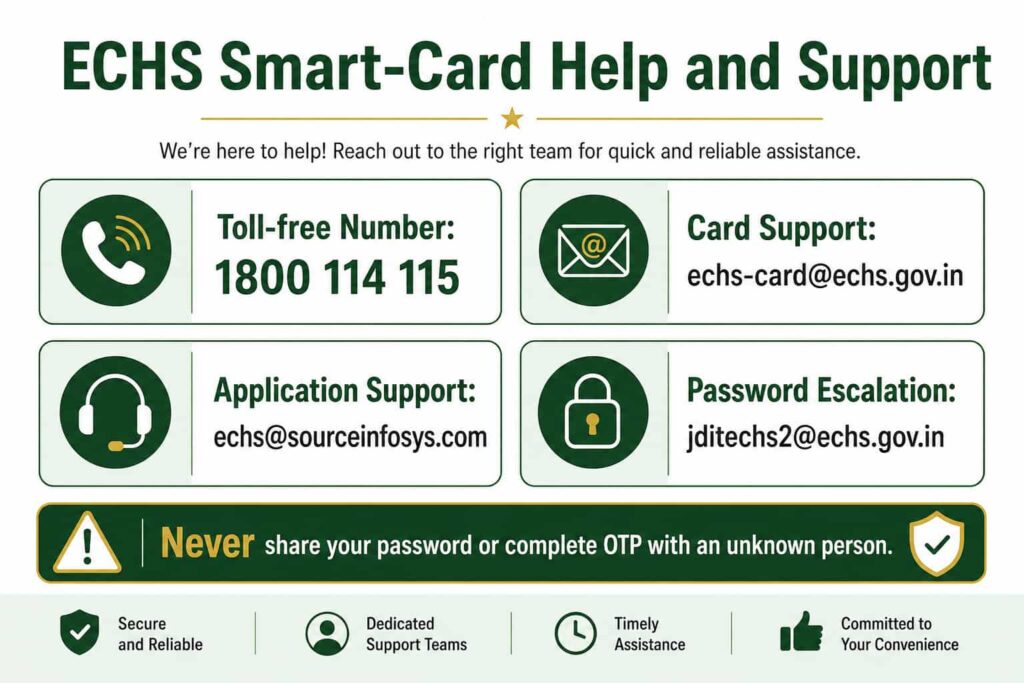
The displayed contact details include:
Toll-free helpline: 1800 114 115
Card-related support: echs-card@echs.gov.in
Application and login support: echs@sourceinfosys.com
Password-related escalation: jditechs2@echs.gov.in
Beneficiaries should verify the latest contact details on the official ECHS website before sending personal records because helpline numbers and departmental email addresses may change.
Passwords and complete OTPs should never be shared. Identity and pension documents should be provided only when required for an authorised verification process.
Has ECHS specified the effective date of these revised charges?
The ECHS website describes the displayed figures as revised rates. However, the short rate display does not separately mention an effective date alongside the three amounts.
The safest wording is therefore:
The revised smart-card printing charges are currently displayed on the official ECHS website.
Beneficiaries should verify the actual amount shown on the official payment page when submitting the application.
An effective date should not be assumed unless it is expressly stated in an official instruction or portal notice.
What is genuinely new in this ECHS update?
The password-recovery policy dated 10 June 2026 and the displayed smart-card printing charges address two separate issues.
The password policy explains how a registered beneficiary can regain access to the online application through:
- email and OTP;
- security-question verification; or
- manual verification.
The newer practical information is the display of the following card-printing rates:
- ₹172.50 for a fresh 64 KB smart card;
- ₹129.38 for replacement of an old 16 KB or 32 KB card; and
- ₹51.75 for replacement after loss of an existing 64 KB card.
Taken together, the information provides beneficiaries with a more complete roadmap—from accessing the online account to selecting the correct card category and preserving payment records.
Final takeaway
ECHS beneficiaries should pay attention to both the applicable card charge and the accuracy of their registered information.
The official website currently displays:
- ₹172.50 for a fresh 64 KB ECHS smart card;
- ₹129.38 for replacement of an old 16 KB or 32 KB card; and
- ₹51.75 for replacement after loss of an existing 64 KB card.
A forgotten application password may be recovered through the registered email and OTP, through the saved security question or, where both options fail, through manual verification by ECHS authorities.
The most important precautions are to:
- maintain access to the registered email;
- keep the registered mobile number active;
- select the correct application category;
- verify the amount on the official payment page;
- save the transaction receipt and application number;
- avoid duplicate payments; and
- use only official ECHS channels.
A minor error in the email address, card category or payment process can delay access to an important healthcare document. Beneficiaries should therefore review their records before an urgent card-related requirement arises.
Frequently asked questions
What is the charge for a fresh 64 KB ECHS smart card?
The official ECHS website currently displays a printing charge of ₹172.50 for a fresh 64 KB smart card. The amount should be verified on the authorised payment page before completing the transaction.
What is the charge for replacing an old 16 KB or 32 KB ECHS card?
The displayed replacement charge is ₹129.38. Beneficiaries should confirm that the existing card is an old 16 KB or 32 KB card before selecting this category.
What is the charge for replacing a lost 64 KB ECHS card?
ECHS currently displays a charge of ₹51.75 for replacement after loss of an existing 64 KB card.
Are these ECHS treatment or membership charges?
No. The displayed amounts relate to smart-card printing or replacement and should not be interpreted as treatment, medicine, annual subscription or polyclinic charges.
Can an ECHS password be reset through OTP?
Yes. The beneficiary can use the forgotten-password option and request an OTP through the email address already registered with the smart-card application.
What should be done if the OTP is not received?
Check the registered email address, spam folder, inbox storage, mobile number and typing errors. If the OTP still does not arrive, the matter may be escalated through the official ECHS support process.
Can the password be recovered without access to the registered email?
The saved security-question option may be used. Where that option also fails, manual verification through Central Organisation ECHS or the concerned Regional Centre may be necessary.
Is a PPO copy required for every password-reset request?
No. A PPO copy may be required in cases where the beneficiary has no access to the registered email and identity must be verified manually.
What should be done if payment is deducted twice?
Preserve both transaction references, application details and bank records. Contact the official support channel and avoid further payments until instructions are received.
Should beneficiaries use a payment link received through WhatsApp?
No. Smart-card payments should be made only through the authorised ECHS application system. Unknown or forwarded payment links should not be used.
What is the official ECHS toll-free number?
The ECHS portal currently lists 1800 114 115 as the toll-free assistance number.
Has ECHS announced a separate effective date for the displayed charges?
The short rate display does not separately mention an effective date. Beneficiaries should treat them as the rates currently displayed and verify the payable amount at the time of application.
Sources:-
Official ECHS website:
https://www.echs.gov.in/
Official ECHS policy section:
https://www.echs.gov.in/stat_auto_sec
Password-recovery policy dated 10 June 2026:
https://www.echs.gov.in/assets/policy/Policy%20on%20Forget%20Password.pdf

Leave a Reply