

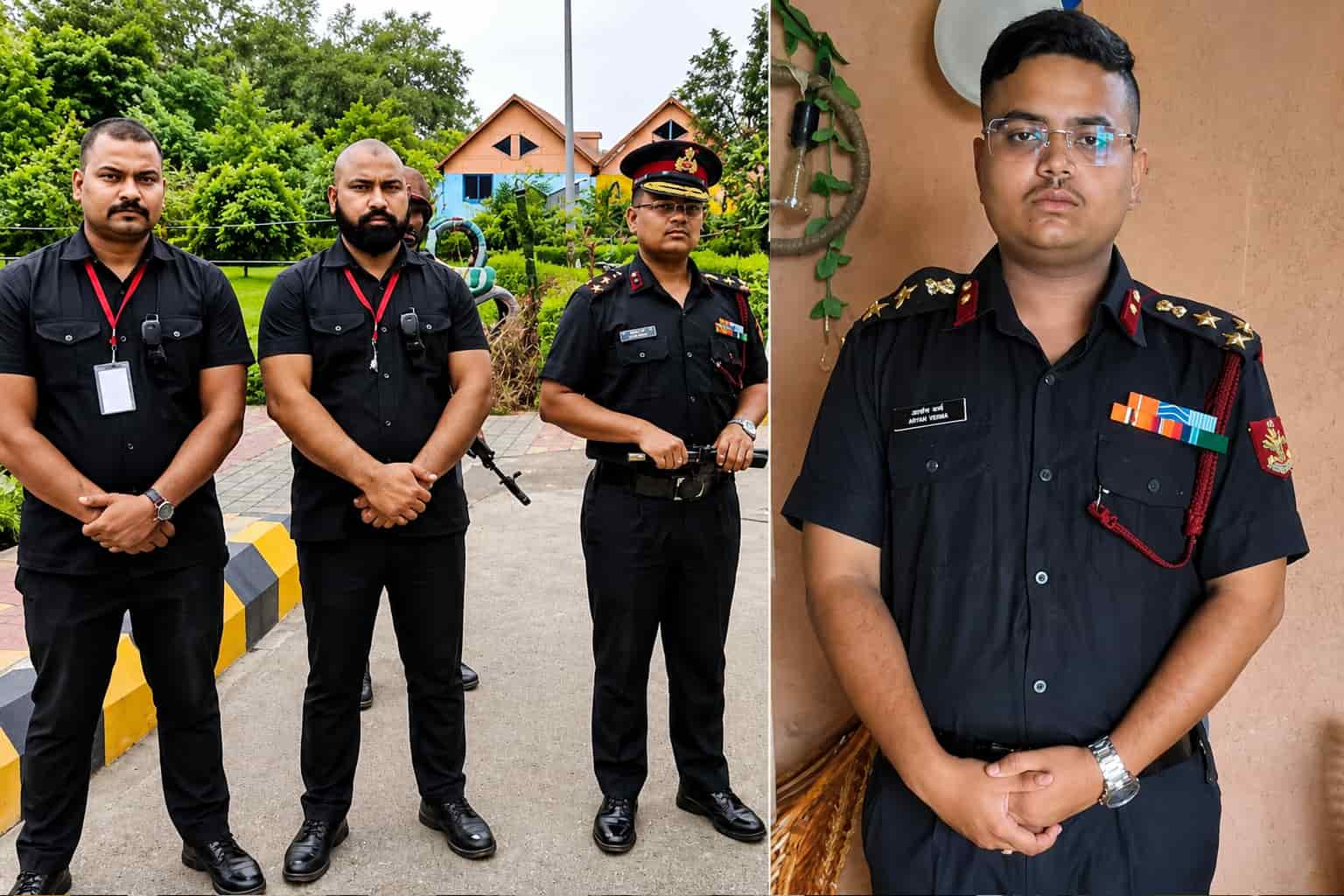
A 21-year-old man was reportedly arrested in Shahjahanpur for allegedly posing as an Indian Army Brigadier. Know why fake rank display, Army-style vehicles, false recruitment influence and unofficial claims must be verified carefully.
A uniform commands respect in India.
That respect is earned by years of training, service, discipline and sacrifice. But the same respect can also be misused when someone creates a false military image to impress or mislead people.
The Shahjahanpur fake Brigadier case is a serious reminder of that risk.
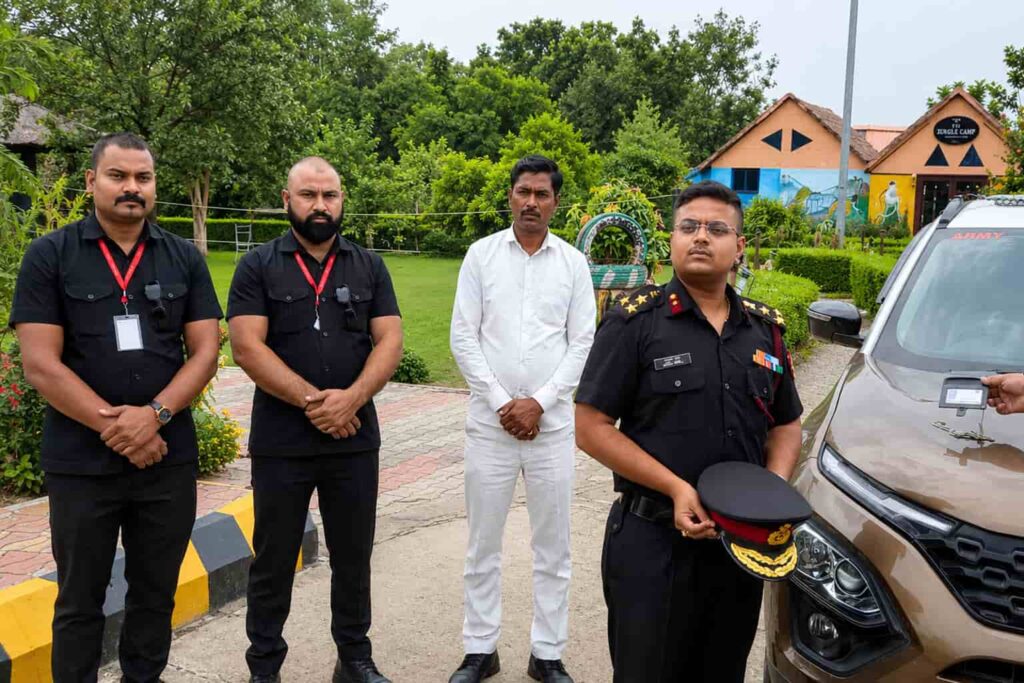
According to media reports, a 21-year-old man identified as Aryan Verma was arrested in Uttar Pradesh’s Shahjahanpur for allegedly posing as a senior Indian Army officer. Reports say he was dressed in a Brigadier-style uniform and moved in a Tata Harrier SUV carrying Army-style insignia, accompanied by men allegedly projected as security personnel.
This case should not be seen only as a strange incident. It should be treated as a public awareness warning, especially for defence aspirants, parents and families who trust anyone claiming Army connection.
Why this case became alarming?
The concern is not only that a young man allegedly wore a uniform.
The bigger concern is the complete image reportedly created around him: senior rank, official-looking vehicle display, military-style identity, security cover and confident public presentation.
For an ordinary citizen, such a setup can look convincing. Many people may hesitate to question a person who appears to be a senior Army officer.
That is exactly why verification matters.
A real Army rank is not a costume. It comes through a formal career path, commissioned service, postings, promotions, command responsibility and official records.
A 21-year-old presenting himself as a Brigadier should immediately raise questions.
Why defence aspirants are most vulnerable?
Many young people preparing for Army, Navy and Air Force recruitment are emotionally invested in the uniform. Their families also want guidance, contacts and clarity.
This creates a sensitive environment.
If a person claims to be a senior officer, says he can help in recruitment, displays a uniform, shows an ID card or moves with Army-style symbols, some aspirants may believe him without checking.
That is dangerous.
No genuine defence recruitment happens through private influence. No real selection can be arranged through a personal contact. No candidate should pay money or share documents with someone only because he looks like a military officer.
For every defence aspirant, the safest rule is simple: rely only on official recruitment portals and authorised notifications.
What media reports have claimed?
Media reports say the accused was allegedly caught after a trap involving Army-linked authorities and local ex-servicemen. Some reports mention that he had been under suspicion and was confronted after arriving in officer-like presentation.
Reports also mention items such as uniform, Army-style insignia, air pistol or dummy weapon, vehicle display and men allegedly posing as security personnel. NDTV reported that a case was registered at Sadar Bazar police station and investigation was underway.
These are serious allegations, but they should still be written responsibly.
Until police records, court proceedings or official releases clarify every detail, the correct words are: alleged, reportedly, accused and investigation.
What is not yet fully clear?
Several points still need official confirmation.
Was any money taken from aspirants or families?
Were recruitment promises made?
Who prepared the alleged documents or insignia?
Who owned or arranged the vehicle?
Did the associates know the full story?
Were more people involved?
Which exact legal sections were applied?
These questions should not be answered through guesswork.
Responsible reporting should inform the public without declaring unverified conclusions.
How can citizens identify suspicious military claims?
A fake identity often depends on public hesitation.
People feel uncomfortable asking questions when someone appears powerful. But respectful verification is not disrespect.
Warning signs may include:
A very young person claiming a very senior rank
Recruitment promises or selection shortcuts
Demand for money in the name of Army connection
Private security being shown as official commandos
Unusual vehicle plates, flags or symbols
Pressure created through rank display
Refusal to share verifiable official identity through proper channels
Claims of secret influence in medical, written exam or merit list
If any such signs appear, citizens should stay cautious and inform proper authorities instead of confronting recklessly.
Why official recruitment channels matter?
Defence recruitment is rule-based.
Candidates should follow only official platforms such as Join Indian Army, Indian Navy, Indian Air Force, UPSC, NDA/CDS notifications, Agnipath/Agniveer official portals and recognised government communication.
Aspirants should never trust private claims of guaranteed selection.
No one can legally sell a defence job. No one can bypass the written exam, physical test, medical test, SSB or official merit process through personal influence.
If someone says otherwise, that itself is a warning.
Why ex-servicemen awareness is valuable?
Veterans understand rank structure, uniform details, military conduct and service protocol better than ordinary citizens.
That experience can protect society.
If an ex-serviceman notices suspicious use of uniform, rank, badges, vehicle insignia or Army-style claims, the matter can be reported through proper channels. Such alertness helps protect civilians and the dignity of the Armed Forces.
The Shahjahanpur case shows why veteran networks and local awareness matter.
Comment
The uniform deserves respect, but respect should not become blind trust.
A real soldier does not need artificial drama to prove his service. Rank has a history. Uniform has rules. Military identity has verification.
This case is a reminder that society must protect the honour of the Armed Forces by questioning suspicious display responsibly.
For aspirants, the lesson is even stronger: shortcuts are traps.
Anyone promising selection through influence is not helping your career. He may be putting your future at risk.
Final takeaway
The Shahjahanpur fake Brigadier case should be understood as a defence awareness story.
Media reports say a 21-year-old man was allegedly arrested for posing as a senior Army officer using uniform, vehicle display and military-style surroundings. The matter is under investigation, and final conclusions should come only from official records.
For citizens and defence aspirants, the message is clear:
Respect the uniform, but verify doubtful claims.
Trust official recruitment channels, not private promises.
Do not pay money for defence selection.
Do not share documents with suspicious individuals.
Report misuse of Army identity through proper authorities.
The honour of the uniform belongs to those who earn it through service. Society has a duty to protect that honour from impersonation.
Sources:-
India Today report:
https://www.indiatoday.in/india/story/shahjahanpur-arrest-21-year-old-held-for-posing-as-senior-indian-army-officer-2926059-2026-06-13
Hindustan Times report:
https://www.hindustantimes.com/cities/lucknow-news/fake-brigadier-nabbed-after-army-sting-operation-in-shahjahanpur-cantonment-101781290143219.html
Times of India report:
https://timesofindia.indiatimes.com/city/lucknow/woh-con-tha-army-veterans-nab-21-year-old-brigadier/articleshow/131691648.cms


Leave a Reply