

The Indian Army is not short of courage.
It is not short of tradition.
It is not short of operational experience.
The real challenge before every modern Army today is different: how fast can it convert ideas into capability?
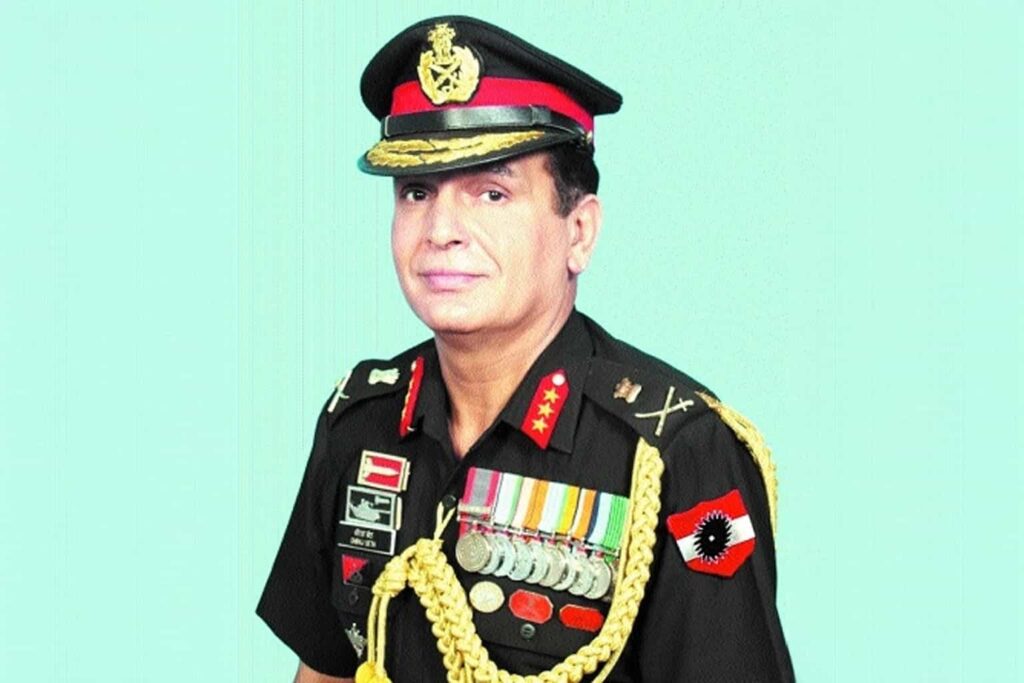
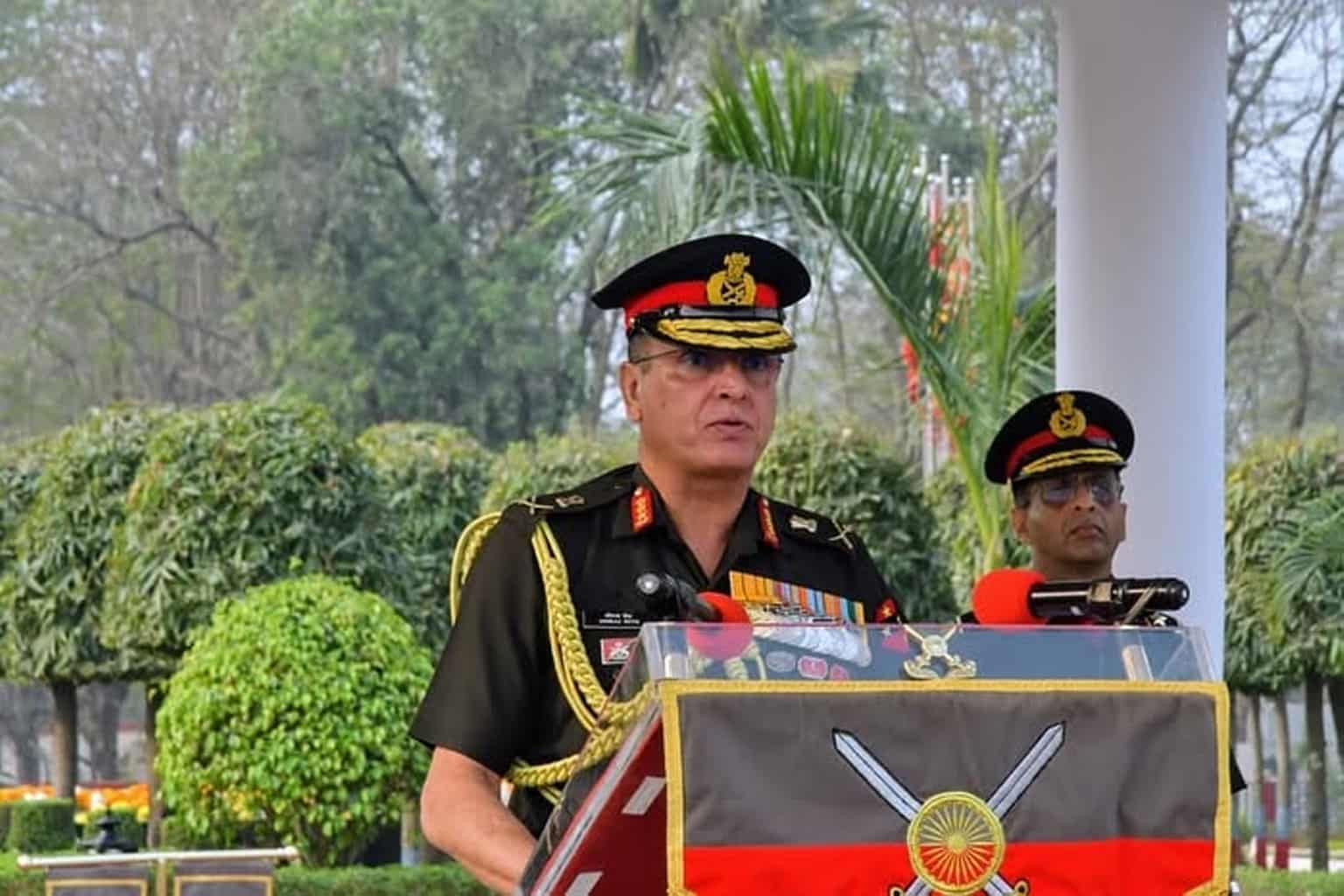
That is the question General Dhiraj Seth faces as he takes over as the 31st Chief of the Army Staff.
This is not just a change of name at the top of Army Headquarters. It is a moment when the Indian Army’s future-war agenda will be tested through execution. Modernisation, jointness, drones, battlefield transparency, force restructuring and technology absorption are no longer discussion points. They now have to become visible at formation level, unit level and soldier level.
That is where General Seth’s tenure becomes important.
A new Chief in a changing Army
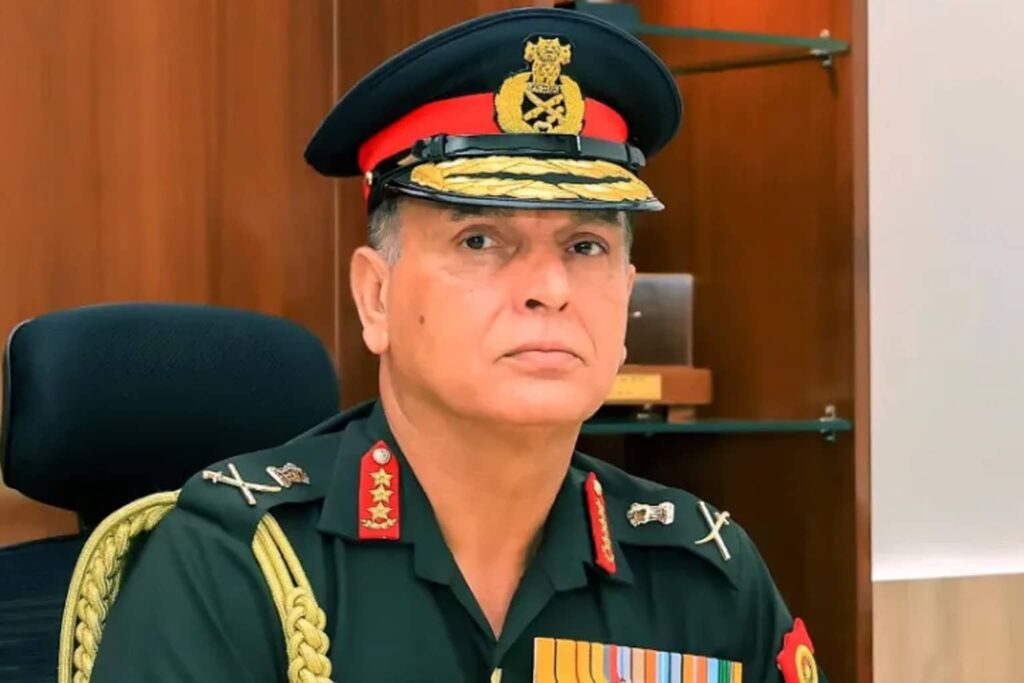
General Dhiraj Seth, PVSM, UYSM, AVSM, has taken over as Chief of the Army Staff from General Upendra Dwivedi, who superannuated after more than four decades of service.
The fresh update is important because the appointment phase is over. The command phase has begun.
The Government had earlier appointed Lt Gen Dhiraj Seth as the next Chief of the Army Staff with effect from the afternoon of 30 June 2026. At that time, he was serving as Vice Chief of the Army Staff.
Now, he is no longer the next Chief.
He is the serving COAS.
That changes the nature of the story. It is no longer about profile alone. It is about priorities, pace and delivery.
Why this is not a routine appointment?
Every Chief takes over with experience.
But every Chief also takes over at a particular moment in history.
General Seth assumes charge at a time when the Indian Army is being pushed by multiple pressures at the same time: border vigilance, technology-led warfare, drone threats, counter-drone systems, electronic warfare, cyber-linked operations, precision firepower, integrated formations and the larger movement towards jointness among the Services.
The battlefield is changing faster than older military systems were designed to change.
This is why the new Chief’s success will not be judged only by statements or ceremonies. It will be judged by how quickly the Army can adapt without losing its operational balance.
The execution challenge
Modernisation is easy to announce.
It is much harder to implement.
A new concept has to move from Army Headquarters to command level, from command level to corps and division, and finally into the hands of the soldier who has to use it in the field.
This is where many military reforms face the real test.
Technology must not remain trapped in PowerPoint presentations.
Drones must not remain limited to demonstration events.
Counter-drone systems must not remain only procurement headlines.
Integrated Battle Groups must not remain only doctrinal discussion.
Electronic warfare capability must not remain confined to specialised pockets.
The challenge is to make future-war capability practical, deployable, maintainable and usable in real conditions.
That is the space where General Dhiraj Seth’s leadership will be watched closely.
Why his Armoured Corps background matters?
General Seth was commissioned into the Armoured Corps in December 1986.
This background matters because the Armoured Corps is built around mobility, firepower, speed and battlefield shock. It teaches officers to think in terms of manoeuvre, timing, concentration of force and operational tempo.
But the modern battlefield is no longer only about tanks moving across open terrain.
It is now about tanks moving with drones overhead, electronic signatures being watched, precision weapons searching for targets, real-time surveillance shaping decisions and networked systems compressing reaction time.
An Armoured Corps officer at the top of the Army therefore brings an interesting question:
How will traditional manoeuvre thinking adapt to a battlefield where visibility, speed and technology decide survival?
This is not only about armoured warfare.
It is about how the entire Army thinks about movement under modern surveillance.
From mechanised strength to multi-domain warfare
The future Indian Army will need more than strong formations.
It will need connected formations.
A future-ready Army must be able to combine infantry, armour, artillery, aviation, drones, air defence, electronic warfare, cyber support, logistics and intelligence into a faster decision-making cycle.
This is where the idea of multi-domain operations becomes important.
The Army can no longer think only in terms of land combat. It must operate in an environment shaped by air, space, cyber, information and electronic domains.
General Seth’s earlier exposure to strategic planning and capability development becomes relevant here.
The question is not whether the Army understands future warfare.
The question is whether it can reorganise, equip and train fast enough for it.
The capability-development lens
General Seth’s profile includes important appointments in strategic planning and capability development.
That may sound administrative to a general reader, but it is highly important.
Capability development is where future requirements are translated into force structure, equipment priorities, acquisition plans and long-term modernisation direction.
A Chief with such experience understands that battlefield readiness is not created suddenly during a crisis. It is built years earlier through decisions on equipment, training, formations, infrastructure, doctrine and budget priorities.
That background may help in one key area: aligning what the Army wants with what the Army can realistically absorb.
Because modernisation is not only about buying equipment.
It is about integrating it into the way the Army fights.
What Gen Upendra Dwivedi leaves behind?
General Upendra Dwivedi’s tenure will be remembered for operational preparedness, transformation, jointness, technology absorption, force restructuring and soldier-centric initiatives.
That is the platform on which General Seth now stands.
The outgoing Chief’s period saw major emphasis on future-ready formations and technology-linked initiatives. That means the new Chief is not beginning with a blank slate.
His task is different.
He has to deepen, refine and operationalise the transformation already underway.
A reform is successful only when it survives beyond the officer who started it.
That continuity will matter.
Jointness cannot remain a slogan
One of the biggest shifts in India’s military future is jointness.
The Army, Navy and Air Force cannot prepare for future wars in separate compartments. The next conflict may demand combined use of land power, air power, maritime security, drones, space-based surveillance, cyber systems and electronic warfare.
For the Army Chief, this means land operations must be planned with a joint mindset.
The Army will remain the largest Service by manpower and one of the most visible arms of national security. But size alone will not be enough. Integration will matter.
A modern Army must be able to see with other Services, share information with other Services and act in coordination with other Services.
This is one of the defining tests of the coming years.
Soldier-level technology absorption
Technology absorption is often discussed at the top level.
But the real test is the soldier.
Can a young officer use new systems confidently?
Can a JCO integrate modern equipment into routine training?
Can a jawan operate and maintain technology in heat, cold, dust, altitude and pressure?
Can formations trust new systems during operations, not only during trials?
If the answer is yes, modernisation has succeeded.
If the answer is no, modernisation remains incomplete.
This is why General Seth’s tenure will need to focus not only on acquisition, but also on training, maintenance, doctrine, user confidence and field-level adaptation.
The drone and counter-drone challenge
Drones have changed modern warfare.
They are used for surveillance, target acquisition, logistics, loitering attack and battlefield awareness. They are also used by state and non-state actors.
For the Indian Army, drone capability and counter-drone capability will remain central themes.
A future-ready Army must be able to use drones at multiple levels while also protecting its own troops, vehicles, posts and infrastructure from hostile unmanned systems.
This requires more than equipment.
It requires training, electronic warfare support, integrated air defence, quick decision-making and clear rules for use.
The new Chief will have to push this capability deeper into formations.
Mechanised modernisation will remain important
Because General Seth comes from the Armoured Corps, many readers will naturally watch how mechanised forces evolve under his leadership.
India’s mechanised capability has to adapt to modern surveillance, precision strikes, unmanned platforms and electronic warfare.
Armour will still matter.
Mobility will still matter.
Firepower will still matter.
But survivability, networking, protection and integration with drones and artillery will matter even more.
The future of armoured and mechanised forces will not be about old versus new warfare. It will be about combining traditional battlefield power with modern battlefield awareness.
Welfare cannot be separated from readiness
An Army is not only platforms and formations.
It is people.
Soldier welfare, family welfare, veterans, Veer Naris, training conditions, housing, medical support, mental resilience and dignity of service are not soft issues. They affect morale and readiness.
A soldier who knows his family is supported serves with greater confidence.
A veteran who feels respected strengthens the larger military community.
A force that balances modernisation with human dignity becomes stronger from within.
General Seth’s leadership will therefore be watched not only on technology and operations, but also on how soldier-centric priorities continue.
What citizens should understand?
For citizens, the appointment of a new Army Chief may look like a formal defence update.
But the importance lies in the direction of the institution.
The Indian Army is moving through a period where old strengths must be preserved and new capabilities must be absorbed.
It has to remain ready on borders while preparing for future threats.
It has to modernise without losing discipline.
It has to become more joint without weakening its own operational identity.
It has to bring technology into the field without making the soldier dependent on fragile systems.
This balance will define the coming phase.
What should not be exaggerated?
It would be wrong to say that the Army will transform overnight because a new Chief has taken over.
It would also be wrong to assume that one officer alone can change the entire system.
Military transformation is institutional. It requires time, budget, doctrine, training, industry support, procurement discipline and user feedback.
The Chief’s role is to set direction, maintain pressure, protect priorities and ensure that change reaches the ground.
That is the realistic way to understand this transition.
What to watch during General Seth’s tenure?
The key areas to watch will be:
how Integrated Battle Groups move from concept towards operational practice,
how drone and counter-drone systems spread across formations,
how mechanised forces adapt to modern threats,
how technology absorption reaches unit level,
how jointness is practiced with the Navy and Air Force,
how logistics and infrastructure support future warfare,
how soldier welfare remains integrated with readiness,
and how capability development aligns with real operational needs.
These will decide whether the Army’s transformation remains a plan or becomes a field reality.
Final takeaway
General Dhiraj Seth’s assumption of charge as the 31st Chief of the Army Staff comes at a decisive moment for the Indian Army.
The institution is already moving towards transformation, jointness, technology absorption and future-war preparedness.
His real test will be execution.
Can the Army convert modernisation into field capability?
Can technology reach the soldier?
Can jointness become practice?
Can mechanised strength adapt to a transparent battlefield?
Can welfare and readiness move together?
The answer will shape the next chapter of the Indian Army.
General Seth’s leadership will be judged not only by what is announced at the top, but by what changes on the ground.
That is where the real Army story begins.
Sources:-
PIB / Ministry of Defence — General Dhiraj Seth takes over as Chief of the Army Staff:
https://www.pib.gov.in/PressReleasePage.aspx?PRID=2279326&lang=1®=3
PIB / Ministry of Defence — Lt Gen Dhiraj Seth appointed as Chief of the Army Staff:
https://www.pib.gov.in/PressReleasePage.aspx?PRID=2272460&lang=1®=6
PIB / Ministry of Defence — Lt Gen Dhiraj Seth assumes appointment of Vice Chief of the Army Staff:
https://www.pib.gov.in/PressReleasePage.aspx?PRID=2247620
PIB / Ministry of Defence — General Upendra Dwivedi relinquishes appointment of Chief of the Army Staff:
https://www.pib.gov.in/PressReleasePage.aspx?PRID=2279293
PIB Mumbai — Lt Gen Dhiraj Seth relinquishes command of Southern Command:
https://www.pib.gov.in/PressReleasePage.aspx?PRID=2247292&lang=1®=1




Leave a Reply