

A new Army Chief’s first message is never just a formal speech.
It tells soldiers what to prepare for.
It tells families what the institution values.
It tells the country how the Army sees the future.
General Dhiraj Seth’s first message as the 31st Chief of Army Staff should be understood in this way. His focus was not limited to ceremony, rank or tradition. He used the word VIJAY to explain the direction in which he wants to take the Indian Army.
This makes the message important.
Because VIJAY is not only a patriotic word here. It is a leadership framework.
It connects operational readiness, technology, jointness, self-reliance and soldier welfare into one clear priority structure.
Why this speech matters now?
The Indian Army is operating in a changing security environment.
The challenges readiness, technology, jointness, self-reliance and soldier welfare into one clear priority structure.
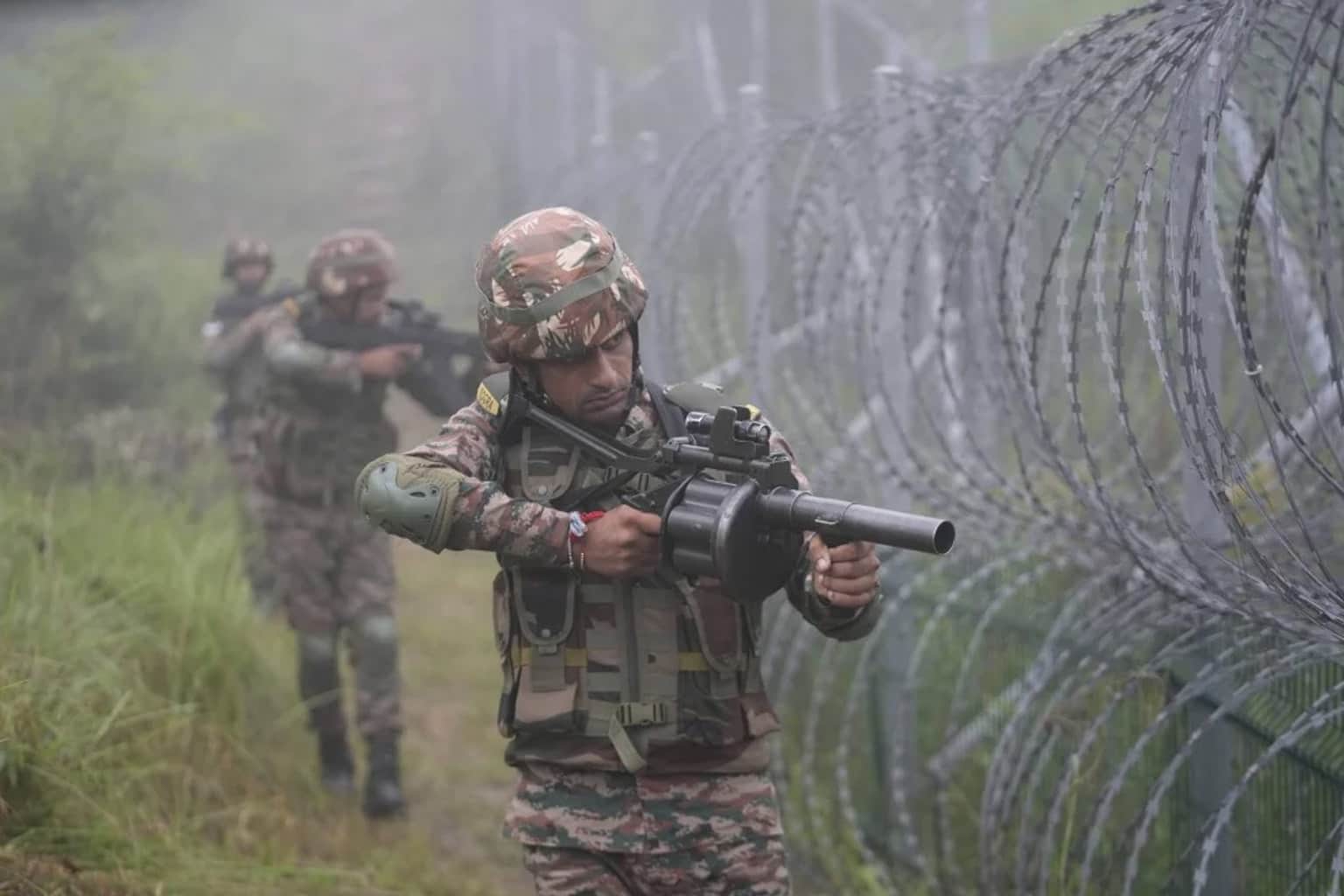
Why are no longer limited to conventional war. Future conflicts may involve drones, cyber threats, electronic warfare, information warfare, precision strikes, surveillance systems, artificial intelligence, space-based assets and fast-moving multi-domain operations.
This means the Army has to remain strong in traditional soldiering, but it also has to become faster in technology adoption.
General Dhiraj Seth’s message is important because it accepts this reality.
He described the Indian Army as a combat-ready and battle-hardened force. But he also said that modernisation must be taken forward with fresh energy and determination.
That is the balance in his vision.
Strong traditions, but future-ready capability.
VIJAY: Not a slogan, but a priority map
General Seth explained his priorities through the acronym VIJAY.
Each letter points to one major area:
V — Vigilance and Readiness
I — Innovation and Transformation
J — Jointness and Integration
A — Atmanirbharta
Y — Yoddha First
This is a simple structure, but it covers almost every major issue facing the Army today.
Border alertness, battlefield technology, tri-service coordination, indigenous capability and soldier welfare are all included in this framework.
That is why VIJAY should be read as a roadmap, not just as a speech line.
Vigilance and readiness: The first duty of the Army
The first part of VIJAY is vigilance and readiness.
For the Indian Army, vigilance means continuous awareness of borders, threats and operational developments.
Readiness means the ability to respond when required.
In simple terms, the Army cannot afford to be reactive. It must stay alert before a crisis becomes visible to the public.
This includes high operational preparedness, trained formations, effective surveillance, logistics readiness, updated drills and quick response capability.
In today’s environment, readiness is not only about manpower and weapons. It is also about information, mobility, communication and decision-making speed.
That is why this first priority is the foundation of everything else.
Innovation and transformation: Adapting to new wars
The second part of VIJAY is innovation and transformation.
This is one of the most important points in the speech.
Modern warfare is changing quickly. Drones are becoming common on the battlefield. Electronic warfare can disrupt communication. Cyber operations can affect military systems. Precision weapons can change the pace of combat. Artificial intelligence can support faster analysis and decision-making.
In such a battlefield, an Army cannot depend only on old methods.
Innovation means finding new solutions.
Transformation means changing doctrine, training, structure and capability according to the future battlefield.
For the Indian Army, this may include better drone integration, counter-drone systems, electronic warfare preparedness, improved surveillance, faster logistics, stronger battlefield communication and new training methods.
The key message is clear:
The Army must not only buy new technology. It must learn how to fight differently with it.
Jointness and integration: Future wars will not be single-service wars
The third part of VIJAY is jointness and integration.
This is central to India’s wider defence reforms.
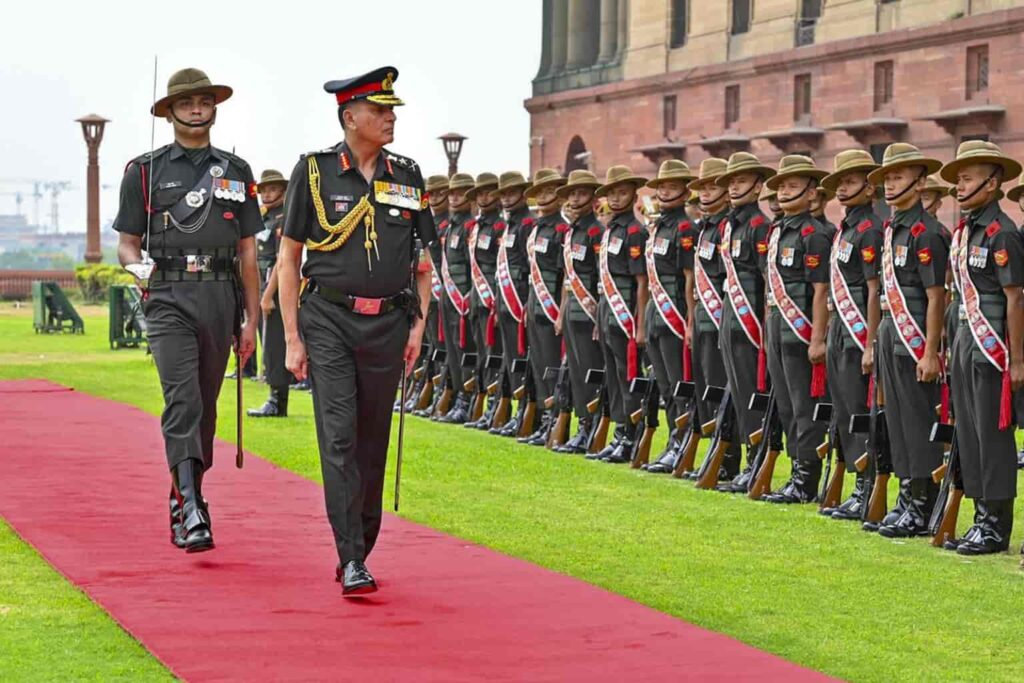
Future conflicts will not be fought by the Army alone. Land, air, maritime, cyber, space and information domains will have to work together.
That means the Army, Navy and Air Force need deeper coordination.
Jointness means better cooperation between the Services.
Integration means combining capabilities for a common operational purpose.
For example, a land operation may need air support, drone feeds, satellite inputs, cyber protection, electronic warfare support and logistics coordination. If these systems work separately, the response becomes slower. If they work together, the response becomes sharper.
General Seth’s emphasis on jointness shows that the Army’s future cannot be planned in isolation.
It must be part of a larger national defence system.
Military-civil fusion and whole-of-nation approach
Another important idea in the speech was that national security is not limited only to military strength.
General Seth referred to military-civil fusion and a whole-of-nation approach.
This is important because modern national security depends on more than soldiers and weapons.
It also depends on industry, technology, infrastructure, research institutions, startups, civil administration, communication networks and public preparedness.
The Army may fight at the front, but the nation supports that fight through roads, equipment, innovation, production, logistics and technology.
This idea connects the Army’s modernisation with the broader goal of Viksit Bharat 2047.
Atmanirbharta: Winning with indigenous solutions
The fourth part of VIJAY is Atmanirbharta.
This is not just about buying Indian-made equipment.
It is about building confidence that India can develop, produce, adapt and sustain its own battlefield systems.
General Seth’s message was clear: the Army must move towards indigenous solutions.
For the Indian Army, Atmanirbharta can include indigenous weapons, drones, communication systems, surveillance platforms, ammunition, vehicles, protective equipment, electronic warfare tools and battlefield software.
The advantage is not only economic.
The real advantage is operational independence.
If the Army can use systems designed according to Indian terrain, Indian requirements and Indian operational conditions, then its flexibility increases.
Atmanirbharta means the Army should not remain dependent on foreign systems for every critical need.
Yoddha First: The human centre of modernisation
The last part of VIJAY is Yoddha First.
This is the most human part of the vision.
General Seth said that from an Agniveer to the senior-most veteran, all are Yoddhas.
This line is important because it expands the idea of the Army family.
It includes serving soldiers.
It includes Agniveers.
It includes veterans.
It includes Veer Naris.
It also reminds the country that technology cannot replace the soldier. It can only strengthen him.
A future-ready Army still needs motivated, trained and respected soldiers at its centre.
What Yoddha First means in practical terms?
Yoddha First should not be seen only as an emotional phrase.
It has practical meaning.
It means better training.
It means improving the soldier’s technological threshold.
It means preparing troops for new battlefield systems.
It means giving Agniveers meaningful military exposure and capability.
It means recognising veterans as part of the military community.
It means respecting Veer Naris and ensuring welfare remains a serious institutional priority.
If modernisation focuses only on weapons and ignores soldiers, it remains incomplete.
General Seth’s framework places the soldier back at the centre of transformation.
Why veterans and Veer Naris matter in this vision
When an Army Chief mentions veterans and Veer Naris in his first major message, it carries institutional meaning.
Veterans are not disconnected from the Army after retirement. They carry experience, memory, discipline and public trust.
Veer Naris represent the families that have borne the highest cost of national service.
Their welfare is not only an administrative subject. It is a matter of dignity and continuity.
The Yoddha First idea recognises that the Army family extends beyond the serving uniform.
This is especially important for defence families, because they want assurance that welfare, respect and connection will remain part of Army priorities.
JAI se VIJAY: The strongest message
One of the most powerful lines from General Seth’s message is the connection between JAI and VIJAY.
JAI stands for:
Jointness
Atmanirbharta
Innovation
General Seth described these as the foundation of his VIJAY priorities.
This creates a strong final message:
Jointness, Atmanirbharta and Innovation will lead the Army towards VIJAY.
In simple language, the Army’s future success will depend on how well it can work together, build indigenous strength and adapt to new technology.
How this connects with Army transformation?
General Dhiraj Seth’s background also makes this message important.
He comes with experience in operational command, strategic planning, capability development and modernisation-related appointments.
This matters because modernisation is not only about announcement. It requires long-term planning, capability roadmap, procurement decisions, doctrine changes and training reforms.
The Army is already discussing future-ready formations, drones, battlefield surveillance, integrated battle groups, technology absorption and joint operations.
General Seth’s VIJAY framework gives these themes a simple public-facing structure.
Why this is different from a normal appointment story?
Many articles about a new Chief focus only on biography.
Where he served.
Which course he did.
Which formations he commanded.
That information is useful, but it is not enough.
The real question now is:
What direction will the Army take under his leadership?
The answer lies in VIJAY.
His speech gives a clear direction: the Army must stay vigilant, innovate faster, integrate better, become more self-reliant and keep the soldier at the centre.
That is the real story.
What this means for soldiers?
For soldiers, this vision means the coming years may bring greater emphasis on technology training, operational readiness, integrated exercises and adaptation to new battlefield systems.
A soldier may need to understand not only traditional drills, but also drone awareness, digital systems, networked communication, electronic warfare challenges and faster decision cycles.
This does not reduce the importance of courage.
It adds new layers to soldiering.
The future soldier will need discipline, physical endurance, tactical awareness and technological confidence.
What this means for defence families?
For defence families, the Yoddha First message is the most relatable point.
It tells families that the Army Chief is speaking not only about weapons and technology, but also about people.
Agniveers, serving soldiers, veterans and Veer Naris are all part of the same military family.
This matters because the emotional strength of the Army comes from families as much as from formations.
A soldier serves better when the family feels connected, respected and supported.
What citizens should understand?
For ordinary citizens, the VIJAY vision gives a simple way to understand the Indian Army’s future.
The Army is not standing still.
It is preparing for a security environment where threats can come through borders, drones, cyber systems, information networks and new technology.
At the same time, it is keeping the soldier at the centre.
This combination matters.
A future-ready Army must be technologically strong, but also morally and institutionally rooted.
What should not be misunderstood?
This speech does not mean the Army will transform overnight.
It does not mean technology alone will solve every battlefield challenge.
It does not mean traditional soldiering has become less important.
It also does not mean welfare is only a slogan.
The correct understanding is:
General Dhiraj Seth has set a leadership framework. The real test will be implementation through training, doctrine, capability development, jointness, indigenous systems and welfare delivery.
Key takeaways
General Dhiraj Seth has taken over as the 31st Chief of Army Staff.
His first message focused on a future-ready and technology-enabled Indian Army.
He explained his priorities through the VIJAY acronym.
VIJAY stands for vigilance, innovation, jointness, Atmanirbharta and Yoddha First.
The speech connects Army modernisation with soldier welfare.
The phrase JAI se VIJAY links jointness, Atmanirbharta and innovation with future success.
Final view
General Dhiraj Seth’s VIJAY vision is important because it gives the Indian Army’s future direction in simple words.
The message is not only about modern weapons.
It is about readiness.
It is about new thinking.
It is about tri-service integration.
It is about indigenous capability.
And most importantly, it is about the Yoddha.
From Agniveer to veteran, from serving soldier to Veer Nari, the Army family remains at the centre of the vision.
That is why this speech should be remembered not only as the first address of a new Army Chief, but as a leadership framework for a future-ready Indian Army.
JAI se VIJAY is more than a line.
It is the message that India’s Army must remain alert, innovative, united, self-reliant and soldier-first.
Sources:-
PIB — General Dhiraj Seth takes over as Chief of the Army Staff
https://www.pib.gov.in/PressReleasePage.aspx?PRID=2279326&lang=1®=48
PIB — Lt Gen Dhiraj Seth appointed as Chief of Army Staff w.e.f. June 30, 2026
https://www.pib.gov.in/PressReleasePage.aspx?PRID=2272460&lang=2®=48
PIB — Lt Gen Dhiraj Seth assumes appointment of Vice Chief of the Army Staff
https://www.pib.gov.in/PressReleasePage.aspx?PRID=2247620
PIB — Ministry of Defence: 2025 as Year of Reforms
https://www.pib.gov.in/PressReleaseIframePage.aspx?PRID=2089184
Supporting media sources
Times of India — Army Chief Dhiraj Seth unveils VIJAY vision
https://timesofindia.indiatimes.com/defence/news/army-chief-dhiraj-seth-unveils-vijay-vision-for-future-ready-indian-army/articleshow/132112850.cms
Navbharat Times — Salute and चरण स्पर्श moment / VIJAY priorities
https://navbharattimes.indiatimes.com/india/army-chief-general-dhiraj-seth-salutes-his-father-leftinent-general-km-seth-retired-after-receiving-guard-of-honour-says-my-priority-vijay/articleshow/132106141.cms


Leave a Reply