


General NS Raja Subramani has taken charge as India’s Chief of Defence Staff and Secretary, Department of Military Affairs. His appointment comes at a critical time for jointness, military modernisation, indigenous weapons and defence reforms.
A change at the top of India’s military leadership is never just about one officer taking charge.
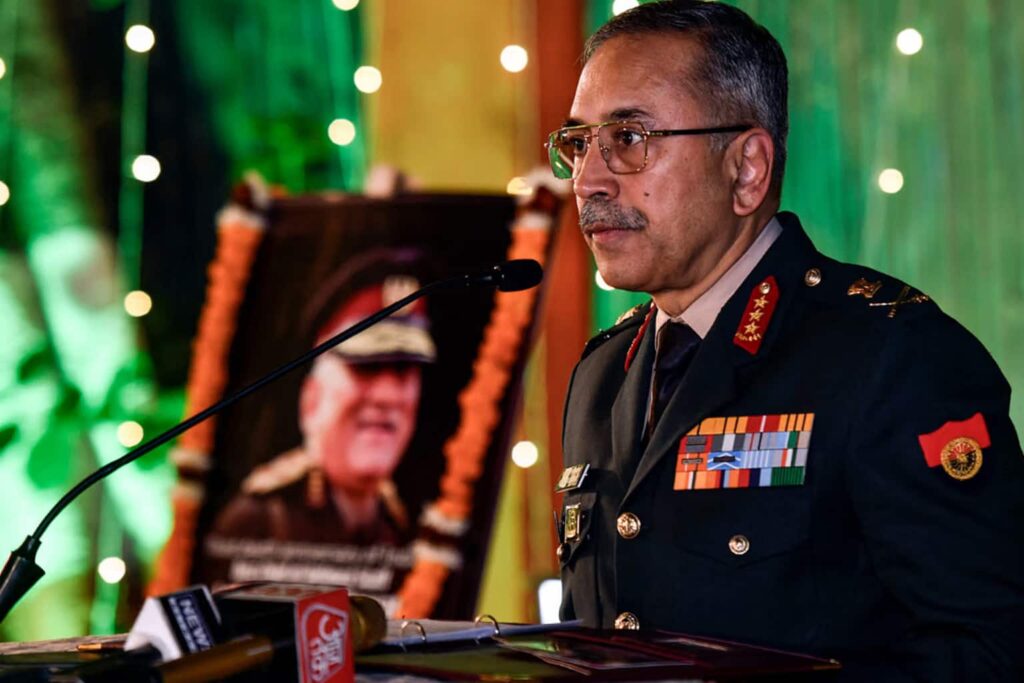
It is about the road ahead.
When General NS Raja Subramani assumed charge as Chief of Defence Staff and Secretary, Department of Military Affairs, the ceremony may have lasted only a short while. A wreath at the National War Memorial. A Guard of Honour at South Block. A formal assumption of responsibility. But behind that moment lies one of the most difficult questions before India’s defence system today.
How should India prepare its armed forces for the next kind of war?
That is where this appointment becomes important.
The Chief of Defence Staff is not the head of one service. He is expected to look at the Army, Navy and Air Force together. He has to think of land borders, air power, maritime security, cyber threats, drones, space support, intelligence, logistics and technology as parts of one national defence picture.
For a country like India, this is not an easy task.
India has long borders. It has a vast coastline. It has complex security challenges on the western and northern fronts. It has to protect island territories, sea lanes, airspace, cyber networks and strategic interests. No single service can handle this alone in the future.
That is why the CDS office matters.
General Subramani takes charge at a time when the Indian military is being asked to move faster on integration, joint planning and modernisation. These words may sound technical, but their meaning is very practical. The Army, Navy and Air Force must be able to plan together, train together, use resources wisely and respond quickly when a crisis comes.
In the old way of thinking, each service prepared mainly for its own battlefield. The Army focused on land. The Navy focused on sea. The Air Force focused on air. That separation was natural for many years. But modern conflict does not work in such clean compartments.
A border crisis may need air surveillance, ground troops, drones, cyber protection, satellite imagery and logistics support at the same time. A maritime threat may have air and land consequences. A cyber strike may begin before any visible military movement. A drone or missile attack may require immediate coordination across several systems.
This is why jointness is not a slogan. It is becoming a military necessity.
General Subramani’s first message after taking charge placed emphasis on jointness, integration and synergy. That matters because India’s defence reforms have reached a stage where the question is no longer whether the services should work together. The real question is how quickly and how effectively that can happen without weakening the strengths of each service.
This will be one of his biggest tests.
Theatre commands will remain a central part of that discussion. The basic idea is to bring assets of different services into integrated structures based on operational needs. In simple terms, instead of looking at war only from the point of view of one service, the system should be able to look at a region, a threat and a mission in a combined way.
But theatreisation is not a small file movement.
It touches command structures, service cultures, manpower, equipment, operational control, budgets and long-term planning. The Army, Navy and Air Force each have their own traditions and professional concerns. Building trust between them will be just as important as drawing new organisational charts.
A reform may look neat on paper. It works only when the people inside the system accept it, understand it and trust it.
This is where General Subramani’s long service background becomes relevant. He has served across difficult operational environments and held major command and staff appointments. His career includes service in the Garhwal Rifles, command experience, Central Command, the Vice Chief of Army Staff appointment and a role as Military Adviser at the National Security Council Secretariat.
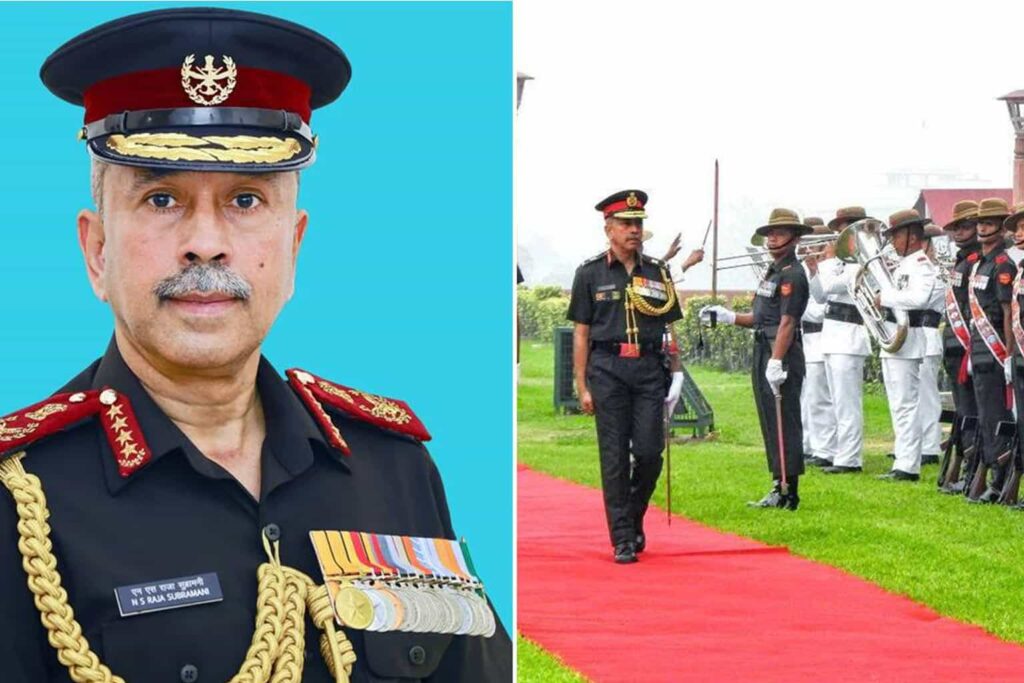
That combination is important.
A CDS must understand the soldier at the post and the national security file in Delhi. He must understand what happens at formation level and what happens at policy level. He must know the pressure of operations and the patience required for reform. That balance is not easy, but it is necessary.
The second big area before the new CDS is Atmanirbharta in defence.
India has been pushing indigenous weapons, defence manufacturing and self-reliance for several years. But the real challenge is not only to announce indigenous systems. The real challenge is to develop them, test them, induct them and make them useful for the armed forces in field conditions.
A weapon system is not successful only because it is made in India. It becomes successful when the soldier, sailor or air warrior can trust it in real operations.
This is why the CDS role becomes important in connecting the armed forces with industry, startups, academia and research organisations. The military must clearly explain what it needs. Industry must be able to deliver reliable systems. Scientists and engineers must understand the operational environment. Startups must be encouraged, but the final test must always be battlefield usefulness.
Innovation is another word that is often used casually. In defence, innovation is not about looking modern. It is about saving time, improving accuracy, protecting lives and gaining advantage over the adversary.
Drones, artificial intelligence, surveillance systems, communication networks, cyber tools, electronic warfare, precision weapons and unmanned platforms are changing the character of warfare. India cannot afford to treat these as optional areas. The future battlefield will punish slow thinking.
General Subramani’s focus on innovation is therefore important, but it will need practical execution. New ideas must reach training institutions, operational units and procurement systems. Otherwise innovation remains a conference word.
For soldiers on the ground, all these reforms must finally answer simple questions.
Will coordination improve during operations?
Will equipment reach faster?
Will training become more realistic?
Will surveillance and communication improve?
Will indigenous systems be reliable?
Will different services support each other more smoothly?
Will welfare remain part of the leadership conversation?
That last question matters deeply for the Sainik Welfare News audience.
The official message after the new CDS took charge also referred to training and welfare, including veterans and Veer Naris. This is significant because the armed forces are not only made of serving personnel. They include retired soldiers, families, dependents and those who carry the cost of service long after the uniform is put away.
Veterans are not just pensioners. They are people with experience, memory and a lifetime of service behind them. Veer Naris are not just beneficiaries of welfare schemes. They represent sacrifice that the nation must remember with dignity.
However, this update should be understood correctly. The appointment of a new CDS does not automatically mean a new pension order, OROP update, ECHS change or direct financial benefit. No such assumption should be made unless an official order is issued.
But when the CDS speaks about welfare, it reminds the system that military strength is not only about weapons. It is also about people.
A force that wants to modernise must not forget the soldier’s family. It must not forget the veteran who served in difficult areas. It must not forget the Veer Nari who lives with the cost of national service. It must not forget training, morale and human dignity.
For defence aspirants, this appointment is also worth studying. Many young candidates preparing for the armed forces focus only on entry, SSB, physical fitness and motivation. These are important. But future officers must also understand the larger direction of the military.
The officer of tomorrow will not serve in a simple battlefield. He or she will operate in a world of drones, satellites, cyber threats, joint commands, data-driven decisions and fast-moving technology. Leadership will require courage, but also adaptability. Discipline will remain essential, but so will learning.
The new CDS has taken charge at exactly such a turning point.
For the ordinary citizen, this story may appear distant. But defence leadership affects national security in a direct way. When the three services coordinate better, the country becomes more prepared. When indigenous systems improve, strategic dependence reduces. When training improves, operational confidence rises. When veterans and families remain part of the conversation, the moral strength of the force is protected.
That is why this appointment should be seen with seriousness, not noise.
There will be many expectations from General NS Raja Subramani. Some will expect quicker theatre commands. Some will expect faster defence modernisation. Some will expect stronger indigenous capability. Some will expect better coordination between the services. Some will expect welfare to remain visible.
The real challenge will be to move all these priorities together without losing focus.
A military institution cannot be changed overnight. Reforms need patience, trust and discipline. But they also need urgency because threats do not wait for internal comfort.
The new CDS now stands at the centre of that difficult balance.
The ceremony is over. The Guard of Honour has been given. The office has a new name.
Now begins the real test: turning jointness, Atmanirbharta and innovation into everyday military practice.
For India’s armed forces, this is not just a change in leadership.
It is a reminder that the next battlefield will demand a more integrated, more modern and more prepared force.
And that is why General NS Raja Subramani’s appointment as Chief of Defence Staff matters.
Sources:-
PIB, Ministry of Defence:
https://www.pib.gov.in/PressReleasePage.aspx?PRID=2259242&lang=1®=3
News On AIR / Akashvani:
https://newsonair.gov.in/general-n-s-raja-subramani-assumes-charge-as-the-countrys-new-cds/



Leave a Reply