

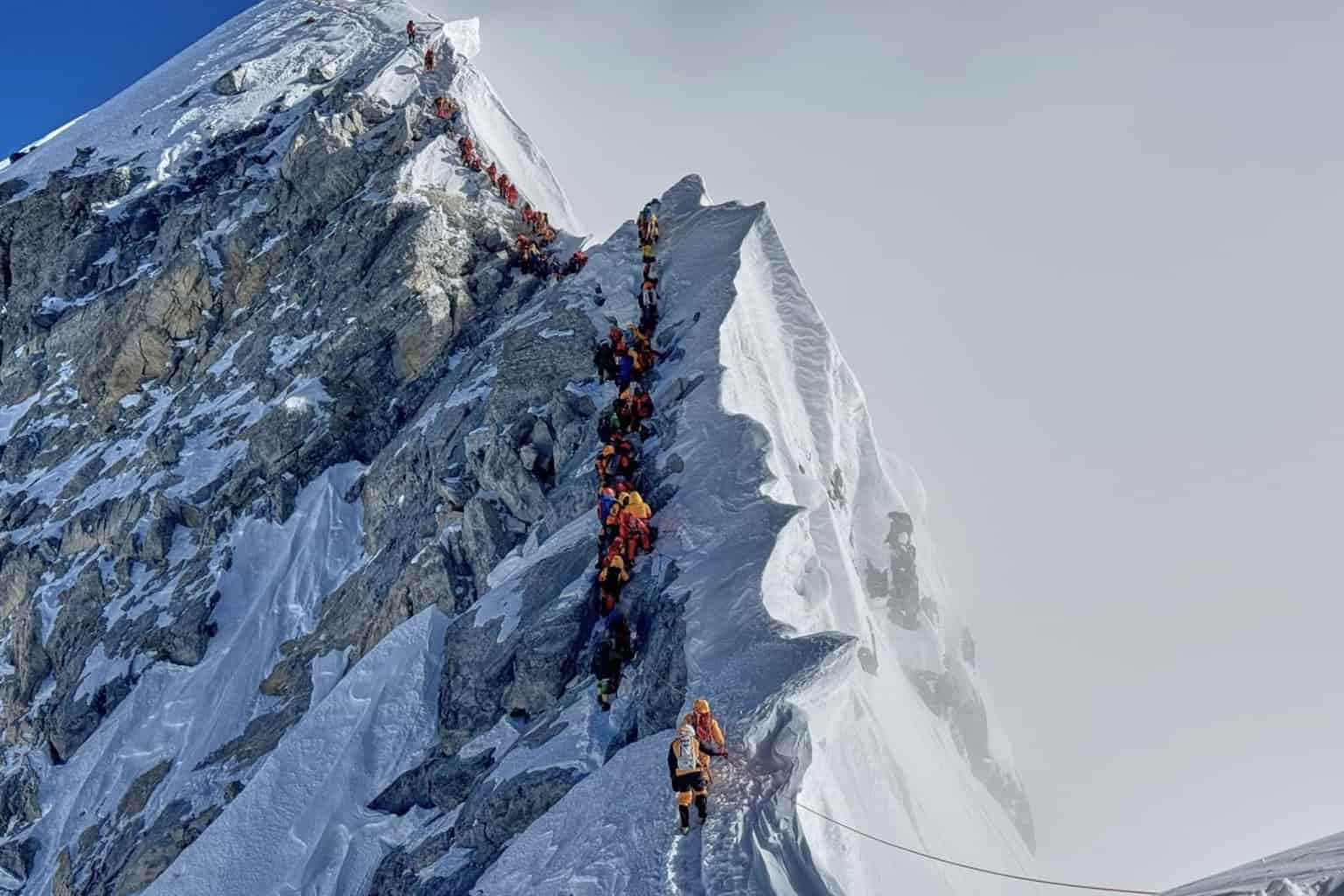
Mount Everest has many stories of triumph.
But some stories remain frozen on the mountain for decades.
One of them is the story of Green Boots — the climber whose body became one of Everest’s most recognised and painful landmarks on the north-side route.
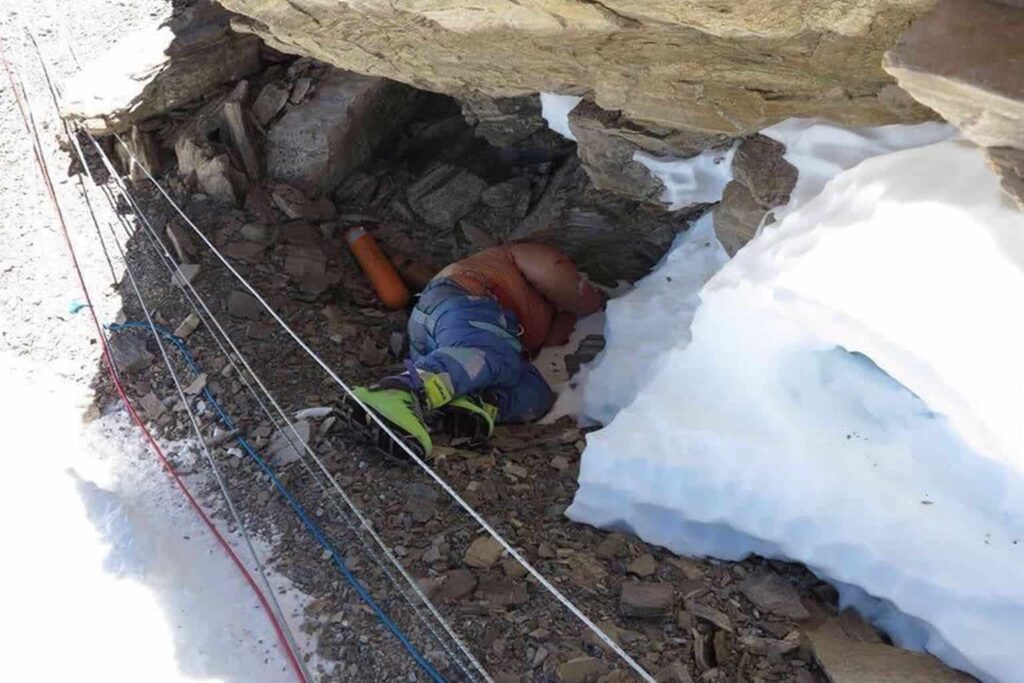
For years, climbers knew him by the colour of his boots. Expedition reports, documentaries and mountaineering conversations referred to him as a point on the route, a warning sign in the death zone and a grim reminder of Everest’s cost.
Now, India’s latest ITBP-linked recovery record gives this story a new direction.
A Government of India eProcurement tender identifies the recovery subject as Late Dorje Morup “Green Boot” and refers to a Phase-II retrieval operation from the Mount Everest Tibet side during the June–September 2026 window.
This is not a normal recovery operation.
It is a mission into one of the most dangerous zones on Earth.
The story should not begin with the body
The biggest mistake in writing about Green Boots is to begin with the shock value of a body on Everest.
That makes the story sensational.
The more responsible way is to begin with the man and the mission.
The climber linked to the latest official recovery document was part of the Indo-Tibetan Border Police background — a force deeply connected with high-altitude endurance, mountain training and Himalayan duty.
The 1996 Indian ITBP Everest expedition attempted the mountain from the North Ridge, the Tibet side. Three climbers from that expedition died after their summit attempt on 10 May 1996.
Everest turned that tragedy into a legend.
But for India, the story is not folklore. It is the unfinished journey of a soldier-mountaineer.
Why Green Boots became famous?
Green Boots became known not because of a formal memorial, but because of where the body lay.
On the north-east ridge route, near extreme altitude, the body became visible to climbers moving toward the summit. Over time, people began using it as a landmark.
That is the painful part.
A man with a service background, a climbing history and a family memory was reduced in public language to the colour of his boots.
For mountaineers, Green Boots became a marker.
For India, he should be remembered as a human being first.
The identity question
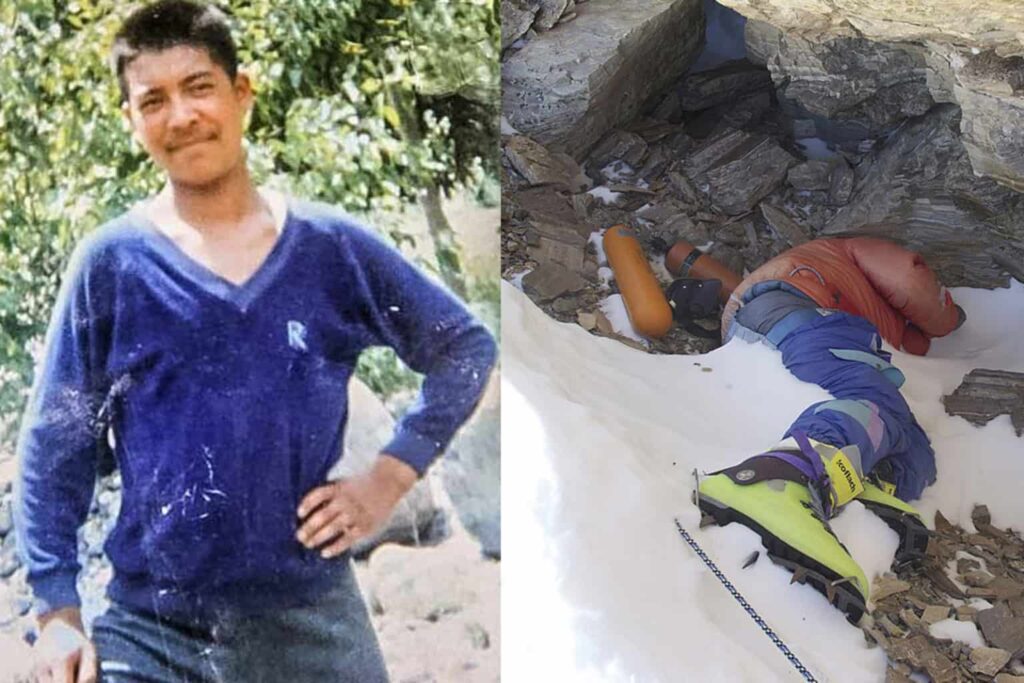
For decades, Green Boots was widely believed to be Tsewang Paljor, one of the Indian ITBP climbers who died during the 1996 Everest disaster.
However, the latest ITBP-linked tender identifies the recovery subject as Late Dorje Morup “Green Boot.”
This distinction must be handled carefully.
It is not responsible to write with casual certainty that the long-standing public belief was wrong unless more official verification material is available publicly.
The safest and most accurate wording is:
For years, Green Boots was widely believed to be Tsewang Paljor. The latest ITBP-linked government tender identifies the recovery subject as Late Dorje Morup “Green Boot.”
That line protects both accuracy and dignity.
Why recovery from Everest is so hard?
People often ask one simple question:
Why did it take nearly 30 years?
The answer lies in Everest’s death zone.
Above 8,000 metres, the human body is already fighting for survival. Oxygen is low, movement is slow, weather can change suddenly and decision-making becomes difficult. Even living climbers struggle to descend safely from that altitude.
Recovering a frozen body from such a height is far more dangerous.
The body may be heavy, frozen into the terrain and difficult to move. A recovery team must protect itself while also handling the remains respectfully. One mistake can risk more lives.
This is why many bodies remain on Everest.
The mountain is not only high. It is logistically cruel.
Why the Tibet-side location matters?
The recovery subject is linked with the Mount Everest Tibet side.
That adds another layer of complexity.
This is not only a climbing mission. It requires permissions, coordination, high-altitude expertise, route planning, preservation of remains, transport and repatriation formalities.
The recovery cannot be done casually.
It needs experienced personnel, specialist climbers and a plan that respects both safety and dignity.
That is why the official tender route matters. It shows that the recovery is being approached as a structured operation, not as an emotional one-time attempt.
Why this is more than an Everest story?
For the world, Green Boots may be part of Everest’s grim history.
For India, the story carries a different meaning.
It is about a soldier who never returned.
It is about a force that still remembers.
It is about the difficulty of recovering someone from a place where even survival is uncertain.
It is also about correcting the way people speak about the dead.
A human being should not become a route marker forever.
A name matters.
A dignified recovery matters.
A family’s closure matters.
The role of ITBP
The Indo-Tibetan Border Police has a long connection with mountains and high-altitude operations. Its personnel have trained and operated in difficult Himalayan conditions.
That background is important because the 1996 expedition was not a casual private climb. It was connected with a force whose identity includes mountain endurance and service in extreme terrain.
When ITBP is linked with the recovery of Green Boots, the story becomes institutional as well as emotional.
It reflects a force trying to bring back one of its own from a place where the world had almost stopped seeing him as a person.
The 1996 tragedy must be remembered carefully
The 1996 Everest season is remembered globally as one of the mountain’s most tragic chapters.
In the Indian ITBP expedition on the North Ridge, three climbers died after the 10 May summit attempt. Weather, timing, altitude and exhaustion turned the climb into disaster.
But the Indian story is often overshadowed in global Everest narratives.
Green Boots became famous, but the larger Indian expedition story did not receive the same public attention.
That is why the recovery discussion should also remind readers that Indian mountaineers and uniformed climbers were part of Everest’s difficult history.
What should not be sensationalised?
This story needs restraint.
Do not use graphic photos of the body for traffic.
Do not write it like a horror story.
Do not reduce it to “Everest’s dead body landmark.”
Do not claim DNA confirmation unless a clear official public document confirms it.
Do not say the recovery is guaranteed to succeed.
Do not write that the identity mystery is fully closed unless authorities release complete verification details.
The right tone is respectful, cautious and human.
What the recovery mission symbolises?
If the mission succeeds, it will not change what happened in 1996.
It will not erase three decades of silence on the mountain.
But it can do something important.
It can bring dignity back to a story that became too casual in public memory.
It can replace a nickname with a name.
It can remind people that every body on Everest was once a person with a life, family, duty and dream.
It can also show that a soldier is not forgotten simply because he was lost in the world’s highest death zone.
Why this matters for defence families?
Defence families understand something deeply: service does not end only in official records.
Memory matters.
Honour matters.
The way a nation speaks about its personnel matters.
A body lying on a mountain for decades is not only a mountaineering issue. It is also an emotional issue for the force, the family and the country.
Bringing someone home is not always possible.
But trying with dignity carries meaning.
What readers should understand?
There are four important points.
First, Green Boots was long believed to be Tsewang Paljor, but the latest ITBP-linked tender identifies the recovery subject as Late Dorje Morup “Green Boot.”
Second, the climber was connected to the 1996 Indian ITBP Everest expedition from the North Ridge.
Third, recovery from Everest’s death zone is extremely dangerous and requires specialist high-altitude capability.
Fourth, this story should be handled as a matter of dignity, not curiosity.
Final takeaway
Green Boots is not just an Everest landmark.
He represents a human story trapped under snow, altitude and public misunderstanding.
For almost 30 years, climbers remembered the boots. Now India’s official recovery effort may help bring the focus back to the man.
The mountain may have kept him for decades.
But a nation can still choose to remember him with his name, his service and his dignity.
That is the real meaning of the Green Boots recovery mission.
Sources:-
Government of India eProcurement / ITBP tender record:
https://eprocure.gov.in/eprocure/app?component=view&page=WebTenderStatusLists&service=direct&sp=S6iSog%2F%2FznG2Q7vMtJkzOfw%3D%3D
Himalayan Journal — The Indian Ascent of Qomolungma by the North Ridge:
https://www.himalayanclub.org/hj/53/7/the-indian-ascent-of-qomolungma-by-the-north-ridge/
Himalayan Journal — Climbs of Indo-Tibetan Border Police:
https://www.himalayanclub.org/hj/45/21/climbs-of-indo-tibet-border-police/
The Guardian — Mount Everest, Green Boots and the mission to solve a 30-year mystery:
https://www.theguardian.com/world/2026/jun/22/mt-everest-green-boots-man-cave-climber-identity
NDTV — ITBP launches mission to retrieve body of Green Boots climber after 30 years:
https://www.ndtv.com/india-news/itbp-launches-mission-to-retrieve-body-of-green-boots-climber-after-30-years-on-everest-11642026
The Times — Mission to bring home Green Boots, Everest’s grisliest landmark:
https://www.thetimes.com/world/asia/article/mission-to-bring-home-green-boots-everests-grisliest-landmark-z9997jrg2




Leave a Reply