

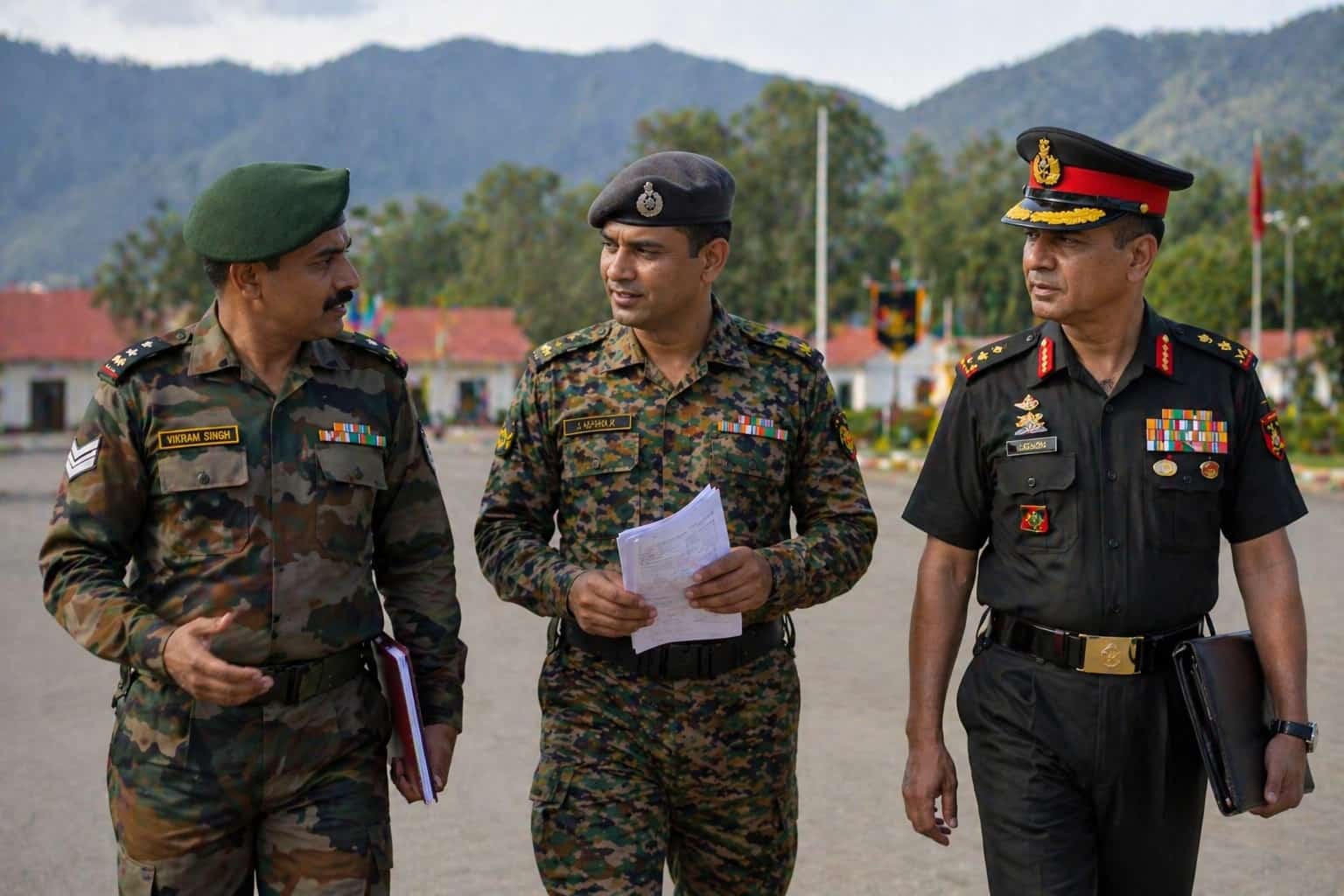
The 8th Pay Commission is often discussed in terms of salary revision, fitment factor, and allowances. But for the defence community, the real conversation runs deeper. It is not just about how much pay will increase. It is about whether the structure itself reflects the reality of military service.
For soldiers, Junior Commissioned Officers (JCOs), and officers, the current phase of the 8th Pay Commission is being closely watched for one reason: will the next pay matrix correct long-standing structural concerns in defence pay levels?
This question is not theoretical. It directly affects serving personnel, veterans, and their families.
Why Defence Pay structure cannot be treated like a normal salary system?
Military service operates under conditions that are fundamentally different from civilian roles. Frequent transfers, operational duties, high-risk deployments, extreme weather postings, and separation from families are part of daily life.
At the same time, career timelines in defence are compressed. Many personnel retire earlier than their civilian counterparts, which increases the importance of fair pay progression and pension calculation during active service.
Because of this, defence pay cannot be approached as a simple numerical adjustment. It must reflect responsibility, hardship, rank progression, and long-term financial security.
That is where the debate around pay levels becomes important.
Why Pay Levels matter more than headline salary numbers?
When people hear about a pay commission, the focus usually goes to the expected increase. But in reality, the structure behind the numbers is what defines long-term impact.
Pay levels determine:
- Basic pay progression
- Promotion-linked financial growth
- Allowance calculation
- Pension benefits after retirement
For defence personnel, each level is directly linked to rank and responsibility. If the structure is not aligned properly, even a higher salary increase may not fully address underlying concerns.
This is why discussions around NCOs, JCOs, and officers are gaining importance.
The growing concern around NCO and JCO progression
For Non-Commissioned Officers (NCOs), the issue often revolves around progression and recognition of experience.
Many soldiers join at a young age, spend years in demanding field conditions, and gradually take on leadership roles. Their movement across pay levels should reflect not just time served, but also responsibility gained.
If the structure does not support meaningful progression, it creates a sense of stagnation.
For JCOs, the situation becomes even more critical.
JCOs act as the backbone of unit-level leadership. They bridge the gap between officers and jawans, manage discipline, oversee training, and ensure execution on the ground. Their role carries authority, experience, and operational importance.
If their pay levels do not match their responsibilities, it affects not just financial satisfaction but also morale within the system.
How officer-level structure brings its own challenges?
For officers, the issue is slightly different but equally important.
The officer cadre operates within a highly competitive promotion structure. Not everyone can move to the highest ranks due to limited vacancies, even if they have served with distinction.
This creates a situation where capable officers may retire without reaching senior ranks, which directly impacts their pay progression and pension.

The pay matrix needs to account for this structural reality.
If the system only rewards those who reach the top, it may not fully recognise the contribution of those who serve effectively but exit earlier due to pyramid limitations.
Why past corrections highlight the need for careful review?
The evolution of defence pay structure in previous pay commissions shows that adjustments are often required even after implementation.
Changes in pay matrix stages, rationalisation factors, and structural corrections were made after the 7th Pay Commission. This indicates that designing a fair system is complex and requires continuous refinement.
This history is important because it shows that the 8th Pay Commission must approach defence pay levels with deeper analysis rather than a one-time formula.
Why the current phase is crucial for Defence Personnel?
At present, the 8th Pay Commission is in a stage where inputs and representations play a key role.
This is the time when defence personnel, veterans, and associations can present their concerns in a structured manner.
Once the commission moves into final drafting, the scope for introducing new issues becomes limited.
This makes the current phase highly important.
It is not just about waiting for recommendations. It is about contributing to them.
What kind of representation can make an impact?
A strong representation does not simply ask for higher pay. It explains the issue in a clear and logical way.
For defence pay levels, this could include:
- Current level and rank affected
- Nature of responsibility and duty conditions
- Gap between responsibility and compensation
- Impact on morale and retention
- Effect on pension and long-term financial security
When these points are presented clearly, they provide the commission with a realistic understanding of the issue.
Why this discussion goes beyond money?
At its core, the debate around defence pay levels is not just about financial gain.
It is about recognition.
It is about ensuring that the system reflects the value of service, the weight of responsibility, and the challenges faced by those in uniform.
For veterans, it is also about dignity after retirement. Pension is not just a financial tool. It is a continuation of respect for service rendered.
Conclusion
The 8th Pay Commission presents an important opportunity to revisit defence pay structure with clarity and fairness.
For NCOs, JCOs, and officers, the focus is not only on how much pay increases, but on whether the system truly reflects their role, responsibility, and career realities.
The outcome will depend not just on internal calculations, but also on how effectively these concerns are presented during the current phase.
Because in the end, a fair pay structure is not just about numbers.
It is about ensuring that those who serve the nation are valued in a way that matches the responsibility they carry.




Leave a Reply