

Some people retire from office.
Some retire from designation.
But a few never retire from public duty.
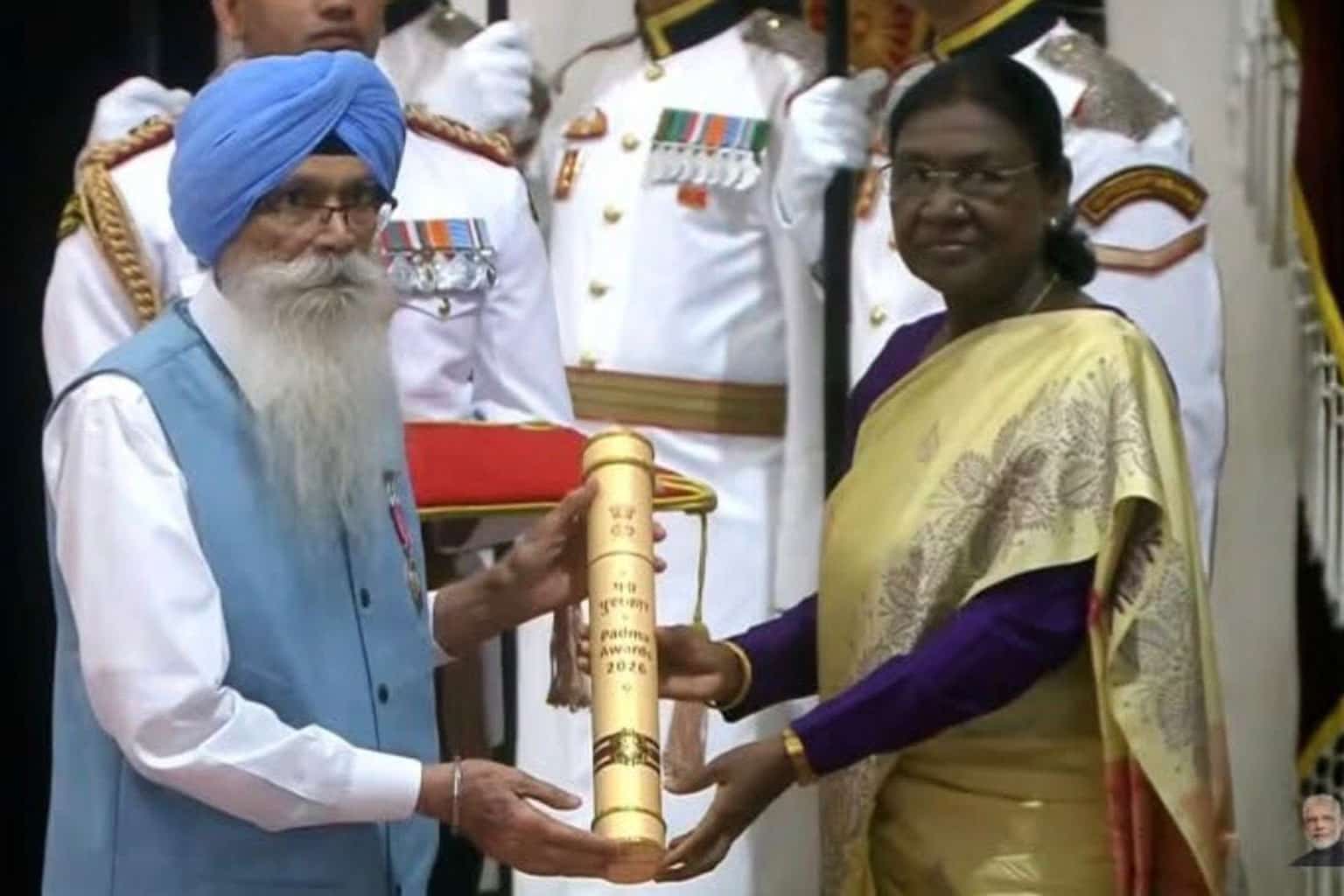
Inderjit Singh Sidhu, the retired Punjab Police officer who received the Padma Shri 2026 in the field of Social Work, belongs to that rare category.
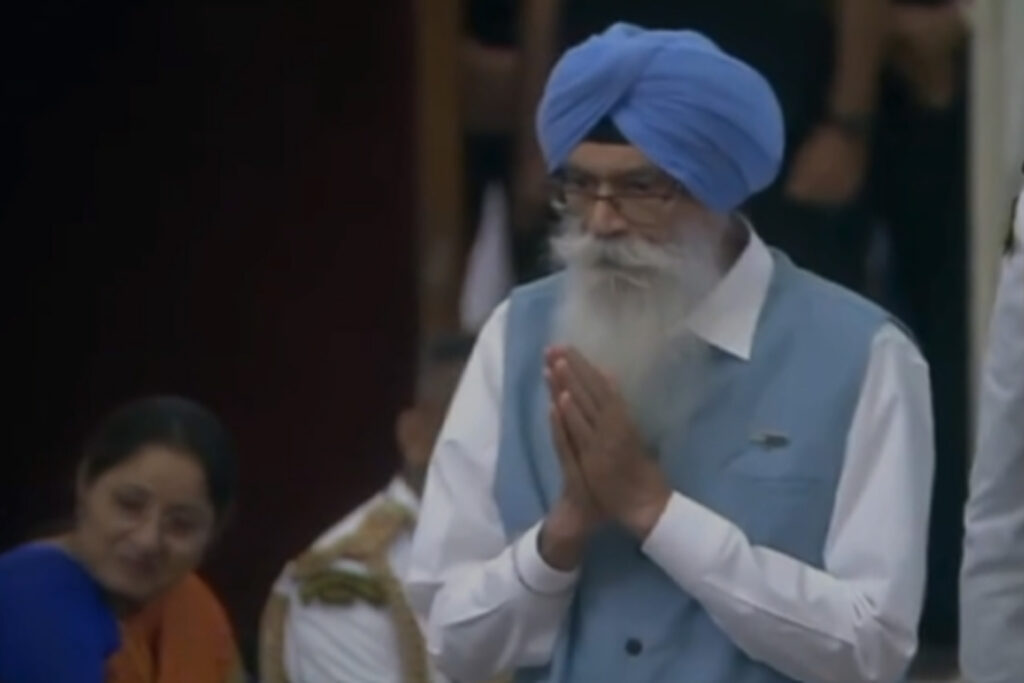
The official Padma Awards list confirms his name among the Padma Shri awardees from Chandigarh. But the real story is not only that he received one of India’s highest civilian honours.
The real story is what he did after rank, authority and uniform were behind him.
He picked up a broom.
And he turned public cleanliness into a daily act of service.
Who is Inderjit Singh Sidhu?
Inderjit Singh Sidhu is a retired Punjab cadre IPS officer and former Deputy Inspector General of Police.
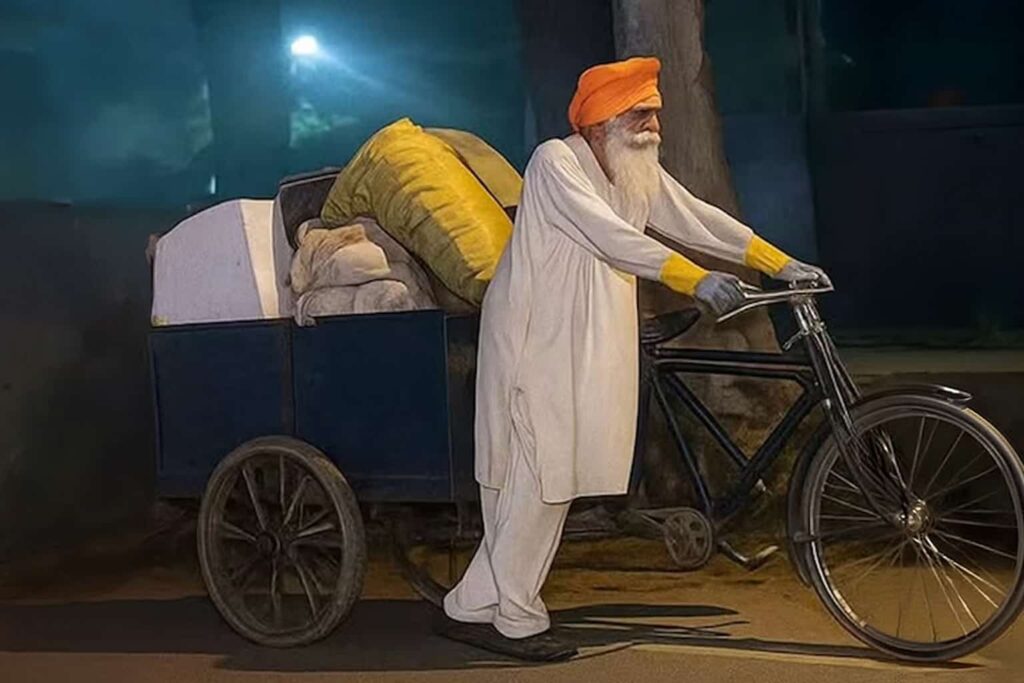
He has been widely reported as Chandigarh’s “broom warrior” because of his long personal commitment to cleaning public spaces.
After retirement, many senior officers choose a quiet life, advisory work, public platforms or institutional roles. Sidhu chose a different path.
He stepped into streets, parks and neighbourhood spaces with a broom.
Not for a photo.
Not for an event.
Not for one cleanliness drive.
He made it a routine.
That is why his Padma Shri should be seen not just as an award, but as recognition of a life that continued serving society after formal service ended.
What the official Padma sources confirm?
The Ministry of Home Affairs Padma Awards 2026 list names Shri Inderjit Singh Sidhu under the Padma Shri category.
The field mentioned is Social Work.
The state or Union Territory mentioned is Chandigarh.
The PIB Padma Awards release also lists him in the same category. The ceremony notification later refers to him as Sardar Inderjit Singh Sidhu, Social Work, Chandigarh.
This is important because the award was not given for police service.
It was given for social work.
That distinction must be kept clear while writing about him.
His police career is part of his background, but the Padma Shri recognition is for what he did as a citizen after retirement.
The meaning of the “broom warrior” story
The phrase “broom warrior” may sound simple, but it carries a deeper message.
A broom in his hand challenged the way society looks at cleanliness.
Many people complain about dirty public spaces.
Few bend down to clean them.
Many people speak about civic sense.
Few turn it into daily discipline.
Sidhu’s work became powerful because it removed distance between status and service.
A retired DIG cleaning public spaces sends a very strong message: no work that protects public dignity is small.
Why his story stands out?
India has many awardees with grand achievements.
Some build institutions.
Some create art.
Some lead movements.
Some serve science, education, medicine or public life.
Inderjit Singh Sidhu’s story is different because it is built on repetition.
Day after day.
Morning after morning.
Public space after public space.
His work was not dramatic. It was consistent.
That consistency is what made it meaningful.
A city does not become cleaner only by slogans. It becomes cleaner when people treat public space as shared responsibility.
Public service after retirement
Retirement often marks the end of official responsibility.
But Sidhu’s example shows that public duty can continue without office, staff, vehicle or designation.
In government service, authority can make people listen.
After retirement, only personal example remains.
That is why his story has moral strength.
When a retired senior police officer cleans public spaces himself, he is not giving an order. He is setting an example.
That example can be more powerful than instruction.
Why the Padma Shri matters here?
The Padma Shri is not only a personal honour in this case.
It is also a public message.
It tells citizens that social work does not always need a big organisation.
It does not always need a stage.
It does not always need a campaign banner.
Sometimes it begins with one person refusing to ignore litter.
Sometimes it begins with one citizen deciding that public cleanliness is not only the job of sanitation workers.
Sidhu’s recognition shows that sustained civic action can also become national service.
The retired DIG who chose humility
There is something striking about the contrast in this story.
A senior police officer is normally associated with command, authority, uniform and protocol.
A broom is associated with ground-level physical work.
Sidhu brought these two worlds together.
He showed that dignity does not reduce when a person does manual civic work. In fact, dignity increases when a person uses his standing to support a larger social message.
This is why his story is powerful for young officers, retired officials and ordinary citizens alike.
It asks a simple question: after rank and position, what remains of service?
In his case, the answer was action.
Why this story matters for Chandigarh?
Chandigarh is known for planning, order and urban design.
But even a planned city needs responsible citizens.
Public cleanliness cannot depend only on municipal systems. Citizens also decide whether a city remains clean or becomes careless.
Sidhu’s work turned this idea into a visible habit.
He did not wait for a special drive.
He did not limit himself to speeches.
He used his own hands to make a point.
That is why his story belongs not only to an individual but also to the civic conscience of Chandigarh.
What citizens can learn from him?
The biggest lesson is simple.
Do not outsource every civic responsibility.
A citizen may not be able to clean an entire city. But he can avoid littering. He can stop someone politely. He can support local cleanliness efforts. He can respect sanitation workers. He can teach children that public spaces deserve care.
Sidhu’s life after retirement shows that civic duty begins when complaint turns into action.
A clean city is not built by government alone.
It is built by habits.
What young officers and veterans can learn?
For officers and veterans, this story has another meaning.
Service does not have to end with retirement.
A person who has lived a disciplined life can continue to influence society without holding office.
The uniform may be removed, but the habit of responsibility can remain.
Sidhu’s post-retirement mission shows that discipline, humility and public spirit can create impact even in old age.
This makes his Padma Shri more than a personal honour.
It becomes a lesson in life after service.
What should not be wrongly reported?
This story should be written carefully.
Do not write that he received Padma Shri for police service.
The official category is Social Work.
Do not write that he was an Army officer.
He was a retired Punjab Police officer.
Do not write that he single-handedly cleaned Chandigarh.
That would be an exaggeration.
Do not turn the story into a political cleanliness campaign unless a source specifically supports that angle.
The safest and strongest description is:
Inderjit Singh Sidhu, a retired Punjab Police DIG and Chandigarh’s widely reported “broom warrior,” was honoured with Padma Shri 2026 in the Social Work category for his long civic cleanliness work.
Why this is an inspiring national story?
Many people wait for recognition before doing something.
Sidhu’s story works in the opposite direction.
He did the work quietly for years.
Recognition came much later.
That is why people connect with this story.
It does not look manufactured.
It does not look like a one-day campaign.
It looks like a habit that became a mission.
In a time when public life often becomes loud, his work speaks softly but strongly.
Comment
Inderjit Singh Sidhu’s Padma Shri is a reminder that service has many forms.
Sometimes service wears uniform.
Sometimes it works from an office.
Sometimes it stands at a public function.
And sometimes, it walks into a street with a broom.
What makes his story special is not only that he cleaned public spaces. It is that he continued doing it after reaching a rank where society would have excused him from such work.
He did not treat cleanliness as someone else’s duty.
That is the real lesson.
Final takeaway
Inderjit Singh Sidhu’s Padma Shri 2026 is not just an award announcement.
It is a story of public duty after retirement.
A retired Punjab Police DIG, known as Chandigarh’s “broom warrior,” has shown that civic service does not need a title, office or microphone.
It needs consistency.
It needs humility.
It needs the courage to do what others only discuss.
His recognition in the Social Work category proves that ordinary-looking work can carry extraordinary value when done with sincerity for decades.
The message from his life is clear:
Public service does not end with retirement.
Sometimes it begins again, quietly, with a broom in hand.
Sources:-
MHA Padma Awards 2026 official PDF:
https://www.mha.gov.in/sites/default/files/Padma_Awards2026W_25012026.pdf
Padma Awards 2026 Gazette / Ceremony notification:
https://www.mha.gov.in/sites/default/files/2026-06/PadmaCeremony_23062026_2230.pdf
PIB Padma Awards 2026 release:
https://www.pib.gov.in/PressReleasePage.aspx?PRID=2218547&lang=1®=3
Padma Awards official website:
https://padmaawards.gov.in/?Year=2026-2026
The Tribune report:
https://www.tribuneindia.com/news/chandigarh/chandigarhs-88-year-old-broom-warrior-receives-padma-shri-from-president-murmu/
Times of India report:
https://timesofindia.indiatimes.com/city/chandigarh/padma-shri-call-doesnt-change-ex-digs-day-broom-in-hand-he-goes-out/articleshow/127498334.cms


Leave a Reply