

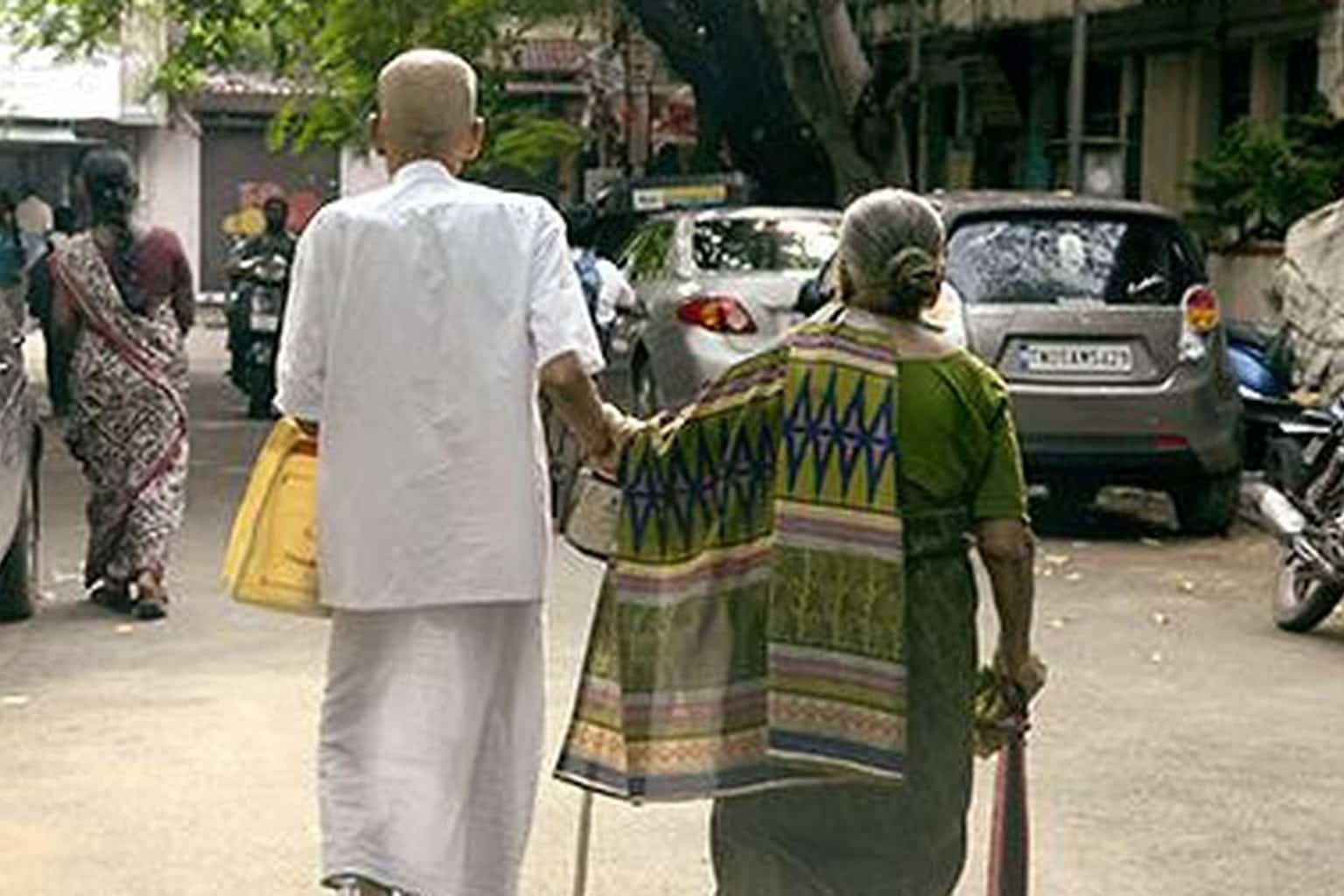
India is ageing faster than many people realise. The country is still seen as a young nation, but the number of senior citizens is steadily rising. This means old age income security is no longer a small welfare topic. It is becoming a national social security challenge.
For many elderly citizens, retirement does not come with a pension slip, savings account, provident fund or family pension. A large number of Indians spend their working life in the informal sector as daily wage workers, agricultural labourers, domestic workers, street vendors, small shop workers, drivers, helpers, gig workers and self-employed low-income earners. When such workers grow old, many of them do not have a regular monthly income.
This is where India’s old age pension system becomes important. But the real question is uncomfortable:
Can ₹200 per month as central old age pension assistance protect the dignity of a poor senior citizen in today’s India?
What is the Indira Gandhi National Old Age Pension Scheme?
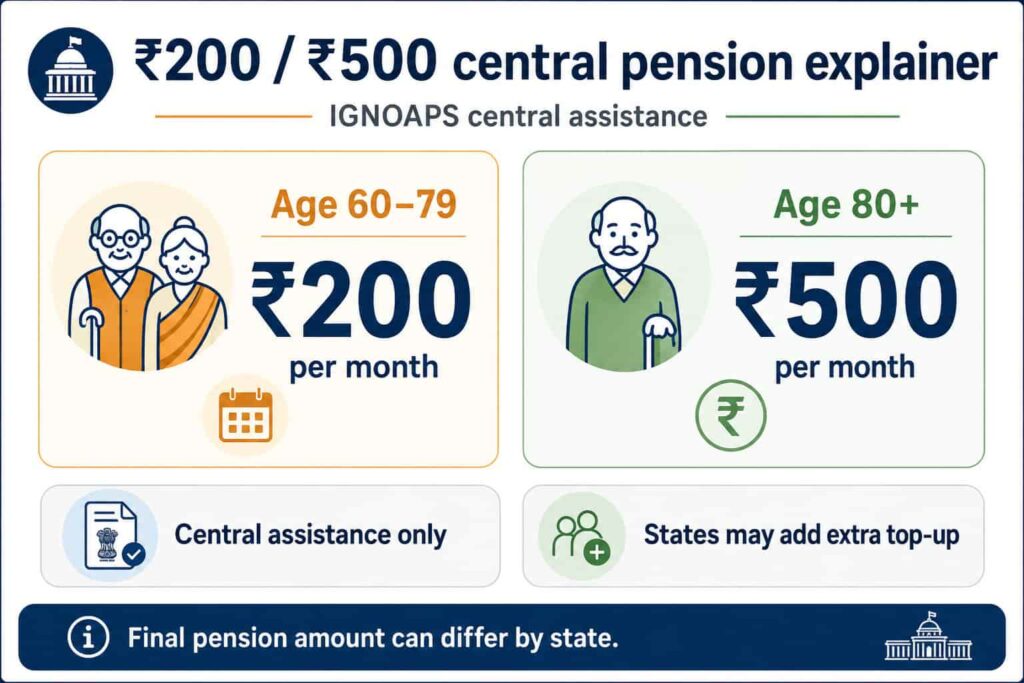
The Indira Gandhi National Old Age Pension Scheme, also known as IGNOAPS, is a pension assistance scheme under the National Social Assistance Programme. It is meant for senior citizens who belong to Below Poverty Line households and are aged 60 years or above.
Under the scheme, eligible senior citizens aged 60 to 79 years receive ₹200 per month as central assistance. For senior citizens aged 80 years and above, the central assistance is ₹500 per month. The NSAP official portal also mentions this structure, and the myScheme government portal lists the same eligibility and pension amount details.
This means the Centre provides a base pension amount, but the final amount received by a beneficiary can differ from state to state because states and Union Territories may add their own top-up support.
The ₹200 question: Support or symbolism?
The biggest problem is not that the scheme does not exist. The problem is whether the amount is strong enough for the cost of living today.
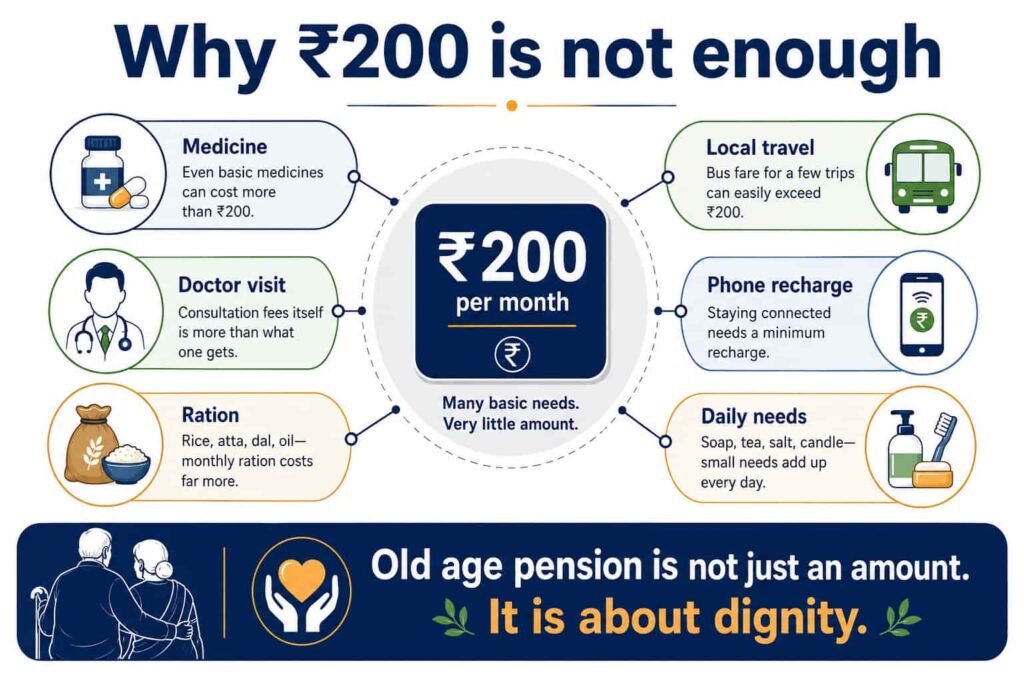
A senior citizen may need money for medicines, doctor visits, ration, local travel, phone recharge, small household expenses and basic personal needs. In that reality, ₹200 per month is not a meaningful income support. It may still matter emotionally to a poor elderly person, but financially it is extremely limited.
That is why the old age pension debate should not be seen only as a government payment issue. It is a question of elderly dignity, dependency and survival support.
India is ageing, but retirement security is weak
The old age pension issue will become more serious in the coming decades. UNFPA’s India Ageing Report has projected that elderly citizens may form more than 20% of India’s population by 2050. The same ageing discussion also highlights the vulnerability of very old women, especially widowed and dependent elderly women.
This means India’s pension challenge is not only about today’s poor elderly. It is also about tomorrow’s ageing population.
As life expectancy rises and families become smaller, traditional family-based care may not be enough. Migration, urbanisation, nuclear families and rising healthcare costs are already changing the way elderly citizens live. Many senior citizens may not have children living with them. Many may not have enough savings. Many may not be covered by formal pension systems.
This creates a serious policy question:
Is India preparing early enough for old age income security?
Why state-wise pension disparity matters?
Old age pension in India depends on both the Centre and the states. The Centre gives the base amount under NSAP, while states can add their own pension amount depending on their budget and welfare priorities.
This creates a major difference. A senior citizen in one state may receive more pension because the state adds a higher top-up. Another senior citizen in a different state may receive much less, even if both are poor and elderly.
So, the pension amount often depends not only on the need of the senior citizen, but also on the state in which the person lives.
This is where the system becomes uneven. Old age poverty is a national problem, but old age pension support is not uniform across India.
The informal worker problem
India’s biggest old age pension challenge is connected to the informal workforce.
Millions of Indians work for decades without formal employment benefits. They may not have provident fund, employer pension, gratuity, health insurance or retirement savings. Their income may be irregular throughout life, and in old age, their earning capacity reduces sharply.
Today’s informal worker can become tomorrow’s pension-less senior citizen.
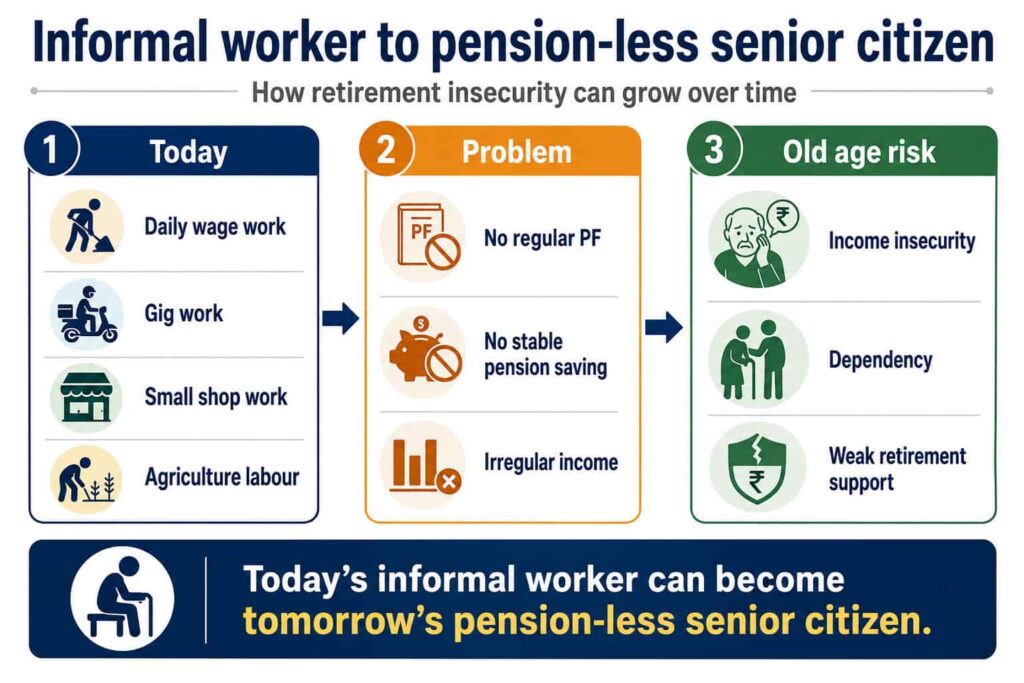
This is the real human angle of the old age pension debate. The issue is not only about increasing one scheme’s amount. It is about building a stronger social security system for workers who were never protected by formal employment benefits.
A domestic worker who cleaned homes for 30 years, a farmer who never had fixed income, a rickshaw driver who worked daily for survival, or a small vendor who earned only enough for household expenses may enter old age with no regular financial support.
For such citizens, old age pension is not a bonus. It can be the only predictable cash support.
Old age pension is not charity
Old age pension should not be treated as charity. It is a form of social protection for people who have already contributed to society through work, family care, labour and community life.
A small pension can help an elderly person maintain some personal independence. It can reduce complete dependence on children or relatives. It can help with medicines, basic food, travel to health centres or small daily expenses.
But if the amount is too low and does not keep pace with inflation, the real value of the pension keeps falling every year.
That is why the ₹200 central pension figure raises a serious question: should old age pension be periodically revised according to inflation and cost of living?
Why elderly women need special attention?
Old age poverty often affects women more deeply. Many elderly women have spent their lives in unpaid domestic work, agricultural support work or informal labour. They may not have property in their name. They may not have savings. Many widowed elderly women depend on children, relatives or welfare schemes.
UNFPA’s ageing discussion has also pointed towards the increasing number of very old, widowed and dependent elderly women in India’s ageing population.
This makes old age pension reform especially important for single, widowed, abandoned or financially dependent elderly women.
A stronger pension system is not only an economic policy. It is also a dignity and gender-security issue.
What families should check for elderly members?
If there is a senior citizen in your family, village or neighbourhood who has no regular pension or monthly income, the family should check whether the person is eligible for old age pension or other social assistance schemes.
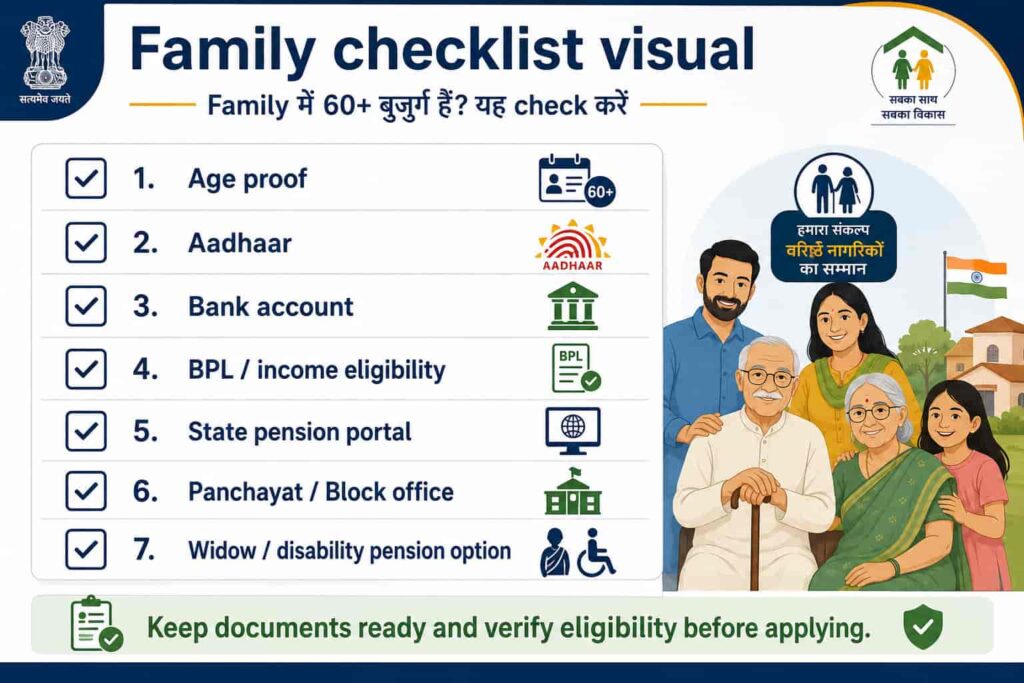
Important documents and checks may include:
| Requirement | Why it matters |
|---|---|
| Age proof | To confirm 60+ eligibility |
| Aadhaar | For identity verification |
| Bank account | For DBT payment |
| BPL or income eligibility | To check scheme qualification |
| State pension portal | To verify local pension rules |
| Panchayat or block office | For application and verification |
| Widow or disability status | To check if another pension scheme applies |
Families should also understand that old age pension, widow pension, disability pension, service pension and family pension are different frameworks. A person may be eligible for one scheme and not another.
What reform should focus on?
India does not need only a discussion on pension amount. It needs a serious review of old age income security.
High-value pension reform should focus on:
- Periodic revision of old age pension amount
- Inflation-linked review mechanism
- Wider identification of vulnerable elderly citizens
- Updated beneficiary database
- Timely DBT payments
- Better Centre-State coordination
- Stronger grievance redressal system
- Special focus on elderly women
- Better awareness at panchayat, block and urban local body level
- Retirement support planning for informal workers
The 2025 PIB reply on increase in old age pension also confirmed that the central pension under NSAP old age pension was ₹200 per month per beneficiary, showing that the low central base amount remains a live policy issue.
Why this issue cannot be ignored?
India’s old age pension debate is not only about one scheme. It is about the future of ageing in India.
If millions of workers remain outside formal pension systems, and if family support becomes weaker due to migration and nuclear households, then the pressure on welfare schemes will increase. Healthcare costs will rise. Elderly dependency will increase. Families will face higher caregiving pressure.
A country cannot prepare for an ageing society only after the crisis becomes visible. Pension planning, elderly care, healthcare support and social security must be discussed early.
Final view
The Indira Gandhi National Old Age Pension Scheme is an important welfare support for poor senior citizens, but the current central assistance of ₹200 for the 60–79 age group and ₹500 for the 80+ age group is far below the real cost of ageing in today’s India.
The bigger issue is not just the pension amount. The bigger issue is India’s silent pension gap.
A large part of India’s workforce does not have formal retirement protection. Today’s informal worker may become tomorrow’s pension-less senior citizen. As India’s elderly population rises, old age pension will become a bigger social security challenge.
The question is no longer whether India has an old age pension scheme.
The real question is:
Is the pension support strong enough to protect elderly dignity in modern India?
FAQs:-
What is the Indira Gandhi National Old Age Pension Scheme?
The Indira Gandhi National Old Age Pension Scheme is a social assistance scheme under NSAP for eligible Below Poverty Line senior citizens aged 60 years or above.
How much central pension is given under IGNOAPS?
Eligible senior citizens aged 60 to 79 years receive ₹200 per month as central assistance. Those aged 80 years and above receive ₹500 per month.
Do states add extra pension?
Yes. States and Union Territories can add their own top-up amount. That is why the final pension received by beneficiaries may differ from state to state.
Is old age pension the same as service pension?
No. Old age pension under IGNOAPS is a civil welfare assistance scheme for poor senior citizens. Service pension, defence pension, family pension and government pension are different frameworks.
Why is ₹200 pension being questioned?
Because the cost of medicines, food, travel and daily needs has increased. ₹200 per month is too low to provide meaningful income support to a poor elderly citizen.
Why is India’s ageing population important for pension reform?
India’s elderly population is expected to rise sharply in the coming decades. This will increase pressure on pension support, healthcare systems and family caregiving.
Why are informal workers important in this debate?
Many informal workers do not have PF, employer pension, gratuity or retirement savings. When they grow old, they may depend heavily on welfare schemes like old age pension.
Sources:-
- myScheme — Indira Gandhi National Old Age Pension Scheme
https://www.myscheme.gov.in/schemes/nsap-ignoaps - NSAP official portal — National Social Assistance Programme
https://nsap.dord.gov.in/ - PIB — Social security for senior citizens / IGNOAPS ₹200 and ₹500 assistance
https://www.pib.gov.in/PressReleasePage.aspx?PRID=2247767&lang=1®=1 - UNFPA — India ageing, elderly to make up 20% of population by 2050
https://india.unfpa.org/en/news/india-ageing-elderly-make-20-population-2050-unfpa-report - UNFPA India Ageing Report 2023 PDF
https://india.unfpa.org/sites/default/files/pub-pdf/20230926_india_ageing_report_2023_web_version_.pdf - UMANG — NSAP / IGNOAPS details
https://web.umang.gov.in/landing/scheme/detail/nsap-indira-gandhi-national-old-age-pension-scheme_nsap-ignoaps.html - PIB — National Social Assistance Programme overview
https://www.pib.gov.in/PressReleasePage.aspx?PRID=2187327 - PIB — NSAP beneficiary and scheme details
https://www.pib.gov.in/PressNoteDetails.aspx?ModuleId=3&NoteId=155928&lang=1®=3

Leave a Reply