

In counter-terror operations, danger is not limited to bullets.
Sometimes it is hidden in the ground under a soldier’s boot.
It may be a dark slope, a loose rock, a gorge, a forested ridge or one difficult step taken during a search in hostile terrain.
Operation Sheruwali in Jammu & Kashmir’s Rajouri district has again reminded the country that soldiers face many kinds of risk while carrying out operational duties.
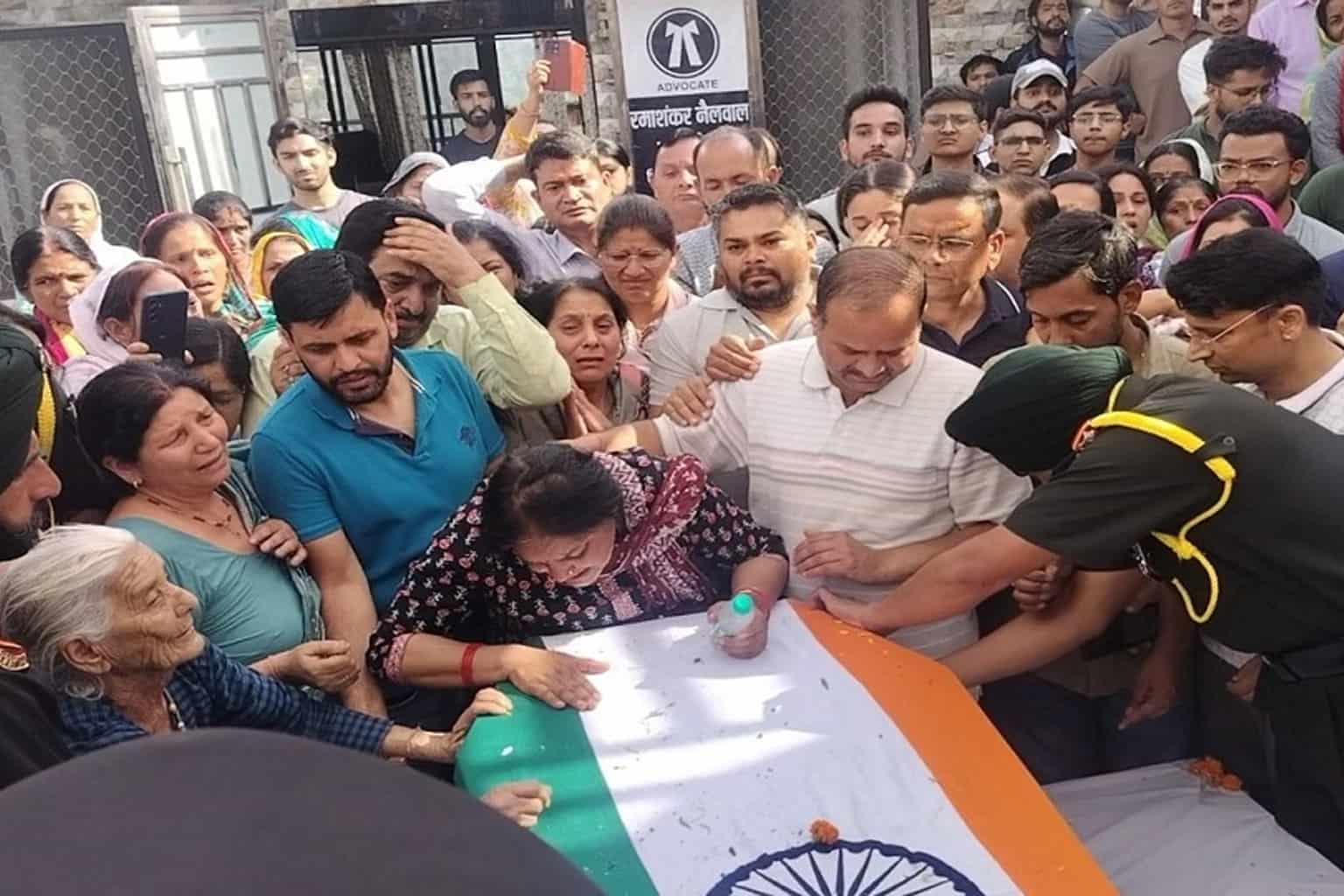
Lieutenant Beereshwar Goswami lost his life during the operation after reportedly slipping into a deep gorge in the Dorimaal area of the Gambhir Mughlan belt. His sacrifice was honoured with a wreath-laying ceremony at Air Force Station, Jammu, where Jammu and Kashmir Lieutenant Governor Manoj Sinha, along with senior military, police and civil officials, paid tribute.
This story is not only about one operation.
It is about the unseen dangers of counter-terror duty.
What is Operation Sheruwali?
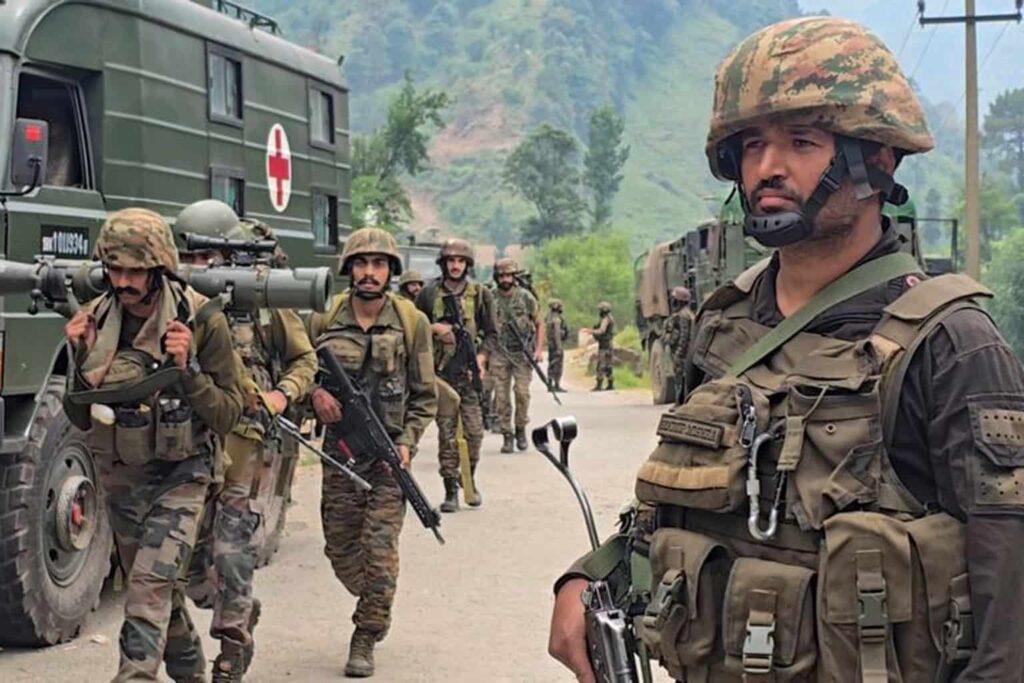
Operation Sheruwali was launched in Rajouri district after security forces established contact with a suspected group of terrorists in the area.
Media reports say the operation began on 23 May 2026 and involved joint efforts by the Army, paramilitary forces and Jammu & Kashmir Police.
The search focused on forested and rugged areas of Rajouri, including the Gambhir Mughlan belt.
Economic Times reported that the operation was launched after forces established contact with a group of two to three foreign infiltrators, and that helicopters, drones and sniffer dogs were used as the hunt continued.
Such details show that this was not a short routine cordon.
It was a sustained search operation in difficult terrain.
Why the terrain matters?
Rajouri is not an easy area for search operations.
The ground can be uneven.
The slopes can be steep.
The vegetation can hide movement.
Gorges, ridges and forested patches can make every step dangerous.
In such terrain, a soldier has to watch many things at the same time. He has to remain alert for the enemy. He has to maintain contact with his team. He has to read the ground. He has to move without creating unnecessary exposure.
This is why counter-terror operations in hilly and forested belts are physically and mentally demanding.
The enemy is not the only challenge.
The terrain itself becomes part of the operation.
Lt Beereshwar Goswami: Remembered with military honours
News On AIR reported that Lt Beereshwar Goswami lost his life while carrying out operational duties in Rajouri district.
A wreath-laying ceremony with full military honours was held at Air Force Station, Jammu. The Lieutenant Governor of Jammu and Kashmir, senior military officers, police officials and civil officials paid tributes before his mortal remains were taken to his native village in Almora district of Uttarakhand for the last rites.
The Army’s White Knight Corps also expressed grief and extended condolences to the bereaved family, as reported by News On AIR.
This is the part of the story that must be written with restraint.
A young officer lost his life while serving in an anti-terror operation. That fact should not be reduced to a dramatic line. It deserves dignity.
Why this is a different kind of battlefield risk?
When people think of military sacrifice, they often imagine direct firing or an encounter.
But in real operations, risk appears in many forms.
A soldier may face hostile fire.
He may face mines or improvised explosive devices.
He may face darkness, slippery ground, bad visibility, deep ravines, sudden movement and exhaustion.
He may have to continue for days without the comfort of predictable routine.
Lt Goswami’s death shows that operational duty is dangerous even when the immediate cause is not direct enemy fire.
The mission environment itself carries risk.
That is why the phrase “operational duties” is important.
It means the soldier was part of an active security task, moving and functioning in a live operational environment.
From Day 3 to Day 16: What the reports show?
The timeline of media reports shows the difficulty of Operation Sheruwali.
The New Indian Express reported that the operation had entered its third day in Rajouri.
Times of India later reported that the operation had entered its fourth day and searches had been intensified.
Economic Times reported the operation entering Day 8 as forces continued the hunt for terrorists.
News On AIR later reported that the operation had entered its 16th consecutive day when the tribute to Lt Goswami was reported.
This timeline tells an important story.
A counter-terror operation may not end quickly.
It can stretch across days.
It can demand patience, endurance and continuous pressure.
It can involve multiple agencies, search teams, technology and ground movement.
For soldiers on the ground, every additional day means fatigue, uncertainty and risk.
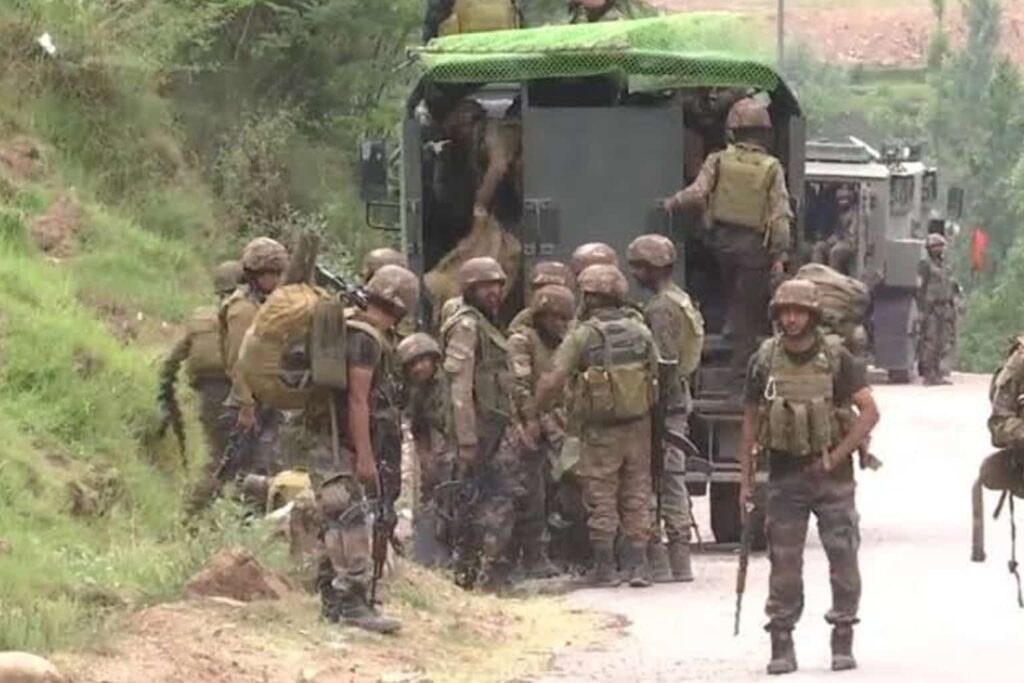
Why long search operations are difficult?
A long operation is not only a test of weapons.
It is a test of stamina.
The troops must maintain alertness even when there is no immediate contact.
They must search without becoming careless.
They must cover difficult ground without losing formation.
They must respond to intelligence updates.
They must coordinate with other forces.
They must remain prepared for sudden contact.
In such operations, small mistakes can become serious. A wrong step on difficult terrain can be as dangerous as a wrong movement under fire.
This is why Operation Sheruwali should be understood as a difficult ground operation, not simply as a headline about a search.
Use of drones, helicopters and sniffer dogs
Economic Times reported that helicopters, drones and sniffer dogs were used during the intensified search.
This indicates the nature of the operation.
Modern counter-terror operations are not carried out only by foot patrols. They often involve technology, surveillance, tracking support and coordination across security agencies.
But technology does not remove the soldier from danger.
Drones may scan.
Helicopters may support.
Dogs may assist tracking.
But the final movement through rocks, forests and ravines still needs troops on the ground.
That is where the risk remains human.
Why the name “Sheruwali” became important?
Operation names often become public markers of a security response.
For civilians, the name may appear in news reports.
For soldiers, it represents days of movement, pressure, search, caution and duty.
Operation Sheruwali became important because reports showed it continuing across several days in Rajouri and being linked with the hunt for suspected infiltrators.
The operation also became nationally discussed after Lt Beereshwar Goswami lost his life while performing operational duties.
That is why the name now carries both security significance and a memory of sacrifice.
What should not be assumed?
This story must be written carefully.
Do not claim that the operation has concluded unless an official source says so.
Do not claim the exact number of terrorists neutralised unless officially confirmed.
Do not add unsupported details about tactics, troop movement or precise locations beyond what has already been reported.
Do not sensationalise the officer’s death.
Do not treat a terrain-related operational casualty as a lesser sacrifice.
The confirmed and safe point is that Lt Beereshwar Goswami lost his life while carrying out operational duties during Operation Sheruwali in Rajouri, after reportedly slipping into a deep gorge.
That is enough to understand the seriousness of the sacrifice.
Why the sacrifice should be remembered properly?
A soldier’s sacrifice is not measured only by the weapon fired at him.
It is measured by the duty he was performing.
It is measured by the risk he accepted.
It is measured by the environment in which he served.
In the case of Lt Beereshwar Goswami, the risk came during an active anti-terror operation in difficult terrain.
That should be recognised with the same seriousness as any operational loss.
For the family, the nature of the terrain does not reduce the loss.
For the unit, the officer was part of a mission.
For the nation, he served in uniform and did not return.
Rajouri and the pressure on security forces
Rajouri has remained a sensitive district in Jammu & Kashmir’s security landscape.
Operations in such areas require alertness not only from the Army but also from police and other security forces.
When reports mention joint operations, drones, helicopters and sniffer dogs, they show the layered nature of modern counter-terror work.
The public often sees only the final headline.
The ground reality is much harder.
Search teams move through broken terrain.
Commanders balance speed with caution.
Units maintain pressure without exposing troops unnecessarily.
Every decision carries consequence.
Why this story matters for citizens?
Citizens usually notice the Army during wars, parades or major encounters.
But much of military duty happens quietly.
It happens on patrol routes.
It happens during searches.
It happens in forests and slopes where there are no cameras.
It happens in long operations where soldiers must remain ready for danger even when nothing is visible.
Operation Sheruwali is a reminder that internal security and counter-terror duty are not only about dramatic contact.
They are about endurance.
They are about terrain.
They are about unseen pressure.
They are about soldiers continuing the mission despite risk.
What defence aspirants should learn?
For defence aspirants, this story gives a serious lesson.
The Army is not only about rank, uniform and pride.
It is also about responsibility in uncertain conditions.
An officer or soldier may be required to lead or move in terrain where physical courage and judgment are both tested.
Fitness matters.
Discipline matters.
Teamwork matters.
Mental steadiness matters.
Respect for terrain matters.
Aspirants should understand that real military service is far more demanding than a recruitment dream. It requires readiness for hardship that cannot always be predicted.
Comment
Lt Beereshwar Goswami’s sacrifice should make us look at counter-terror operations with more maturity.
Not every danger comes from the front.
Sometimes the danger is underfoot.
Sometimes it is hidden in a ravine.
Sometimes it is in the fatigue of a long search.
Sometimes it is in the decision to keep moving because the mission is not yet over.
Operation Sheruwali shows that the soldier’s burden is larger than the public often sees.
The nation must remember not only the outcome of an operation, but also the risks carried during it.
Final takeaway
Operation Sheruwali in Rajouri was a long and difficult anti-terror operation in challenging terrain.
Reports show it moved from Day 3 to Day 4, then Day 8 and later to its 16th consecutive day.
Lt Beereshwar Goswami lost his life while carrying out operational duties after reportedly slipping into a deep gorge in the Dorimaal area of the Gambhir Mughlan belt.
He was honoured with full military honours at Air Force Station, Jammu, before his mortal remains were taken to his native place in Uttarakhand.
This is not only a story of an officer’s death.
It is a reminder of the hidden dangers of counter-terror duty.
In Rajouri’s difficult terrain, soldiers do not face only the enemy.
They face the ground, the weather, the darkness, the slope, the fatigue and the uncertainty of every step.
Lt Beereshwar Goswami’s name should be remembered with that understanding.
Sources:-
News On AIR report on Lt Beereshwar Goswami and Operation Sheruwali:
https://newsonair.gov.in/jk-lg-manoj-sinha-pays-tribute-to-lt-beereshwar-goswami-martyred-in-rajouri-anti-terror-operation/
Economic Times report on Operation Sheruwali entering Day 8:
https://economictimes.indiatimes.com/news/defence/operation-sheruwali-enters-day-8-as-forces-intensify-hunt-for-terrorists/articleshow/131414269.cms
New Indian Express report on Operation Sheruwali entering third day:
https://www.newindianexpress.com/india/2026/May/25/operation-sheruwalienters-third-day-in-j-ks-rajouri
NDTV report on Lt Beereshwar Goswami:
https://www.ndtv.com/india-news/army-officer-beereshwar-goswami-dies-after-falling-into-gorge-during-anti-terror-operation-sherawali-in-jammu-and-kashmir-rajouri-11602010
Times of India report on Operation Sheruwali entering Day 4:
https://timesofindia.indiatimes.com/india/operation-sheruwali-enters-day-4-searches-intensified/articleshow/131335543.cms




Leave a Reply