


Lorem ipsum dolor sit amet, consectetur adipiscing elit. Ut elit tellus, luctus nec ullamcorper mattis, pulvinar dapibus leo.
A soldier may retire from service, but the habit of responsibility rarely retires.
For years, he has reported on time, followed orders, guarded sensitive areas, handled pressure and worked in a system where discipline is not optional. After retirement, many ex-servicemen still look for work where these qualities are respected.
That is why the security requirement linked with Dr. Rammanohar Lohia Avadh University, Ayodhya, has attracted attention among veterans.
On the surface, it looks like a simple employment update. A university needs security personnel. Ex-servicemen may be considered. Interested candidates may approach through the proper channel.
But for a retired soldier, this kind of update carries more meaning.
It is not only about one more job.
It is about whether the discipline built in uniform can find a meaningful place in civilian life.
Why this update is being discussed?
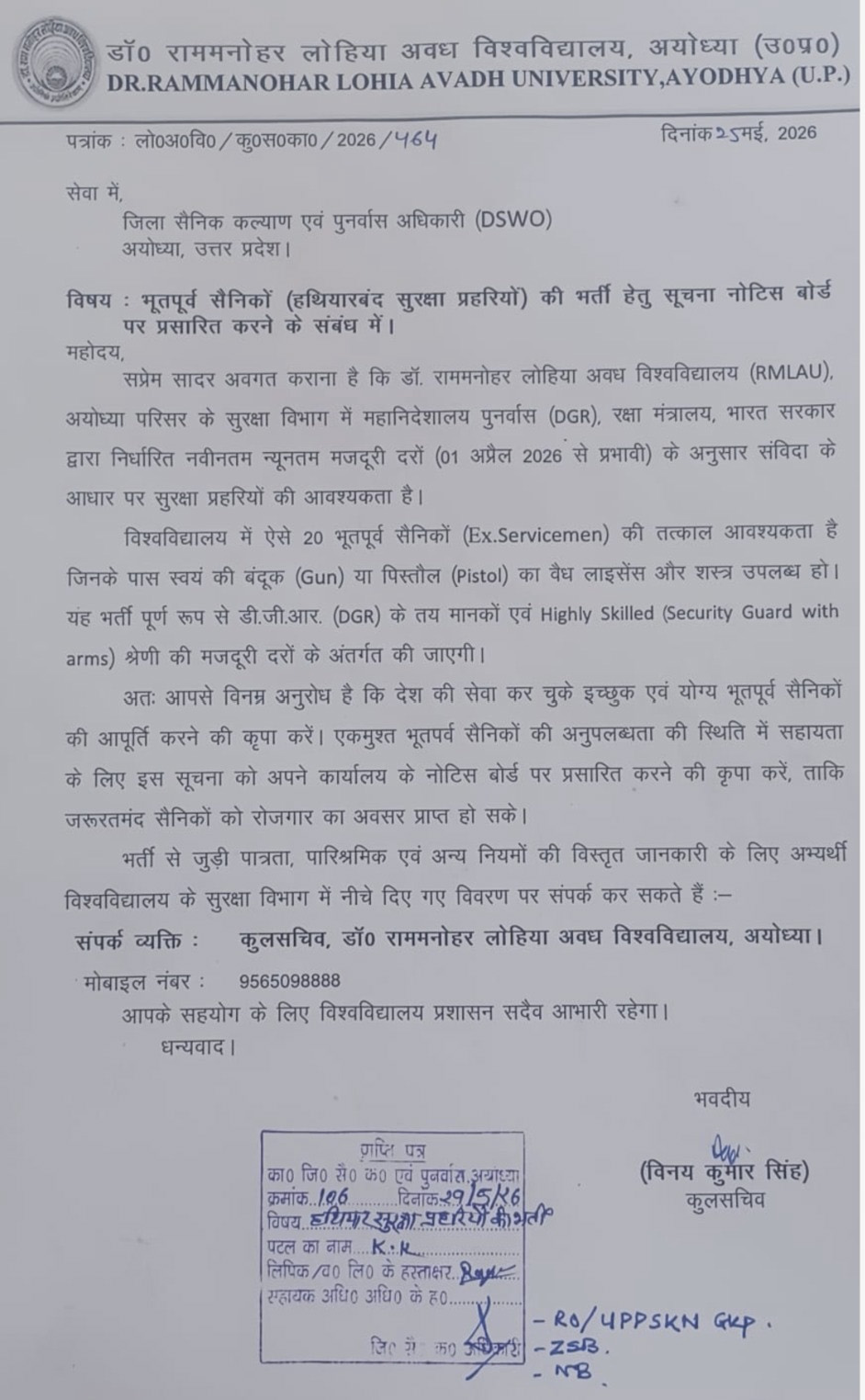
A circulated letter attributed to Dr. Rammanohar Lohia Avadh University, Ayodhya, mentions a requirement for ex-servicemen in the university’s security department. The letter is said to be addressed to the District Soldier Welfare and Rehabilitation Officer, Ayodhya.
According to the circulated details, the requirement is for ex-servicemen who have a valid licence for their own gun or pistol and have the weapon available. The number mentioned is 20 ex-servicemen.
The letter also refers to Directorate General Resettlement norms and wage rates applicable from 1 April 2026.
This is why the update has become important for ex-servicemen in and around Ayodhya. It appears to be connected with armed security duty, not ordinary unarmed gate duty.
However, this is exactly where caution is needed.
A forwarded letter, even if it looks official, should not be treated as final confirmation until it is verified directly from the District Soldier Welfare Office or the university administration.
The official tender background
There is also an official GeM tender document linked with Dr. Rammanohar Lohia Avadh University for security manpower.
This tender background shows that the university has been working on a wider arrangement for security guard, arm guard and supervisor services at different locations. These include administrative areas, academic premises, residential campuses and constituent colleges.
The document shows a total manpower strength of 117 personnel. It also includes categories such as male guards, female guards, arm guards, Purv Sainik and supervisors.
This is important because it shows that the university’s security requirement is not a random one-line claim. There is an official tender background for structured security manpower.
But candidates must understand the difference between a tender and direct recruitment.
A tender usually means manpower may be supplied through an agency or service provider. A circulated local letter may be asking for eligible ex-servicemen details through the welfare office. These are different parts of the same larger picture, but they are not always the same as direct university employment.
That is why every interested veteran should first ask: who will engage the candidate, under what terms, and through which process?
Why universities need disciplined security staff?
A university is not only a place where students attend classes.
It has hostels, offices, laboratories, libraries, examination work, residential areas, visitors, vehicles, events and public movement. Security in such a place is not only about standing at a gate.
It requires calm judgement.
It requires discipline.
It requires the ability to deal with students and visitors without panic.
It requires alertness during late hours.
It requires respect for rules without unnecessary harshness.
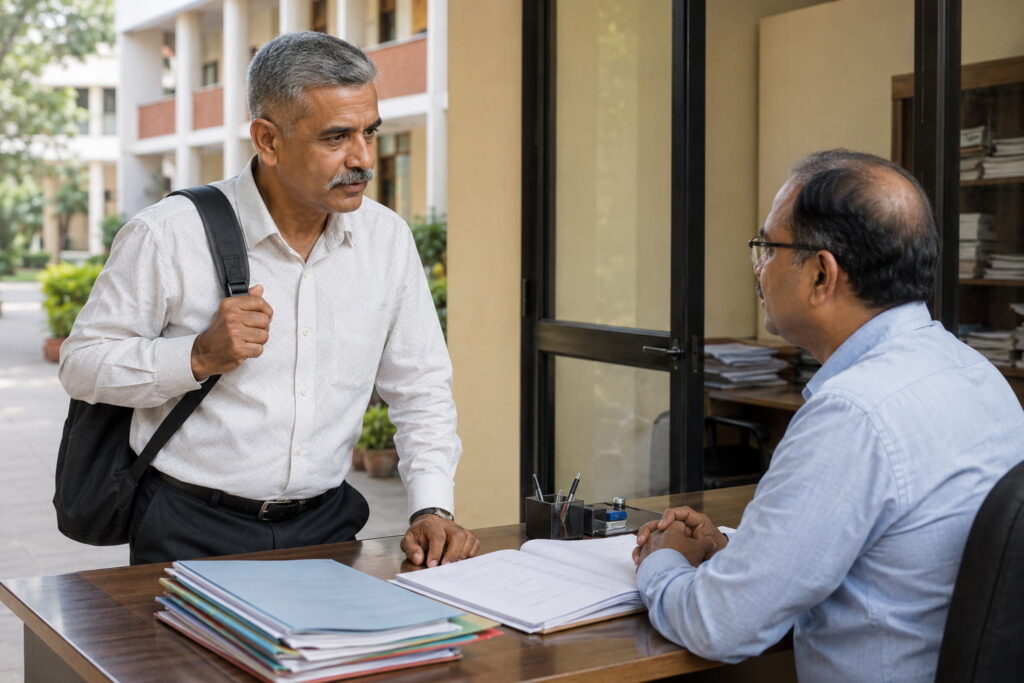
This is where ex-servicemen often become suitable for institutional security roles. They know duty schedules. They understand identity checks. They know how to report incidents. They can remain calm in tense situations. They have already lived a life where alertness is part of the job.
For a university, this experience can be useful.
For an ex-serviceman, this work can offer a second career with dignity.
Why the arms licence condition should be taken seriously?
The circulated requirement mentions candidates with valid licence for their own gun or pistol.
This point should not be treated casually.
Armed security duty is different from ordinary security duty. It carries legal responsibility, safety responsibility and personal accountability. A weapon is not a symbol of status. It is a serious responsibility under law.
Any ex-serviceman interested in such a role should verify whether the arms licence condition is compulsory, what type of licence is acceptable, whether the weapon category is suitable, whether police verification is required, and whether the engagement is through an agency or direct administrative channel.
No candidate should send arms licence copies, weapon details, identity documents or personal papers to any unknown person on WhatsApp or through an unofficial contact.
The safest route is simple: verify from the District Soldier Welfare Office, Ayodhya, or from the university administration before sharing anything.
Why the District Soldier Welfare Office route matters?
For many veterans, the District Soldier Welfare Office is more trusted than a job portal.
Ex-servicemen regularly approach these offices for welfare information, documentation, pension-related help, identity card issues and rehabilitation support. Many retired soldiers may not check online tender portals daily. Some may not be comfortable applying through digital systems. Some may rely on official notice boards and veteran networks.
If a requirement is routed through the District Soldier Welfare Office, it can help information reach the right people.
But it also increases responsibility.
The welfare office route should be used to protect veterans from confusion, not to create more uncertainty. Candidates should be told clearly whether the vacancy is open, what documents are needed, what the wage structure is, whether arms licence is mandatory, whether the job is contractual, and whether selection will be done by the university, agency or another authorised body.
What ex-servicemen should check before applying?
An interested veteran should not rush only because the word “ex-servicemen” is written in a notice.
Before applying, he should confirm the status of the vacancy. He should ask whether the requirement is still active. He should check whether the role is armed security guard, unarmed security guard or another category. He should confirm duty hours, deployment location, wage rate, contract period, medical fitness requirement and age condition.
He should also ask whether the engagement is direct or through a service provider.
This matters because the rights, salary process and reporting authority may change depending on the mode of engagement.
The official tender background mentions security manpower through a service provider model. In such cases, candidates should know who will pay wages, who will issue identity card, who will handle police verification, and who will be responsible for service conditions.
These details should be clarified before joining.
Do not pay money to anyone
This point must be written clearly.
No ex-serviceman should pay money to a middleman for this type of opportunity.
No one should promise guaranteed selection in exchange for money.
No one should collect documents in an unofficial manner.
No candidate should share original documents, arms licence details, Aadhaar copies, pension documents or bank details with private persons unless the process is officially verified.
Job-related misinformation can hurt veterans badly because many ex-servicemen trust official-looking letters. That trust should not be misused.
If there is any doubt, the candidate should contact the District Soldier Welfare Office or the university directly.
Why DGR norms and wage rates matter?
The circulated letter refers to Directorate General Resettlement norms and wage rates. This reference is important because ex-servicemen should not accept vague employment terms.
After retirement, many veterans are willing to work. But dignified work must also have transparent wages, proper duty hours and clear conditions.
If the job is linked with DGR norms or notified wage rates, candidates should ask for the exact wage category. They should ask whether the role is highly skilled armed guard, Purv Sainik guard or another category. They should confirm whether payment will be monthly, whether statutory deductions apply, and whether salary will be paid through bank account.
A veteran should not join only on verbal assurance.
He should know the written terms.
The larger issue: Second career after uniform
India has a large ex-servicemen community. Many soldiers retire at an age when they still have energy, discipline and work capacity. But the civilian job market does not always understand how to use their experience.
Security work is one of the areas where their background can be useful. But veterans should not be treated merely as guards at a gate. They bring training, discipline, emergency response sense and responsibility.
Institutions like universities, hospitals, public campuses and administrative complexes can benefit from this experience if the process is transparent.
At the same time, ex-servicemen also need respect, not exploitation.
A second career should not become a compromise where the veteran accepts unclear wages, unsafe conditions or unofficial handling of documents.
The right model is simple: proper verification, clear eligibility, transparent wage structure and respectful deployment.
Why this update matters for Ayodhya veterans?
Ayodhya and nearby areas have many retired soldiers and defence families. For them, a local institutional opportunity can be helpful because it may allow work without moving far from home.
A job near the family matters. It reduces travel burden. It keeps the ex-serviceman connected with the local community. It also allows the veteran to continue contributing in a disciplined environment.
If the RMLAU requirement is genuine and active, it can become meaningful for eligible veterans.
But the first step is still verification.
This update should be shared as an alert, not as a confirmed appointment list. It should be written as an opportunity to check, not as a guaranteed job.
What should be the responsible message?
The responsible public message is this:
A circulated letter attributed to Dr. Rammanohar Lohia Avadh University, Ayodhya, mentions a requirement for ex-servicemen for armed security duties. The wider official tender background shows that the university has a structured security manpower requirement. Interested ex-servicemen should verify the notice from the District Soldier Welfare Office, Ayodhya, or the university administration before sharing documents or applying.
This wording protects veterans from false hope while still informing eligible candidates.
Final takeaway
For an ex-serviceman, the end of service does not mean the end of duty.
Many veterans still want work where their discipline, alertness and experience are valued. A university security role can be one such opportunity, especially when it is handled through a proper and transparent process.
But every opportunity must be checked before action.
Verify the notice.
Confirm eligibility.
Understand the arms licence condition.
Ask about wages and duty hours.
Check whether the engagement is direct or through an agency.
Do not share documents with unofficial people.
Do not pay money to anyone.
If the vacancy is genuine and active, eligible ex-servicemen should apply through the proper route. If there is doubt, they should wait for official clarification.
The value of a soldier’s discipline does not end after retirement.
It only needs the right place to serve again.



Leave a Reply